Faculty of Health, Medicine and Behavioural Sciences
Availability:
Available for supervision
Media expert
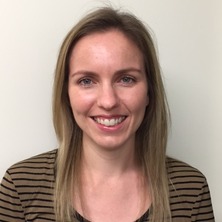
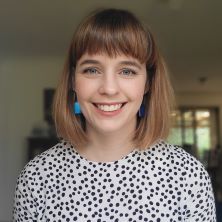
Ingrid Rowlands’ research is broadly focused on women’s reproductive health, with a particular interest in adverse events and diseases including miscarriage, infertility, endometriosis and gynaecological cancer.
Dr Rowlands' current program of work is conducted in partnership with community and focuses on:
Multidisciplinary care needs of people with endometriosis - QENDOCare
Supportive care interventions in cancer - PROMISE trial
Co-designed, integrated, person-centred models of care for people with innate variations of sex characteristics - Interconnect Health Research
Dr Rowlands is a mixed methods researcher and combines her training in health psychology with her epidemiological skills to understand people's health and wellbeing. Her previous research has focused on:
The causes and consequences of endometriosis in Australia - GELLES
Women’s quality of life following a diagnosis of endometrial (uterine) cancer ANECS. In this role, she also led a qualitative study exploring young women’s fertility concerns following a diagnosis of gynaecological cancer.
Women’s adjustment to miscarriage using data from more than 14,000 young women participating in the Australian Longitudinal Study on Women’s Health - Coping with miscarriage study.
Faculty of Health, Medicine and Behavioural Sciences
Availability:
Not available for supervision
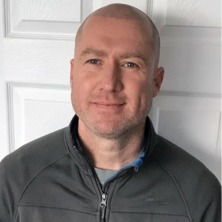
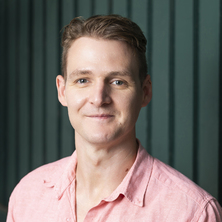
A/Prof Benn Sartorius is an established spatial and global health epidemiologist, with a particular interest in the burden of infectious disease and attributable determinants at sub-national, national and global scales as a tool to help inform and optimise policy at national and subnational scales. Dr Sartorius a principal research fellow in UQ's ODeSI team at University of Queensland, an affiliate professor in Department of Health Metric Sciences at University of Washington and a honorary visiting research fellow at University of Oxfored. Prior to join UQ, Dr Sartorius was the principal investigator for the Global Research on Antimicrobial Resistance (GRAM) Project based in the Centre for Tropical Medicine and Global Health at University of Oxford.
Dr Sartorius' research has focused on better understanding the spatial-temporal burden and risk factors of multiple IDs, including mosquito-borne diseases such as malaria, sexually transmitted infections, neglected tropical diseases such as soil-transmitted helminths and onchocerciasis, vaccine preventable diseases, emerging infectious diseases and more recently focused on antimicrobial resistance. These and other examples highlight the utility of spatial epidemiology to identify higher risk areas that should be prioritised for more targeted, tailored and resource efficient intervention and control measures. However, often spatial risk estimates for IDs are often not produced in-country in settings such as the Pacific, where disease burden is high and local modelling expertise is limited, resulting in use of incomplete/biased data and resulting in inefficient and suboptimal decision-making. I’ve been a collaborator on the Global Burden of Disease (GBD) project since 2014 and the Scientific Council for the GBD Project since 2015. Dr Sartorius is a member of the WHO Reference Group on Health Statistics (RGHS) and chair of the Age-Specific Mortality Estimation and Life Table Computation task force. Benn's vision, through ODeSI-HERA, is to expand his international profile and leadership in spatial-temporal epidemiology of priority infectious diseases in Australia and the Pacific. This will include spatial epidemiological innovation, and capacity building to improve health outcomes in high-risk and vulnerable sub-populations within the region, and will be co-created with stakeholders in the region to ensure that it aligns with their priorities, and support precision-based decision-making systems to help policy makers optimise resource allocation and guide targeted interventions.
Faculty of Health, Medicine and Behavioural Sciences
Senior Research Fellow
School of Dentistry
Faculty of Health, Medicine and Behavioural Sciences
Availability:
Available for supervision
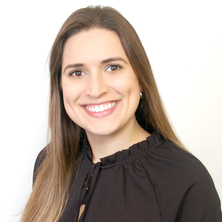
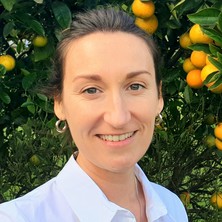
Dr. Helena Schuch is a senior research fellow at the School of Dentistry, University of Queensland.
She is a dentist and an oral epidemiologist with special interest in social epidemiology. Helena is also interested in methods to estimate causal inference and on applying machine learning techniques to predict oral health outcomes.
She completed her PhD in Oral Epidemiology at the University of Adelaide (2018) and is currently in the Editorial Board of Community Dentistry and Oral Epidemiology.
Qualifications: BDS, MScDent, PhD
Research Interests: Oral health inequalities. Life course epidemiology. Causal inference methods. Machine learning applied to oral health.
Faculty of Health, Medicine and Behavioural Sciences
Availability:
Not available for supervision
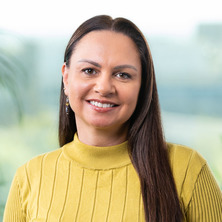
Janet Stajic is a Yidinji–Jirrbal woman of Far North Queensland who grew up in Brisbane. With 17 years’ experience in Aboriginal and Torres Strait Islander health, Janet has worked as an Aboriginal Health Worker, in program management, policy, and research across the Aboriginal community-controlled, public, non-profit, and university sectors. With over a decade of research experience, Janet has contributed to projects spanning chronic disease, blood borne viruses, health services research, program evaluation, and workforce. Her doctoral research explored the racialisation of the Aboriginal and Torres Strait Islander Health Worker and Practitioner workforce, its positioning within the health system, their conceptualisations of care, and the limitations of the health system in supporting this workforce. Janet currently works for the University of Queensland Poche Centre for Indigenous Health as a Research Fellow and is a Professional Ambassador for the National Association of Aboriginal and/or Torres Strait Islander Health Workers and Practitioners.
Faculty of Health, Medicine and Behavioural Sciences
Availability:
Available for supervision
Dr Caley Tapp is a Research Fellow in Substance Use and Mental Health with the School of Public Health at the University of Queensland.
Caley holds qualifications in psychology and epidemiology. She has a PhD in social psychology and completed a post doctoral fellowship on an ARC funded project examining a disease avoidance basis for stigmatisation.
In her previous role with the Analysis and Reporting component of the Australian Mental Health Outcomes and Classification Network she was involved in a range of projects designed to improve the measurement of patient- and service-level outcomes in Australia’s specialised public sector mental health services. She has experience in conducting systematic literature reviews, as well as conducting experimental, quasi-experimental and qualitative studies.
Caley is available to supervise honours, Masters and HDR students on a variety of topics; please get in touch to discuss.
Associate Member of Centre for Community Health and Wellbeing
Centre for Community Health and Wellbeing
Faculty of Health, Medicine and Behavioural Sciences
Postdoctoral Research Fellow
School of Human Movement and Nutrition Sciences
Faculty of Health, Medicine and Behavioural Sciences
Availability:
Available for supervision
Media expert
Dr George Thomas is a Research Fellow in the School of Human Movement and Nutrition Sciences at The University of Queensland and a member of the ARC Centre of Excellence for the Digital Child. His research focuses on children’s digital technology use, family digital routines, healthy screen use, and child health and wellbeing.
George leads an integrated program of research focused on understanding and improving how families manage children’s screen use. His work spans digital health, behavioural science, public health, and research translation through partnerships with government and industry.
His research has informed international policy and guidelines, including reports from UNESCO and the World Health Organization, and contributes to global initiatives such as the Active Healthy Kids Global Alliance.
George is also committed to education and mentorship, having supervised more than 50 student research projects across psychology, dietetics, and exercise science, and supporting students to work on real-world policy and community initiatives.
Faculty of Health, Medicine and Behavioural Sciences
Availability:
Available for supervision
Media expert
Dr Mike Trott is a Research Fellow with the Queensland Centre for Mental Health Research (QCMHR), The University of Queensland, where he serves as Section Head of Epidemiology and Biostatistics within the Physical and Mental Health Research Group. He specialises in lifestyle psychiatry, clinical trials, and psychiatric epidemiology, with a particular focus on addressing the physical health inequities faced by people with schizophrenia and other severe mental illnesses.
His current research program addresses three major themes:
Physical activity and sedentary behaviour – understanding their impact on mental and physical health and developing interventions, including the effectiveness of movement breaks to reduce sedentary time and cardiometabolic risk in people with schizophrenia, and the risk profiles of different types of sedentary behaviours.
Clinical trials – leading the methodological and statistical aspects of a national platform of several schizophrenia clinical trials to find strategies to improve mental and physical health in this population
Pharmacoepidemiology - using statewide and national linked data to determine the comparative effectiveness of clozapine augmentation strategies for treatment-resistant schizophrenia, as well as examining the mortality gap in several mental illness vs the general population.
Senior Lecturer and Specialty Supervisor - General Practice
General Practice Clinical Unit
Faculty of Health, Medicine and Behavioural Sciences
Availability:
Available for supervision
Dr Chloe Tyson is a General Practitioner, medical educator, and researcher with expertise in general practice, antidepressant deprescribing, lifestyle medicine, complex and chronic care, and preventive healthcare. She is a Senior Lecturer in the General Practice Clinical Unit at the University of Queensland Medical School, where she works across undergraduate teaching, assessment, and learning-resource development.
Her current research follows the RELEASE antidepressant tapering plans into everyday general practice: how GPs use them, what gets in the way, and what would make deprescribing more workable. That work is supported by an RACGP Academic Post (2025–2026). Clinically, she works with people whose problems do not fit a standard appointment, using a lifestyle-medicine approach to persistent fatigue, gut and hormonal problems, inflammation, and other unresolved chronic presentations.
Her broader interests include:
General practice and primary care implementation
Antidepressant deprescribing and withdrawal-informed tapering
Lifestyle medicine and whole-person care
Complex and chronic conditions
Preventive health and health optimisation
Mental health in primary care
Medical education, assessment and resource development
Dr Tyson is committed to strengthening general practice as a setting for complex care, deprescribing, and whole-person medicine, and to building that capacity in the next generation of doctors.
Charlotte Young is a research fellow at the Institute for Social Science Research at The University of Queensland. Charlotte is a qualitative researcher with interdisciplinary interests spanning sociology, public health, health promotion, and migration studies. Her research focuses on the systemic drivers of migrant health inequities and how they can be redressed. Charlotte is also interested in the ways migrants adapt and respond to systemic and structural drivers of inequity. Recently, she has been exploring how the COVID-19 pandemic has impacted migrant and refugee background tertiary students and how young culturally and linguistically diverse social media influencers have been promoting COVID-safe behaviours online. Charlotte also explores immigrant organisations as critical settings to influence health and wellbeing. She is passionate about producing impactful research to affect positive change and tackling migrant health problems in solidarity with the communities they affect. Charlotte also has experience conducting evaluation research for large-scale health interventions.