Faculty of Health, Medicine and Behavioural Sciences
Availability:
Available for supervision
Media expert
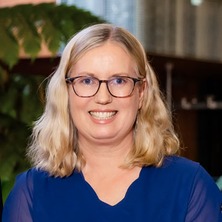
Professor Emma Hamilton-Williams’ career focuses on understanding how immune tolerance is disrupted leading to the development of the autoimmune disease type 1 diabetes. She received her PhD from the Australian National University in 2001, followed by postdoctoral training in Germany and the Scripps Research Institute in the USA.
In 2012, she started a laboratory at the Frazer Institute, University of Queensland where she investigates the gut microbiota as a potential trigger or therapy target for type 1 diabetes, as well as developing an immunotherapy for type 1 diabetes. The overall aim of her research is to find new ways to prevent or treat the underlying immune dysfunction causing autoimmunity.
She is Chief Scientific Officer for an Australia-wide pregnancy-birth cohort study of children at increased risk of type 1 diabetes, which aims to uncover the environmental drivers of this disease. Her laboratory uses big-data approaches including proteomics, metabolomics and metagenomics to understand the function of the gut microbiota linked to disease.
She recently conducted a clinical trial of a microbiome-targeting biotherapy aimed at restoring a healthy microbiome and immune tolerance, with an ultimate aim of preventing type 1 diabetes.
Faculty of Health, Medicine and Behavioural Sciences
Availability:
Not available for supervision
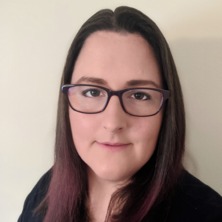
Dr. Akila Wijerathna-Yapa is an interdisciplinary Biotechnology scientist and Postdoctoral Research Fellow at the Frazer Institute, University of Queensland, with over 12 years of expertise spanning Biochemistry, Molecular Biology, and Bioinformatics. Holding a PhD in Biochemistry from The University of Western Australia, an MSc in Molecular Biology from The Hebrew University of Jerusalem, an MBA from the University of Staffordshire, and B.Sc. (Hons.) Sp. Biotechnology from The Wayamba University of Sri Lanka, he brings a rare combination of deep scientific expertise and strategic project management insight to the life sciences.
Dr. Wijerathna-Yapa's research is defined by his ability to integrate advanced technologies—including mass spectrometry-based proteomics, peptidomics, metabolomics, lipidomics, NMR spectroscopy, and transcriptomics—to unravel molecular complexities and translate multi-omics data into actionable insights. His work spans molecular biology, cell culture bioprocess optimisation, clinical biomarker discovery, and spatial biology, with postdoctoral experience at The University of Queensland and Dalhousie University, and collaborative partnerships with leading research institutions across Sri Lanka, China, Israel, Australia, and Canada.
With a strong foundation in advanced statistical data analysis and a proven track record in project management and scientific communication, Dr. Wijerathna-Yapa bridges the gap between scientific discovery and practical innovation. He has authored over 25 peer-reviewed publications and has been recognised with prestigious international awards including the Australian Government Global Talent Independent visa and fellowships from the Higher Education Academy (FHEA, UKPSF). He is passionate about leveraging interdisciplinary knowledge to drive transformative advancements in biotechnology and life sciences.