Faculty of Health, Medicine and Behavioural Sciences
Availability:
Available for supervision
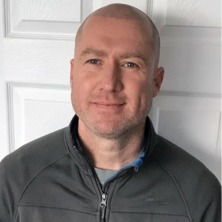
A/Prof Benn Sartorius is an established spatial and global health epidemiologist, with a particular interest in the burden of infectious disease and attributable determinants at sub-national, national and global scales as a tool to help inform and optimise policy at national and subnational scales. Dr Sartorius a principal research fellow in UQ's ODeSI team at University of Queensland, an affiliate professor in Department of Health Metric Sciences at University of Washington and a honorary visiting research fellow at University of Oxfored. Prior to join UQ, Dr Sartorius was the principal investigator for the Global Research on Antimicrobial Resistance (GRAM) Project based in the Centre for Tropical Medicine and Global Health at University of Oxford.
Dr Sartorius' research has focused on better understanding the spatial-temporal burden and risk factors of multiple IDs, including mosquito-borne diseases such as malaria, sexually transmitted infections, neglected tropical diseases such as soil-transmitted helminths and onchocerciasis, vaccine preventable diseases, emerging infectious diseases and more recently focused on antimicrobial resistance. These and other examples highlight the utility of spatial epidemiology to identify higher risk areas that should be prioritised for more targeted, tailored and resource efficient intervention and control measures. However, often spatial risk estimates for IDs are often not produced in-country in settings such as the Pacific, where disease burden is high and local modelling expertise is limited, resulting in use of incomplete/biased data and resulting in inefficient and suboptimal decision-making. I’ve been a collaborator on the Global Burden of Disease (GBD) project since 2014 and the Scientific Council for the GBD Project since 2015. Dr Sartorius is a member of the WHO Reference Group on Health Statistics (RGHS) and chair of the Age-Specific Mortality Estimation and Life Table Computation task force. Benn's vision, through ODeSI-HERA, is to expand his international profile and leadership in spatial-temporal epidemiology of priority infectious diseases in Australia and the Pacific. This will include spatial epidemiological innovation, and capacity building to improve health outcomes in high-risk and vulnerable sub-populations within the region, and will be co-created with stakeholders in the region to ensure that it aligns with their priorities, and support precision-based decision-making systems to help policy makers optimise resource allocation and guide targeted interventions.
Faculty of Health, Medicine and Behavioural Sciences
Availability:
Available for supervision
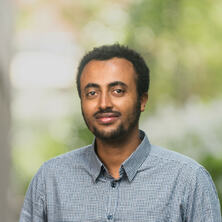
Dr Yonas Tefera is a Research Fellow in psychiatric epidemiology at the Queensland Centre for Mental Health Research (QCMHR), University of Queensland. He specialises in leveraging epidemiological methods and conducting advanced analyses of large-scale population-level administrative datasets related to hospital admissions and primary care. As an epidemiologist, his expertise spans pharmacoepidemiology and health services research. In his current work, he leads linked data analysis of health service data, including hospital, emergency department, community mental health services, and public dental care for people living with mental illness. In addition to health service use, his linked data alnalyses include outcomes for individuals engaged with mental health tribunals and placed on treatment orders. Dr Tefera's interests encompass psychiatric epidemiology, psychopharmacology, pharmacoepidemiology, and the use of advanced statistical and machine learning approaches to understand and enhance care for individuals living with mental illness or substance use problems.
He completed his PhD at Monash University in late 2025, focusing on opioid and psychotropic medicine use among injured Australian workers with back and neck musculoskeletal disorders. His work examined high-risk medicine use patterns, such as initiation, persistence, and co-prescribing of opioids and psychotropics, as well as their impacts on work-related outcomes in this population. His research has improved the understanding of value-based healthcare in Australian workers' compensation schemes. Dr Tefera possesses substantial expertise in diverse clinical research methodologies, robust evidence synthesis, and quantitative data analysis, including causal inference techniques. His experience includes survey-based studies, analysis of multinational surveys, international aggregate datasets, and linked administrative and claims data, as well as injury compensation datasets.
Before undertaking his PhD, Dr Tefera trained as a clinical pharmacist and worked as a lecturer, clinical preceptor, and mentor at the University of Gondar in Ethiopia, teaching courses such as pharmacotherapy, drug informatics, evidence-based medicine, and pharmacoepidemiology. He earned a Master of Public Health with distinction from the University of Manchester and a Master of Science in Clinical Pharmacy from the University of Gondar. His academic excellence has been recognised with several honours, including the Outstanding Student Cup Award from the Ethiopian Pharmaceutical Association and the first-place award for achieving the highest score in his graduating class at the University of Gondar. Additionally, he has received multiple travel grants to present his research at national and international conferences, such as the International Pharmaceutical Federation's World Pharmaceutical Congress and the International Society for Pharmacoepidemiology's Asian Conference on Pharmacoepidemiology.
Affiliate of Australian Women's and Girls' Health Research Centre
Australian Women and Girls' Health Research Centre
Faculty of Health, Medicine and Behavioural Sciences
Senior Lecturer in Biostatistics
School of Public Health
Faculty of Health, Medicine and Behavioural Sciences
Availability:
Available for supervision
Media expert
Dr Michael Waller: is a biostatistician working on the Australian Longitudinal Study of Womens Health (ALSWH). He has previous experience working on cancer screening, and military health studies. His current research focus is using linked data sources to assess dementia rates and risk factors.