Affiliate of Centre for Environmental Responsibility in Mining
Centre for Environmental Responsibility in Mining
Faculty of Engineering, Architecture and Information Technology
ARC Future Fellow and Director, Global Centre for Mineral Security
Sustainable Minerals Institute
Faculty of Engineering, Architecture and Information Technology
Centre Director of Global Centre for Mineral Security
Global Centre for Mineral Security
Faculty of Engineering, Architecture and Information Technology
Availability:
Available for supervision
Media expert
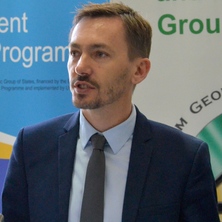
Professor Daniel Franks is Director of the Global Centre for Mineral Security at the University of Queensland’s Sustainable Minerals Institute and is an Australian Research Council Future Fellow. Professor Franks is known internationally for his work on the interconnections between minerals, materials and sustainable development, with a particular focus on the role of minerals in poverty reduction. He has introduced a number of key concepts in development studies including ‘mineral poverty’, ‘mineral security,’ and ‘development minerals;’ and has worked with a wide range of public and private sector partners to implement breakthrough sustainability innovations, such as OreSand to drastically reduce mine waste, and ‘social impact management plans,’ a regulatory tool now adopted throughout the world.
He is the author of more than 160 publications, including more than 40 publications for the United Nations. His research has appeared in journals such as Nature Sustainability and the Proceedings of the National Academy of Sciences, and is available in 11 languages. He is an Editorial Board Member of the International Journal of Minerals Policy & Economics, as well as Impact Assessment and Project Appraisal and has field experience at more than 100 mining and energy sites and 40 countries.
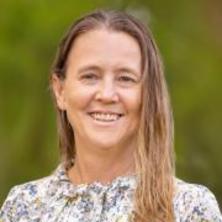
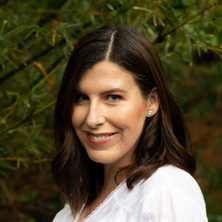
Chris is a social scientist specialising in international development. Her research primarily revolves around resilience and adaptation, with a current focus on agriculture policy and implementation. With a wealth of experience from her previous roles in international development and academia, Chris also brings strong expertise in monitoring and evaluation.
She has designed and led both research for development (R4D) and development projects across Cambodia, Vietnam, Solomon Islands, Kiribati, Tuvalu, Vanuatu, and Fiji. Her applied research aims to understand the processes and mechanisms of change that bridge policy and action, enhancing food security and sustainability. Currently, Chris is working on projects that emphasise agriculture policy and knowledge brokering for Environmental and Human Health (One Health) in Cambodia, building on her previous work in climate resilience, adaptation, and agrarian change in the region.
Faculty of Health, Medicine and Behavioural Sciences
Availability:
Available for supervision
Media expert
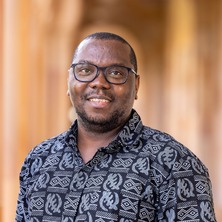
Dr. Amani Kasherwa is a social work lecturer in the School of Nursing, Midwifery, and Social Work at the University of Queensland (UQ), with expertise in childhood trauma. His primary research focus is on child sexual abuse, particularly among children and families exposed to adverse childhood experiences (ACEs) in complex humanitarian settings. Amani's work deeply explores the intersection of childhood trauma, including intergenerational trauma and access to support services for children and young people affected by various forms of childhood adversities. He is highly engaged in the fields of critical childhood and youth studies, peacebuilding, family violence, and mental health services.
Amani brings his extensive research, teaching and practice experiences to enrich the learning experiences of undergraduate and postgraduate students at UQ. He received his PhD in Social Work from the University of New South Wales (UNSW Sydney) in 2024, with a thesis titled "Negotiating Survival Overseas: Exploring the Help-Seeking Processes and Support Patterns of Adverse Childhood Experiences (ACEs) Survivors in African Communities with Refugee Backgrounds in New South Wales." His research agenda post-PhD focuses on developing culturally safe prevention strategies for children, young people, and families transitioning from refugee settlements and negotiating a new life in high-income countries like Australia, building on the foundation of social work and peacebuilding theories and methods.
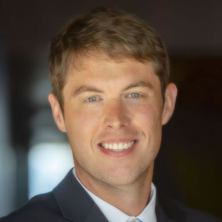
My research and teaching interests include development, applied microeconometrics, agriculture, poverty, and the environment. I am particularly interested in using new data sources and new empirical methods to improve our understanding of a wide range of outcomes, especially the SDGs.
My current work focuses on three separate strands of literature: labor allocation, poverty, and methodologies to improve estimates of statistics of interest to economists and policymakers. Ongoing work studies how households allocate their labor in developing countries, especially across sectors. I work on the effects of pollution on agricultural productivity as well as how a changing environment affects labor allocation decisions. I also have ongoing work studying poverty and the best ways to improve poverty estimates, whether across time or across space. Relatedly, in work with regular collaborators, we are studying the best options to estimate different statistics – including poverty and labor force statistics – in developing countries, where data infrastructure may not allow the types of methods used in developed countries. For example, we are studying whether small area estimation methods or machine learning methods offer more accurate predictions of different outcomes and at different levels of aggregation. As part of my small area estimation and poverty work, I take part in capacity building with the United Nations Statistics Division and the World Bank to improve the understanding of small area estimation across the world. Current work revolves around disseminating working guidelines as well as in-person workshops for officials from national statistics offices.
Faculty of Health, Medicine and Behavioural Sciences
Availability:
Available for supervision
Media expert
Dr Stacey Pizzino is a global health expert specialising in the intersection of conflict, disasters, and climate change. She is a Fellow with the United Nations Institute for Disarmament Research (UNIDIR) Conventional Weapons Programme, contributing to international policy dialogue on the humanitarian impacts of weapons systems. She also holds a visting fellow appointment at the Centre for Conflict and Health Security at Kings College London. Her research examines the health and environmental impacts of armed conflict, explosive ordnance and climate-driven extreme events - issues that increasingly shape the global public health landscape.
She led the world’s largest epidemiological study on casualties from landmines and explosive remnants of war, analysing data from over 100,000 individuals across 17 countries. This landmark research contributes to global strategies aimed at mitigating the health consequences of explosive ordnance.
Dr Pizzino brings a unique perspective shaped by frontline experience as a paramedic alongside her academic expertise. She is the co-editor of a textbook on Disaster Health Management, contributing to the education and training of the next generation of disaster health professionals.
She is Co-Lead of CliMigHealth Asia Pacific, part of a global network advancing research, education, and policy on the intersections of climate change, migration, and health to build resilient, inclusive, and responsive health systems.
She has extensive experience in public health partnerships and policy translation, working collaboratively with diverse stakeholders to inform research and transform findings into actionable policies that enhance population health outcomes.
Dr Pizzino is a skilled communicator and advocate, and regularly presents in global policy forums such as the United Nations. Her ability to engage policymakers, humanitarian agencies and global audiences ensures that her research drives real-world impact.
School of Political Science and International Studies
Faculty of Humanities, Arts and Social Sciences
Availability:
Available for supervision
Media expert
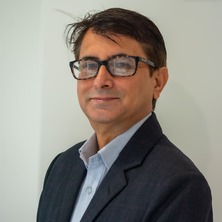
DB’s research interest includes conflict transformation and peacebuilding, the intersection of religion and politics, and populism and nationalism in the Asia Pacific region. Currently, his research is focused on exploring the dilemmas and complexities associated with peacebuilding in authoritarian, populist and nationalist states across South and Southeast Asia. He has conducted research fieldwork across South and Southeast Asia, especially Nepal, Sri Lanka, India, and Myanmar.
He is the author of Combatants to Civilians: Rehabilitation and Reintegration of Maoist Fighters in Nepal's Peace Process (Palgrave, 2018) and co-editor of The Routledge Handbook of Populism in the Asia Pacific (Routledge, 2024) and Reconciliation in Conflict-Affected Communities: Practices and Insights from the Asia Pacific. He has also published his research in scholarly journals such as World Development, Contemporary South Asia, Religion & Politics, Asian Studies Review, Journal of Human Rights, Conflict, Security & Development and Contemporary Politics. He is a Research Member in the ‘Addressing Violent Extremism and Radicalisation into Terrorism’ (AVERT) Research Network at the Deakin University in Melbourne.
Before coming to the academia, he worked with several international organisations for more than ten years in Nepal, Sri Lanka and Viet Nam. Since 2010, he has been actively collaborating with government and non-government organizations and has provided research and consultancy service to several agencies including United Nations Development Programme (UNDP), UN Women, ActionAid Myanmar, UNICEF, International Alert UK, Care International and Mercy Corps. In 2022, he supported the Connected Communities team in NSW Department of Premier and Cabinet to develop and implement the evaluation framework and plan for NSW’s Countering Violent Extremism Programme.
Kanchana is a Research Fellow at the Centre for Policy Futures with a background in economics. Her research focuses on labour market vulnerability, tourism resilience, disaster risk management, climate adaptation, and economic security. She has experience across academia, government policy research, and economic consulting, with expertise in both quantitative and qualitative research methods. Her work seeks to generate evidence that informs policy development and helps address emerging social and economic challenges.