Postdoctoral Research Fellow, Materials Science and Sustainable Nanotechnology
Australian Institute for Bioengineering and Nanotechnology
Availability:
Available for supervision
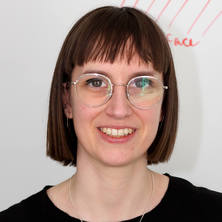
Silvia Chowdhury is a Postdoctoral Research Fellow at the Australian Institute for Bioengineering and Nanotechnology (AIBN), The University of Queensland (UQ), Australia. She received her PhD in Materials Science from AIBN, UQ in May 2025. Prior to that, she earned a Master of Science (by Research) in Mechatronics Engineering from the International Islamic University Malaysia (IIUM), and a Bachelor of Science in Electrical and Electronics Engineering from the American International University-Bangladesh (AIUB). Her current research focuses on the design and fabrication of metal-organic frameworks with precisely tailored composition and morphology to optimise their performance in gas sensing and biosensing applications.
Dr Verdi's research is in the field of computational materials physics. Her work employs first-principles or ab initio methods, complemented by machine learning techniques, to predict and understand physical properties of materials without relying on empirical models. For more information, visit the research group website.
She received her doctorate from the University of Oxford in 2017. After working at the University of Oxford and the University of Vienna, Dr Verdi moved to the University of Sydney in 2023 as an ARC DECRA Fellow. In the same year, she then joined UQ as a Lecturer in Condensed Matter Physics. She is an associate investigator of the ARC Centre of Excellence for Quantum Biotechnology (QUBIC).
Her current research focuses on understanding the structural, optical and thermodynamic properties of atomic defects for applications in quantum technologies. She is also interested in studying the influence of atomic vibrations, defects, temperature and disorder on the intrinsic properties of various functional materials that can be exploited for novel technologies. Feel free to reach out to Dr Verdi if you are interested in simulating materials properties from first principles using supercomputers and exploring how this can help develop better materials.