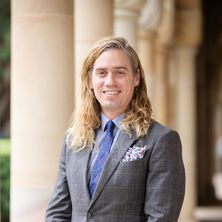
Dr. Buning is a Senior Lecturer in the Tourism discipline at the UQ Business School and Research Lead of the UQ Micromobility Research Cluster. He is recognised as one of Australia’s leading voices on micromobility, e-mobility and global scholar for cycling tourism. His research focuses on active living, tourism systems, and destination development, with a particular attention to both residents and visitors.His research agenda examines how tourists and residents engage in physical activity both as a driver of tourism behaviour and community health (e.g., active lifestyle sports, sports club participation) and as a feature of destination mobility systems (e.g., active transport).
His work on active transport investigates how bikeshare, e-scooters, and micromobility more generally enable healthier, more active, and more sustainable communities for residents and visitors. This work directly informs public policy and industry strategy. His research on active lifestyle sports contributes to scholarship in active sport tourism, including mountain biking, cycling, running, rock climbing, and hiking. Research outcomes have contributed to improved economic performance, increased visitor dispersal, reduced congestion pressures, enhanced public health outcomes, and strengthened community wellbeing in destination contexts through sustainable transport and active tourism strategies.
Dr. Buning has worked extensively with active transport providers, sporting organisations, and state and local governments across Australia and the United States. He regularly consults on data-driven strategy development for active mobility systems, events, and community-based tourism initiatives. His work regularly appears in leading tourism, sport, and transport journals and popular press outlets around micromobility, active transport, sport tourism, and event management.
Are you a government, industry or an academic interested in collaborating on research or teaching projects to get people moving? Please get in touch
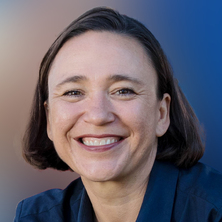
Sara and her research group, the Low Harm Hedonism Initiative, develop theories of environmentally significant human behaviour and leverage them to design practical measures that trigger pro-environmental behaviour without undermining consumer satisfaction. These new behavoiur change interventions are then tested in real-world contexts, so their effectiveness on actual behaviour change with environmental consequences can be established. Sara’s research is driven by scholarly curiosity and the desire to create meaningful change. Sara is a dedicated supervisor and mentor of early career researchers.
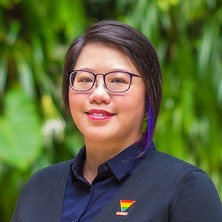
Dr Faith Ong's research focus lies in the role of events, tourism and hospitality as tools of social change. Thus, she researches into the social impacts of events and tourism on communities. Her work explores how different forms of festivals, community gatherings and targeted events impact the social inclusivity of places. Volunteering is also one of Faith’s areas of expertise, determining the impacts of volunteering in tourism and events on the individual.
Faith is interested in enabling full and inclusive participation of communities across a broad spectrum of events and travel. In particular, her work has focused on communities that are sexually and culturally diverse, as well as people with disabilities. She continues to explore the signals of inclusion and exclusion at occasions that are meant to bring communities together.
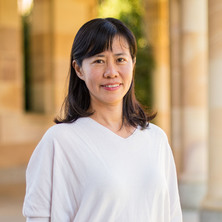
Dr Sun’s research addresses tourism sustainability, focusing on economic impacts and environmental footprinting. Her work on tourism economic impacts is to use the input-output modelling to provide quantitative estimates on jobs, income and GDP with respect to changes in national tourism policy, market development or special events and disasters. In addition, she also works on the environmental perspectives of travel behaviour, quantifying the tourism carbon footprint and tourism water footprint. She successfully constructed and analysed tourism impacts for individual countries (Taiwan, China, Japan, United States, and New Zealand) and provided the first detailed estimate of the global travel impact on greenhouse gas emissions.
She worked closely with federal and local administers, including Statistics Norway, Indonesia Ministry of Finance, Taiwan Ministry of the Interior Construction Agency, Taiwan Forestry Bureau, and the US National Park Service. Her research projects include cases with national tourism carbon emission inventory, tourism employment vulnerability, tourism marketing programs, and national park management.
Dr Sun has published in top academic journals including Nature Climate Change, Tourism Management, Journal of Travel Research and Journal of Sustainable Tourism. Before joining UQ from Taiwan in 2018, She had 9 consecutive research projects with the Taiwan Ministry of Science and Technology (MOST) (equivalence to Australia Research Council), and 4 governmental grants. Dr Sun is currently the lead CI of the ARC Discovery Project that will set up the global tourism carbon emissions database and identify enablers for tourism decarbonization.