Faculty of Health, Medicine and Behavioural Sciences
Research Fellow
School of Health and Rehabilitation Sciences
Faculty of Health, Medicine and Behavioural Sciences
Availability:
Available for supervision
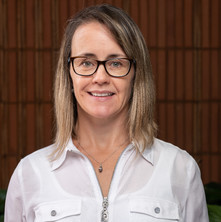
Dr Jonathan Davies is a chronic pain researcher working to improve how pain is understood, assessed and treated. His research focuses on pain phenotyping, precision pain care, and the psychological, physiological and contextual factors that shape pain and treatment response.
At UQ’s Centre for Innovation in Pain and Health Research, he contributes to DISCERN, an NHMRC Synergy-funded multidisciplinary research program developing and validating new approaches to pain assessment. A major focus of his work is DECIPHER PAIN, a standardised, multimodal tool designed to characterise the relative contributions of nociceptive, neuropathic and nociplastic pain and support more personalised care.
His research integrates clinical assessment, quantitative sensory testing, experimental pain methods, psychophysiology, digital health and population data. He is particularly interested in how physiological signals, behaviour, language, psychosocial context and real-world health data can be combined to better understand individual differences in pain and treatment outcomes.
His broader expertise includes placebo and nocebo effects, mindfulness, mental health, quality of life, health outcome measurement and population health. His work aims to support more precise, scalable and patient-centred approaches to pain research and care.
Senior Research Fellow - Frailty & Hospital Outcomes Research
Frazer Institute
Faculty of Health, Medicine and Behavioural Sciences
Affiliate of Centre for Online Health
Centre for Online Health
Faculty of Health, Medicine and Behavioural Sciences
Availability:
Available for supervision
Media expert
I am an early career researcher with 5 years post-PhD and estimated research time relative to opportunity of 3 years. Currently, I am a Senior Research Fellow at The University of Queensland’s (UQ) Australian Frailty Network. I have years of study and work experience, including consumer and community involvement, in various healthcare settings in Brazil (2009-2019), the UK (2003-2008) and Australia (2019-present). I came to Australia in December 2019 for a 12-month PhD research placement at UQ after winning a highly competitive scholarship from the Brazilian Government. I have a Bachelor of Pharmacy, a Graduate Certificate in Project Management, a Master of Philosophy in Public Health, a Diploma of Higher Education in Youth and Community Studies and an OCN Level 3 Certificate in Community Development. I completed my PhD in Public Health in 2021.
I have a proven track record for delivering high-quality projects, with national significance, including policy change and integration into the national strategy in Brazil, and the implementation of a digital model of care developed in Australia. My track record demonstrates a rising career trajectory. My research interests are telehealth, virtual care and digital health, including digitally disrupted models of care for chronic conditions, trust and confidence in telehealth and digital health, digital health literacy, health services research, including implementation and evaluation strategies, mixed-methods, cross-sectional studies, co-design and qualitative inquiry, community and consumer involvement in research and service redesign.
Faculty of Health, Medicine and Behavioural Sciences
Affiliate of UQ Poche Centre for Indigenous Health
UQ Poche Centre for Indigenous Health
Faculty of Health, Medicine and Behavioural Sciences
Availability:
Available for supervision
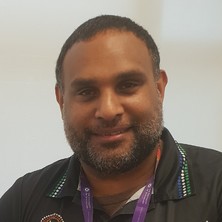
Dr Carl Francia (Saibai Koedal awgadhalayg) is a Torres Strait Islander physiotherapist and cardiovascular epidemiologist whose research focuses on improving cardiovascular health equity for Aboriginal and Torres Strait Islander peoples through Indigenous-led, community-partnered research.
Based at The University of Queensland's Poche Centre for Indigenous Health, Carl leads research examining acute rheumatic fever (ARF), rheumatic heart disease (RHD), cardiovascular health, health services, and implementation of evidence into policy and practice. His work combines epidemiology, health systems research, and community partnership approaches to support prevention, early detection, long-term management, and elimination of RHD.
Carl currently coordinates the NHMRC Synergy-funded iPreventRHD program, a national Indigenous-led research initiative focused on life-course approaches to preventing and managing RHD. He is also a Chief Investigator on an MRFF-funded project exploring cardiovascular health among First Nations women and girls and is involved in community-led climate and cardiovascular health initiatives in the Torres Strait.
Research interests include:
• Cardiovascular epidemiology and population health • Acute rheumatic fever and rheumatic heart disease • Indigenous health and health equity • Implementation science and health services research • Climate change and cardiovascular health • Indigenous Data Sovereignty and community-led research
Carl welcomes enquiries from Honours, Masters, and HDR students interested in Indigenous health, cardiovascular disease prevention, epidemiology, implementation science, health systems research, and community-partnered research.
Faculty of Health, Medicine and Behavioural Sciences
Availability:
Available for supervision
Media expert
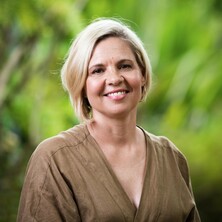
Dr Kristiana Ludlow is a Senior Research Fellow at the Centre for Health Services Research, Faculty of Health, Medicine, and Behavioural Sciences, the University of Queensland, and an Honorary Postdoctoral Fellow at the Australian Institute of Health Innovation, Macquarie University. She completed her Bachelor of Psychology with first class Honours in 2015, her Master of Research in Medicine and Health Sciences in 2017, and her PhD in in Health Innovation in 2020. Dr Ludlow has expertise in co-design, qualitative research and Q methodology. Her research interests include co-designing interventions and digital health tools with end-users, frailty, education, aged care, person-centred care, the role of family caregivers in care, missed care/unfinished care, and care prioritisation. She is passionate about collaborating with consumers, service users and health professionals to improve the delivery of healthcare and mental health services.
Affiliate of Centre for the Business and Economics of Health
Centre for the Business and Economics of Health
Faculty of Business, Economics and Law
Affiliate of Queensland Digital Health Centre
Queensland Digital Health Centre
Faculty of Health, Medicine and Behavioural Sciences
Senior Research Fellow
School of Business
Faculty of Business, Economics and Law
Availability:
Available for supervision
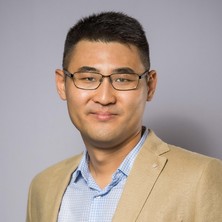
Dr Anton Pak is a Senior Research Fellow in the Centre for the Business and Economics of Health, The University of Queensland. Anton is an applied economist by training and his research interests focus on the behaviour of patients and their choices, utilisation of emergency department services, waiting time modelling, and the economics of digital health. Anton examines empirical questions by utilising health economics theory and concepts and by analysing large panel and cross-sectional datasets (including linked data) using classical econometrics techniques, as well as machine learning methods.
Anton is currently co-leading an Emergency Medicine Foundation funded project “ED waiting time predictions in real-time: development of data acquisition system and performance evaluation of advanced statistical models.”, which is being undertaken in partnership with Princess Alexandra Hospital. Anton has worked extensively on interdisciplinary research with statisticians, mathematical modellers, clinicians, epidemiologists, and public health experts.
Prior to joining the Centre, Anton worked as a Research Fellow in Applied Economics and Data Scientist at James Cook University. His previous experience also includes working as a management consultant and university lecturer.
Anton has a PhD (Economics) from The University of Queensland.
Faculty of Health, Medicine and Behavioural Sciences
Research Fellow/Senior Research officer
School of Nursing, Midwifery and Social Work
Faculty of Health, Medicine and Behavioural Sciences
Availability:
Available for supervision
Dr Lucy Shinners is an Indigenous clinician‑researcher with 25 years of ICU nursing experience and a career deeply embedded in the health system. Her work is grounded in the realities of clinical practice and the experiences of patients, families and communities, shaping a research program that examines how emerging technologies can strengthen safe, high‑quality and culturally responsive care.
Using a sociotechnical lens, Dr Shners studies how artificial intelligence influences the health workforce, clinical decision‑making and the conditions required for safe adoption. Her internationally used SHAIP tool supports health services to understand workforce perceptions of AI and ensures that consumer perspectives remain central to technology design and implementation. She also works with Indigenous health organisations to co‑design technological solutions that reflect community priorities, and has contributed to establishing First Nations leaders’ priorities for AI, an expanding line of work shaping future governance and innovation.
Her research intersects with infection prevention and vascular access safety, where she investigates healthcare‑associated infections, device‑related harm and opportunities to improve surveillance, early detection and patient experience. Increasingly, these domains converge as she explores AI‑enabled approaches for infection risk prediction and monitoring, and evaluates how emerging technologies can enhance clinical governance and system performance.
Dr Shinners’ work provides health services, policymakers and industry with evidence‑based, culturally informed insights into AI, infection prevention and the future of safe care.
Centre Director of Centre for Living Experience Research
Centre for Living Experience Research
Faculty of Health, Medicine and Behavioural Sciences
Affiliate of Queensland Aphasia Research Centre (QARC)
Queensland Aphasia Research Centre
Faculty of Health, Medicine and Behavioural Sciences
Affiliate of University of Queensland Centre for Hearing Research (CHEAR)
Centre for Hearing Research
Faculty of Health, Medicine and Behavioural Sciences
NHMRC Emerging Leadership Fellow
School of Health and Rehabilitation Sciences
Faculty of Health, Medicine and Behavioural Sciences
Availability:
Available for supervision
Media expert
I am a research leader who believes the best science is built with the people it is designed to serve. As a two-time NHMRC Emerging Leadership Fellow and Certified Practising Speech Pathologist, I lead a transdisciplinary team of more than 20 researchers at the University of Queensland. We work in partnership with consumers, clinicians, communities, government, and industry to co-produce interventions, technologies, systems, and standards that drive real change and serve the public good.
My research themes include: (a) Design and implementation of a national audit system to drive quality improvement in post-stroke aphasia services; (b) Development and implementation of methodological standards to improve aphasia research quality and reduce research wastage; (c) Development of technology-enhanced interventions to support self-management, promote equitable access to information and services, and empower people with communication support needs; (d) Development of fit-for-purpose training and resources for aged care workers to help older Australians have better conversations about aged care.
I am Director of the Centre for Living Experience Research and lead the Qualitative Collective, and the School of Health and Rehabilitation Sciences Communication Research and Engagement Theme (CommRET). I am a UQ Research Integrity Advisor.