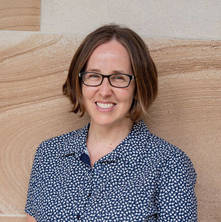
I am a medicinal chemist and postdoctoral research fellow at the University of Queensland, Australia, where I obtained my BSc (Hons) with a major in organic chemistry in 2011. Following this, I worked at the Institute for Future Environments and later the Centre for Tropical Crops and Biocommodities at QUT, where I gained experience in analytical chemistry, as well as molecular biology and genetics. In 2015, I returned to UQ to begin my PhD in the design and synthesis of novel antifungals targeting invasive infection under the supervision of Prof. Craig Williams and Prof. Luke Guddat, which I completed in 2019. Since this time I have worked at the School of Chemistry and Molecular Biosciences as a Postdoctoral Research Fellow under the supervision of Prof. Craig Williams, Prof. Avril Robertson, and now Prof. James De Voss. Broadly, my research interests lie in the pursuit of drug design and development campaigns addressing difficult or under-researched clinical concerns, and in particular, the use of novel bioisosteric approaches to improve drugability and drug efficacy.
More recently, I have developed an interest in Australian mushroom species. Very little recorded knowledge on our endemic mushrooms species exists. My research in this space seeks to characterise the genetic and molecular features of Australian wood rot mushrooms, which are critical players in maintaining and restoring the health of our unique forests ecosystems. With this information we aim to better understand our fungal biodiversity and the ecological roles they play, and to explore their potential as a platform for the identification of new drug molecules.
Jianying Han (PhD) is an Early Career Research Fellow and Natural Product Chemist at the Institute for Molecular Bioscience, specialising in the discovery of structurally novel and biologically active small molecules from unique microbial resources. His research focuses on unlocking the chemical diversity of underexplored microorganisms, particularly rare Actinobacteria and other environmentally derived microbes. Dr Han integrates microbial cultivation strategies, genome-guided discovery, and advanced chemical analysis to activate silent biosynthetic pathways and reveal new classes of natural products. His work employs innovative approaches including high-throughput cultivation matrices, co-cultivation, precursor-directed biosynthesis, and microbial biotransformation to expand the chemical space accessible from microbial metabolites. Through these strategies, He aims to identify new bioactive compounds with potential applications in agriculture, biotechnology, and pharmaceutical discovery, while contributing to the development of Australia’s microbial resources and bioeconomy.
Affiliate Senior Research Fellow of School of Chemistry and Molecular Biosciences
School of Chemistry and Molecular Biosciences
Faculty of Science
Senior Research Fellow
Queensland Alliance for Agriculture and Food Innovation
Availability:
Available for supervision
Dr Natasha Hungerford is an organic chemist and has extensive experience in natural products chemistry. She is a Senior Research Fellow leading the Natural Toxin group within the Centre for Animal Science, Queensland Alliance for Agricultural and Food Innovation (QAAFI) and is based at the Health and Food Sciences Precinct (Cooper's Plains). She joined QAAFI in 2016 and specialises in natural plant toxins and their impacts on livestock and human health, including food safety and regulations. Collaborative projects with government/industry have spanned mitigation of toxin impacts on cattle, to evaluation of toxins in honey (and health impacts). Subsequent examinations of stingless bee honey serendipitously led to the ground-breaking discovery of the rare sugar trehalulose as a major component of these honeys. Dr Hungerford continues to lead and manage projects to address agricultural industry challenges, including reducing methane gas emissions for a carbon neutral beef industry and international stingless bee honey development.
Dr Hungerford achieved her PhD in 1998, through the UQ School of Chemistry and Molecular Biosciences, and subsequently conducted postdoctoral research in natural products chemistry and in synthetic organic chemistry, at the University of Oxford, Australian National University, The University of Sydney, Griffith University and Memorial Sloan-Kettering Cancer Center.
Jeffrey Mak (PhD) is an organic chemist at the Institute for Molecular Bioscience. His publications cover a range of disciplines such as biological and medicinal chemistry, total synthesis, and physical organic chemistry. Dr Mak was selected as a Rising Star of Chemistry by the Australian Journal of Chemistry (2022).
Jeffrey Mak was awarded the Harriett Marks Bursary and a UQ University Medal before undertaking doctorate studies in natural product total synthesis with Prof. Craig Williams. This culminated in the first total synthesis of two caged diterpenes, (−)-neovibsanin G and (−)-14-epi-neovibsanin G. Next, he joined Prof. David Fairlie's group at the Institute for Molecular Bioscience. He is currently active in the fields of chemical biology and drug development. He is recognised for his development of ligands that modulate mucosal associated invariant T (MAIT) cells, which are a newly characterised subset of immune cells important in antibacterial defence (Accounts of Chemical Research, 2021). In 2014, he was part of an Australian team that discovered the identity of the ligands that activate MAIT cells, as published in Nature, playing a key role in the chemical synthesis and characterisation of the unstable and structurally unprecedented ligands (Nature Communications, 2017). He was selected as a CAS SciFinder Future Leader by the Chemical Abstract Service (a division of the American Chemical Society, 2017). In 2018, Dr Mak was chief investigator on a UQ Early Career Researcher Grant for developing new drug leads that target MAIT cells. Other recent awards include RSC Twitter Poster Conference (Chemical Biology) 1st Prize (2018), and a CASS Travel Award (2018).
Dr Mak has lectured in the undergraduate course Advanced Organic Chemistry (CHEM3001, 2017-2023). He has also served as a member of the UQ Cultural Inclusion Council, and as an ACS Wikipedia Fellow to systematically improve the chemistry and scientific content on Wikipedia (2018).
Student projects
Projects in medicinal chemistry, synthesis, and chemical biology are available (depending on lab space) for enthusiastic organic chemistry students at all levels (PhD, Masters, Honours, Undergraduate). These include the design and synthesis of:
Stable analogues of immunostimulating bacterial ligands towards vaccines and anti-cancer immunotherapies
Chemical biology tools for exploring MAIT cell activation
Highly selective histone deacetylase (HDAC) inhibitors as new drug leads
Previous student publications:
Mak JYW* et al. (2024) Potent Immunomodulators Developed from an Unstable Bacterial Metabolite of Vitamin B2 Biosynthesis. Angewandte Chemie, e202400632.
Mak JYW et al. (2021) HDAC7 inhibition by phenacetyl and phenylbenzoyl hydroxamates. Journal of Medicinal Chemistry, 64 (4), 2186-2204.
Awad W, Ler GJM et al. (2020) The molecular basis underpinning the potency and specificity of MAIT cell antigens. Nature Immunology, 21 (4), 400-411.
Ler GJM, Xu W, Mak JYW, Liu L et al. (2019) Computer modelling and synthesis of deoxy and monohydroxy analogues of a ribitylaminouracil bacterial metabolite that potently activates human T cells. Chemistry – A European Journal, 25 (68), 15594-15608.
Queensland Alliance for Agriculture and Food Innovation
Availability:
Available for supervision
Dr Viviene Santiago is a Postdoctoral Research Fellow in the Natural Toxins group within the Centre for Animal Science, Queensland Alliance for Agriculture and Food Innovation (QAAFI) and is based at the Health and Food Sciences Precinct (Coopers Plains). With a robust foundation in organic and analytical chemistry, her research primarily focuses on natural products chemistry from terrestrial, marine, and microbial sources.
Dr Santiago joined QAAFI as a Postdoctoral Research Fellow in 2023. Her current research involves developing a delivery system for bioactive compounds aimed at reducing enteric methane emissions in cattle and exploring atypical sugars in novel foods such as stingless bee honey. Over the years, she has cultivated a keen interest in utilising liquid chromatography-mass spectrometry (LC-MS) and molecular networking techniques to investigate chemical diversity from different sources such as natural toxins in certain plants and atypical sugars in stingless bee honey.
Dr Santiago earned her Ph.D. from The University of Queensland, where her dissertation focused on applying advanced molecular networking techniques, such as the Global Natural Products Social Molecular Networking (GNPS), to explore the chemical diversity of Australian microbes. Her academic journey also includes a Master’s and a Bachelor’s degree in Chemistry from the University of the Philippines – Diliman. These academic experiences have equipped her with a comprehensive understanding of natural products chemistry, enabling her to make significant contributions to both academia and industry.
Queensland Alliance for Agriculture and Food Innovation
Availability:
Available for supervision
Media expert
Professor Heather Smyth helps industry understand what makes food taste great - and how to deliver it consistently. Her research integrates sensory science, flavour chemistry, food structure, and consumer insights to identify the drivers of consumer acceptance and translate these into product innovation and optimisation.
She works across the agri-food value chain - linking primary production, processing and formulation to consumer experience - supporting the development of differentiated, high-value Australian products. Her research spans formulated foods, horticultural produce, meat, seafood and cereals, as well as premium foods including wine, coffee and high-value speciality crops. She has a particular interest in supporting ‘Brand Australia’ by defining and communicating the unique quality, provenance and sensory characteristics of Australian foods. Professor Smyth is a Fellow of the Australian Institute of Food Science and Technology (AIFST).
Professor Smyth is particularly focused on anticipating future consumer needs and supporting industry to respond, guiding the development of products and agri-food systems that align with evolving expectations around quality, health, sustainability and experience.
Queensland Alliance for Agriculture and Food Innovation
Availability:
Available for supervision
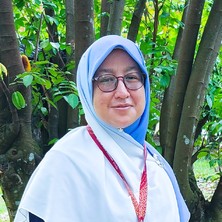
Dr. Norhasnida Zawawi is an Honorary Senior Fellow at the Queensland Alliance for Agriculture and Food Innovation (QAAFI), University of Queensland, Australia, where she contributed to the discovery of trehalulose, a rare low-GI sugar in stingless bee honey. She is currently Head of the Halal Science Laboratory at the Halal Products Research Institute and Senior Lecturer at Universiti Putra Malaysia (UPM), leading the Halal Healthcare and Wellness Research Programme.
She has played key roles in developing honey standards, including contributions to the FSANZ-approved native bee honey standard (2024), and previously served with the Department of Standards Malaysia and Apimondia Asia. Dr. Zawawi is an Editorial Board Member of the Pertanika Journal of Tropical Agricultural Science and a reviewer for high-impact journals such as Food Chemistry and Journal of Apicultural Research.
With over RM 1 million in research funding, 46 Scopus-indexed publications, and an H-index of 20, her work bridges food science, halal innovation, and bee product research.
Dr. Zawawi’s future research is centred on advancing functional foods and halal-certified bioactive products, with a strong emphasis on native bee honey and plant-based milk alternatives. Her goals include:
Exploring bioactive compounds and unique compositions of stingless bee honey, plant seed beverages, and other alternative foods to enhance human health.
Integrating omics technologies to identify molecular markers of efficacy and quality in halal-certified functional foods.
Promoting sustainable innovation in the halal wellness industry through translational research and commercialisation pathways.
Expanding global collaborations to support cross-disciplinary research in food science, nutrition, and halal product development.
These goals reflect her commitment to bridging traditional knowledge with cutting-edge science, enhancing public health, and supporting the growth of the native bee honey and halal food industries worldwide.