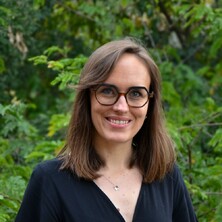
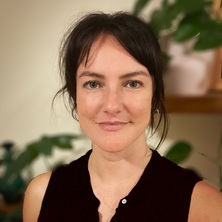
Christina Bornatici is a Postdoctoral Research Fellow working on the ARC Kathleen Fitzpatrick Laureate Project Bringing Equality Home: A New Gender Agenda. Her broader research interests include gender inequality, family dynamics, paid employment and unpaid work, social policy, and quantitative research methods.
Her research examines how gender inequalities are produced, sustained, and challenged across the life course and over historical time, with a particular focus on gender attitudes and the division of labour within couples. She uses longitudinal quantitative and comparative methods to analyse how attitudes, couple dynamics, institutional contexts, and gender norms shape social outcomes.
Christina holds a PhD in Social Sciences from the University of Lausanne, Switzerland. Prior to joining ISSR, she was a researcher at FORS – the Swiss Centre of Expertise in the Social Science.
Affiliate of ARC COE for Children and Families Over the Lifecourse
ARC COE for Children and Families Over the Lifecourse
Faculty of Humanities, Arts and Social Sciences
Postdoctoral Research Fellow
Institute for Social Science Research
Faculty of Humanities, Arts and Social Sciences
Availability:
Available for supervision
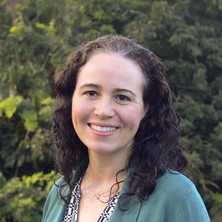
Dr Sandra Buchler is the Mary Lee Family Dynamics Fellow at the ARC Centre of Excellence for Children and Families over the Life Course. She is currently undertaking a research project on the life course trajectories of sole parents in Australia. Sandra holds a PhD in Sociology from the University of Queensland. Her broader research interest lies in the role of gender ideology and labour market stratification in perpetuating gender inequality. Her areas of research and expertise include life course transitions, families, gender inequality, female labour force participation, gender ideologies, education, qualitative evaluation and quantitative research methods. Sandra was a Lecturer at the University of Bamberg from 2011 to 2013 and a Senior Lecturer at the Goethe University Frankfurt (2014 – 2024).
Affiliate of ARC COE for Children and Families Over the Lifecourse
ARC COE for Children and Families Over the Lifecourse
Faculty of Humanities, Arts and Social Sciences
Postdoctoral Research Fellow
Institute for Social Science Research
Faculty of Humanities, Arts and Social Sciences
Availability:
Not available for supervision
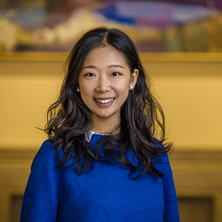
Suri Li is a Postdoctoral Research Fellow at the Institute for Social Science Research, University of Queensland and the Centre of Excellence for Children & Families over the Life Course. Her current work centres on gender inequality and family dynamic across life course and explores the interplay of gender relations in the public and private spheres.
Prior to her current position, she holds a BSc and MSc in Finance, as well as an MA in Public Policy from the University of Edinburgh, the UK and a PhD in Sociology at Trinity College Dublin, Ireland. Her DPhil Thesis focus on the relationship between household resources and child wellbeing in Ireland, Australia and the UK using longitudinal data from birth cohort studies.
Affiliate of Centre for Digital Cultures & Societies
Centre for Digital Cultures & Societies
Faculty of Humanities, Arts and Social Sciences
UQ Amplify Senior Research Fellow
Institute for Social Science Research
Faculty of Humanities, Arts and Social Sciences
Availability:
Not available for supervision
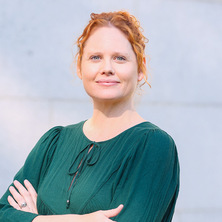
Kiah Smith is a Sociologist with expertise in environment, sustainable development and food justice. With a strong record of international publications on food justice, food security, climate resilience, financialisation, ethical trade, green economy, sustainable livelihoods, gender empowerment and food system governance, Kiah’s work contributes new understandings of the social dimensions of food system transformation at the intersection of multiple crises. Using mostly qualitative, participatory methodologies (such as action research and future scenario planning), her research emphasises the role that civil society plays in transformative policy making that is systems-focused and inclusive of social-ecological perspectives. For example, her ARC DECRA study - Fair Food, Civil Society and the Sustainable Development Goals - examined how civic stakeholders are able to resist, reshape or redefine what a just and sustainable food system might look like, based on co-design and collaboration with civil society, local government, advocacy groups and grassroots food actors (food hubs, community gardens, and food charities) in Australia. This interdisciplinary research agenda can best be summarised as one where ‘food futures’ are closely connected with ‘deep’ sustainability, rights, justice and empowerment, within the growing field of ‘sustainability transitions’.
Other past and present studies include: Multifunctional horticulture - land, labour and environments; Ethical consumption and COVID; Responsible innovation in digital agriculture; Employment policy and indigenous food sovereignty in remote Australia; Financialisation of food and farmland in Australia; Resilience and governance of Australian food systems during crisis; and Mapping civil society, human rights and the SDGs. Kiah has conducted research in Australia and internationally, she has worked with local NGOs (in Africa and Australia), with the United Nations Research Institute in Geneva, and in multidisciplinary research teams spanning the social and natural sciences both here and abroad. Kiah is also a Future Earth Fellow, treasurer of the Australasian Agrifood Research Network, and executive member of the RC40 on Food and Agriculture in the International Sociological Association. Her work at the nexus of academia and policy/advocacy contributes to the growing movement for the right to food in Australia and globally.
Zoe Staines (she/her) is Senior Lecturer and Director of Research in the School of Social Science at The University of Queensland. Her deeply interdisciplinary research spans social policy, sociology, and criminology, examining gender and work, care, welfare conditionality, and (de)coloniality with particular attention to structural injustice. She has published four books (including with leading publishers, Routledge and Policy Press) and dozens of journal articles, 85% of which are in Q1 journals and 21% of which are in journals ranked well within the top 10% globally (e.g., Policy Studies–top 2%, Sociology–top 4%). Her research has received multiple prizes and awards, including an ARC DECRA (2020-2023), the Australian and New Zealand Society of Criminology's 'best book in criminology' prize (2025), the John Mayer best article in Aus Journal of Political Science prize (2022), a Whitlam Institute Research Fellowship (2023), and UQ's competitive Foundation Research Excellence Award (2023).
Zoe is an elected board member for Australia's national Council for Humanities, Arts, and Social Sciences (CHASS), Chair of the Organising Committee for the 2026 Australian Social Policy Conference, Deputy Chair of the Australian Basic Income Lab, and an invited mentor for the International Association for Feminist Economics where she works with a group of eight mentees from across the Asia-Pacific region. She also served as Associate Editor and then Co-Editor of the Australian Journal of Social Issues (Q1) between 2019-2025. Before entering academia, Zoe held senior research and policy roles in government and the non-profit sector, and she remains committed to research with translational impact on policy and practice.
Zoe is recipient of a 2024 Australian Award for University Teaching (AAUT) and a 2023 UQ Citation for Outstanding Contributions to Student Learning, for 'co-creating imaginative, innovative, and engaging new resources for social science students to become effective social change agents'. She teaches into UQ's Bachelor of Social Science, Bachelor of Arts, and Bachelor of Criminology and Criminal Justice, while also sitting on the Bachelor of Social Science Program Committee. Zoe also currently supervises nine PhD students undertaking projects that span welfare conditionality, social policy, social housing, gender and work, work platformisation, artificial intelligence and future of work, and international human rights and law. She has been twice nominated for a UQ School of Social Science Excellence in Research Mentorship award.