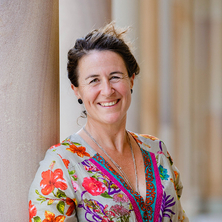
Affiliate of Centre for Digital Cultures & Societies
Centre for Digital Cultures & Societies
Faculty of Humanities, Arts and Social Sciences
Senior Lecturer in Applied Linguistics
School of Languages and Cultures
Faculty of Humanities, Arts and Social Sciences
Availability:
Available for supervision
Media expert
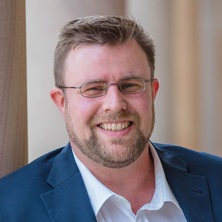
I'm a Senior Lecturer in Applied Linguistics at the University of Queensland, where I use computational methods and large text and speech corpora to study how English is actually used — in everyday conversation, across social groups, and by learners.
My research focuses on features that traditional grammars overlook but that shape real communication: discourse markers (like, you know), general extenders, terms of address, vulgarity, and adjective amplification. I also work in corpus phonetics, particularly vowel production and voice-onset timing in first- and second-language English speakers.
Alongside my research, I hold several roles focused on language research infrastructure:
Director of Research, School of Languages and Cultures, UQ
Director of the Language Technology and Data Analysis Laboratory (LADAL), a free open-access hub for language data science (https://ladal.edu.au/)
Chief Investigator on the Language Data Commons of Australia (LDaCA), a national research infrastructure project (https://www.ldaca.edu.au/)
I'm also an advocate for reproducibility and open science in the humanities and social sciences, and I develop tools and workflows that make text and speech analysis more transparent and rigorous.
Research areas: applied linguistics, corpus linguistics, computational linguistics, sociolinguistics, language variation and change, learner corpus research, corpus pragmatics, reproducibility, digital humanities.
Affiliate of Centre for Digital Cultures & Societies
Centre for Digital Cultures & Societies
Faculty of Humanities, Arts and Social Sciences
Senior Lecturer
School of Languages and Cultures
Faculty of Humanities, Arts and Social Sciences
Availability:
Available for supervision
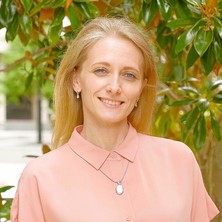
I am Senior Lecturer in the School of Languages and Cultures at The University of Queensland (UQ).
My research interests lie within the broad areas of pragmatics and discourse analysis, particularly, the pragmatics of social interaction (face-to-face and online), identity construction, humour, (im)politeness, getting acquainted and family talk. I have been working with different types of data, including naturally-occurring conversations, reality television discourse, qualitative interviews, corpora and social media.
Currently, I'm working on a research project entitled Family talk in multilingual Australia (AusFamTalk): for more details, see my Research on a Page.
I am Associate Editor in the Journal of Pragmatics, Co-Editor-in-Chief of Mouton Series in Pragmatics (MSP), an Editorial Board member in Advances in (Im)politeness Studies (book series, Springer) and a member of the IPrA Consultation Board.
I regularly review grant applications and I am a member of:
College of Experts, European Science Foundation (from 2021)
Review College, FWO (Research Foundation – Flanders) (2024-2029)
I've always loved languages, maybe because I've always been surrounded by a variety of them. I grew up speaking Lithuanian (lietuvių) and Russian (русский). Then I spent many years studying and then also teaching English and I also have a certificate for teaching Spanish as a foreign language (español como lengua extranjera ELE). Due to my study/research relocations, I can also communicate (sometimes extremely poorly) in Dutch (nederlands), French (français) and Portuguese (português), and at the moment I'm struggling with Modern Greek (ελληνικά) and Japanese (日本語)!
Chilmeg Elden (associate supervisor; with Prof Michael Haugh): The establishment and management of interpersonal relationships in early encounters between Australian and Japanese language exchange partners
Zhiyi Liu (principal supervisor; with Dr Wei-Lin Melody Chang and Prof Ping Chen): The pragmatics of caring: Relating practices in Chinese-speaking families
PhD (completed)
(2026) Chantima Wangsomchok (associate supervisor; with Prof Michael Haugh): Conversational humour in English as a Lingua Franca (ELF) workplaces
(2026) Andrea Rodriguez (principal supervisor; with Prof Michael Haugh): Relational accountability: Insights from categorial work in accounting practices (Transnational family talk in Spanish)
(2025) Nicholas Hugman (associate supervisor; with Prof Michael Haugh): Towards a (micro)theory of conversational humour: The interactional accomplishment of incongruity
(2023) Amir Sheikhan (associate supervisor; with Prof Michael Haugh and Dr Wei-Lin Melody Chang): Conversational humour in intercultural initial interactions in English
MA (completed)
(2026) Danie Wang: “I learned it by myself”: Categories and category relations in parent–young dhild pedagogical sequences
(2025) Sidonie Evans: “That’s what being a dad’s all about”: The construction of the father category and fatherhood in male advice podcasts
(2025) Marlene Valdés Fuentes: “Mamá, por favor, ¿me dejas que me ponga ahí?: A multimodal analysis of a toddler’s requests in Spanish family interactions
(2023) Yeisy Vanessa Maldonado Ramirez: Reporting offence to friends in Spanish: A pragmatic analysis of moral grounds and impolite behaviour
(2023) Shea-Lea Wheeler: A discourse study of fictional self-presentation in Dungeons & Dragons gameplay
(2021) Zhiyi Liu: Constructing identities of a mother and an older sister/adult child: Membership categorization analysis of Chinese-Australian family talk
(2021) Maria Nagao: English teachers of young learners in Japan: A discourse analytical study on identity construction
(2021) Shupei Ni: Relational work in video game live-streaming interactions: Case studies of jocular abuse and joint fantasizing
(2021) Andrea Rodriguez: “Ay no, I do feel exhausted”: Interactional co-construction and interpersonal management of complaints in Spanish phone conversations between friends and relatives
(2020) Duyen Hong Ngoc Luong: Teaching English as a foreign language in Vietnam: Teachers’ and students’ perceptions of the English-only approach and code-switching in the classroom
Sinkeviciute, Valeria and Andrea Rodriguez (under review). The everyday morality of doing ‘being a couple’: Pragmatic and categorial insights into caring in (transnational) family interactions
Edited volume
Sinkeviciute, Valeria, Andrea Rodriguez and Zhiyi Liu (eds). (under contract). Relating, normativity and culture-in-action in family interaction: 'Doing family’ across languages and spaces. Routledge
2022-present: "Family talk in multilingual Australia"
2025 (February-April): "‘Who we are’ in multilingual Australia: Language and identity construction in family talk" funded by a Fellowship at the Leibniz-Institute for the German Language (IDS), Mannheim, Germany
2023: "Talking families into being: Analysing family interactions in Australian multilingual context" funded by Research Fund, School of Languages and Cultures (UQ)
2022: "‘Who we are’ in multilingual Brisbane: Family talk in Spanish and Russian speech communities" funded by HASS Enabler Funding Scheme (HASS EFS), Faculty of Humanities and Social Sciences (UQ)
June 27-June 2 2027: Panel: The pragmatics of doing ‘being siblings’ in talk-in-interaction at IPrA2027, Helsinki, Finland
June 27-June 2 2027: Panel co-organised with Zhiyi Liu and Andrea Rodriguez: The pragmatics of ‘doing family’ in everyday life at IPrA2027, Helsinki, Finland
Sinkeviciute, Valeria and Andrea Rodriguez (eds). (2026). Rules of engagement: Relationships and socialisation practices in family discourse. Discourse Studies 28(4). https://journals.sagepub.com/toc/disa/28/4
Sinkeviciute, Valeria (ed). 2024. Advances in the study of social action in online interaction. Internet Pragmatics https://doi.org/10.1075/ip.7.1
Haugh, Michael and Valeria Sinkeviciute (eds.). 2021. The pragmatics of initial interactions: Cross-cultural and intercultural perspectives. Journal of Pragmatics. https://www.sciencedirect.com/journal/journal-of-pragmatics/special-issue/10DB1P3LJJ8
Sinkeviciute, Valeria (ed.). 2019. The interplay between humour and identity construction. Journal of Pragmatics 152. https://www.sciencedirect.com/journal/journal-of-pragmatics/vol/152/suppl/C
Dynel, Marta and Valeria Sinkeviciute (eds.). 2017. Conversational humour: Spotlight on languages and cultures. Language & Communication 55. http://www.sciencedirect.com/science/journal/02715309/55?sdc=1
Reviews of my monograph "Conversational humour and (im)politeness: A pragmatics analysis of social interaction":
Yang, N. (2022). Book review: Sinkeviciute, Valeria.2019. Conversational Humour and (Im)politeness. Amsterdam: John Benjamins. Journal of Politeness Research 18(2): 451-455. https://doi.org/10.1515/pr-2020-0015
Tsami, V. & Saloustrou, V. (2021). Book review: Sinkeviciute, Valeria.(2018). Conversational Humour and (Im)politeness. Amsterdam: John Benjamins. The European Journal of Humour Research 9(3): 179-183. https://europeanjournalofhumour.org/ejhr/article/view/544/556
Murphy, J. (2021). Review of Conversational Humour and (Im)politeness: A Pragmatic Analysis of Social Interaction, Valeria Sinkeviciute. John Benjamins, Amsterdam/Philadelphia (2019). 274 pp. ISBN 9789027262110 (e-book). Journal of Pragmatics 183: 105-106. https://doi.org/10.1016/j.pragma.2021.07.010
Krendel, A. (2020). Review of Conversational Humour and (Im)politeness. Valeria Sinkeviciute, John Benjamins Publishing Company, Amsterdam/Philadelphia, 2019 (e-book), ISBN: 9789027262110. Corpus Pragmatics 4: 479–483.https://link.springer.com/article/10.1007/s41701-020-00086-w
23-29 June 2026 (with Zhiyi Liu and Andrea Rodriguez) - ‘Doing family’ in talk-in-interaction: Diversity across languages, at the International Conference on Conversation Analysis (ICCA2026), Edmonton, Canada
22-27 June 2025 (with Andrea Rodriguez) - (Cross-)linguistic studies on relationships and socialisation practices in family discourse, at the 19th International Pragmatics Conference, IPrA2025, Brisbane, Australia
9-14 July 2023 (with Andrea Rodriguez) - Membership categorisation and interpersonal relationships in social interaction, at the 18th International Pragmatics Conference, IPrA2023, Brussels, Belgium
12 September 2025 - A pragmatic and categorial analysis of a sibling dispute. Talk at Research Seminar Series at Western Sydney University
11 December 2024 - “Tú quieres que yo te dé un premio?”: Acción social y categorías en las conversaciones familiares. Talk at Seminario Permanente de Análisis de la Conversación (SPAC)
11-13 October 2024 - Online interaction as multimodal accomplishment of the social order. Plenary talk at the 3rd Interactional Conference on Discourse Pragmatics (ICDP-3)
21 January 2021 - Social interaction and identity construction. Guest lecture for postgraduate students at University of Maribor, Slovenia
20 January 2021 - Pragmatics and social action. Guest lecture for undergraduate students at University of Maribor, Slovenia
Journal of Pragmatics / Pragmatics / Journal of Politeness Research / Discourse Studies / Lingua / Language & Communication / Research on Language and Social Interaction / Internet Pragmatics / Discourse, Context & Media / Contrastive Pragmatics / Pragmatics and Society / Gender, Work & Organization / Sociolinguistic Studies / Pragmatics & Cognition / Journal of English for Academic Purposes / The Sociological Review
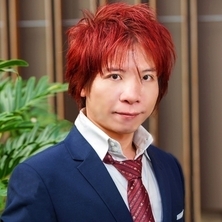
Ken Tann is an in-house linguist at the UQ Business School. He specializes in applying linguistic and semiotic techniques to interdisciplinary research, and helps industry professionals add value to their professions through effective communication. His analytical framework has been applied across media, forensic, education and workplace contexts. He is currently supervising PhD research in marketing, finance and aged care.
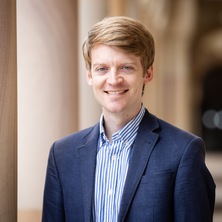
Damon Thomas is a senior lecturer in literacy education. His current research interests include theories of writing, writing development, pedagogy, and assessment, systemic functional linguistics, argumentation, standardised assessment, and classical rhetoric. Damon's research has made important contributions in the following areas:
Understanding the complexities of student writing development
Exploring writing instruction in situ
Unpacking and critiquing the results of Australia's only large-scale test: the National Assessment Program - Literacy and Numeracy.
Damon completed his PhD at the University of Tasmania (UTAS) in 2015. He began lecturing at UTAS in 2014 and was promoted to senior lecturer in 2019. He took up a senior lecturer position at the University of Queensland (UQ) in 2021. Before starting his academic career, Damon taught as a primary school teacher in Tasmania after completing a Bachelor of Education degree with First Class Honours.
Damon was part of a team of Chief Investigators from the University of Tasmania, Deakin University, and La Trobe University that secured a successful ARC Linkage Project in 2015 in partnership with Anglicare Tasmania (LP150100558). The project investigated conditions that improved learning and wellbeing outcomes in regional, low-SES schools in Tasmania and Victoria. Damon oversaw the literacy component across school sites and conducted in-depth case studies in Tasmanian primary and high schools.
Damon is currently a Chief Investigator on an ARC Discovery Project investigating talk for learning in early years mathematics classrooms. Damon's main role is to employ several linguistic frameworks to understand the complexities of student dialogue and features of productive talk.
Damon is a member of several professional organisations including the Australian Systemic Functional Linguistics Association (ASFLA), the Primary English Teaching Association of Australia (PETAA), and the Australian Literacy Educators' Association (ALEA). Damon also translates literacy research for practising teachers via his blog: Read Write Think Learn
Assoc. Prof. Dr. habil Franzisca Weder, Senior Lecturer at the University of Queensland, Brisbane (Australia), is researching, writing and teaching in the areas of Organizational Communication and Public Relations with a specific focus on Sustainability Communication and Corporate Social Responsibility.
She worked as Guest Professor at University of Alabama (USA), University of Eichstätt-Ingolstadt (GER), University of Waikato (NZ), RMIT (Melbourne, AUS) and University of Ilmenau (GER).
Franzisca Weder is Chair of the International Environmental Communication Association (IECA) -> check this out (and become a member :-): https://www.theieca.org
Curious about her work? check…
her eco-culture jamming
her sustainability related conversations with artists and campaigners
one of her papers on Sustainability and Storytelling
one of her books
on Sustainability Communication: THE SUSTAINABILITY COMMUNICATION READER
on integrated CSR Communication: INTEGRATED CSR COMMUNICATION
or (in case you speak German..) on Organizational Communication and PR
or other recent papers:
on how (much) Covid made us more sustainable
on sustainability as cognitive friction https://www.frontiersin.org/articles/10.3389/fcomm.2020.00008/full
or on antagonistic framing and CSR Communication https://www.emerald.com/insight/content/doi/10.1108/CCIJ-01-2018-0014/full/html
or (in case you speak German), her ideas on cultures of sustainability