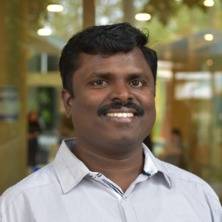
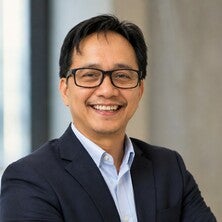
Dr. Pratheep Annamalai is a polymer and nanomaterials scientist with a keen interest in engineering materials for sustainable living. He is an Adjunct Senior Research Fellow at the School of Agriculture and Food Sciences. He has extensive expertise in both translational and fundamental research using nanotechnological tools towards sustainability. Currently, he is interested in alternative proteins and valorisation of agricultural crops and food waste into reactive, building blocks for improving the performance and utility of bioproducts. Thematically, his research focuses on
Food Processing (plant-based food products)
Bioproducts (from agri-food waste)
Sustainable building blocks (for advanced materials).
Before joining UQ, Pratheep studied Chemistry in University of Madras, received PhD in Chemistry from University of Pune (India), then went on to work as a postdoctoral researcher on hydrophobic membranes at the Université Montpellier II (France), and on ‘stimuli-responsive smart materials’ at the Adolphe Merkle Institute - Université de Fribourg (Switzerland).
Upon being instrumental in the discovery of ‘spinifex nanofibre nanotechnology’ and establishing Australia’s first nanocellulose pilot-plant, he has been awarded UQ Excellence awards for leadership and industry partnerships for 2019. Recognising his contribution to the nanomaterials, polymer nanocomposites, polymer degradation and stabilisation regionally and globally, he has been invited to serve as a committee member for ISO/TC229-WG2 for characterisation of nanomaterials (2016), a mentor in TAPPI mentoring program (2018), guest/academic editor for various journals (Fibres, Int. J Polymer Science, PLOS One). He has served as a member of the UQ-LNR ethics committee for reviewing the applications (2017-) and a member of the AIBN-ECR committee in 2014.
Research at the interface between applied statistics and quantitative genetics with extensive publications on the analysis and interpretation of multi-way data from large-scale plant breeding experiments, particularly those involving genotype by environment interaction. Theory and application of pattern analysis - clustering and ordination procedures - appropriate for data collected from plant breeding experiments and/or stored in germplasm databases. Analysis, interpretation and impact of genotype x environment interaction for primary economic plant attributes (yield and quality) and data management, integration and analysis (bioinformatics).
Other Activities:
Past President of the International Biometric Society (2010-11) and the Statistical Society of Australia Incorporated (2005-07). Life member of the Statistical Society of Australia Incorporated (2010). Australian Medal for Agricultural Science from the Australian Institute of Agricultural Science and Technology (1998).
Previous Head of the School of Land, Crop and Food Sciences (2001-10).
Fellow of the Australian Academy of Technological Sciences and Engineering, Australian Institute of Company Directors, Australian Institute of Agricultural Science and Technology and Institute of Statisticians (which has merged with the Royal Statistical Society).
Member of the Board of Trustees of the International Rice Research Institute (2013-15).
Dr Anthony Halog: Expert in Circular Economy, Life Cycle Thinking, and Sustainable Systems
Dr. Anthony B. Halog is a professor at the University of Queensland specialising in circular economy, sustainability engineering, industrial ecology, and life cycle assessment (LCA/LCSA). His current work focuses on designing low-carbon, net-zero, and resource-efficient systems to address climate change, waste reduction, and sustainable development.
Dr. Halog works across energy, materials, food, waste, and policy systems, applying systems thinking, life cycle sustainability assessment, digital twins, and artificial intelligence for sustainability. His research helps governments, industries, and communities make evidence-based decisions that reduce emissions, improve resource efficiency, and avoid unintended environmental impacts.
A core focus of his work is transforming linear value chains into circular value chains, supporting green hydrogen, bioenergy, circular bioeconomy, agricultural waste valorisation, waste-to-energy, and sustainable materials. These solutions contribute to decarbonisation, climate resilience, sustainable supply chains, and the green economy.
Key areas of expertise
Circular economy and industrial ecology
Life cycle assessment and sustainability metrics
Green hydrogen, bioenergy, and clean energy transitions
Sustainable waste management and circular bioeconomy
Systems modelling, AI-enabled tools, and sustainability policy
Dr. Halog collaborates with policymakers, industry partners, SMEs, and Indigenous communities in Australia and internationally to deliver practical climate solutions and support the transition to decarbonised circular economies.
Affiliate of ARC COE for Plant Success in Nature and Agriculture
ARC COE for Plant Success in Nature and Agriculture
Faculty of Science
Principal Research Fellow
Queensland Alliance for Agriculture and Food Innovation
Availability:
Available for supervision
Associate Professor Craig Hardner holds a bachelor in Forest Science awarded by the University of Melbourne, and BSc (Hons) and PhD from the University of Tasmania. Prior to his PhD, A/Prof Hardner worked as a Research Fellow at Swedish Agricultural University 1988-1990 supporting willow breeding for energy production. Between 1996-2007, A/Prof Hardner lead the CSIRO macadamia breeding program. A/Prof Hardner joined the University of Queensland in 2007 and commenced a joint appointment with Queensland Government as a research fellow in horticulture breeding and genetics. He has an extensive collaboration network in horticulture breeding and conservation including domestic and international organisations and Universities.
A/Prof Hardner was lead author on a 128 page review of macadamia genetics and domestication published in 2009 and is curator of macadamia cultivar descriptions for HortScience. He was awarded a Churchill fellowship in 2012 to travel to Hawaii to trace the domestication pathway of macadamia.
Deputy Director of Centre for Biodiversity and Conservation Science
Centre for Biodiversity and Conservation Science
Faculty of Science
Research Fellow
School of the Environment
Faculty of Science
Availability:
Not available for supervision
How do we feed the world, adapt to and mitigate climate change, and conserve biodiversity? My research addresses these critical questions by quantifying the trade-offs between agricultural production, climate change, and biodiversity in tropical agricultural landscapes. A key focus of my work is agroforestry—the strategic integration of trees into cultivated lands. While agroforests are not a one-size-fits-all solution, my research shows that agroforestry, when informed by a quantitative understanding of these trade-offs, can improve biodiversity and climate outcomes without compromising agricultural productivity.
Through fieldwork and conservation planning, and in collaboration with my wonderful colleagues at the Centre for Biodiversity and Conservation Science (CBCS), I aim to understand how agricultural landscapes can be optimized across large geographic areas, to best meet conflicting goals and improve biodiversity outcomes. The goal of this work is to improve sustainability outcomes across West Africa, where tropical forests have been rapidly converted in order to produce 60% of the world’s cocoa.
Affiliate of ARC COE for Plant Success in Nature and Agriculture
ARC COE for Plant Success in Nature and Agriculture
Faculty of Science
Emeritus Professor
Queensland Alliance for Agriculture and Food Innovation
Availability:
Available for supervision
Media expert
Professor Henry, is a graduate of the University of Queensland, B Sc (Hons), Macquarie University, M Sc (Hons) and La Trobe University (Ph D). In 2000 Professor Henry was awarded a higher doctorate (D Sc) by UQ for his work on analysis of variation in plants.
He is currently Professor of Innovation in Agriculture. Before being appointed QAAFI Director (May 2010-September 2020), he was Director of the Centre for Plant Conservation Genetics at Southern Cross University, a centre which he established in 1996. Other previous positions held by Professor Henry include Research Director of the Grain Foods Cooperative Research Centre (CRC) (until 2010) and Research Program Leader in the Queensland Agricultural Biotechnology Centre (until 1996).
Professor Henry’s speciality research area is the study of agricultural crops using molecular tools. He is particularly interested in Australian flora and plants of economic and social importance and has led the way in research into genome sequencing to capture novel genetic resources for the diversification of food crops to deliver improved food products.
Kathleen Herbohn is a Professor in financial accounting. She has a PhD from the University of Adelaide concerned with full cost environmental accounting by organisations managing multiple purpose natural resources. Kathleen's research is concerned with corporate social responsibility for issues such as climate change and tax transparency with a focus on how public data can be used in debt and equity markets to inform stakeholders about organisational performance. Her other research interests include the role of financial accounting in informing capital markets in areas of ambiguity (e.g. impairment, business and operating risk, biological assets) and the accounting profession.
Kathleen's publications have appeared in various journal including Accounting, Organizations and Society, The Journal of Business Finance and Accounting, The Journal of Business Ethics, Accounting and Finance Journal, The British Accounting Review, Accounting Research Journal and The Australian Accounting Review. She is also a co-author on the twelfth, thirteenth, fourteenth, fifteenth and sixteenth editions of the Issues in Financial Accounting textbook and an editor of a book published by Edward Elgar (Cheltenham, UK) on Sustainable Small-Scale Forestry: Socio-Economic Analysis.
Kathleen is currently a member of the Academic Advisory Panel of the Australian Accounting Standards Board and an Associate Editor of the Australian Accounting Review.
Affiliate of Centre for Environmental Responsibility in Mining
Centre for Environmental Responsibility in Mining
Faculty of Engineering, Architecture and Information Technology
Affiliate of Centre for Geoanalytical Mass Spectrometry
Centre for Geoanalytical Mass Spectrometry
Faculty of Science
Professorial Research Fellow
Sustainable Minerals Institute
Faculty of Engineering, Architecture and Information Technology
Availability:
Available for supervision
Media expert
Professor Longbin Huang is a Full Professor and leader of an interdisciplinary research group in Ecological Engineering in Mining. His research focuses on mine waste rehabilitation, ecological engineering, and geomicrobial soil formation, integrating ecological, microbiological, and environmental processes to address sustainability challenges in the mining sector, with influence spanning industry, academia, and policy. Professor Huang leads cutting-edge research in: Geo-microbial ecology, Mineral bioweathering, Microbially and rhizosphere driven soil formation from Tailings Minerals.
Professor Huang's work has advanced nature-based solutions for transforming mine tailings, waste rock, and bauxite residues into sustainable ecosystems. Supported by approximately AUD $23 million in competitive and industry-funded research over the past 15 years, his team has developed and demonstrated innovative rehabilitation technologies with field-scale applications. These include a pioneering technology for the treatment and dealkalization of bauxite residues, which has been commercialized through the University of Queensland startup Bioculum Pty Ltd, and novel approaches for preventing acid mine drainage generation in mine waste materials.
Professor Huang has published over 190 scholarly outputs, including journal articles, conference papers, patents, and book chapters. His research has attracted broad international recognition and has contributed significantly to the advancement of mine waste management, ecological restoration, and sustainable mining practices worldwide.
He is highly experienced in industry-partnered research and translation of knowledge into field-based technologies for tackling large environmental challenges in the mining industry, for example, technologies for tackling global tailings problem. Since 2010, he has led many large and industry-partnered research projects attracting about $23M funding. The research aims to deliver transformative knowledge and practices (i.e., technologies/methdologies) in the rehabilitation of mine wastes (e.g., tailings, mineral residues, spoils, waste rocks) and mined landscapes for non-polluting and ecologically and financially sustainable outcomes. Prof Huang has successfully demonstrated innovative methodology and technology to achieve nature-based outcomes in treating and rehabilitating tailings and waste rocks. Prof Huang’s research program was featured in Rio Tinto’s media releases as one of the four most successful global R&D partnerships in 2024. Prof Huang led the development of the first field-feasible technology to treat and dealkalize alkaline bauxite residues for sustainable rehabilitation. His industry-partnered research was recognised in 2019 UQ’s Partners in Research Excellence Award (Resilient Environments) (Rio Tinto and QAL). Prof Huang is also developing new knowledge and technologies for achieving non-polluting and ecologically sustainable rehabilitation of, for example, coal mine spoils and tailings, Fe-ore tailings, bauxite tailings (from mining bauxite), and Cu/Pb-Zn tailings.
Membership of Board, Committee and Society
Professional associations and societies
2010 – Present Australian Soil Science Society.
2023 – Present AuSIMM
2015 – 2025 Present American Society of Mining and Reclamation (ASMR)
Editorial boards/services
2025 - present: Member of Editorial Board, Energy & Environment Nexus
Affiliate of ARC COE for Plant Success in Nature and Agriculture
ARC COE for Plant Success in Nature and Agriculture
Faculty of Science
Senior Research Fellow
School of Agriculture and Food Sustainability
Faculty of Science
Availability:
Available for supervision
Media expert
I am centre-wide sernior research fellow in the ARC Centre of Excellence for Plant Success in Nature and Agriculture, based here at UQ. Currently I lead a small but growing team of computational biologists focusing on new techniques for predicting complex quantitative traits through causal molecular networks using AI and ML approaches.
Areas of interest:
Machine Learning, AI and high performance computing to learn and exploit functional connectivity in biological data
Gene Expressions networks
Multiplex networks, information propagation and perturbation
Genomic Prediction
Our goal is to aid crop and forestry breeders in selecting parental lines more accurately, which gives us a pathway to improving certain plant species. I also spend time developing new data analysis techniques that are being applied to human disease and conditions such as Autism and substance addiction.
David completed his PhD at Australian National University in 2017, focusing on the genome-wide basis of foliar terpene variation in Eucalyptus. He then undertook a postdoc at Oak Ridge National Laboratory, a US Dept of Energy lab with a focus on big data. After a stint as a staff scientist at Oak Ridge, David arrived at the Centre of Excellence in 2023 in the role of a Senior Research Fellow. He currently supervises 3 PhD students and one full time postdoctoral researcher at UQ.
I am specialised in remote sensing, Earth observation (EO), and geospatial data science. My current research centres on modelling canopy height by integrating GEDI LiDAR and Sentinel-2 satellite data. This work leverages high-performance computing (HPC), cloud platforms, and machine learning (ML) to produce scalable, reproducible workflows for environmental monitoring and decision support.
My current focus includes:
EO-driven canopy height estimation for forest structure and biomass monitoring
Scalable HPC/cloud workflows for processing LiDAR and satellite data
AI/ML applications in EO for ecosystem modelling and climate resilience
Supporting policy and land planning with EO-derived environmental indicators
Previously, I led research on satellite-based grassland curing to improve fire monitoring, addressing inter-satellite variability and product accuracy for use by fire managers. I also contributed to government-led programs focusing on environmental water planning and provide the framework for coordinating the development of flood works.
I collaborate with academic, government, and industry stakeholders nationally and internationally to ensure EO science translates into tools and insights that support environmental monitoring.
RESEARCH INTERESTS Fire Ecology, Restoration Ecology, Ecological Genomics, Wildlife Science, Conservation Biology, Invasive Plants
My research group studies fire ecology and conservation biology. Currently, we are working on:
Using fire to benefit plant biodiversity and manage invasive plants
Predicting effects of changing fire regimes on plant-animal interactions
Native grassland restoration
Biodiversity in agricultural landscapes
We have a special interest in plants and animals living in fire-prone areas because of the fascinating fact that these ecosystems are never static but continually re-shaped by cycles of fire and regeneration. While being grounded in fundamental biology and ecological theory, our research is always aimed at improving knowledge for biodiversity conservation. Our work has applications in fire management, biological invasion and threatened species conservation.
TECHNICAL APPROACHES: POPULATION GENETICS | SPATIAL LANDSCAPE GENETICS | DEMOGRAPHIC SIMULATION MODELLING | STATISTICAL MODELLING OF POPULATIONS & COMMUNITIES | BIOINFORMATICS | SPATIAL ANALYSIS IN R | We also know how to drop a hand-made 1 x 1 m polypipe quadrat on the ground and do good old-fashioned field work.
TEACHING: I teach ecology, wildlife science and environmental science at UQ. My teaching and coordination activities have included Elements of Ecology (AGRC1032), Wildlife Technology (ANIM3018) and People Fire & Environment (ENVM3215 / ENMV7530).
EDITORIAL I am Associate Editor for Wildlife Letters (2023–)
I was Associate Editor for Journal of Applied Ecology for four years (2018–2022).
CURRICULUM VITAE
2019 – current Lecturer, University of Queensland
2018 – 2022 Associate Editor, Journal of Applied Ecology
2018 – 2019 Marie Skłodowska-Curie Research Fellow, Trinity College Dublin
2016 – 2017 Post-doctoral Research Fellow, Trinity College Dublin
2015 – 2016 Post-doctoral Research Assistant, University of Melbourne
My research focuses on soil health in cropping and pasture systems, with particular expertise in soil carbon and soil organic matter dynamics, microbial ecology, and plant–soil interactions. I investigate how agronomic interventions influence soil functional processes and productivity, with the goal of reversing soil fertility decline and building healthier, more resilient soils. This work includes assessing the impacts of tillage, cover cropping, crop rotational diversity, nutrient management, and organic amendments on soil processes, crop development, and long-term system performance.
Teaching and education
I am committed to student‑centred, evidence‑based teaching that prepares graduates for contemporary agricultural practice. My teaching spans introductory to advanced agronomy, with a focus on aligning theory with hands‑on learning through lectures, tutorials, practicals, and field‑based activities. I coordinate and teach into courses including fundamentals of agriculture and cropping systems, and serve as Course Coordinator for an industry placement course, where students undertake structured work‑integrated learning experiences with agricultural and agri‑industry partners.
Across my teaching, I emphasise applied problem‑solving, quantitative skills, systems thinking, and graduate employability. I am particularly interested in curriculum design, constructive alignment, assessment for learning, and integrating research and industry context into agronomy education.