Queensland Alliance for Agriculture and Food Innovation
Higher Degree by Research Scholar
Queensland Alliance for Agriculture and Food Innovation
Availability:
Available for supervision
Media expert
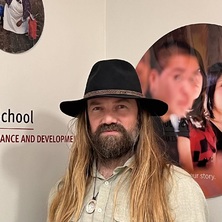
Jacob is a proud Gamilaraay man from QLD and a PhD candidate within QAAFI. Jacob's work focuses on Indigenous food sovereignty as nation-building, looking at the Gamilaraay peoples' governance of thier native grains industry as a case study.
Jacob is taking a systems approach in developing the nascent native grains industry. His priority is setting strong, strategic, sustainable, Indignoeus-led governace to ensure opportunity and benefit remains with Indigenous people. Jacob also has active interests spanning the ecology and conservaion of native grassland species; agronomic knowledge to help support reintroduction of native grains; supply chain and processing of native grains; nutrition and food safety; product development and marketing; and education and engagement.
Jacob's passion also extends to the broader Indigenous food sovereignty movement. Through his work, Jacob collaborates across disparate spaces and advocates for the transformative potential of integrated, circular, sustainable, Indigenous-designed food systems that prioritise human and ecosystem health over profit and production.
Affiliate of Research Centre in Creative Arts and Human Flourishing
Research Centre in Creative Arts and Human Flourishing
Faculty of Humanities, Arts and Social Sciences
Senior Lecturer
School of Communication and Arts
Faculty of Humanities, Arts and Social Sciences
Availability:
Available for supervision
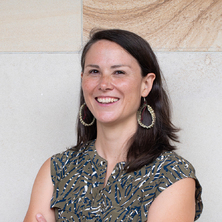
Dominique Chen is a proud Gamilaraay woman and interdisciplinary researcher working at the intersections of relational creative practice, Indigenous studies, urban studies, and land-based practices including agriculture, cultural food growing, and Indigenous food sovereignty.
She is a Senior Lecturer in Art History at UQ's School of Communication and Arts, specialising in Indigenous Art, anti-colonial and reparative praxis, and Indigenous Research Methodologies. Her PhD research examines urban Aboriginal food growing, exploring the potential of culturally-centred, relational creative practices in relvitalising cultural food knowledges, systems, practices, and connections to Country.
Dominique coordinates BlackWords, AustLit's dedicated research resource for Aboriginal and Torres Strait Islander writers and storytellers. She is passionate about people and Country care, and is committed to supporting self-determined, community-engaged and culturally-grounded research within the academy.
Queensland Alliance for Agriculture and Food Innovation
Availability:
Available for supervision
I work at the interface of sensory science and analytical chemistry to understand how food production, processing and environmental conditions influence food quality, provenance, authenticity and consumer perception. My research supports agrifood industries, including meat, seafood and broader food production sectors, by linking measurable chemical changes with sensory attributes such as flavour, aroma, texture and appearance.
I am interested in partnering with producers, processors, industry bodies and technology providers to evaluate how different growing, treatment, feeding, farming, harvesting or processing methods affect product quality and consumer perceptibility. This includes industry trials focused on climate-smart crops, sustainable production systems, improved animal and seafood production methods, provenance claims and product differentiation. My goal is to help translate scientific measurement into practical insights that support innovation, product integrity and consumer confidence.
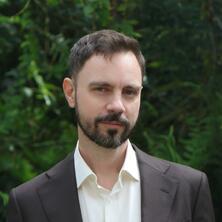
Luke Williams is a proud Gumbaynggirr man of northern NSW. Luke’s research primarily focuses on the traditional uses of native Australian plants with an emphasis on understanding how these plants can contribute to our modern food systems. This includes the promotion of traditional foods in Indigenous communities to improve food security and cultural wellbeing, through to supporting Indigenous businesses to lead the bush food industry, so that the nutritional and environmental benefits attributed to native plants can be enjoyed by all.
Luke’s PhD examined the dietary safety assessment of Australian native foods. He continues this line of research today using a mixed-methods approach that includes working with Traditional Custodians to understand histories of use and cultural context, while supporting consumer safety through the generation of quantitative evidence, such as toxicological endpoints and chemical analyses. Luke is currently expanding this work to develop new laboratory approaches for characterising biological activity and potential toxicity, including emerging non-animal and high-content screening tools to better understand safety and mechanism of action.
Luke sees the growing native foods industry as a culturally appropriate economic opportunity for Indigenous Peoples. However, he also recognises that if these foods and plant-based products are to be made widely available, development must occur under Indigenous leadership and be supported by robust scientific evidence to ensure they are safe for general consumption.