Affiliate of Centre for Digital Cultures & Societies
Centre for Digital Cultures & Societies
Faculty of Humanities, Arts and Social Sciences
Lecturer
School of Communication and Arts
Faculty of Humanities, Arts and Social Sciences
Availability:
Not available for supervision
Media expert
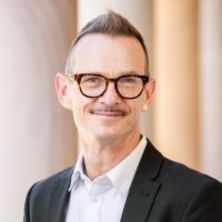
Dr. Alex Beare is a Lecturer in communication at the University of Queensland. His research specialises in subscription video on demand, audience cultures, and media representations of masculinity. Prior to coming to Brisbane, Alex taught at the University of Adelaide with a teaching focus in Digital Cultures, Media Theory, Screen Studies, and Research Methods. Since completing his PhD, Alex has published in journals such as Television & New Media, the International Journal of Communication, and Critical Studies in Television, and has contributed to ABC Radio and The Conversation. He is also the author of The New Audience for Old TV (Routledge, 2024). Alex is currently leading cross-institutional research collaborations relating to the emergence of ‘supportive streaming’ and digital news representations of homophobia in the AFL.
Affiliate of Centre for Digital Cultures & Societies
Centre for Digital Cultures & Societies
Faculty of Humanities, Arts and Social Sciences
Senior Lecturer
School of Communication and Arts
Faculty of Humanities, Arts and Social Sciences
Availability:
Available for supervision
Media expert
Lisa Bode lectures in Film and Television Studies at the University of Queensland. She is the author of Making Believe: Screen Performance and Special Effects in Popular Cinema (Rutgers University Press, 2017), which historicizes screen performance within the context of visual and special effects cinema and technological change in Hollywood filmmaking, through the silent, early sound, and current digital eras, in order to shed light on the ways that digital filmmaking processes such as motion capture, digital face-replacement, and green-screen acting are impacting screen acting and stardom. She has published work in edited collections and journals on the implications of digital filmmaking technologies for synthetic media; screen acting and stardom, the cultural reception of the synthespian, mock documentary performance, and the processes through which dead Hollywood stars are remembered, forgotten, or re-animated. She co-edited the August 2021 special issue of Convergence on Digital Faces and Deepfakes on screen, and is currently writing a monograph for Rutgers University Press called Deepfakes and Digital Bodies.
She is on the editorial board for the series Animation: Key Films / Filmmakers (Bloomsbury Academic, and Animation Studies, the open-access peer-reviewed journal for The Society for Animation Studies. In 2020 she co-founded the Visual Effects Research Network with Associate Professor Leon Gurevitch
Bonnie Evans is a Lecturer in Media Studies at the University of Queensland. Her research has addressed the intersections between feminist politics and screen media, particularly film and television, and she has published on true crime documentary. Her most recent journal article examines rape-revenge film in the context of the Me Too movement, specifically Corale Fargeat's 2017 film Revenge, and her forthcoming monograph The New Feminist Horror will be published by Edinburgh University Press in 2027. Her book will explore aesthetic and thematic links between contemporary feminisms, including the Me Too Movement and recent horror cinema, and the PhD thesis that forms the basis of the book received a UQ Dean's Award for Oustanding HDR Theses in 2022. Bonnie teaches across film and television studies, media studies and digital media and in 2025, she won the HASS Early Career Teaching Excellence Award for her innovations in teaching.
She is interested in supervising HDR research on the following broad topics:
Gender in film, television and media studies
Feminist media studies
Genre film, television and media, particularly horror
Embodied approaches to media studies (phenomenology, affect, feeling and emotion)
Documentary studies, true crime and reality television
Gender and sexual violence in film and television
Feminist movements in media (#MeToo, the fourth wave, second wave etc).
Faculty of Engineering, Architecture and Information Technology
Associate Professor in Design (Built Environments)
School of Architecture, Design and Planning
Faculty of Engineering, Architecture and Information Technology
Availability:
Available for supervision
Media expert
Assoc Prof Fred Fialho Teixeira is an architect, media artist and associate professor at University of Queensland, School of Architecture, Design and Planning and director of the UQ VisLab. He has been working in the fields of computational architecture, biodesign and immersive environments for the last 20 years. He has been awarded the Dean's Fellowship from the University of California where he initiated is PhD and developed innovative biological-based design strategies at the California Nano Systems Institute. He's an alumni of the Architectural Association, School of Architecture (AA) and accredited architect by Royal Institute of British Architects (RIBA) and Portuguese Chamber of Architects (OA) and also practiced for high profile offices such as Zaha Hadid Architects. Presently his research work on bio-design and spatial computation combines the use of mixed reality, advanced manufacturing and biomaterials to enable the next generation of built environments
Memberships
Architectural Association, School of Architecture (UK),Royal Institute of British Architects (UK), Chamber of Architects (PT), Australian Smart Communities Association (AU), UQ CyberResearch Centre
Affiliate of Research Centre in Creative Arts and Human Flourishing
Research Centre in Creative Arts and Human Flourishing
Faculty of Humanities, Arts and Social Sciences
Senior Lecturer
School of Languages and Cultures
Faculty of Humanities, Arts and Social Sciences
Availability:
Available for supervision
Lucy Fraser is a Senior Lecturer in Japanese at the School of Languages and Cultures, St Lucia campus, UQ. Her research interests include depictions of animal-human relationships in fiction, fairy tales and fairy tale retellings in Japanese and English, and ideas of gender--especially the figure of the girl--in contemporary Japanese literature, manga, film, and television. She is also interested in Japan-Australia literary and cultural connections, and editing and translation of literature and literary criticism.
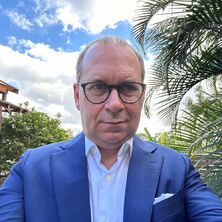
Greg Hainge FAHA is a leading scholar in cultural studies, with expertise spanning French literature, sound studies, film and philosophy. The connecting thread across his diverse research is the interpretation of difficult texts, the work of making sense of what is unfamiliar, complex, or unlike ourselves. For Greg this is more than a scholarly method: he argues that the capacity to engage well with people, ideas and cultures different from our own is among the most important things a society can cultivate, and that nothing builds it more powerfully than learning other languages and understanding other cultures.
As Professor of French and Head of the School of Languages and Cultures at the University of Queensland, Greg is passionate about the importance of languages and knowledge of other cultures in education and is driving a large-scale program of work that seeks to flip the script on the importance of languages, which he sees as a critical skill for the future, never more so than right now given the rise of generative AI.
The author of three monographs and over 50 academic chapters and articles, Greg has also written articles for The Australian, and catalogue essays for major international exhibitions, including ‘David Lynch: Between Two Worlds’ at the Gallery of Modern Art, Queensland and 'Audiosphere' held at the Reina Sofia National Museum in Madrid.
Greg is a Fellow of the Australian Academy of the Humanities and a Senior Fellow of the Higher Education Academy. He is editor in chief of Culture, Theory and Critique and serves on the editorial boards of Contemporary French Civilization, Études Céliniennes, Corps: Revue Interdisciplinaire and French Screen Studies.
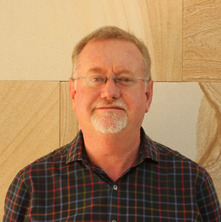
Jacobs is a scholar of film and television. He published on television history and aesthetics and now writes mostly about film. He taught film and television studies at the University of East Anglia, the University of Warwick, and Griffith University. His first book, The Intimate Screen (Oxford University Press, 2000) is a pioneering study of early television drama; his second book Body Trauma TV (British Film Institute, 2003) explores the aesthetics of the hospital drama in relation to the contemporary cultural imagination. His critical account of the television show Deadwood (Palgrave Macmillan/British Film Institute, 2012) is part of the BFI TV Classics series, and he wrote a critical study of its author David Milch for Manchester University Press. More recent works include, Reluctant Sleuths, True Detectives for SUNY Press Horizons of Cinema series and (with Alison Taylor) Nicolas Winding Refn: Neon, Evil, and Expressionism in the same series. With Frances Bonner he wrote, The Persistance of Television: People, Programmes and Practices that Endure for Bloomsbury.
Affiliate of Research Centre in Creative Arts and Human Flourishing
Research Centre in Creative Arts and Human Flourishing
Faculty of Humanities, Arts and Social Sciences
Head of School, Communication and Arts
Faculty of Humanities, Arts and Social Sciences
Availability:
Not available for supervision
Media expert
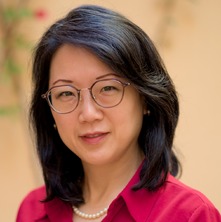
Jenna Ng is a multi-award-winning researcher studying digital media culture, with particular research interests in digital visual culture; creative technologies; AI and algorithmic culture and interactive storytelling. Currently Head of the School of Communication and Arts, she also leads strategic direction, leadership and management of a multi-disciplinary department of over 80 academic staff across art history, drama, journalism, communications, film and television, digital media culture, literature and creative and professional writing.
Ng's publications include the books Understanding Machinima: Essays on Filmmaking in Virtual Worlds (Bloomsbury, 2013), a "Highly Recommended" CHOICE title, and The Post-Screen Through Virtual Reality, Holograms and Light Projections: Where Screen Boundaries Lie (Amsterdam University Press, 2021), which won an Honourable Mention by the British Association of Film, Television and Screen Studies.
Working across a range of media, Ng also produces innovative creative research outputs with practice-based methodologies. She has produced a second screen installation for theatre performance; multimedia scholarship; video essays; and online open-access collaborative initiatives. Her latest project, a creative research website titled "The New Virtuality" (thenewvirtuality.com), won the John Culkin Award for Outstanding Praxis and the Media, Communication and Cultural Studies Association (MECCSA) Practice-Based Research of the Year award, with its video essay winning the Learning on Screen Special Jury Prize (while nominated in the category of "Creative Reuse") and had its debut screening at the InScience Film Festival 2025 in LUX Nijmegen.