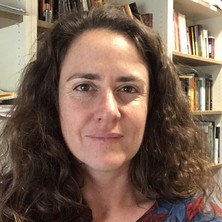
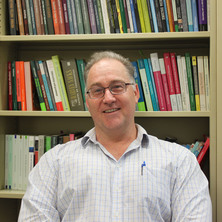
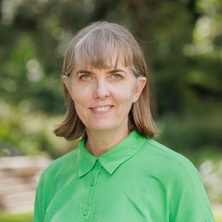
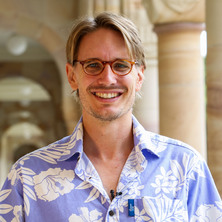
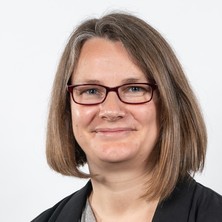
Sally Babidge is a sociocultural anthropologist in the School of Social Science at the University of Queensland and current Director of the Bachelor of Social Science and Master of Development Practice program. Her research is focussed on the social and cultural dimensions of ecological and economic change, especially that driven by the extractives industry and experienced by Indigenous Peoples in Chile and Australia. Current projects consider the political, practical and epistemological problems of 'seeing' harms from large scale mining projects, especially in the 'critical minerals' extraction boom (see a recent short FILM made with research collaborators in Chile), and in relation to groundwater and associated community futures. Ethnographic methodologies and theory that rely on sustained, engaged, and ethical relationships characterise her practice in Australia and Chile and resulting publications.
She has recently published a monograph, "Groundwater Politics: Advanced Extractivism and Slow Resistance" (Berghahn, 2025).
She designs courses for and teaches in the undergraduate major in anthropology, multidisciplinary teaching in theory and methodology for Humanities and Social Science Faculty Honours students. HDR students in anthropology and mixed social science undertake research under her supervision on questions associated with ecological futures, especially water, territorial relations, and in areas of political and environmental anthropology, decolonial, feminist and other critical foci of theory and methodology.
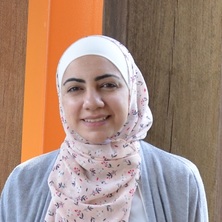
I'm a linguistic anthropologist who studies how communicative events in Indonesia figure in the building and maintenance of social relationships and common knowledge among Indonesians. During my PhD and post-PhD early years my research often involved long periods of fieldwork in Indonesia. As research funding and sabbatical have become scarce, I have increasingly turned to publically available data, such as Indonesian films, newspapers, social media and so on. I have published extensively on my research, including Language, Migration, and Identity: Neighbourhood Talk in Indonesia (Cambridge University Press, 2010); Language and Superdiversity: Indonesians Knowledging at Home and Abroad (Oxford University Press, 2015), Global Leadership Talk: Constructing Good Governance in Indonesia (Oxford University Press, 2020); Reimagining Rapport (Oxford University Press, 2021); Rapport and the discursive co-construction of social relations in fieldwork settings (Mouton De Gruyter, 2019); and Contact Talk: The Discursive Organization of Contact and Boundaries (with Deborah Cole and Howard Manns, Routledge, 2020).
Affiliate of Centre of Architecture, Theory, Culture, and History
Centre of Architecture, Theory, Culture and History
Faculty of Engineering, Architecture and Information Technology
Associate Professor
School of Architecture, Design and Planning
Faculty of Engineering, Architecture and Information Technology
Availability:
Available for supervision
Media expert
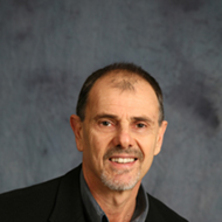
Dr Kelly Greenop is an Associate Professor within the School of Architecture and is co-Director of the Architecture Culture Theory History (ATCH) Research Centres within the School. Her research has focused on work with Aboriginal and Torres Strait Islander people in urban Brisbane, using ethnographic techniques to document the place experiences and attachment, and the importance of architecture, place, family and country for urban Indigenous people. She also conducts research into the intercultural place heritage of the Brisbane region, and the urban cultural history of Brisbane’s suburbs.
Kelly's latest research is in Digital Cultural Heritage, utilising 3D laser scanning of heritage environments and buildings in South East Queensland. She has been working with researchers from ATCH, School of Architecture, CSIRO and site managers at Queensland Parks and Wildlife Service to scan and archive fragile, remote and at risk sites, and research the use of scanning in architectural heritage practice.
With colleagues from AERC she has also conducted research into Aboriginal housing, particularly with respect to crowding and homelessness. Kelly’s research has been supported by grants from the Australian Institute of Aboriginal and Torres Strait Islander Studies (AIATSIS), the Queensland Government, the Australian Federal Government and the Australian Housing and Urban Research Institute (AHURI).
Awards
National Trust (Queensland) John Herbert Memorial Award (best heritage project in the state) for Agency Programs, in collaboration with Queensland Rail, 2018
National Trust (Queensland) Gold Award for Agency Programs, in collaboration with Queensland Rail, 2018
Queensland Premier’s Sustainability Awards for Heritage: ‘Highly Commended’ for Moreton Bay Digital Cultural Heritage Projects, 2014
Best Paper, Society of Architectural Historians, Australia and New Zealand Conference, 2013
Memberships
Member, International Association for People Environment Studies (IAPS)
Member, Society of Architectural Historians (US)
Member, Society of Architectural Historians Australia New Zealand (SAHANZ)
Member, Architectural Humanities Research Association (AHRA)
Member, Association of Critical Heritage Studies Member (Appointed), Australian Institute of Aboriginal and Torres Strait Islander Studies
Affiliate of Research Centre in Creative Arts and Human Flourishing
Research Centre in Creative Arts and Human Flourishing
Faculty of Humanities, Arts and Social Sciences
Associate Professor
School of Social Science
Faculty of Humanities, Arts and Social Sciences
Availability:
Available for supervision
Media expert
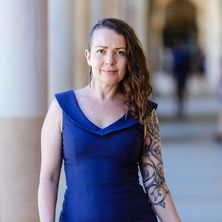
I am a political anthropologist specialising in migration, refugee protection, and religious politics in Southeast Asia, with particular expertise in Malaysia's treatment of displaced populations and Muslim identity formation. My research combines ethnographic fieldwork with policy analysis to understand how states, communities, and individuals navigate questions of belonging, protection, and cultural identity.
Academic Background I hold a PhD in anthropology and sociology from La Trobe University, with previous degrees in Social Anthropology and Politics/International Relations from the University of Kent. I was an Australian Research Council DECRA research fellow (2014-2017) and the Lee Kong Chian NUS-Stanford Fellow on Contemporary Southeast Asia (2023-2024), spending time at the National University of Singapore and Stanford University's Walter H. Shorenstein Asia-Pacific Research Center.
Research Focus My work spans political anthropology, development studies and migration studies, with particular focus on:
Maritime refugees
Refugee and immigration policy in Southeast Asia
Religion-state relations and Muslim identity politics
Urban refugee experiences and protection frameworks
Faith and spirituality in the modern world
Participant observation methodology in sensitive research contexts
Publications and Engagement I currently co-lead the Maritime Refugee Lab and am author of Lives in Limbo: Refugee Place-Making and Survival in Malaysia (Stanford University Press) and Modern Muslim Identities: Negotiating Religion and Ethnicity in Malaysia (NIAS/NUS Press), a textbook introduction to the social sciences, and co-editor of volumes on human security and urban refugees published by Allen & Unwin/Routledge and a recent volume on anthropology as vocation. As a regular media commentator and course director for UQ's MOOC "World101x: Anthropology of Current World Issues," I translate academic research for broader audiences through traditional and digital platforms.
Core Member of Centre for Community Health and Wellbeing
Centre for Community Health and Wellbeing
Faculty of Health, Medicine and Behavioural Sciences
Senior Lecturer
School of Languages and Cultures
Faculty of Humanities, Arts and Social Sciences
Availability:
Available for supervision
Media expert
I am a linguist specialising in intercultural and public health communication, with a focus on the intersections of language, culture, and migration in healthcare. My research centres on co-designing accessible health communication resources with culturally and linguistically diverse (CALD) communities across Asia and Australia. Drawing on linguistic ethnography and co-design approaches, I work to improve community health, infectious disease prevention, and health equity for underserved populations. I am also passionate about collaborating with colleagues across the health and social sciences to address complex public health challenges, and I convene an interdisciplinary health communication research group at the School.
My publications focus on public health communication. A central aim of these publications is to distill complex health communication data into accessible and actionable strategies that deliver tangible benefits to communities and practitioners. In 2025, I published a single-authored book, Health Crisis Communication: Multimodal Classification for Pandemic Preparedness, which examines effective public health communication and offers practical strategies for communicating complex epidemiological concepts to the public.
I am currently leading and collaborating on three major research projects addressing health communication with vulnerable populations across gender, race, migration, and socioeconomic status. These projects aim to develop tailored communication strategies and resources for conveying critical health information effectively.
I co-create a community health outreach program with Myanmar migrant workers in Thailand.
I co-lead an international project that examines clinician–patient communication across Australia, Switzerland, and Thailand.
I lead a travel medicine project in Australia that investigates how health professionals communicate infectious disease risks to vulnerable groups, including children, pregnant women, and older adults with underlying health conditions.
My research has been recognised with several awards, including the 2021 Humanities Travelling Fellowship from the Australian Academy of the Humanities, the 2025 Young Scholar Research Award from the North America Taiwanese Professors’ Association (NATPA), and the 2025 High Distinction Award from the Taiwan Association of Medical History.
I welcome enquiries from prospective PhD, MPhil, and Honours students interested in health discourse, intercultural communication, and migration studies. Please feel free to contact me to discuss potential research projects.
Affiliate of Centre of Architecture, Theory, Culture, and History
Centre of Architecture, Theory, Culture and History
Faculty of Engineering, Architecture and Information Technology
Professorial Research Fellow
School of Architecture, Design and Planning
Faculty of Engineering, Architecture and Information Technology
Availability:
Available for supervision
Media expert
Professor Paul Memmott is an anthropologist and architect and for some decades was the Director of the Aboriginal Environments Research Centre at the University of Queensland (School of Architecture and Institute for Social Science Research). This has now become the Aboriginal Environments Research Collaborative (AERC) within the School of Architecture, Design and Planning. The AERC has provided and continues to provide an applied research focus on a range of topics in relation to Indigenous populations, including institutional architecture, vernacular architecture, housing, crowding, governance, well-being, homelessness, family violence and social planning for communities.
Paul was the first full-time architectural-anthropological consultant in Australia, being principal of a research consultancy practice in Aboriginal projects during 1980 to 2008. His research interests encompass Aboriginal sustainable housing and settlement design, Aboriginal access to institutional architecture, Indigenous constructs of place and cultural heritage, vernacular architecture, social planning in Indigenous communities, cultural change and architectural anthropology.
Paul’s scholarly research output includes over 300 publications (including 11 books and monographs), 215 applied research reports and 40 competitive grants. He has supervised over 50 postgraduate and honours students and has won a number of prestigious teaching awards in Indigenous education (including an Australian Award for University Teaching – AAUT). One of his books, titled 'Gunyah, Goondie + Wurley: Aboriginal Architecture of Australia', received three national book awards in 2008 (Edition 1), including the prestigious Stanner Award from the Australian Institute of Aboriginal and Torres Strait Islander Studies, and then upon the publication of an expanded edition 2 in 2022, another three national book awards.
Paul also has extensive professional anthropological experience in Aboriginal land rights claims, Native Title claims and associated court work since 1980. He has presented evidence and been examined in a variety of Australian courts as an expert witness on a cross-section of Indigenous issues, in addition to the Native Title work.
Awards
AIA Neville Quarry Award, 2015
Best Exhibit, Australian Architectural Exhibit, Venice Biennale 2018 (Team led by Baracco + Wright Architects, Melbourne)
Memberships
Life Member, Academy of Social Sciences (Australia)
I am an ARC Future Fellow at UQ with interdisciplinary research interests spanning social and biological sciences. My research examines how environmental and societal structures shape skeletal growth, metabolism, and health, drawing on technical expertise in skeletal histology applied across bioarchaeology, forensics, palaeontology, biology, and biomedicine. I also offer ad hoc skeletal histology consultation in forensic cases. My research has attracted ~$1.7M in competitive funding as PI (>$3.3M including collaborative grants), including an ARC DECRA and Future Fellowship.
I currently serve as Editor‑in‑Chief of Anthropological Review, Editorial Board Member of Annals of Human Biology, and Vice‑President of the Australasian Society for Human Biology. In 2024, I received the Linnean Society of London’s Trail‑Crisp Medal for contributions to microscopy in natural history.
My career spans academic, government, and industry roles in Australia, the UK, and the Netherlands, including positions at Naturalis Biodiversity Center, the Australian Government, ANU, Imperial College London, and the University of Kent, where I completed my BSc (Hons), PhD, and PGCHE. My previous service includes Treasurer of the Australasian Society for Human Biology and editorial roles with The Proceedings of the Royal Society of Queensland, Scientific Reports, and Anthropological Review.
I work in medical anthropology and critical global health in Indonesia and Fiji. Funded by the Australian Research Council, I am currently researching obstetrics and childbirth experiences in Indonesian maternity care settings. This project is conducted with Dr Els Rieke (Universitas Papua), Associate Professor Najmah (Universitas Sriwijaya), Dr Elan Lazuardi (Universitas Gadjah Mada), with further support from Dr John Wantania and Dr Grace Korompis (Sam Ratulangi University). We are looking at diverse experiences in North Sulawesi, West Papua, South Sumatra, and Central Java.
I also value recent collaborations with researchers at the National University of Singapore (Associate Professor Shefaly Shorey, Alice Lee Centre for Nursing Studies) and Fiji National University focused on maternity care. In 2026, I will begin working with collaborators in Fiji on community-based ethnographic research on maternity care and cultural difference, supported by an ARC Future Fellowship. This involves ethnographic research in health settings in Fiji, looking at interactions and cultural norms to understand local ideals and practices of respectful care.
Prior to this I have worked closely with West Papuan and other international researchers on studies of maternity care and hospital experiences, older women's life stories, and HIV/AIDS. I completed a study with Dr Els Tieneke Rieke and Meki Wetipo on how urban Papuans understand and experience hospital childbirth, as part of an effort to understand dire maternal health conditions in this location (2023, The Asia Pacific Journal of Anthropology). This was published in a special issue on 'Reproducing Life in Conditions of Abandonment in Oceania', I edited with Alexandra Widmer (York University, Canada).
Other recent publications look at competing ideas of respectful maternity care in Singapore, gender inequality in Indonesia's frontier economy, older Papuan women’s narratives of economic agency and survivance (co-authored with Yohana Baransano), and the challenges faced by Indonesian newlyweds. My article in Asian Studies Review, "West Papuan ‘Housewives’ with HIV: Gender, Marriage, and Inequality in Indonesia," was awarded the 2025 Wang Gungwu Prize by the Asian Studies Association of Australia (ASAA).
I am an experienced PhD supervisor in medical anthropology and welcome research students who wish to conduct anthropological research in Indonesia or the Pacific Islands, especially in medical anthropology and hospital ethnography. My teaching experience includes undergraduate and postgraduate courses in medical anthropology (ANTH2250/7250), Pacific anthropology (ANTH2020) and gender (SOCY2050). I also enjoy contributing to Oceania journal as an associate editor.
Dr Stefanie Plage is an ARC DECRA Fellow at the School of Social Science researching health and social care in the context of housing instability. Prior to her DECRA Fellowship, she was a Research Fellow with the Life Course Centre at the School of Social Science at UQ. Her expertise is in qualitative research methods, including longitudinal and visual methods. Her research interests span the sociology of emotions, disadvantage and health and illness. Stefanie has taught introductory and advanced courses in sociology and medical sociology, research design and qualitative inquiry, including the use of software for qualitative research (i.e. NVivo). Her work is multi-disciplinary. She completed her PhD at the Centre for Social Research in Health at The University of New South Wales. In her study she employed a mix of longitudinal qualitative interviews and visual elicitation methods to explore the lived experience of people with cancer.
As part of her DECRA, UQ offers a PhD opportunity. While the DECRA itself is not focussed on Aboriginal and Torres Strait Islander peoples, the project will support a PhD Candidate to address their experiences. The scholarship is advertised here https://study.uq.edu.au/study-options/phd-mphil-professional-doctorate/projects/dying-dignity-caring-people-without-home-end-life . Please reach out to Stefanie directly for more information.
Dr. Maram Shaweesh's is a qualitative researcher. Her interdisciplinary research spans several humanities and spatial disciplines, including architecture, housing adequacy, migration, multiculturalism, everyday encounters in the Australian suburb, urban design, and young people's experiences in urban spaces.
Maram has conducted various research projects focused on housing. For instance, she investigated everyday life in suburban housing as experienced by the Australian Lebanese community. This research utilised social qualitative research methods to explore the relationship between housing design and policy, and the social and cultural context in Australia, such as changing family ideals, household composition, children's wellbeing, parenting values, and social marginalisation. Additionally, Maram has experience working with remote Indigenous communities, having contributed to the "Gunana Futures" research project investigating housing adequacy in Mornington Island.
Maram was also involved in the team working on the Growing Up in Logan project as part of Growing Up in Cities. Collaborating with Logan City Council (CityStudio) and Beenleigh State High School, the project aims to understand adolescents' perceptions of urban space to better comprehend how local environments impact their everyday lives.
As part of her role at the UQ Institute for Social Science Research, Maram worked across several externally and internally funded projects, including Foundation Partner for a National Centre for Place-Based Collaboration (Nexus Centre for place-based collaboration); Targeted Review of Student Equity in Higher Education Programs and System Level Policy Levers; Social Isolation and Loneliness - Research, Analysis and Best Practice; SMBI Community Intiative - Learning by doing; Empowered Communities Partnership Lessons Learned Project; Place-based Approaches to Road Safety; and, Sharing with Friends (co-housing model for older women in Australia).
David Trigger works on the different meanings attributed to land and nature across diverse sectors of society and in different countries. His research encompasses academic studies of how land and sense of place inform the cultural identities of citizens with diverse ancestries. His research is mostly focused on Australian society. In Australian Aboriginal Studies, Professor Trigger has carried out more than 35 years of anthropological study on Indigenous systems of land tenure, including applied research on resource development negotiations and native title claims. In collaboration with colleagues he has in recent years sought understanding of the overlaps and divergences of senses of place among those with Euro-Australian, Asian and Aboriginal ancestries. This work includes projects focused on a comparison of pro-development, environmentalist and Aboriginal perspectives on land and nature. Of particular interest are the issues of ‘nativeness’ and ‘invasiveness’ as understood in both nature and society, with implications for issues of land, cultural identity and environmental management.
Affiliate of Centre for Digital Cultures & Societies
Centre for Digital Cultures & Societies
Faculty of Humanities, Arts and Social Sciences
Senior Lecturer
School of Social Science
Faculty of Humanities, Arts and Social Sciences
Availability:
Available for supervision
Media expert
Mair Underwood is an anthropologist in the School of Social Science who specialises in bodies. In particular she explores how body modifications (such as tattoo or bodybuilding) are used to create, reflect and disrupt social boundaries such as those of gender and class. She is especially interested in the social lives of image and performance enhancing drugs: how they acquire meaning through social interactions and how they alter social interactions.
She also has an interest in assessment practice and has conducted research into assessment techniques that promote student engagement and academic integrity and compiled them into a searchable database called the UQ Assessment Ideas Factory
Mair is passionate about community engagement and engages with the community through her YouTube profile and podcasts such as this one with VPA Australia https://www.vpa.com.au/podcast
Mair Underwood coordinates two courses:
SOSC2190 Human Bodies, Culture and Society
SOCY1060 Gender, Sexuality and Society: An Introduction