Faculty of Health, Medicine and Behavioural Sciences
Director Teaching and Learning of School of Biomedical Sciences
School of Biomedical Sciences
Faculty of Health, Medicine and Behavioural Sciences
Associate Professor
School of Biomedical Sciences
Faculty of Health, Medicine and Behavioural Sciences
Availability:
Not available for supervision
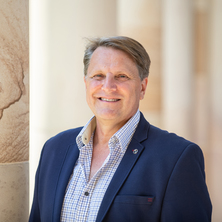
Stephen is a physiologist with expertise in endocrinology whose research examines how hormones regulate metabolism, growth, appetite, and reproduction. He works closely with animal nutritionists and veterinary clinicians on challenges in animal health and production, with current research focused on phosphorus deficiency in Australian cattle.
Alongside his scientific work, Stephen is a recognised educational leader with strengths in teaching strategy, curriculum renewal, and student success. As Director of Teaching and Learning in the School of Biomedical Sciences (2019–2024), he led the School’s response to COVID-19, receiving a UQ Service Excellence commendation and the Faculty of Medicine Academic Leader of the Year award. He has guided the renewal of the UQ Bachelor of Biomedical Science, shaping a future-focused program that strengthens student engagement, belonging, and graduate capability. His leadership has also influenced biomedical science education nationally and internationally through school–university pathways, curriculum reviews, science communication projects, and the development of physiology MOOCs. He was recently awarded a Senior Fellowship of the Higher Education Academy.
Stephen’s educational leadership is grounded in extensive teaching experience. He has taught physiology to more than 40,000 students across biomedical, health, animal, and veterinary programs, earning multiple teaching awards including a national ALTC Citation. His educational research focuses on how students learn complex concepts in physiology, particularly in contexts involving uncertainty and integration. Reappointed in 2025 as Director of Teaching and Learning in Biomedical Sciences, he also serves as interim Deputy Associate Dean (Academic) for Student Experience and Success in the Faculty of Health, Medicine and Behavioural Sciences.
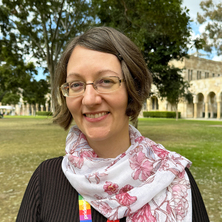
Dr. Laura Grogan is a qualified veterinarian, Senior Lecturer in Wildlife Science and Leader of the Biodiversity Health Research Team (https://www.biodiversity-health.org/) - a collaborative multiple-university research group focused on finding sustainable solutions for the most challenging threatening processes currently affecting biodiversity.
Dr. Grogan has a background in research on wildlife diseases, ecology and conservation. She's particularly interested in investigating the dynamics, relative importance, and impacts of infectious diseases among other threats affecting wildlife across both individual and population scales, to improve conservation management.
While she works across taxa and methodological approaches, her main study system currently involves the devastating amphibian fungal skin disease, chytridiomycosis, where at the individual scale she focuses on the pathogenesis and amphibian immune response to the disease, untangling the roles of resistance and tolerance in defense against infection. At the population and landscape scale she explores mechanisms underlying persistence in the face of endemic infection, focused on the endangered Fleay's barred frog. She also studies population and infection dynamics of chlamydiosis in koala using a mathematical modelling approach, exploring the relative benefits of different management approaches. In addition to working on amphibian and koala diseases, Laura is a keen birdwatcher, wildlife photographer and artist. She supervises projects across wildlife-related fields (predominantly vertebrates).
You can find out more about her research team here: www.biodiversity-health.org.
Dr. Grogan has been awarded around $1.3 million in research funding since 2018. In late 2019 she was awarded an Australian Research Council Discovery Early Career Researcher Award (DECRA; DE200100490), worth $426,742. This project, titled "Understanding infection tolerance to improve management of wildlife disease", commenced in late 2020. Dr. Grogan was identified as one of the four top-ranked science DECRA awardees by the Australian Academy of Science’s 2020 J G Russell Award, and was also recipient of the highest award of the Wildlife Disease Association Australasia Section with their 2019 Barry L Munday Recognition Award.
PhD and Honours projects are now available in the following areas (plus many more areas - please get in touch if you have an idea):
Can frogs be ‘vaccinated’ by antifungal treatment of active infections to develop protective immunity to the devastating chytrid fungus? (Principal Supervisor)
Establishing the conservation status of south-east Queensland’s amphibians - occupancy surveys and species distribution models (Principal Supervisor)
Tadpoles as a reservoir of the lethal frog chytrid fungal disease – measuring sublethal effects on growth, time to metamorphosis and ability to forage (mouthpart loss) (Principal Supervisor)
Impacts of chytrid fungus on the survival of juvenile endangered Fleay’s barred frogs, Mixophyes fleayi, and importance for population recruitment (Principal Supervisor)
Measuring the infection resistance versus tolerance of barred frogs to the devastating chytrid fungal disease to improve management outcomes (Principal Supervisor)
Mapping the impacts of fire-fighting chemicals on endangered frog habitats (Co-Supervisor)
Bowra birds: what do long-term monitoring data reveal about bird communities in the semi-arid region? (Co-Supervisor)
Impacts of fire-fighting chemicals on endangered frogs: Implications for conservation and management (Co-Supervisor)
Queensland Alliance for Agriculture and Food Innovation
Availability:
Available for supervision
Media expert
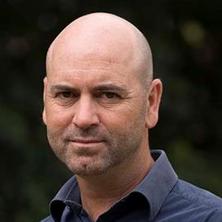
Professor Eugeni Roura is a nutritionist with interests in digestive physiology and gut health, chemosensory science (including taste and smell) and transgenerational mechanisms relevant to chickens, pigs and humans. Eugeni holds a Veterinary and PhD degrees from the Autonomous University of Barcelona and a MPhil and post-doctoral appointments at the University of California (Davis). He developed a sixteen-year career in the feed and food industries before joining The University of Queensland (2010) where he currently leads the Nutrition & Chemosensory Science Group. The main current research areas in animal science include appetite modulation in chickens and pigs, nutrition interventions to boost embryonic/foetal development (including “in ovo”), and strategies to improve sustainability of chicken meat, egg and pork production. In human nutrition the focus is around food allergies and appendicitis. In 2011, Eugeni joined the UQ School of Biomedical Sciences as an Affiliated Lecturer. Since 2010 he has graduated 20 PhD students in Australia, published more than 100 peer-reviewed publications, and has been invited as keynote speaker to more than 50 national and international scientific meetings. He is currently serving as President of the World’s Poultry Science Association (Australia branch), Director of the AgriFutures Chicken Meat Consortium, and member of the National Committee for Nutrition (Australian Academy of Sciences), R&D and Education Committees of the Australasian Pork Research Institute Ltd., and the Federation of Oceania Nutrition Societies. He was the recipient of the Nutrition Society of Australia 2024 Medal award.
Faculty of Health, Medicine and Behavioural Sciences
Affiliate Senior Research Fellow of Queensland Brain Institute
Queensland Brain Institute
Faculty of Health, Medicine and Behavioural Sciences
Availability:
Available for supervision
Media expert
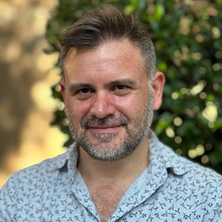
I am a biologist interested in the general question of how changes in developmental processes can lead to evolutionary variation and origin of complex traits (such as neural circuits). I study development and evolution of the brain of mammals. My doctoral thesis studied brain regions involved in olfactory and pheromonal communication in mammals. I discovered several events of parallel co-variation of sensory pathways in distantly related species sharing similar ecological niches, as cases of ontogenetic and phylogenetic plasticity. Currently, I study development and evolution of neocortical circuits by following two main lines of research: one aims to determine how early neuronal activity emerges during development and help shape brain connections, and the other one aims to understand what developmental processes led to evolutionary innovations in the mammalian brain. My research combines molecular development (electroporation, CRISPR), transcriptomics, sensory manipulations, neuroanatomy mapping (MRI, stereotaxic tracer injections, confocal and image analysis), optogenetics, and in vivo calcium imaging (multiphoton and widefield) in rodent pups and marsupial joeys.