Deputy Associate Dean Research (Research Partnerships)
Faculty of Science
Affiliate of Australian Centre for Ecogenomics (ACE)
Australian Centre for Ecogenomics
Faculty of Science
Availability:
Available for supervision
Media expert
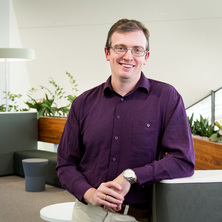
Prof David Ascher is an NHMRC Investigator Leadership Fellow and Deputy Associate Dean (Research Partnerships) in the Faculty of Science at The University of Queensland. He also serves as Deputy Director of the Australian Centre for Ecogenomics and Head of Computational Biology & Clinical Informatics at the Baker Heart and Diabetes Institute. Internationally, he sits on scientific advisory boards for A*STAR (Singapore), Fiocruz (Brazil) and the Tuscany University Network (Italy), and has been recognised with major honours including the Royal Society of Chemistry Horizon Prize.
A global leader in computational biology and personalised medicine, Prof Ascher develops advanced AI- and structure-based approaches to understand how genetic variation alters protein structure, function, and clinical outcomes. His group has built one of the world’s most widely used platforms for interpreting coding variants—over 120 computational tools, accessed more than 12 million times per year from 120+ countries. These tools underpin clinical diagnostics, guide drug development pipelines, and support international public-health responses to antimicrobial resistance and emerging infectious diseases.
His research has led to new molecular insights across infectious disease, rare disease, oncology and cardiometabolic health, and has been translated directly into practice—informing WHO policy, enabling early resistance detection in tuberculosis and leprosy, stratifying patients with hereditary cancers, and supporting vaccine design with partners including Pfizer. Many of his methods are embedded in globally used resources such as Ensembl VEP, PDBe, and the EMBL-EBI KnowledgeBase.
Prof Ascher has a longstanding commitment to interdisciplinary leadership and capability-building across UQ. As Director (Strategy) of the Biotechnology Programs and later as Deputy Associate Dean (Research Partnerships), he has driven initiatives to transform UQ’s biotechnology education, grow industry-embedded training, expand international partnerships, and diversify research income. He has led the development of UQ’s biotechnology–industry placement ecosystem, initiated new professional development programs adopted across multiple Faculties and Institutes, and established major collaborations with government, industry and global research organisations.
He has published more than 250 peer-reviewed papers (over half as senior author: FWCI 2.7), secured more than $40M in competitive research funding, and supervised over 60 HDR students who now hold leadership positions in academia, industry and government. His work appears in leading journals including Nature, Nature Genetics, Science, PNAS and Nature Microbiology, and is cited in over 100 policy documents and 40 patents.
Prof Ascher holds degrees in Biotechnology, Biochemistry, Structural Biology and Law. His research career has spanned Adelaide, Melbourne, Cambridge and Brisbane. After his PhD with Professor Michael Parker, he worked with Sir Tom Blundell at the University of Cambridge, where he led programs in structure-guided drug discovery and protein–protein interaction targeting. He established his independent laboratory at Cambridge and then at the University of Melbourne/Bio21 Institute, before moving to the Baker Institute in 2019 and joining UQ in 2021.
My current focus is on the application of deep learning models that read DNA sequences and predict cell type specific gene expression, chromatin accessibility, and transcription factor binding to human genetics. Specially, I am interested in 1) how well do current models trained on genetic variation across genomes generalize to genetic variation between individual genomes? 2) Can these models predict causal variants at loci that are associated with human traits? And if so, to what degree? 3) Can we utilize these models to link DNA sequences to the effect of genetic variants on human traits and disease?
Australian Institute for Bioengineering and Nanotechnology
Availability:
Available for supervision
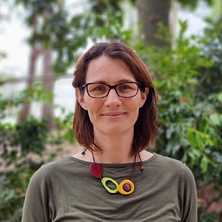
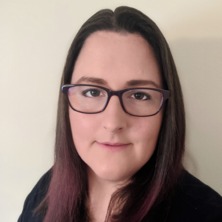
Helen Gunter is a Senior Postdoctoral Fellow at the Australian Institute for Bioengineering and Nanotechnology. Dr. Gunter is partnering with Oxford Nanopore Technologies and the BASE Facility to benchmark a comprehensive test of mRNA vaccine quality. Helen has authored 25 publications, with 10 as first author, one as senior author, and 14 as middle author. She has published in influential journals such as Nature, Nature Communications and Translational Psychiatry. Helen’s work has attracted >$2M in funding from Oxford Nanopore (2023), the Genome Innovation Hub (2021), Deutesche Forschungsgemeinschaft (2011), a Zukunftskolleg Fellowship (2008) and from the University of Konstanz (2013).
Research Fellow: Microbial Genomics and Bioinformatics
Frazer Institute
Faculty of Health, Medicine and Behavioural Sciences
Availability:
Available for supervision
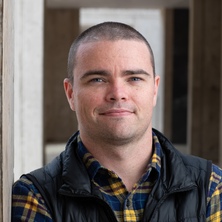
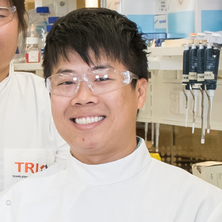
I am a bioinformatician developing computational methods and open-source software that make pathogen genome sequencing faster, cheaper, and more clinically useful. My research applies long-read (Oxford Nanopore) and short-read whole-genome sequencing to detect antimicrobial resistance, reconstruct microbial genomes, and trace how infections spread.
A core part of my work is building widely used, open-source bioinformatics tools and reproducible analysis pipelines that researchers and laboratories around the world rely on. I also contributed to the World Health Organization catalogue of tuberculosis drug-resistance mutations, a global reference for genome-based diagnosis.
Working closely with clinical and public-health laboratories, I help translate these methods out of research and into real diagnostic and outbreak-response settings — including sequencing pathogens directly from patient samples, without the delays of laboratory culture.
My areas of expertise include:
- Pathogen genomics and genomic epidemiology
- Antimicrobial resistance and drug-resistance prediction
- Long-read sequencing, genome assembly, and metagenomics
- Culture-free, direct-from-sample diagnostics
- Open-source scientific software development (Rust and Python)
You can explore my open-source tools on my GitHub profile (https://github.com/mbhall88).
Faculty of Health, Medicine and Behavioural Sciences
Affiliate of Ian Frazer Centre for Childhood Immunotherapy Research
Ian Frazer Centre for Children's Immunotherapy Research
Faculty of Health, Medicine and Behavioural Sciences
Affiliate Senior Research Fellow of Frazer Institute
Frazer Institute
Faculty of Health, Medicine and Behavioural Sciences
Affiliate of Child Health Research Centre
Child Health Research Centre
Faculty of Health, Medicine and Behavioural Sciences
Availability:
Available for supervision
Media expert
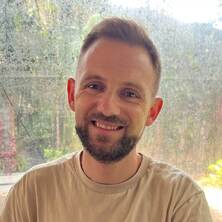
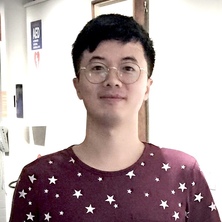
Associate Professor Kelvin Tuong is an NHMRC Emerging Leadership Fellow and Deputy Director and group Leader of the Ian Frazer Centre for Children’s Immunotherapy Research (IFCCIR), Child Health Research Centre. He is interested in single-cell analysis of immune cells and harnessing adaptive immune receptors for understanding immune cell development and function in health and in cancer.
A/Prof Tuong was born and raised in Singapore and moved to Brisbane, Australia, after completing national service in Singapore and obtaining a Diploma in Biomedical Laboratory Technology (Ngee Ann Polytechnic).
A/Prof Tuong was originally trained as a molecular cell biologist and gradually transitioned into bioinformatics during his post-doctoral training. He has been very prolific for an early career researcher, having published >70 articles since 2013, with nearly a third of them as first/co-first or last author and has a stellar track record of pushing out highly collaborative work in prestigious journals including Nature, Cell, Science, Nature Medicine, Nature Biotechnology J Exp Med etc. He has the rare combination of having excellent laboratory and bioinformatics skill sets which provide him a strong command of both fundamental immunology and computational approaches.
A/Prof Tuong completed his undergraduate Bachelor's degree in Biomedical science with Class I Honours, followed by his PhD in macrophage cell biology and endocrinology at UQ (Prof Jenny Stow lab and Emiritus Prof George Muscat lab, IMB, UQ). He then went on to a post-doc position with Emiritus Prof Ian Frazer (co-inventor of the Gardasil cervical cancer vaccine, UQ Frazer Institute, Translational Research Institute) where he worked on HPV immunology, cervical cancer and skin cancer. In his time in the Frazer lab, he developed an interest in bioinformatics analyses as a means to tackle and understanding immunology problems in health and disease. He then moved to the UK and joined Prof Menna Clatworthy's lab at the University of Cambridge and Prof Sarah Teichmann's lab at the Wellcome Trust Sanger Institute. He has focused his interests on single-cell analyses of tissue immune cells, including T and B cells and their specific receptors (TCR/BCR). He has developed bespoke bioinformatics software, including one tailored for single-cell B Cell Receptor sequencing analysis, Dandelion, which he used in one of the largest combined single-cell transcriptomic, surface proteomic and TCR/BCR sequencing dataset in the world, published in Nature Medicine, and more recently in Nature Biotechnology where we introduced a TCR-based pseudotime trajectory analysis method.
A/Prof Tuong is now leading the Computational Immunology group at the IFCCIR and his lab is focused on investigating how pediatric immunity is perturbed during cancer at the cellular level and how this information can be used for creating novel warning systems for children with cancer. For potential students/post-docs/trainees interested in joining the team, please contact A/Prof Tuong at z.tuong@uq.edu.au.