Affiliate of Centre for Digital Cultures & Societies
Centre for Digital Cultures & Societies
Faculty of Humanities, Arts and Social Sciences
Lecturer in Digital Media and Cultures
School of Communication and Arts
Faculty of Humanities, Arts and Social Sciences
Availability:
Available for supervision
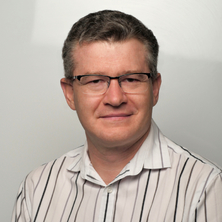
I am a media studies scholar studying current smart technologies and consequent ontological conundrums we face as these machines become smarter than us at telling how things are within ourselves and around our worlds. My previous research on the Internet of Things (IoT) was about these hidden arrangements of things in our background that machines constantly remind us of as those we should always be a little paranoid of, and how this normalized paranoia leads us to accept the IoT as a new smarter technique of self-governance. My first book Internet-ontologies-Things: Smart Objects, Hidden Problems, and their Symmetries (2023) argues these popular narratives of smart lives as our strategic and speculative responses to such common feelings: "Something is there, so embedded in our bodies, homes, and neighbourhoods. We feel it but cannot grasp it!"
Digital ontology is the term that best describes the nature of my research but it's less relevant to a pure philosophical inquiry about how things are in the world. Ontology in my practical and critical concern is rather related to the new capitalist ideology (or realism) that runs media industries’ current speculative economy. So, my critical reading of the ontological turn in humanities and social sciences focuses on its strategic dimension. How does this turn draw our attention to the things that our too-human perception always fails to pay the right attention to? How does this in turn mobilize our constant speculation about things beyond our perceptions and control, not only as the inexhaustible source of our anxieties but also as the inexhaustible resource of cultural production?
My current research interests include Digital Ontology, New Materialism, Speculative (Capitalist) Realism, Quantum Physics as Cultural Imagination, Science and Technology Studies, Actor-Network Theory, French Philosophers (e.g. Foucault, Deleuze, and Badiou), Eco- and Geo-philosophy/criticism, new materialist film and videogame studies.
Professor Pierre Benckendorff is an award-winning researcher specialising in visitor behaviour, technology enhanced learning and tourism. He has held several teaching and learning leadership positions at The University of Queensland and James Cook University in Australia. His experience includes coordinating a team of teaching and learning staff, program quality assurance and accreditation, and curriculum reviews of undergraduate and postgraduate coursework programs in business, tourism, hospitality and event management. He has developed and taught undergraduate and postgraduate courses in introductory tourism management, international tourism, tourist behaviour, tourism and leisure futures, tourism transportation, tourism operations, tourism technologies, tourism analysis, business skills and marketing communications.
Pierre has been actively involved in a number of national teaching and learning projects totalling close to AUD 1 million in grant funding. In 2007, he received a national Carrick citation for outstanding contributions to student learning. Pierre was part of the national team that developed the Learning and Teaching Academic Standards for Tourism, Hospitality and Events and has continued to co-lead efforts to embed and measure these standards under the auspices of CAUTHE. He is currently the co-chair of knowledge creation for the BEST Education Network and in this capacity, has worked with the World Travel and Tourism Council to edit a book of international cases based on Tourism for Tomorrow award finalists and winners. He is the co-editor of the Handbook of Teaching and Learning in Tourism. Pierre serves regularly as an external reviewer of tourism programs in Australia and overseas institutions.
His research interests include visitor behaviour, tourism information technologies, and tourism education and training. He has authored over 80 publications in these areas in leading international journals and is a regular speaker at tourism research conferences. He is on the editorial board of several leading tourism journals and is a regular reviewer of papers. He has also co-authored one of the leading textbooks on tourism and information technology. He has served as a judge for the Queensland Tourism Awards as well as the Australian Tourism Awards. His passion for travel and tourism has taken him to some of the world’s leading theme parks and airports, the major cities of Europe and North America, the African Savannah and the bustling streets of Asia. He has also travelled extensively throughout Australia and New Zealand.
Affiliate of Research Centre in Creative Arts and Human Flourishing
Research Centre in Creative Arts and Human Flourishing
Faculty of Humanities, Arts and Social Sciences
Professor
School of Social Science
Faculty of Humanities, Arts and Social Sciences
Availability:
Not available for supervision
Media expert
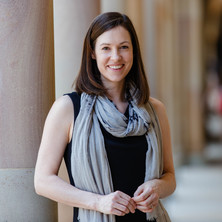
Rebecca Olson is Professor of Sociology at the University of Queensland, cutting-edge translational qualitative researcher, mentor and award-winning educator with expertise in the sociologies of health and emotions. Her work advances the human aspects of care. It empowers students, teachers and researchers to foreground social and emotional aspects in addressing emerging health challenges through collaborative, interdisciplinary research with in-built impact. As Co-Founder and past Director of SocioHealthLab, she leads an interdisciplinary collective of researchers, health professional educators and practitioners interested in doing health and healthcare differently: more socially aware, more relational, more inclusive and more just. As Director of Teaching and Learning in the School of Social Science, she prioritises collaborative, reflexive, creative and emotions-centred practices in higher education. As Joint Editor-in-Chief of Health: An Interdisciplinary Journal for the Social Study of Health, Illness and Medicine, Olson fosters dialogue across theory-curious clinician researchers and critical health social scientists. With 100+ scholarly publications – as well as news media and creative video productions – Rebecca is a prolific contributor to public debate. With research interests spanning medicinal cannabis and health professions education to climate anxiety, Olson is internationally renowned for bringing sociological insight to complex challenges related to emotions, wellbeing, healthcare and caregiving.
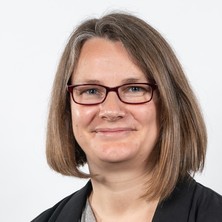
Dr Stefanie Plage is an ARC DECRA Fellow at the School of Social Science researching health and social care in the context of housing instability. Prior to her DECRA Fellowship, she was a Research Fellow with the Life Course Centre at the School of Social Science at UQ. Her expertise is in qualitative research methods, including longitudinal and visual methods. Her research interests span the sociology of emotions, disadvantage and health and illness. Stefanie has taught introductory and advanced courses in sociology and medical sociology, research design and qualitative inquiry, including the use of software for qualitative research (i.e. NVivo). Her work is multi-disciplinary. She completed her PhD at the Centre for Social Research in Health at The University of New South Wales. In her study she employed a mix of longitudinal qualitative interviews and visual elicitation methods to explore the lived experience of people with cancer.
As part of her DECRA, UQ offers a PhD opportunity. While the DECRA itself is not focussed on Aboriginal and Torres Strait Islander peoples, the project will support a PhD Candidate to address their experiences. The scholarship is advertised here https://study.uq.edu.au/study-options/phd-mphil-professional-doctorate/projects/dying-dignity-caring-people-without-home-end-life . Please reach out to Stefanie directly for more information.