Director of Research of School of Biomedical Sciences
School of Biomedical Sciences
Faculty of Health, Medicine and Behavioural Sciences
Affiliate of Centre for Motor Neuron Disease Research
Centre for Motor Neuron Disease Research
Faculty of Health, Medicine and Behavioural Sciences
Affiliate of Centre for Cardiovascular Health and Research
Centre for Cardiovascular Health and Research
Faculty of Health, Medicine and Behavioural Sciences
Associate Professor
School of Biomedical Sciences
Faculty of Health, Medicine and Behavioural Sciences
Availability:
Available for supervision
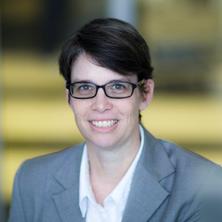
I am an Associate Professor in the School of Biomedical Sciences (SBMS) at The University of Queensland, where I teach physiology and lead research that explores how cells respond to stress, injury and disease. My work aims to better understand the molecular and cellular processes that influence health and disease, with a particular focus on areas relevant to cancer, heart disease, neurological conditions and emerging cell-based therapies.
I completed my doctorate at the University of Western Australia in Biochemistry and Cell Biology, where I studied how heart cells respond to signals that can drive abnormal tissue growth. I then undertook postdoctoral training in Singapore at the Institute of Molecular and Cell Biology, part of A*STAR, where my research expanded into understanding how the cytoskeleton, internal structures of cells, help control development and disease.
After returning to Australia, I was supported by national fellowships from the NHMRC and ARC, which enabled me to establish an internationally connected research program. My research brings together cell biology, imaging, computational approaches and emerging technologies to uncover how cells make critical decisions, including whether to survive or die under stress.
Alongside my research and teaching, I contribute to leadership within SBMS as Director of Research and support major research infrastructure initiatives across the Faculty of Health, Medicine and Behavioural Sciences (HMBS) as Academic Director of Research Infrastructure. I also serve on steering committees for UQ’s Viral Vector Core (VVC) and the Centre for Cardiovascular Health and Research (CCVHR), helping to strengthen the platforms and partnerships that support biomedical discovery and translation.
Faculty of Health, Medicine and Behavioural Sciences
Availability:
Available for supervision
Media expert
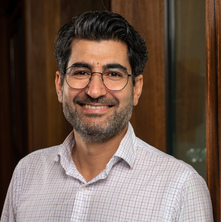
Dr Abbas Shafiee is leading a multidisciplinary program in Regenerative Dermatology and Biofabrication. His research integrates stem cell biology, organoid technology, and bioengineering to develop advanced human models and regenerative therapies for skin repair and disease.
Dr Shafiee completed his PhD in stem cell biology, discovering a previously unknown vascular stem cell population, termed the Meso-Endothelial Bipotent Progenitor, and mapping its molecular signatures (Stem Cell Reports 2018). This seminal discovery advanced the understanding of human vascular development and regeneration.
He subsequently joined Distinguished Professor Dietmar Hutmacher’s group, where he developed humanised tissue-engineered bone and tumour models that mimic cancer metastasis and tumor–stroma interactions. These models (International Journal of Cancer (2018), Biomaterials (2018, 2020), and Bone Research (2019), Acta Biomaterialia (2020), Bone (2022)) provided unprecedented insights into human-specific cancer biology and preclinical drug testing.
Dr Shafiee joined Metro North Health (MNH) in 2020 to lead a research program and develop, implement, and evaluate the applications of 3D printing, scanning, cell therapies, and biofabrication technologies in skin wound settings, and dermatology research. His team has developed vascularised and immune-integrated skin organoids and 3D-printed bioengineered grafts that accelerate wound closure with minimal scarring (Biomaterials 2021; Advanced Healthcare Materials (2022; 2025); Small 2024; Burns & Trauma 2025). These breakthroughs underpin new patient-specific skin disease models, and drug screening platforms (Acta Biomaterialia 2025). He is the lead inventor on an international patent protecting an Optimized Method for Generating Human Skin Organoids (WO/2025/097221), which forms the foundation for emerging commercial and translational partnerships. This body of work led to the establishment of the International Consortium for Organoid Research in Dermatology, a global network accelerating discovery and translation in skin biology, rare genetic skin diseases, and regenerative dermatology.
Dr Shafiee has secured >AUD $2.4M as Chief Investigator (>AUD $1.1M as CIA) in competitive research funding from national, international, philanthropic, and industry-supported schemes. Dr Shafiee has supervised more than ten PhD, Masters, honours students and contributed to multiple professional, editorial, and scientific leadership roles. He has authored over 88 peer-reviewed publications (>5,500 citations, h-index 40) and delivered more than 50 invited, keynote, and plenary presentations internationally. He serves on multiple professional and editorial boards, including Australian Wound & Tissue Repair Society (AWTRS), Burns & Trauma, and Engineered Regeneration. In recognition of his pioneering contributions to regenerative medicine and science communication, he has received multiple honours, including the 2024 Frazer Institute Rising Star Award, the 2025 AWTRS EMCR Award, and the 2025 Queensland Young Tall Poppy Science Award, and selection as a 2026 TEDx speaker, recognising his leadership in translating complex science to global audiences.
He actively engages with the media, schools, and community programs to inspire future scientists and raise public awareness of regenerative medicine and organoid technologies. His outreach has reached millions nationwide through major media coverage (e.g., The Australian, 7NEWS, ABC NEWS) .
Research areas:
Human iPSC-derived skin organoids and skin-on-chip models
Vascularization and immune integration in skin tissue engineering
Rare genetic skin diseases and personalized regenerative therapies
Translational biofabrication and wound healing technologies
Organoid-based preclinical drug discovery platforms
Honours, Masters, and PhD opportunities are available for motivated students interested in regenerative dermatology, biofabrication, and organoid biology.