Affiliate of Queensland Alliance for Environmental Health Science
Queensland Alliance for Environmental Health Sciences
Faculty of Health, Medicine and Behavioural Sciences
UQ Amplify Senior Research Fellow
School of Pharmacy and Pharmaceutical Sciences
Faculty of Health, Medicine and Behavioural Sciences
Availability:
Available for supervision
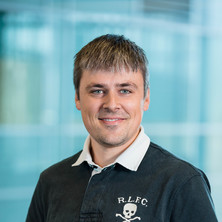
Richard Bade is a Senior Research Fellow and ARC DECRA fellow at the Queensland Alliance for Environmental Health Sciences, The University of Queensland. He obtained his PhD from the University Jaume I, Castellon, Spain in 2016, which focussed on analytical tools for the investigation of licit and illicit drug residues in water before joining the Population Health Chemistry Group at the University of South Australia in 2017, where his research focussed on the development of quantitative and qualitative methods for the determination of illicit drugs in wastewater. He is involved with the National Wastewater Drug Monitoring Program, funded by the Australian Criminal Intelligence Commission, in collaboration with the University of South Australia.
His research interests are associated with the surveillance, detection and identification of new psychoactive substances in wastewater and other matrices as well as exploring the impact of chemical and pathogen exposure during mass gatherings. Dr Bade currently leads an expanding international consortium exlporing the prevalence of new psychoactive substances worldwide (currently from 23 countries, 60 sites). He is a strong supporter of collaborative research, with ongoing projects involving academic and industrial partners in Australia and around the world.
Faculty of Health, Medicine and Behavioural Sciences
Affiliate of UQ Poche Centre for Indigenous Health
UQ Poche Centre for Indigenous Health
Faculty of Health, Medicine and Behavioural Sciences
Availability:
Available for supervision
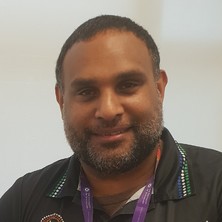
Dr Carl Francia (Saibai Koedal awgadhalayg) is a Torres Strait Islander physiotherapist and cardiovascular epidemiologist whose research focuses on improving cardiovascular health equity for Aboriginal and Torres Strait Islander peoples through Indigenous-led, community-partnered research.
Based at The University of Queensland's Poche Centre for Indigenous Health, Carl leads research examining acute rheumatic fever (ARF), rheumatic heart disease (RHD), cardiovascular health, health services, and implementation of evidence into policy and practice. His work combines epidemiology, health systems research, and community partnership approaches to support prevention, early detection, long-term management, and elimination of RHD.
Carl currently coordinates the NHMRC Synergy-funded iPreventRHD program, a national Indigenous-led research initiative focused on life-course approaches to preventing and managing RHD. He is also a Chief Investigator on an MRFF-funded project exploring cardiovascular health among First Nations women and girls and is involved in community-led climate and cardiovascular health initiatives in the Torres Strait.
Research interests include:
• Cardiovascular epidemiology and population health • Acute rheumatic fever and rheumatic heart disease • Indigenous health and health equity • Implementation science and health services research • Climate change and cardiovascular health • Indigenous Data Sovereignty and community-led research
Carl welcomes enquiries from Honours, Masters, and HDR students interested in Indigenous health, cardiovascular disease prevention, epidemiology, implementation science, health systems research, and community-partnered research.
Faculty of Health, Medicine and Behavioural Sciences
Research Fellow/Senior Research officer
School of Nursing, Midwifery and Social Work
Faculty of Health, Medicine and Behavioural Sciences
Availability:
Available for supervision
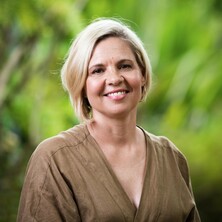
Dr Lucy Shinners is an Indigenous clinician‑researcher with 25 years of ICU nursing experience and a career deeply embedded in the health system. Her work is grounded in the realities of clinical practice and the experiences of patients, families and communities, shaping a research program that examines how emerging technologies can strengthen safe, high‑quality and culturally responsive care.
Using a sociotechnical lens, Dr Shners studies how artificial intelligence influences the health workforce, clinical decision‑making and the conditions required for safe adoption. Her internationally used SHAIP tool supports health services to understand workforce perceptions of AI and ensures that consumer perspectives remain central to technology design and implementation. She also works with Indigenous health organisations to co‑design technological solutions that reflect community priorities, and has contributed to establishing First Nations leaders’ priorities for AI, an expanding line of work shaping future governance and innovation.
Her research intersects with infection prevention and vascular access safety, where she investigates healthcare‑associated infections, device‑related harm and opportunities to improve surveillance, early detection and patient experience. Increasingly, these domains converge as she explores AI‑enabled approaches for infection risk prediction and monitoring, and evaluates how emerging technologies can enhance clinical governance and system performance.
Dr Shinners’ work provides health services, policymakers and industry with evidence‑based, culturally informed insights into AI, infection prevention and the future of safe care.
Associate Member of Centre for Community Health and Wellbeing
Centre for Community Health and Wellbeing
Faculty of Health, Medicine and Behavioural Sciences
Postdoctoral Research Fellow
School of Human Movement and Nutrition Sciences
Faculty of Health, Medicine and Behavioural Sciences
Availability:
Available for supervision
Media expert
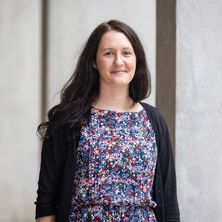
Dr George Thomas is a Research Fellow in the School of Human Movement and Nutrition Sciences at The University of Queensland and a member of the ARC Centre of Excellence for the Digital Child. His research focuses on children’s digital technology use, family digital routines, healthy screen use, and child health and wellbeing.
George leads an integrated program of research focused on understanding and improving how families manage children’s screen use. His work spans digital health, behavioural science, public health, and research translation through partnerships with government and industry.
His research has informed international policy and guidelines, including reports from UNESCO and the World Health Organization, and contributes to global initiatives such as the Active Healthy Kids Global Alliance.
George is also committed to education and mentorship, having supervised more than 40 student research projects across psychology, dietetics, and exercise science, and supporting students to work on real-world policy and community initiatives.
Centre Director of Centre for Living Experience Research
Centre for Living Experience Research
Faculty of Health, Medicine and Behavioural Sciences
Affiliate of Queensland Aphasia Research Centre (QARC)
Queensland Aphasia Research Centre
Faculty of Health, Medicine and Behavioural Sciences
Affiliate of University of Queensland Centre for Hearing Research (CHEAR)
Centre for Hearing Research
Faculty of Health, Medicine and Behavioural Sciences
NHMRC Emerging Leadership Fellow
School of Health and Rehabilitation Sciences
Faculty of Health, Medicine and Behavioural Sciences
Availability:
Available for supervision
Media expert
I am a research leader who believes the best science is built with the people it is designed to serve. As a two-time NHMRC Emerging Leadership Fellow and Certified Practising Speech Pathologist, I lead a transdisciplinary team of more than 20 researchers at the University of Queensland. We work in partnership with consumers, clinicians, communities, government, and industry to co-produce interventions, technologies, systems, and standards that drive real change and serve the public good.
My research themes include: (a) Design and implementation of a national audit system to drive quality improvement in post-stroke aphasia services; (b) Development and implementation of methodological standards to improve aphasia research quality and reduce research wastage; (c) Development of technology-enhanced interventions to support self-management, promote equitable access to information and services, and empower people with communication support needs; (d) Development of fit-for-purpose training and resources for aged care workers to help older Australians have better conversations about aged care.
I am Director of the Centre for Living Experience Research and lead the Qualitative Collective, and the School of Health and Rehabilitation Sciences Communication Research and Engagement Theme (CommRET). I am a UQ Research Integrity Advisor.