Deputy Associate Dean Research (Research Partnerships)
Faculty of Science
Affiliate of Australian Centre for Ecogenomics (ACE)
Australian Centre for Ecogenomics
Faculty of Science
Availability:
Available for supervision
Media expert
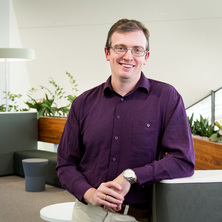
Prof David Ascher is an NHMRC Investigator Leadership Fellow and Deputy Associate Dean (Research Partnerships) in the Faculty of Science at The University of Queensland. He also serves as Deputy Director of the Australian Centre for Ecogenomics and Head of Computational Biology & Clinical Informatics at the Baker Heart and Diabetes Institute. Internationally, he sits on scientific advisory boards for A*STAR (Singapore), Fiocruz (Brazil) and the Tuscany University Network (Italy), and has been recognised with major honours including the Royal Society of Chemistry Horizon Prize.
A global leader in computational biology and personalised medicine, Prof Ascher develops advanced AI- and structure-based approaches to understand how genetic variation alters protein structure, function, and clinical outcomes. His group has built one of the world’s most widely used platforms for interpreting coding variants—over 120 computational tools, accessed more than 12 million times per year from 120+ countries. These tools underpin clinical diagnostics, guide drug development pipelines, and support international public-health responses to antimicrobial resistance and emerging infectious diseases.
His research has led to new molecular insights across infectious disease, rare disease, oncology and cardiometabolic health, and has been translated directly into practice—informing WHO policy, enabling early resistance detection in tuberculosis and leprosy, stratifying patients with hereditary cancers, and supporting vaccine design with partners including Pfizer. Many of his methods are embedded in globally used resources such as Ensembl VEP, PDBe, and the EMBL-EBI KnowledgeBase.
Prof Ascher has a longstanding commitment to interdisciplinary leadership and capability-building across UQ. As Director (Strategy) of the Biotechnology Programs and later as Deputy Associate Dean (Research Partnerships), he has driven initiatives to transform UQ’s biotechnology education, grow industry-embedded training, expand international partnerships, and diversify research income. He has led the development of UQ’s biotechnology–industry placement ecosystem, initiated new professional development programs adopted across multiple Faculties and Institutes, and established major collaborations with government, industry and global research organisations.
He has published more than 250 peer-reviewed papers (over half as senior author: FWCI 2.7), secured more than $40M in competitive research funding, and supervised over 60 HDR students who now hold leadership positions in academia, industry and government. His work appears in leading journals including Nature, Nature Genetics, Science, PNAS and Nature Microbiology, and is cited in over 100 policy documents and 40 patents.
Prof Ascher holds degrees in Biotechnology, Biochemistry, Structural Biology and Law. His research career has spanned Adelaide, Melbourne, Cambridge and Brisbane. After his PhD with Professor Michael Parker, he worked with Sir Tom Blundell at the University of Cambridge, where he led programs in structure-guided drug discovery and protein–protein interaction targeting. He established his independent laboratory at Cambridge and then at the University of Melbourne/Bio21 Institute, before moving to the Baker Institute in 2019 and joining UQ in 2021.
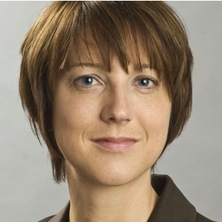
Birgitta Ebert’s research focuses on developing biotechnology concepts to address critical challenges such as pollution, climate change and overexploitation of natural resources.
She specializes in improving microbial catalysts for eco-friendly chemical and material production by leveraging metabolic engineering, synthetic biology, systems analysis, and modelling. Her goal is to create microbial cell factories that convert renewable resources and waste into valuable products, reducing reliance on petrochemicals. She collaborates closely with chemists and chemical engineers to enhance the integration of chemical and biological processes for improved efficiency and sustainability.
Birgitta has a background in Chemical Engineering and a PhD in Systems Biotechnology from TU Dortmund University (Germany). She led a research group in Systems Metabolic Engineering at the Institute of Applied Microbiology at RWTH Aachen University (Germany) from 2012 to 2019. In 2016, she expanded her expertise in Synthetic Biology by joining the Keasling lab at the University of California in Berkeley and the Joint BioEnergy Institute in Emeryville (USA).
Since April 2019, she has been at the Australian Institute for Bioengineering and Nanotechnology at the University of Queensland, applying her expertise to engineer microbial cell factories for fermentation-based manufacturing.
Affiliate of ARC COE for Plant Success in Nature and Agriculture
ARC COE for Plant Success in Nature and Agriculture
Faculty of Science
Senior Research Fellow
School of Agriculture and Food Sustainability
Faculty of Science
Availability:
Available for supervision
Media expert
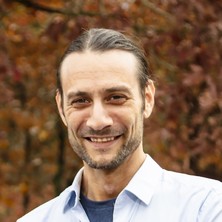
I am centre-wide sernior research fellow in the ARC Centre of Excellence for Plant Success in Nature and Agriculture, based here at UQ. Currently I lead a small but growing team of computational biologists focusing on new techniques for predicting complex quantitative traits through causal molecular networks using AI and ML approaches.
Areas of interest:
Machine Learning, AI and high performance computing to learn and exploit functional connectivity in biological data
Gene Expressions networks
Multiplex networks, information propagation and perturbation
Genomic Prediction
Our goal is to aid crop and forestry breeders in selecting parental lines more accurately, which gives us a pathway to improving certain plant species. I also spend time developing new data analysis techniques that are being applied to human disease and conditions such as Autism and substance addiction.
David completed his PhD at Australian National University in 2017, focusing on the genome-wide basis of foliar terpene variation in Eucalyptus. He then undertook a postdoc at Oak Ridge National Laboratory, a US Dept of Energy lab with a focus on big data. After a stint as a staff scientist at Oak Ridge, David arrived at the Centre of Excellence in 2023 in the role of a Senior Research Fellow. He currently supervises 3 PhD students and one full time postdoctoral researcher at UQ.