Deputy Associate Dean Research (Research Partnerships)
Faculty of Science
Affiliate of Australian Centre for Ecogenomics (ACE)
Australian Centre for Ecogenomics
Faculty of Science
Availability:
Available for supervision
Media expert
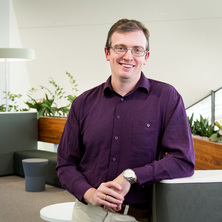
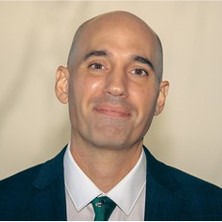
Prof David Ascher is an NHMRC Investigator Leadership Fellow and Deputy Associate Dean (Research Partnerships) in the Faculty of Science at The University of Queensland. He also serves as Deputy Director of the Australian Centre for Ecogenomics and Head of Computational Biology & Clinical Informatics at the Baker Heart and Diabetes Institute. Internationally, he sits on scientific advisory boards for A*STAR (Singapore), Fiocruz (Brazil) and the Tuscany University Network (Italy), and has been recognised with major honours including the Royal Society of Chemistry Horizon Prize.
A global leader in computational biology and personalised medicine, Prof Ascher develops advanced AI- and structure-based approaches to understand how genetic variation alters protein structure, function, and clinical outcomes. His group has built one of the world’s most widely used platforms for interpreting coding variants—over 120 computational tools, accessed more than 12 million times per year from 120+ countries. These tools underpin clinical diagnostics, guide drug development pipelines, and support international public-health responses to antimicrobial resistance and emerging infectious diseases.
His research has led to new molecular insights across infectious disease, rare disease, oncology and cardiometabolic health, and has been translated directly into practice—informing WHO policy, enabling early resistance detection in tuberculosis and leprosy, stratifying patients with hereditary cancers, and supporting vaccine design with partners including Pfizer. Many of his methods are embedded in globally used resources such as Ensembl VEP, PDBe, and the EMBL-EBI KnowledgeBase.
Prof Ascher has a longstanding commitment to interdisciplinary leadership and capability-building across UQ. As Director (Strategy) of the Biotechnology Programs and later as Deputy Associate Dean (Research Partnerships), he has driven initiatives to transform UQ’s biotechnology education, grow industry-embedded training, expand international partnerships, and diversify research income. He has led the development of UQ’s biotechnology–industry placement ecosystem, initiated new professional development programs adopted across multiple Faculties and Institutes, and established major collaborations with government, industry and global research organisations.
He has published more than 250 peer-reviewed papers (over half as senior author: FWCI 2.7), secured more than $40M in competitive research funding, and supervised over 60 HDR students who now hold leadership positions in academia, industry and government. His work appears in leading journals including Nature, Nature Genetics, Science, PNAS and Nature Microbiology, and is cited in over 100 policy documents and 40 patents.
Prof Ascher holds degrees in Biotechnology, Biochemistry, Structural Biology and Law. His research career has spanned Adelaide, Melbourne, Cambridge and Brisbane. After his PhD with Professor Michael Parker, he worked with Sir Tom Blundell at the University of Cambridge, where he led programs in structure-guided drug discovery and protein–protein interaction targeting. He established his independent laboratory at Cambridge and then at the University of Melbourne/Bio21 Institute, before moving to the Baker Institute in 2019 and joining UQ in 2021.
Faculty of Health, Medicine and Behavioural Sciences
Availability:
Available for supervision
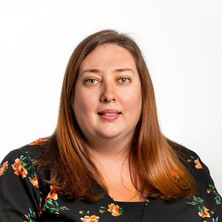
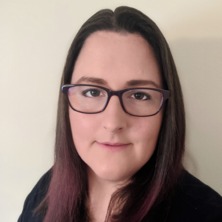
Dr Melinda Ashcroft is a Research Fellow on Infectious Disease Epidemiology (Climate Change) in the Faculty of Medicine at The University of Queensland (UQ). Her current research focus is on Nontuberculous mycobacteria (NTM) and how NTM infections are associated with climate change and major weather events. Previously Melinda has worked at Monash University as a Research Fellow on the Sero-epidemiology of Klebsiella spp., at the University of Melbourne as a Postdoctoral Research Fellow on the Genomic Epidemiology of Neisseria gonorrhoeae and as a Research Associate at UQ on the genomics and epigenomics of extraintestinal pathogenic Escherichia coli. Melinda was awarded a Bachelor of Applied Science (Biotechnology/Biochemistry) in 2004 from Queensland University of Technology and a Master of Biotechnology in 2013 from UQ. She then switched fields to Microbial Genomics and was awarded a PhD from UQ in 2019 for her thesis: Evolution and function of mobile genetic elements and DNA methyltransferases in extraintestinal pathogenic Escherichia coli.
My current focus is on the application of deep learning models that read DNA sequences and predict cell type specific gene expression, chromatin accessibility, and transcription factor binding to human genetics. Specially, I am interested in 1) how well do current models trained on genetic variation across genomes generalize to genetic variation between individual genomes? 2) Can these models predict causal variants at loci that are associated with human traits? And if so, to what degree? 3) Can we utilize these models to link DNA sequences to the effect of genetic variants on human traits and disease?
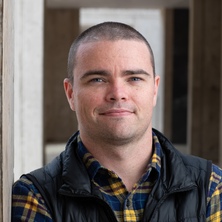
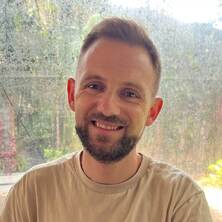
Dr. Bialasiewicz worked at the Royal Children's Hospital and the Children's Health Queensland HHS for over 18 years conducting translational research and clinical support centering on infectious disease (primarily viral and bacterial) molecular diagnostics, general microbiology and molecular epidemiology. In 2019, he became a group leader at The University of Queensland's Australian Centre for Ecogenomics, expanding on a growing interest in the microbial ecology of the human body, it's role in health and disease, and ways to manipulated to achieve desirable outcomes. One Health microbial ecology, where human health is interconnected with the health of animals (both livestock and wildlife), and the broader environment is also an area of active interest. His background in virology has influenced the work he does, meaning a key focus of his microbial ecology works centres around the interactions between all types of microorgansims (bacteria, archaea, viruses, fungi, and micro-eukaryotes).
Ongoing work includes:
- Leveraging of emerging technologies to explore the hidden microbial diversity and their interactions in the human body.
- Using the technology to develop microbial (e.g. phage)-based treatments or preventatives to complex diseases (e.g. Otitis Media, Chronic Rhinosinusitis, GvHD).
- Understanding the genetics of antibiotic resistance spread.
Affiliate of ARC COE for Plant Success in Nature and Agriculture
ARC COE for Plant Success in Nature and Agriculture
Faculty of Science
Adjunct Associate Lecturer
Queensland Alliance for Agriculture and Food Innovation
Availability:
Available for supervision
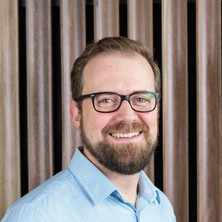
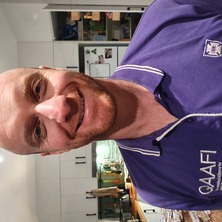
Dr Daniel Edge-Garza is a horticulture and crop geneticist at the Queensland Alliance for Agriculture and Food Innovation at the University of Queensland, Australia. His research interests are to develop and translate tools using genome-wide DNA information for breeders and growers to make meaningful decisions. Daniel’s PhD awarded by the University of Queensland in 2024 focused on identifying global G x E patterns to assist with improved germplasm-environment matching for commercial deployment. Before joining QAAFI, he obtained his Bachelor's Degree in Biological Sciences in 2005 and Master's Degree in Biotechnology in 2009 both at California State University, Fresno. From 2008, he worked as a faculty associate in research for tree fruit breeding at Washington State University becoming recognized worldwide for his efforts to streamline the deployment of DNA tests for pome and stone fruit breeding programs. He has also collaborated with the Genome Database for Rosaceae since 2018 to curate genomics data and train breeders on how to upload and access their data on the Breeding Information Management System.
Research Fellow: Microbial Genomics and Bioinformatics
Frazer Institute
Faculty of Health, Medicine and Behavioural Sciences
Availability:
Available for supervision
I am a bioinformatician developing computational methods and open-source software that make pathogen genome sequencing faster, cheaper, and more clinically useful. My research applies long-read (Oxford Nanopore) and short-read whole-genome sequencing to detect antimicrobial resistance, reconstruct microbial genomes, and trace how infections spread.
A core part of my work is building widely used, open-source bioinformatics tools and reproducible analysis pipelines that researchers and laboratories around the world rely on. I also contributed to the World Health Organization catalogue of tuberculosis drug-resistance mutations, a global reference for genome-based diagnosis.
Working closely with clinical and public-health laboratories, I help translate these methods out of research and into real diagnostic and outbreak-response settings — including sequencing pathogens directly from patient samples, without the delays of laboratory culture.
My areas of expertise include:
- Pathogen genomics and genomic epidemiology
- Antimicrobial resistance and drug-resistance prediction
- Long-read sequencing, genome assembly, and metagenomics
- Culture-free, direct-from-sample diagnostics
- Open-source scientific software development (Rust and Python)
You can explore my open-source tools on my GitHub profile (https://github.com/mbhall88).