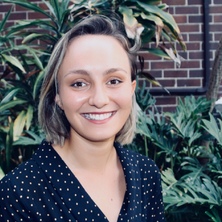
Elizabeth-Rose Ahearn is a Postdoctoral Research Fellow in the School of Social Sciences at the University of Queensland (UQ). Her research centres on measuring and evaluating the impact of charitable not-for-profit organisations, as well as other purpose-driven entities, including those in the public sector, social enterprises, corporate social responsibility efforts, and social impact bonds. She has a particular interest in leveraging digital technologies to enhance impact measurement, improve management processes, and support evidence-based decision-making. Elizabeth-Rose has extensive experience as an evaluator, having collaborated with a diverse range of for-purpose organisations, including a research secondment with the Department of Social Services focused on digital tools for advancing Australia's social impact investing sector. Alongside her role at UQ, she serves as the Co-Chair of the Queensland chapter of the Social Impact Measurement Network of Australia (SIMNA).
Affiliate of Centre for Cardiovascular Health and Research
Centre for Cardiovascular Health and Research
Faculty of Health, Medicine and Behavioural Sciences
Affiliate Professor of Mater Research Institute-UQ
Mater Research Institute-UQ
Faculty of Health, Medicine and Behavioural Sciences
Affiliate of Minerals Industry Safety and Health Centre
Minerals Industry Safety and Health Centre
Faculty of Engineering, Architecture and Information Technology
Centre Director of Centre for Community Health and Wellbeing
Centre for Community Health and Wellbeing
Faculty of Health, Medicine and Behavioural Sciences
Professor in Community Health and Wellbeing
School of Human Movement and Nutrition Sciences
Faculty of Health, Medicine and Behavioural Sciences
Professor in Community Health and Wellbeing
School of Public Health
Faculty of Health, Medicine and Behavioural Sciences
Availability:
Available for supervision
Media expert
My work focuses on how universities can operate as deeply embedded institutions within the societies they serve. Knowledge is created through listening, trust and genuine partnership, and impact comes from being present, responsive and collaborative. I focus on strengthening universities’ social licence by developing new ways of working with and alongside communities.
I am a Professor of Community Health and Wellbeing here at The University of Queensland, with an international reputation in community health, prevention, health services and policy. Together with my team, I lead research that shapes how communities thrive, with our work recognised through multiple awards for research excellence and real-world impact.
The cornerstone of my work is leading the Springfield Living Lab. Living labs use place-based, systems-oriented approaches to bring together research, teaching and partnerships to co-create, test and refine solutions in real-world settings over time. Springfield provides a uniquely rich environment for this work through its integrated urban design, strong local governance and commitment to innovation across health, education and technology. As Australia’s largest master-planned city, it offers a complex, real-world context for understanding how community-led approaches can translate into scalable models for broader application.
As a leader, I bring people together across disciplines, sectors and lived experience to create shared purpose and coordinated action. I support teams and organisations to imagine what is possible, map pathways forward and translate ambitious ideas into sustained impact. My leadership is values-led, collaborative and grounded in practical delivery.
I am particularly interested in how research, teaching and engagement can be better aligned to address complex societal challenges, while building cultures where people can do their best work.
I welcome opportunities to work with people and organisations committed to community connection, partnership and innovation. Together, we can strengthen trust, build capability and design approaches that are meaningful for the next generation and for society more broadly.
Faculty of Health, Medicine and Behavioural Sciences
Availability:
Available for supervision
I am a health psychologist and researcher with a strong focus on health psychology and mental health, particularly within First Nations and culturally and linguistically diverse (CALD) communities. My research expertise lies in the development and evaluation of health and wellbeing programs, and cultural adaptations to programs and research methods to more effectively measure mental health and wellness. I have extensive clinical and industry experience, including roles in program design, evaluation, and advocacy within First Nations health, chronic disease management and chronic pain.
Currently, my work spans several projects, including evaluating mental health services for First Nations Australians and investigating the needs of First Nations carers for loved ones with mental health concerns. I also have a keen interest in cultural correlates and expressions of mental disorder, in empowering people to make health behaviour changes, and to engage more effectively with healthcare services through individual, group and health promotion interventions.
Faculty of Health, Medicine and Behavioural Sciences
Affiliate of UQ Poche Centre for Indigenous Health
UQ Poche Centre for Indigenous Health
Faculty of Health, Medicine and Behavioural Sciences
Availability:
Available for supervision
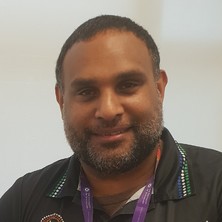
Dr Carl Francia (Saibai Koedal awgadhalayg) is a Torres Strait Islander physiotherapist and cardiovascular epidemiologist whose research focuses on improving cardiovascular health equity for Aboriginal and Torres Strait Islander peoples through Indigenous-led, community-partnered research.
Based at The University of Queensland's Poche Centre for Indigenous Health, Carl leads research examining acute rheumatic fever (ARF), rheumatic heart disease (RHD), cardiovascular health, health services, and implementation of evidence into policy and practice. His work combines epidemiology, health systems research, and community partnership approaches to support prevention, early detection, long-term management, and elimination of RHD.
Carl currently coordinates the NHMRC Synergy-funded iPreventRHD program, a national Indigenous-led research initiative focused on life-course approaches to preventing and managing RHD. He is also a Chief Investigator on an MRFF-funded project exploring cardiovascular health among First Nations women and girls and is involved in community-led climate and cardiovascular health initiatives in the Torres Strait.
Research interests include:
• Cardiovascular epidemiology and population health • Acute rheumatic fever and rheumatic heart disease • Indigenous health and health equity • Implementation science and health services research • Climate change and cardiovascular health • Indigenous Data Sovereignty and community-led research
Carl welcomes enquiries from Honours, Masters, and HDR students interested in Indigenous health, cardiovascular disease prevention, epidemiology, implementation science, health systems research, and community-partnered research.
Core Member of Centre for Community Health and Wellbeing
Centre for Community Health and Wellbeing
Faculty of Health, Medicine and Behavioural Sciences
Senior Lecturer
School of Languages and Cultures
Faculty of Humanities, Arts and Social Sciences
Availability:
Available for supervision
Media expert
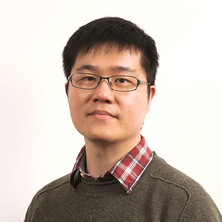
I am a linguist specialising in intercultural and public health communication, with a focus on the intersections of language, culture, and migration in healthcare. My research centres on co-designing accessible health communication resources with culturally and linguistically diverse (CALD) communities across Asia and Australia. Drawing on linguistic ethnography and co-design approaches, I work to improve community health, infectious disease prevention, and health equity for underserved populations. I am also passionate about collaborating with colleagues across the health and social sciences to address complex public health challenges, and I convene an interdisciplinary health communication research group at the School.
My publications focus on public health communication. A central aim of these publications is to distill complex health communication data into accessible and actionable strategies that deliver tangible benefits to communities and practitioners. In 2025, I published a single-authored book, Health Crisis Communication: Multimodal Classification for Pandemic Preparedness, which examines effective public health communication and offers practical strategies for communicating complex epidemiological concepts to the public.
I am currently leading and collaborating on three major research projects addressing health communication with vulnerable populations across gender, race, migration, and socioeconomic status. These projects aim to develop tailored communication strategies and resources for conveying critical health information effectively.
I co-create a community health outreach program with Myanmar migrant workers in Thailand.
I co-lead an international project that examines clinician–patient communication across Australia, Switzerland, and Thailand.
I lead a travel medicine project in Australia that investigates how health professionals communicate infectious disease risks to vulnerable groups, including children, pregnant women, and older adults with underlying health conditions.
My research has been recognised with several awards, including the 2021 Humanities Travelling Fellowship from the Australian Academy of the Humanities, the 2025 Young Scholar Research Award from the North America Taiwanese Professors’ Association (NATPA), and the 2025 High Distinction Award from the Taiwan Association of Medical History.
I welcome enquiries from prospective PhD, MPhil, and Honours students interested in health discourse, intercultural communication, and migration studies. Please feel free to contact me to discuss potential research projects.
Faculty of Health, Medicine and Behavioural Sciences
Availability:
Not available for supervision
Zoe is a Honorary Research Fellow with the School of Human Movement and Nutrition Sciences. She also currently holds an appointment as a Senior Research Officer with the Mental Health Evaluation Research Stream at Queensland Centre for Mental Health Research (QCMHR), where she leads and manages large-scale evaluation projects that seek to enhance mental health services within Queensland. During her time at QCMHR, she has worked on several state-wide evaluations for Queensland Health - including of their Crisis Support Spaces, Adolescent Day Program and Youth and Adult Step-Up-Step-Down Programs.
Zoe's research work largely focuses on the development, implementation and evaluation of interventions that seek to promote positive health behaviours and which improve social and mental health outcomes. Previously, she developed and trialled a behavioural support program (Active Choices) for the Department of Veterans Affairs, with the aim of increasing self-managed physical activity and social connectedness in Australian Defence Force veterans. Zoe has also designed and evaluated a brief motivational intervention for cannabis users (iAx), which is now in routine use at the Princess Alexandra Hospital.
In addition to her work as a researcher, Zoe has held roles in health consulting where she assisted State and Federal Government agencies, PHNs and peak bodies to design, implement and review health services, programs and policies.
Zoe's educational background in psychology, having completed a Bachelor of Psychological Science (2013) and Doctor of Philosophy (2020) in this discipline.
Senior Lecturer and Specialty Supervisor - General Practice
General Practice Clinical Unit
Faculty of Health, Medicine and Behavioural Sciences
Availability:
Available for supervision
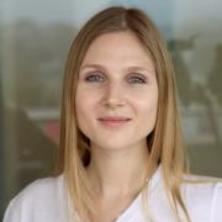
Dr Chloe Tyson is a General Practitioner, medical educator, and researcher with expertise in general practice, antidepressant deprescribing, lifestyle medicine, complex and chronic care, and preventive healthcare. She is a Senior Lecturer in the General Practice Clinical Unit at the University of Queensland Medical School, where she works across undergraduate teaching, assessment, and learning-resource development.
Her current research follows the RELEASE antidepressant tapering plans into everyday general practice: how GPs use them, what gets in the way, and what would make deprescribing more workable. That work is supported by an RACGP Academic Post (2025–2026). Clinically, she works with people whose problems do not fit a standard appointment, using a lifestyle-medicine approach to persistent fatigue, gut and hormonal problems, inflammation, and other unresolved chronic presentations.
Her broader interests include:
General practice and primary care implementation
Antidepressant deprescribing and withdrawal-informed tapering
Lifestyle medicine and whole-person care
Complex and chronic conditions
Preventive health and health optimisation
Mental health in primary care
Medical education, assessment and resource development
Dr Tyson is committed to strengthening general practice as a setting for complex care, deprescribing, and whole-person medicine, and to building that capacity in the next generation of doctors.