Faculty of Health, Medicine and Behavioural Sciences
Research Fellow
School of Health and Rehabilitation Sciences
Faculty of Health, Medicine and Behavioural Sciences
Availability:
Available for supervision
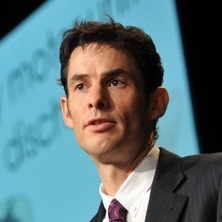
Dr Jonathan Davies is a chronic pain researcher working to improve how pain is understood, assessed and treated. His research focuses on pain phenotyping, precision pain care, and the psychological, physiological and contextual factors that shape pain and treatment response.
At UQ’s Centre for Innovation in Pain and Health Research, he contributes to DISCERN, an NHMRC Synergy-funded multidisciplinary research program developing and validating new approaches to pain assessment. A major focus of his work is DECIPHER PAIN, a standardised, multimodal tool designed to characterise the relative contributions of nociceptive, neuropathic and nociplastic pain and support more personalised care.
His research integrates clinical assessment, quantitative sensory testing, experimental pain methods, psychophysiology, digital health and population data. He is particularly interested in how physiological signals, behaviour, language, psychosocial context and real-world health data can be combined to better understand individual differences in pain and treatment outcomes.
His broader expertise includes placebo and nocebo effects, mindfulness, mental health, quality of life, health outcome measurement and population health. His work aims to support more precise, scalable and patient-centred approaches to pain research and care.
Faculty of Health, Medicine and Behavioural Sciences
Availability:
Available for supervision
Media expert
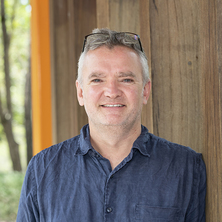
Paul W. Hodges DSc MedDr PhD BPhty(Hons) FAA FACP APAM(Hon) is an National Health and Medical Research Council (NHMRC) Leadership Fellow (Level 3), Professor and Director of the Centre for Innovation in Pain and Health Research (CIPHeR) at The University of Queensland (UQ). He is lead chief investigator on an NHMRC Synergy Grant that includes colleagues from the Universities of Queensland, Adelaide and South Australia, and the South Australian Health and Medical Research Institute. Paul is a Fellow of the Australian Academy of Science, which is a Fellowship of the nation’s most distinguished scientists, elected by their peers for outstanding research that has pushed back the frontiers of knowledge. He is also a Fellow of the Australian College of Physiotherapists, the Australian Academy of Health and Medical Science, and was made an Honoured member of the Australian Physiotherapy Association, their highest honour.
Paul is a recognised world leader in movement control, pain and rehabilitation. His unique comprehensive research approach from molecular biology to brain physiology and human function has led to discoveries that have transformed understanding of why people move differently in pain. His innovative research has also led to discoveries of changes in neuromuscular function across a diverse range of conditions from incontinence to breathing disorders. These observations have been translated into effective treatments that have been tested and implemented internationally.
Paul has received numerous national and international research awards that span basic and clinical science. These include the premier international award for spine research (ISSLS Prize) on five occasions; three times in Basic Science (2006, 2011, 2019) and twice in Clinical Science (2018, 2021). International awards in basic science include the SusanneKlein-Vogelbach Award (2010) and the Delsys Prize for Innovation in Electromyography (2009). National medical research awards include the NHMRC Achievement Award (2011). He has also received national community-based leadership awards including the Young Australian of the Year Award in Science and Technology (1997), Future Summit Australian Leadership Award (2010), and Emerging Leader Award (Next 100 Awards, 2009).
Paul is the Chair of the Terminology Task Force for the International Association for the Study of Pain, Chair of the Consensus for Experimental Design in Electromypgraphy for the International Society for Electrophysiology and Kinesiology and has been the Chair/Co-Chair for several major international conferences. He has led major international consortia to bring together leaders from multiple disciplines to understand pain.
Faculty of Health, Medicine and Behavioural Sciences
Postdoctoral Research Fellow
School of Health and Rehabilitation Sciences
Faculty of Health, Medicine and Behavioural Sciences
Availability:
Not available for supervision
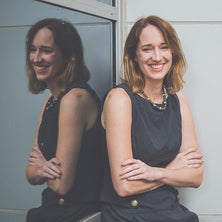
Nicole is a Research Fellow at the RECOVER Injury Research Centre, working within the Improving Health Outcomes after Musculoskeletal Injury program. Her current research focuses on the design and implementation of single-case experimental design studies to evaluate multidisciplinary interventions for whiplash and other musculoskeletal injuries sustained in road traffic incidents. Nicole completed her PhD in Psychology at The University of Queensland, where she investigated the effectiveness and mechanisms of mind-body therapies for pain management in injured athletes. This work advanced understanding of psychological predictors of pain, injury perception, and recovery in sporting contexts. Nicole has published in leading journals including Journal of Sports Sciences and Clinical Journal of Sport Medicine, and presented at national and international conferences such as the Australian Pain Society Annual Scientific Meeting. She holds a Master of Clinical Research from The University of Melbourne and a Bachelor of Psychological Science (Honours) from UQ, and is committed to developing personalised, evidence-based approaches to injury rehabilitation.
Faculty of Health, Medicine and Behavioural Sciences
Centre Director of ARC COE for the Digital Child (UQ Node)
ARC COE for the Digital Child
Faculty of Health, Medicine and Behavioural Sciences
Affiliate of ARC COE for Children and Families Over the Lifecourse
ARC COE for Children and Families Over the Lifecourse
Faculty of Humanities, Arts and Social Sciences
Availability:
Available for supervision
Media expert
My group works to understand and improve sleep for children and families. Sleep is a key ‘pillar of health’ alongside nutrition and activity. It is critical for healthy development, growth, learning, social and emotional functioning, and community participation.
I am the UQ Node Director for the ARC Centre of Excellence for Children and Families over the Life Course (the Life Course Centre). The Life Course Centre is committed to understanding and overcoming the problems of disadvantage, and to helping improve the lives of disadvantaged children and families. The Centre brings together researchers across multiple disciplines in four leading Universities, and significant government and non-government agencies to address these questions.
I am also the UQ Node director for the ARC centre of Excellence for the Digital Child. The Digital Child aims to support children growing up in the rapidly changing digital world, and provide strong evidence and guidance for children, families, educators, government and other concerned with children’s wellbeing.
We collaborate with many other groups around broader issues of sleep and technology, sleep and the environment (including disasters), mental health and wellbeing, pain, disability, and new technologies and approaches. Our work has been supported by the ARC, NHMRC, the MRFF, the NIH, and the DSTG. We use a wide range of methods and measures, including direct physiological and behavioural measurement (inc. ECG, EEG, EMG, actigraphy, computerized tests, simulations, environmental monitoring etc.), quantitative methods (inc. experimental and secondary data approaches), and qualitative methods including co-design and co-conduct approaches.
My team has additional expertise in evaluation of health and other services for government and other agencies, the design of complex interventions, and community consultation and engagement.
Affiliate of Centre for Innovation in Pain and Health Research (CIPHeR)
Centre for Innovation in Pain and Health Research
Faculty of Health, Medicine and Behavioural Sciences
Affiliate of The Centre for Chemistry and Drug Discovery
Centre for Chemistry and Drug Discovery
Institute for Molecular Bioscience
Affiliate of Centre for Marine Science
Centre for Marine Science
Faculty of Science
Availability:
Available for supervision
Media expert
I am an NHMRC Leadership Fellow with joint apointments at the Institute for Molecular Bioscience (IMB) and School of Pharmacy, UQ. My research interests lie in the fields of peripheral pain mechanisms, target identification and analgesic drug discovery. I investigate the contribution of ion channels to sensory neuronal physiology using highly subtype-selective toxins isolated from venomous animals with the aim to develop novel analgesics with improved efficacy and tolerability.
Affiliate of Centre for Innovation in Pain and Health Research (CIPHeR)
Centre for Innovation in Pain and Health Research
Faculty of Health, Medicine and Behavioural Sciences
Lecturer in Physiotherapy
School of Health and Rehabilitation Sciences
Faculty of Health, Medicine and Behavioural Sciences
Availability:
Available for supervision
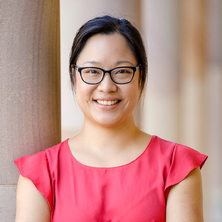
Dr Viana Vuvan is a titled Musculoskeletal Physiotherapist and Lecturer in Physiotherapy at The University of Queensland. Viana has a strong clinical background in musculoskeletal physiotherapy, with experience in managing a wide range of musculoskeletal and sports-related injuries. Viana has a special interest in the management of upper limb musculoskeletal disorders and enjoys sharing her experience with students in the undergraduate and postgraduate physiotherapy programs. Viana is an active member of the Sports Injury Rehabilitation and Prevention for Health (SIRPH) research unit and the Neck and Head Research Unit (NAHRU) at the University of Queensland.
Viana’s research is focused on improving the management of persistent musculoskeletal pain conditions, such as tendinopathies, and better understanding the mechanisms underlying their chronicity. Viana’s PhD research focused on lateral elbow tendinopathy and explored the factors contributing to pain, disability and chronicity within this group. Additionally, Viana has explored similar mechanisms in other tendinopathies, including Achilles, patellar tendinopathy, plantar fasciopathy, as well as in whiplash associated disorders. She has shared her research at numerous state-wide, national and international conferences, and has been awarded for her presentations at several conferences.