Affiliate of Centre for Motor Neuron Disease Research
Centre for Motor Neuron Disease Research
Faculty of Health, Medicine and Behavioural Sciences
Professor
Frazer Institute
Faculty of Health, Medicine and Behavioural Sciences
Availability:
Available for supervision
Neurologist
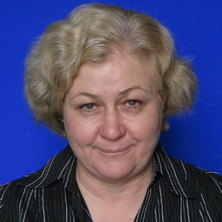
Dr McCombe graduated in Medicine from UQ and completed a Science degree for medical students. She then trained as a neurologist in Sydney, at Prince Henry and Prince of Wales Hospitals. She obtained a PhD from the University of Sydney. She obtained experience in Neurophysiology in Cleveland and then returned to UQ as a post-doctoral fellow. She worked for some years as a research fellow in Neuroimmunology and was an NHMRc SRF. Later she resumed clinical practice as a neurologist, and contimued her research as an NHMRC Practitioner Fellow. She is currentlyProfessor and Head of the Royal Brisbane Clinical school in the School of Medicine and Co-head of the Brain and Mental Health Theme at the UQ Centre for Clinical Research.
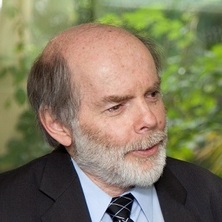
Professor Geoffrey McLachlan's research interests are in: data mining, statistical analysis of microarray, gene expression data, finite mixture models and medical statistics.
Professor McLachlan received his PhD from the University of Queensland in 1974 and his DSc from there in 1994. His current research projects in statistics are in the related fields of classification, cluster and discriminant analyses, image analysis, machine learning, neural networks, and pattern recognition, and in the field of statistical inference. The focus in the latter field has been on the theory and applications of finite mixture models and on estimation via the EM algorithm.
A common theme of his research in these fields has been statistical computation, with particular attention being given to the computational aspects of the statistical methodology. This computational theme extends to Professor McLachlan's more recent interests in the field of data mining.
He is also actively involved in research in the field of medical statistics and, more recently, in the statistical analysis of microarray gene expression data.
Faculty of Health, Medicine and Behavioural Sciences
Honorary Senior Fellow
School of Public Health
Faculty of Health, Medicine and Behavioural Sciences
Availability:
Available for supervision
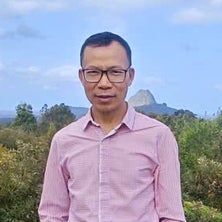
Dr Huy Nguyen is a biostatistician and epidemiologist whose 25+ year career has spanned clinical medicine and advanced quantitative research across Vietnam, Japan, the United Kingdom, the United States and Australia. He trained as a medical doctor at Thai Nguyen and Hanoi Medical University, before completing postgraduate qualifications in statistics, research methods and public health at Flinders University and a PhD in Statistical Modelling and Epidemiology at Queensland University of Technology, for which he received the Outstanding PhD Thesis Award. He has held academic and biostatistics roles at Hanoi Medical University, St Luke's International University, the University of Adelaide, Griffith University, and Federation University Australia, and currently serves as Senior Research Fellow (Biostatistics) at the Poche Centre for Indigenous Health, University of Queensland, with honorary and adjunct appointments at Federation University, St Luke's, UMass Chan Medical School, and Mekong University.
Huy's research focuses on the design and statistical analysis of clinical trials and large observational studies, with particular expertise in causal inference, longitudinal and survival modelling, and Frequentist and Bayesian methods applied to chronic and infectious disease epidemiology. He has served as statistician or statistical/technical advisor on seven clinical trials (six ANZCTR-registered) – most recently as Technical/Statistical Advisor on the Wellcome Trust-funded E-Dengue cluster-randomised trial to reduce dengue incidence in Vietnam's Mekong Delta – and has contributed statistical expertise to over 30 funded research projects supported by the NHMRC, NIH, CDC, and Wellcome Trust, including NIH/Fogarty-funded non-communicable disease research and training in partnership with UMass Chan Medical School.
He has published nearly 100 peer-reviewed articles in international journals – including The Lancet, eClinicalMedicine, The Lancet Regional Health – Western Pacific, PLOS Medicine, and Cardiovascular Research.
Huy has supervised 1 postdoctoral fellow, 6 PhD candidates (2 completed, 4 in progress), 25 Master's students, and 17 Honours/Bachelor students.
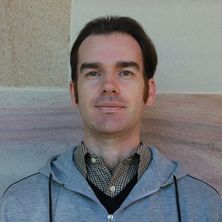
I studied Technical Mathematics at the Vienna University of Technology. I also earned a Master's degree in Law and I finished the first ("non-clinical") part of Medical Studies at the University of Vienna. I earned my PhD in Applied Mathematics at the University of Vienna in 2007. My PhD advisor was Christian Schmeiser, my co-advisor was Peter Markowich. I spent several months at the University of Buenos Aires working with C. Lederman and at the ENS-Paris rue d'Ulm in the group of B. Perthame.
Before coming to UQ, I held post-doc positions at the Wolfgang Pauli Insitute (Vienna), University of Vienna and the Austrian Academy of Sciences (RICAM). In 2013 I won an Erwin Schrödinger Fellowship of the Austrian Science Fund (FWF). I was a post-doc researcher in the group of Alex Mogilner first at UC Davis, then at the Courant Institute of Math. Sciences (New York University).
I moved to UQ in Dec. 2016. More recently, in 2024, I spent 4 months at the department of Mathemetics of the U. of Heidelberg as a visiting scientist.
Postdoctoral Research Fellow in Crop Quantitative Genetics
Queensland Alliance for Agriculture and Food Innovation
Availability:
Available for supervision
Dr. Victor Papin is a postdoctoral researcher at The University of Queensland working in the Hickey Lab. His research focuses on improving crop breeding efficiency through advanced genomic and quantitative genetics approaches. He develops and applies haplotype stacking methodolgy to identify and combine favourable genomic regions that enhance yield, resilience, and sustainability in crops such as chickpea, lentil, and faba bean. Victor’s work bridges applied breeding and theoretical genetics: he designs simulation pipelines to optimise crossing schemes and evaluates genomic selection (GBLUP, FA models, GP) across heterogeneous environments. His ultimate goal is to build integrative, data-driven strategies that enable sustainable genetic improvement under variable climates.
Faculty of Health, Medicine and Behavioural Sciences
Availability:
Not available for supervision
Yang is currently a Adjunct Research Fellow at Prince Charles Hospital Northside Clinical Unit, UQ Faculty of Health, Medicine and Behavioural Sciences. He has extensive experience in analysing large-scale national and international health surveys and hospitalisaiton datasets with complex statistical models. He is interested in answering a couple of research questions in the population level (e.g. the associations between modifiable behaviors and chronic diseases; the inequalities in chronic disease risk).
Emeritus Professor Phil Pollett has research interests in Markov process theory, and mathematical modelling in population biology, ecology, epidemiology, seismology, chemical kinetics and telecommunications.
He holds an honours degree in Applied Mathematics from the University of Adelaide and a PhD degree in Applied Probability from the University of Cambridge. He joined the then Department of Mathematics in 1987 as Senior Lecturer, having previously held positions at the University of Adelaide, Murdoch University and University College of Cardiff. He was promoted to Reader in 1993 and to Professor in 2004.
His research is recognized internationally for significant contributions to Markov process theory, and mathematical modelling. This research has been supported by 12 ARC Large/Discovery/Linkage grants. He was a Chief Investigator (2014-2021) within the ARC Centre of Excellence for Mathematical and Statistics Frontiers (ACEMS), and was a Chief Investigator (2002-2014) within the ARC Centre of Excellence for Mathematics and Statistics of Complex Systems (MASCOS). In 1993, he was awarded the Moran Medal by the Australian Academy of Science for distinguished research in Applied Probability.
Phil Pollett has served on the editorial boards of the Journal of the Australian Mathematical Society, Methodology and Computing in Applied Probability, Stochastic Models, and The Annals of Applied Probability, and has served on the organizing committees of several major international conferences. He devised the Probability Web, recognized as the main Web resource for probabilists throughout the world, and one of the first academic web sites. He has a strong record of innovation in undergraduate teaching, and has guided the development of many postgraduate students and postdoctoral fellows through supervision and collaboration.
I research extrasolar planets - planets around other stars - and focus on developing and applying new data science approaches for detecting and characterizing them. I have taken nearly every approach to exoplanet and stellar observation, including transits, radial velocities, direct imaging, and asteroseismology.
As an ARC DECRA Fellow I'm mainly working on exoplanet direct imaging with the James Webb Space Telescope, and especially how we can use differentiable & probabilistic programming to enhance data analysis to detect faint objects in noisy data. I also work on radio astronomy to study planets' magnetic interactions with their host stars, and using radiocarbon in tree rings as a tracer of long term solar activity.
I grew up in Sydney, New South Wales, and studied for my Honours and Masters at the University of Sydney. I studied abroad at the University of California, Berkeley, and in 2017 I completed my DPhil in Astrophysics at Balliol College, Oxford. From 2017-20 was a NASA Sagan Fellow at the NYU Center for Cosmology and Particle Physics and Center for Data Science. I'm now a Lecturer in Astrophysics and DECRA Fellow at the University of Queensland.
I'm into open source, open science, and climate action. I was a member of the winning Balliol College team in the 2016-17 series of University Challenge on BBC2, with the wonderful Joey Goldman, Freddy Potts, and Jacob Lloyd. Sometimes I write: see my latest piece in The Monthly, about the possible discovery of phosphine on Venus.
Faculty of Health, Medicine and Behavioural Sciences
Availability:
Not available for supervision
Media expert
I build quantitative systems for understanding how humans move, perform, using data from wearable sensors in real-world conditions.
My work sits at the intersection of machine learning, signal processing, and sports and health science. I develop the analytical infrastructure that makes large-scale, free-living sensor research feasible: pipelines for IMU and GNSS data, predictive models for physical activity and pain dynamics, and validation frameworks for wearable devices.
At UQ, I contribute to the CIPHeR program (NIH/NHMRC-funded), investigating mechanisms of chronic low back pain through longitudinal modelling of movement, sleep, stress, and pain. I also lead Metric Trails, an applied R&D initiative developing high-precision geospatial standards for trail and mountain running.
My background spans academia and industry. Before UQ, I led data science teams at LATAM Airlines and built research programs in wearable analytics and geospatial modelling at Adolfo Ibáñez University in Chile, where I supervised 19 postgraduate theses.
I work across disciplines, with physiotherapists, sports scientists, engineers, and clinicians, and across an international network of collaborators in Australia, Chile, Norway and Spain.
Faculty of Health, Medicine and Behavioural Sciences
Availability:
Not available for supervision
A/Prof Benn Sartorius is an established spatial and global health epidemiologist, with a particular interest in the burden of infectious disease and attributable determinants at sub-national, national and global scales as a tool to help inform and optimise policy at national and subnational scales. Dr Sartorius a principal research fellow in UQ's ODeSI team at University of Queensland, an affiliate professor in Department of Health Metric Sciences at University of Washington and a honorary visiting research fellow at University of Oxfored. Prior to join UQ, Dr Sartorius was the principal investigator for the Global Research on Antimicrobial Resistance (GRAM) Project based in the Centre for Tropical Medicine and Global Health at University of Oxford.
Dr Sartorius' research has focused on better understanding the spatial-temporal burden and risk factors of multiple IDs, including mosquito-borne diseases such as malaria, sexually transmitted infections, neglected tropical diseases such as soil-transmitted helminths and onchocerciasis, vaccine preventable diseases, emerging infectious diseases and more recently focused on antimicrobial resistance. These and other examples highlight the utility of spatial epidemiology to identify higher risk areas that should be prioritised for more targeted, tailored and resource efficient intervention and control measures. However, often spatial risk estimates for IDs are often not produced in-country in settings such as the Pacific, where disease burden is high and local modelling expertise is limited, resulting in use of incomplete/biased data and resulting in inefficient and suboptimal decision-making. I’ve been a collaborator on the Global Burden of Disease (GBD) project since 2014 and the Scientific Council for the GBD Project since 2015. Dr Sartorius is a member of the WHO Reference Group on Health Statistics (RGHS) and chair of the Age-Specific Mortality Estimation and Life Table Computation task force. Benn's vision, through ODeSI-HERA, is to expand his international profile and leadership in spatial-temporal epidemiology of priority infectious diseases in Australia and the Pacific. This will include spatial epidemiological innovation, and capacity building to improve health outcomes in high-risk and vulnerable sub-populations within the region, and will be co-created with stakeholders in the region to ensure that it aligns with their priorities, and support precision-based decision-making systems to help policy makers optimise resource allocation and guide targeted interventions.
Associate Member of Centre for Community Health and Wellbeing
Centre for Community Health and Wellbeing
Faculty of Health, Medicine and Behavioural Sciences
Affiliate of Centre for the Business and Economics of Health
Centre for the Business and Economics of Health
Faculty of Business, Economics and Law
Conjoint Professor in Community Diabetes and Digital Health
Medical School
Faculty of Health, Medicine and Behavioural Sciences
Availability:
Not available for supervision
Professor Clair Sullivan is an internationally-recognised leading practising and academic clinical informatician who helps drive digital health transformation in Queensland and globally.
Clair is the Director of the new Queensland Digital Health Centre within the Centre for Health Research at The University of Queensland.
A specialist endocrinologist, Clair graduated with Honours in Medicine from The University of Queensland and earned a Research Doctorate in Medicine from the University of Leeds. In 2014, Clair began a parallel career in the emerging field of digital health and has held significant leadership roles in digital health practice and governance across government and academia. Her work is regularly translated into practice and informs policy in Australia and globally.
Clair is currently Professor of Digital Health at UQ and Conjoint Professor of Community Diabetes at Metro North Health. She is an Adjunct Professor at the Faculty of Health, Queensland University of Technology and an Adjunct Professor, School of Health and Biomedical Sciences at Royal Melbourne Institute of Technology. She is Clinical Director for Community Diabetes at Metro North Health.
She is a fellow of the Royal Australasian College of Physicians, the Australian College of Health Informatics and the Australasian Institute of Digital Health.
Clair serves on several national advisory boards for digital health. She is the recipient of several awards including the 2021 Premier’s Award for Excellence for her team’s work on the digital response to COVID-19 and the 2022 Telstra Brilliant Connected Women in Digital Health Award.
She has generated over $70M in grant funding and has deep collaborations with government and industry. She is ranked in the top 1% of Medical Informatics researchers globally.
Faculty of Health, Medicine and Behavioural Sciences
Availability:
Available for supervision
Media expert
Dr Mike Trott is a Research Fellow with the Queensland Centre for Mental Health Research (QCMHR), The University of Queensland, where he serves as Section Head of Epidemiology and Biostatistics within the Physical and Mental Health Research Group. He specialises in lifestyle psychiatry, clinical trials, and psychiatric epidemiology, with a particular focus on addressing the physical health inequities faced by people with schizophrenia and other severe mental illnesses.
His current research program addresses three major themes:
Physical activity and sedentary behaviour – understanding their impact on mental and physical health and developing interventions, including the effectiveness of movement breaks to reduce sedentary time and cardiometabolic risk in people with schizophrenia, and the risk profiles of different types of sedentary behaviours.
Clinical trials – leading the methodological and statistical aspects of a national platform of several schizophrenia clinical trials to find strategies to improve mental and physical health in this population
Pharmacoepidemiology - using statewide and national linked data to determine the comparative effectiveness of clozapine augmentation strategies for treatment-resistant schizophrenia, as well as examining the mortality gap in several mental illness vs the general population.
Radislav (Slava) Vaisman is a faculty member in the School of Mathematics and Physics at the University of Queensland. Radislav earned his Ph.D. in Information System Engineering from the Technion, Israel Institute of Technology in 2014. Radislav’s research interests lie at the intersection of applied probability, statistics, and computer science. Such a multidisciplinary combination allows him to handle both theoretical and real-life problems, in the fields of machine learning, optimization, safety, and system reliability research, and more. He has published in top-ranking journals such as Statistics and Computing, INFORMS, Journal on Computing, Structural Safety, and IEEE Transactions on Reliability. The Stochastic Enumeration algorithm, which was introduced and analyzed by Radislav Vaisman, had led to the efficient solution of several problems that were out of reach of state of the art methods. In addition, he is an author of 3 books with three of the most prestigious publishers in the field, Wiley, Springer, and CRC Press. Radislav serves on the editorial board of the Stochastic Models journal.
Affiliate of Australian Women's and Girls' Health Research Centre
Australian Women and Girls' Health Research Centre
Faculty of Health, Medicine and Behavioural Sciences
Senior Lecturer in Biostatistics
School of Public Health
Faculty of Health, Medicine and Behavioural Sciences
Availability:
Available for supervision
Media expert
Dr Michael Waller: is a biostatistician working on the Australian Longitudinal Study of Womens Health (ALSWH). He has previous experience working on cancer screening, and military health studies. His current research focus is using linked data sources to assess dementia rates and risk factors.
Yibo Wang is a Postdoctoral Research Fellow at the URBANiQ node within the Institute for Social Science Research (ISSR) at UQ. His current research focuses on urban mobility in relation to public health, with particular emphasis on carbon emissions, socio-demographic patterns, travel modes, heat exposure, and accessibility to health services and infrastructure.
Yibo has a strong interdisciplinary background spanning geographic information systems and mechatronic engineering. He obtained a BEng from BUAA, where he was involved in the design and development of LiDAR systems. He subsequently completed a MEng at ANU, further developing technical expertise in machine learning and computer vision. More recently, he was awarded a PhD from UQ with research focusing on the statistical characteristics of carbon emissions generated by urban travel activities and how these emissions are jointly shaped by household characteristics and the built environment.
Yibo’s combined experience in science and engineering has equipped him with expertise in the design, fabrication, and validation of advanced remote sensing systems, as well as in the analysis of large-scale datasets to inform applied research and policy. At ISSR, he continues to integrate and extend these skills, contributing to improved everyday mobility and public health outcomes in urban contexts.
Affiliate of Centre for Cardiovascular Health and Research
Centre for Cardiovascular Health and Research
Faculty of Health, Medicine and Behavioural Sciences
Senior Research Fellow
Institute for Molecular Bioscience
Availability:
Available for supervision
Dr Nicole Warrington is a NHMRC Emerging Leadership Fellow at the University of Queensland Institute for Molecular Bioscience. She has a strong background in statistical genetics and has been actively working towards understanding the genetic determinants of early life growth. Dr Warrington studied a Bachelor of Science at Victoria University in Wellington, New Zealand, majoring in Mathematical Statistics and Psychology. She then completed an honours degree at The University of Western Australia, where she developed a keen interest for genetics, and was subsequently awarded an Australian Postgraduate Award to complete her PhD in statistical genetics and life-course epidemiology. During her PhD she spent time at the University of Toronto to gain experience in statistical modelling methods for longitudinal growth trajectories and conducted the first genome-wide association study of longitudinal growth trajectories over childhood. After completing her PhD, Dr Warrington started at the University of Queensland and focused on using genetics to inform about the relationship between birth weight and cardio-metabolic diseases in later life. She pioneered a new statistical method to partition genetic effects on birth weight into maternal and fetal components, and combined this method with a causal modelling approach, Mendelian randomization. This method was instrumental in demonstrating the relationship between birth weight and adult hypertension is driven by genetic effects, over-turning 30 years of research into the effects of intrauterine programming. More recently, her research focus has broadened to determine whether rapid weight growth across early life, including fetal development, childhood and adolescence, causally increases risk of cardio-metabolic disease and in doing so, hopes to identify optimal times across the life-course where interventions could reduce the incidence of cardio-metabolic diseases.