Affiliate of The Centre for Population and Disease Genomics
Centre for Population and Disease Genomics
Institute for Molecular Bioscience
ARC Future Fellow - GL
Institute for Molecular Bioscience
Availability:
Available for supervision
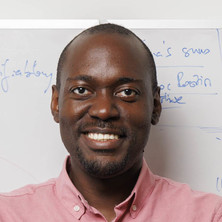
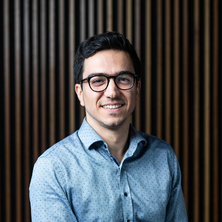
Dr Loic Yengo is a Professor of Statistical Genomics at The University of Queensland (UQ) and Group Leader of the Statistical Genomics Laboratory within UQ’s Institute for Molecular Bioscience. He was awarded a prestigious Snow Medical Research Fellowship in 2024 to dramatically advance the use of genomics to prevent chronic disease such as type 2 diabetes, heart disease and Alzheimer’s, with a particular focus on increasing participation of people with diverse ancestries. After completing a PhD in applied mathematics and statistics at the University of Lille (France) in 2014, he joined UQ in 2016 for postdoctoral training in Quantitative and Statistical Genetics. Loic started his own lab in 2020 to investigate the causes and consequences of genetic variation within and between human populations. His group develops and applies novel statistical methods to analyse large volumes of genomic data. Loic’s research has contributed to improving understanding of the genetic and phenotypic consequences of non-random mating (inbreeding and assortative mating) in human populations and has led to identifying novel genetic variants associated with complex traits and diseases. Loic was named among the top 40 rising stars of research by The Australian newspaper in 2021 and received the UQ Foundation research excellence award the same year. Loic is the 2022 recipient of the Ruth Stephens Gani Medal of the Australian Academy of Science recognizing outstanding contributions to research in human genetics, and was named in Nature Medicine’s 2022 Yearbook among 11 early-career researchers “to watch”.
In 2024, he was the recipient of the American Society of Human Genetics Early Career Award and a Snow Medical Research Foundation Fellowship to accelerate the deployment of genomic risk prediction in the clinic and improve the benefit of genomic medicine in all populations.
Affiliate of Julius Kruttschnitt Mineral Research Centre
Julius Kruttschnitt Mineral Research Centre
Faculty of Engineering, Architecture and Information Technology
Research Fellow
Sustainable Minerals Institute
Faculty of Engineering, Architecture and Information Technology
Availability:
Available for supervision
Dr Unzile Yenial Arslan holds a PhD in Mineral Processing Engineering from Istanbul Technical University. She spent a decade as a Research Assistant at Istanbul Technical University before moving into industry, where she served as a Senior Metallurgist at a copper concentrator in Turkey. During this time, she gained great experience in mineral processing, plant optimisation, operational excellence, and process improvement.
At the University of Queensland (UQ), Dr Yenial Arslan serves as Deputy Leader of the Flotation Chemistry Research Group, where she leads and contributes to industry-focused research that addresses complex mineral processing challenges by integrating geological characteristics, mineral surface reactivity, and flotation chemistry. She is also Deputy Director of the Coarse Particle Flotation Research Program, which develops innovative technologies and strategies to improve coarse particle recovery, enhancing both the efficiency and sustainability of mineral processing operations.
Her research focuses on advancing the understanding of the relationships between mineralogy, surface chemistry, and process engineering to develop practical, efficient, and sustainable mineral processing solutions. By combining fundamental scientific research with strong industry engagement, she bridges the gap between laboratory discoveries and operational implementation, delivering impactful innovations for the global minerals industry.
Faculty of Engineering, Architecture and Information Technology
Affiliate of ARC Research Hub to Advance Timber for Australia's Future Built Environment (ARC Advanc
ARC Research Hub to Advance Timber for Australia's Future Built Environment
Faculty of Engineering, Architecture and Information Technology
Availability:
Available for supervision
Media expert
I have a multidisciplinary background in chemical and civil engineering, chemistry and materials science. Currently, I am the UQ leader of the National Centre for Timber Durability and Design Life, based at USC. I apply my expertise to understand the effects of fungal decay and moisture intrusion in timber connections, as well as the improvement of the fire performance of timber. I supervise 6 PhD students.
Faculty of Engineering, Architecture and Information Technology
Availability:
Available for supervision
Dr Qing Yi is an interdisciplinary environmental scientist with 15 years of experience across environmental geochemistry, biogeochemistry, soil science, mine waste management, sustainable rehabilitation, and mine waste valorisation. His work focuses on understanding the geochemical behaviour of mine wastes and contaminated materials, and developing sustainable solutions for environmental assessment, rehabilitation, and resource recovery.
Qing’s expertise includes geochemical characterisation of mine waste, prediction and management of acid and metalliferous drainage, water quality assessment, contamination fate and transport, and the assessment and remediation of soils, sediments, groundwater, surface water, and mine-affected environments. He also has strong capabilities in laboratory and field-based analysis, predictive geochemical modelling, hydrogeological mapping, and statistical data interpretation.
His career spans research, development, and specialist technical roles across Australia and China, with a strong focus on applying scientific knowledge to practical environmental and mining challenges. Qing is passionate about innovation, interdisciplinary collaboration, and translating research into improved environmental management practices.
Faculty of Engineering, Architecture and Information Technology
Availability:
Available for supervision
Mehmet Yildirimoglu is a Senior Lecturer of Transport Engineering at the School of Civil Engineering. Mehmet received his B.Sc. degree in civil engineering from the Middle East Technical University (METU) in 2009, M.Sc. degree in civil engineering from the Rutgers University in 2011 and Ph.D. degree in civil engineering from École Polytechnique Fédérale de Lausanne (EPFL) in 2015. Prior to joining the School of Civil Engineering at the University of Queensland in 2016, he was a Postdoctoral researcher at EPFL, Switzerland. His research revolves around large-scale traffic modeling, dynamic traffic assignment, data mining techniques and real-time traffic management.
Faculty of Health, Medicine and Behavioural Sciences
Availability:
Available for supervision
Dr Tesfa Yimer is a Research Fellow at National Centre for Youth Substance Use Research, The University of Queensland. Tesfa’s research is focused on drug policy, addiction and mental health epidemiology.
Faculty of Engineering, Architecture and Information Technology
Professor
School of Electrical Engineering and Computer Science
Faculty of Engineering, Architecture and Information Technology
Availability:
Available for supervision
Prof. Hongzhi Yin works as an ARC Future Fellow and Professor and director of the Responsible Big Data & Intelligence Lab (RBDI) at The University of Queensland, Australia. He has made notable contributions to recommendation systems, structured foundation model, spatial-temporal prediction, LLM and ChatBI, and decentralized and edge intelligence. He has received numerous awards and recognition for his research achievements. He has been named to IEEE Computer Society’s AI’s 10 to Watch 2022 and Field Leader of Data Mining & Analysis in The Australian's Research 2020 magazine. In addition, he has received the prestigious 2023 Young Tall Poppy Science Awards, Australian Research Council Future Fellowship 2021, the Discovery Early Career Researcher Award 2016, UQ Foundation Research Excellence Award 2019, 2024 and 2025 Computer Science in Australia Leader Award, AI 2000 Most Influential Scholar Awards in Data Mining (2022-2026) and Information Retrieval and Recommendation (2025-2026), 2024 and 2025 ScholarGPS Highly Ranked Scholar (top 0.05%). His research has won 8 international and national Best Paper Awards, including Best Student Full Paper Award at CIKM 2024, Best Paper Award - Honorable Mention at WSDM 2023, Best Paper Award at ICDE 2019, Best Student Paper Award at DASFAA 2020, Best Paper Award Nomination at ICDM 2018, ACM Computing Reviews' 21 Annual Best of Computing Notable Books and Articles, Best Paper Award at ADC 2018 and 2016. His Ph.D. thesis won Peking University Outstanding Ph.D. Dissertation Award 2014 and CCF Outstanding Ph.D. Dissertation Award (Nomination) 2014. He has ten conference papers recognized as the Most Influential Papers in Paper Digest, including KDD 2021 and 2013, AAAI 2021, SIGIR 2022, WWW 2023 and 2021, CIKM 2021, 2019, 2016, and 2015. He has published 300+ papers in CCF A/CORE A* ranked venues, such as ICML, ICLR, NeurIPS, KDD, SIGIR, WWW, ACL, ICDM, SIGMOD, VLDB, ICDE, AAAI, IJCAI, ACM Multimedia, ECCV, IEEE TKDE, VLDB Journal, and ACM TOIS, achieving an H-index of 93 with over 30,000 citations. He serves as the PC Co-Chair for the top confernces ICDM 2027 and ADMA 2026, and Track Chair/Senior Area Chair for KDD 2027, AAAI 2027, WWW 2027, WWW 2025 and IEEE SSCI 2027. He has also served extensively as an Area Chair/SPC member for many top conferences, such as NeurIPS, KDD, ICDE, SIGIR, WWW, ACL, AAAI, IJCAI, ICDM, ICMR, and CIKM. In addition, he has been serving as Associate Editor/Guest Editor/Editorial Board for Neural Networks (JCR Q1, CCF B, 中科院一区), Science China Information Sciences (JCR Q1, CCF A, 中科院一区), Data Science and Engineering (JCR Q1, 中科院一区), Journal of Computer Science and Technology (JCST, CCF B), Journal of Social Computing, ACM Transactions on Information Systems 2022-2023 (JCR Q1, CCF A, CORE A, 中科院一区), ACM Transactions on Intelligent Systems and Technology 2020-2021 (JCR Q1), Information Systems 2020-2021 (CORE A*), and World Wide Web 2020-2021 and 2017-2018 (CORE A, CCF B). Dr. Yin has also been attracting wide media coverage, such as The Australian, The Australian Institute of Policy & Science (AIPS), Queensland Government, SBS Radio, UQ News, Sohu News, IEEE Computer Society, ACM Computing Reviews.
I am now looking for highly motivated Ph.D. students. The University of Queensland ranks in the top 50 as measured by the Performance Ranking of Scientific Papers for World Universities. The University also ranks 40 in the QS World University Rankings and 41 in the US News Best Global Universities Rankings. The University of Queensland is the best in Australia according to the Australian Financial Review (AFR), which has now ranked UQ in the #1 position for 2 consecutive years. Please find the following three PhD scholarships.
https://study.uq.edu.au/study-options/phd-mphil-professional-doctorate/projects/advancing-federated-learning-unified-urban-spatio-temporal-predictions (2 positions available for this project)
https://study.uq.edu.au/study-options/phd-mphil-professional-doctorate/projects/building-trustworthy-information-recommendation-system (one position limited to domestic student)
Latest News
[30 August 2026] Our research work "Proxy Model-Guided Reinforcement Learning for Client Selection in Federated Recommendation" was accepted by the top journal TKDE (CCF A, CORE A*).
[17 August 2026] We have four research papers accpeted by the top conference ICDM 2026 (CORE A*).
Empowering Compact LLMs with Fusion of Layer-wise Exits for Recommendation
Enhancing Group Recommendation with Memory-Augmented Reasoning in LLM Agent
An Efficient and Effective Agentic Group Shilling Attack on Recommender Systems
Denoising-Aware Inversion: Revealing Privacy Risks in Noise-Protected Text Embeddings
[12 August 2026] We have two research papers accpeted by the top conference CIKM 2026 (CORE A, CCF B).
QA-Merging: Query-Adaptive Reasoning via Layer Selective Model Merging
On Mitigating Data Sparsity in Conversational Recommender Systems
[11 August 2026] Our research work "RuleAgent: Discovering Rules for Recommendation Denoising with Autonomous Language Agents" was accepted by the top journal ACM TOIS (CCF A).
[4 August 2026] I was invited to serve as Research Track Chair for ACM Web Conference 2027 (ACM Web 2027).
[28 July 2026] I have been included in the "2026 AI 2000 Global Artificial Intelligence Scholars List" and awarded the "2026 AI 2000 Most Influential Scholar Award Honorable Mention" in both areas of "Data Mining" and "IR and Recommendation".
[8 July 2026] I was honored to be invited to serve as a Senior Area Chair for the KDD 2027 conference.
[1 July 2026] I was invited to serve as Symposium Chair for 2027 IEEE Symposium Series on Computational Intelligence (SSCI).
[20 May 2026] Our ARC Linkage Project 2025 "AI-Powered Design Co-Pilot for Reimagining Australian Single-Family Homes" has been successfully granted and funded.
[16 May 2026] We have three research papers accepted by the top conference KDD 2026 Research Track (CORE A*, CCF A, Acceptance Rate ~18%).
ProEx: A Unified Framework Leveraging Large Language Model with Profile Extrapolation for Recommendation
LEFT: Learnable Fusion of Tri-view Tokens for Unsupervised Time Series Anomaly Detection
Learning to Evaluate: Cost-Effective Model Evaluation on Unlabeled Data with Meta-Learning
[12 May 2026] I have been recognised in 2026 Edition of Best Scientists in the field of Computer Science and ranked 42 in Australia on Research.com, a leading academic platform.
[8 May 2026] Our research paper "Efficient Prompt Learning for Traffic Forecasting" has been accepted by VLDB Journal (CORE A*, CCF A)
[3 April 2026] We have 3 research papers accepted by the top conference SIGIR 2026.
Prompt-Unknown Promotion Attacks against LLM-based Sequential Recommender Systems
ProMax: Exploring the Potential of LLM-derived Profiles with Distribution Shaping for Recommender Systems
ProEchoMem: Enhancing Long Video Understanding via Multi-Trace Probe-Echo Memory
[27 March 2026] We have successfully secured the opportunity to host the top-tier conference ICDM 2027 in Brisbane.
[24 Feb 2026] We have 3 research papers on ChatBI accepted by the top conferences ICLR 2026 (CORE A*, CCF A) and ICDE 2026 (CORE A*, CCF A).
TableDART: Dynamic Adaptive Multi-Modal Routing for Table Understanding (ICLR 2026)
Boosting Small Language Models for Text-to-SQL with Fine-Grained Execution Feedback and Cost-Efficient Rewards (ICDE 2026)
An Efficient and Effective Evaluator for Text2SQL Models on Unseen and Unlabeled Data (ICDE 2026)
[21 Feb 2026] I’m pleased to join the Organizing Committee of the premier conference WSDM 2027 as the Conference Awards Co-Chair.
[18 Feb 2026] I’m pleased to join the Organizing Committee of the data mining flagship conference ADMA 2026 as the PC Co-Chair.
[5 Feb 2026] We are organizing a workshop "LLM-UP: LLM-powered User Profiling for Search and Recommendation" at SIGIR 2026.
[26 January 2026] We have 3 papers accepted by the top conference ICLR 2026 (CORE A*).
TableDART: Dynamic Adaptive Multi-Modal Routing for Table Understanding
Towards Anomaly-Aware Pre-Training and Fine-Tuning for Graph Anomaly Detection
TrustGen: A Platform of Dynamic Benchmarking on the Trustworthiness of Generative Foundation Models
[20 January 2026] I was invited to serve as Area Chair in the top conference KDD 2026 (CORE A*, CCF A), IJCAI 2026 (CORE A*, CCF A), ARR-ACL 2026 (CORE A*, CCF A) and ICDM 2026 (CORE A*, CCF B).
[14 January] We have two research papers accepted by the top conference WWW 2026 (CORE A*, CCF A). Congratulations to Xinyi and Hung.
Relational Database Distillation: From Structured Tables to Condensed Graph Data
Efficient Content-based Recommendation Model Training via Noise-aware Coreset Selection
[13 January 2025] We have two research papers recognized as ESI Hot Papers and five research papers recognized as ESI Highly Cited Papers.
XSimGCL: Towards Extremely Simple Graph Contrastive Learning for Recommendation
Self-Supervised Learning for Recommender Systems: A Survey
Teaching MLPs to Master Heterogeneous Graph-Structured Knowledge for Efficient and Accurate Inference
Manipulating Recommender Systems: A Survey of Poisoning Attacks and Countermeasures
Enhancing Social Recommendation With Adversarial Graph Convolutional Networks
[19 December 2025] I was invited to serve as Area Chair in the top conference SIGIR 2026 (CORE A*, CCF A) and senior PC member at the top conference ICMR 2026 (CORE A, CCF B).
[9 December 2025] I have been recognized as 2025 ScholarGPS Highly Ranked Scholar (top 0.05% of all scholars), #3 in Data Mining, #8 in Information Engineering.
[8 November 2025] Our research paper "SmartAgent: Chain-of-User-Thought for Embodied Personalized Agent in Cyber World" was accepted by the top conference AAAI 2026 (CCF A and CORE A*). Congratulations to Jiaqi.
[4 November 2025] We have released the first survey on Reasoning-Aware Recommender Systems in the LLM Era.
[28 October 2025] My ARC Discovery Project 2026 "Advancing Federated Learning for Unified Urban Spatio-Temporal Predictions" has been successfully granted and funded.
[13 October 2025] I was invited to be Area Chair for ACL Rolling Review (ARR).
[1 October 2025] I have been recognised in the Stanford/Elsevier Top 2% Scientists List Career Long (2022-2025) and Single Year (2020-2025).
Affiliate of ARC Research Hub for Sustainable Crop Protection
ARC Research Hub for Sustainable Crop Protection
Queensland Alliance for Agriculture and Food Innovation
Availability:
Available for supervision
Dr. Jiaxi Yong is currently a postdoc research fellow in School of Chemistry and Molecular Biosciences (SCMB), the University of Queensland (UQ).
Dr. Yong's research interests are in the field of nano-agro-biotechnology, specifically, nanoparticle-based nucleic acid delivery system, and plant-nanoparticle interactions. His current work is focusing on investigating the uptake and translocation of nanoparticles in plants, with the overarching aim to deliver synthetic RNAs and plasmid into various of plants, from model plants Arabidopsis to horticultural plants and grains including tobacco, tomato, citrus wheat, sorghum, and canola. He is also expertise in fluorescence-based imaging and tracking in plant and mammalian cells and tissues.
Dr. Yong obtained his PhD from Australian Institute for Bioengineering and Nanotechnology (AIBN, UQ) in May 2023. He worked with Dr. Chris Brosnan and Prof. Neena Mitter in the Queensland Alliance for Agriculture and Food Innovation (QAAFI, UQ) from May 2023 to July 2025, and then with Prof. Bernard Carroll in SCMB, UQ from July 2025.
Affiliate of Dow Centre for Sustainable Engineering Innovation
Dow Centre for Sustainable Engineering Innovation
Faculty of Engineering, Architecture and Information Technology
Postdoctoral Research Fellow
School of Chemical Engineering
Faculty of Engineering, Architecture and Information Technology
Availability:
Available for supervision
Ming Yong is a Postdoctoral Research Fellow at the UQ Dow Centre for Sustainable Engineering Innovation and the School of Chemical Engineering, University of Queensland, under the mentorship of Prof. Xiwang Zhang since February 2025. He obtained his Ph.D. in Chemical Engineering from Monash University (2021–2025), where he worked under the supervision of Dr. Zhikao Li, Prof. Xiwang Zhang, and Prof. Huanting Wang. At UQ, Ming’s current research focuses on developing high-performance porous membranes for applications in protein purification, lithium recovery, and redox flow batteries.
Emily is an experienced evaluator and policy analyst whose experience is designing, collecting and interpreting high quality evidence to improve outcomes for priority groups. She has deep, strategic knowledge of the Australian public sector, working alongside government agencies to design, implement and evaluate large, complex social policy initiatives.
Emily's motivated by helping her clients to use evaluation and research to understand the people they serve - conumers, service providers, Executive sponsors, advocacy groups - to deliver tailored programs and achieve better outcomes both for people and human service systems.
Her ability to build rapid rapport, synthesise complex information and balance perspectives means she is an in-demand strategic facilitator and trusted advisor to the executives of government agencies.
Her work creates impact because of her ability to connect information and people. She's great at taking complex information and making it simple and easy to action.
Affiliate of Centre for Environmental Responsibility in Mining
Centre for Environmental Responsibility in Mining
Faculty of Engineering, Architecture and Information Technology
Senior Research Fellow
Sustainable Minerals Institute
Faculty of Engineering, Architecture and Information Technology
Availability:
Available for supervision
I have over 10 years of research and work experience in the field of mining land rehabilitation, acquiring a total of>3.5 million in fund support from the Australian government, research council and mining companies. My extensive experience in industrial engagement, field trial design and application also increased my growth as the leader in sustainable mining waste management.
I am an Advanced Queensland research fellow in the leading global research group of Ecological Engineering of Mine Wastes at the Sustainable Mineral Institute (SMI). My research interest is investigating important molecular and cellular processes in eukaryotes that first arose in bacteria and archaea, and microbial metabolic activities control numerous geochemical cycles in soil formation for sustainable mineral waste management. I have intensive work experience on multiple representative mining wastes, including Cu-Au, Pb-Zn, Iron ore, Uranium mine waste rock and bauxite tailings and residues.
My research strength lies in my multidisciplinary work and research program spans the interface between environmental microbiology, geochemistry, and plants. My expertise includes 1) mineral characterization, 2) soil and rhizosphere element cycling, 3) next-generation sequencing and online-controlled bioreactor techniques. Through the integrated application of environmental 'omics approaches, stable isotope analysis and imaging would give new insights into the fundamental element cycling processes of mined land mining wastes, and upon which I could develop novel biotechnology and methodology to prime sustainable mined land management and bioinoculum product with the field validated designated performance.
Liz Young is the Research Director of the Queensland Decarbonisation Hub and an applied researcher focused on climate transitions, sectoral decarbonisation, and policy innovation. She brings over 20 years of experience in the Queensland Government, including more than a decade in senior leadership roles shaping environmental and climate policy.
Before transitioning to academia, Liz played a central role in major state-wide initiatives such as the Clean Economy Jobs Bill, which legislated Queensland’s 2035 and 2050 emissions reduction targets; the introduction of bioregional planning as part of national environmental reforms; and the development of Queensland’s Protected Area Strategy. Her leadership has spanned a broad policy portfolio including climate adaptation, environmental planning, protected areas, First Nations economic transition, and sustainability planning for the Brisbane 2032 Olympic and Paralympic Games.
Liz holds a PhD in Political Science and an Executive Master of Public Administration (ANZSOG), and was an Australian Parliamentary Fellow. She brings deep expertise in how public policy, institutional settings, and stakeholder dynamics shape environmental outcomes, and is committed to bridging the gap between research and policy through co-production, public sector capability-building, and institutional change.
Charlotte Young is a research fellow at the Institute for Social Science Research at The University of Queensland. Charlotte is a qualitative researcher with interdisciplinary interests spanning sociology, public health, health promotion, and migration studies. Her research focuses on the systemic drivers of migrant health inequities and how they can be redressed. Charlotte is also interested in the ways migrants adapt and respond to systemic and structural drivers of inequity. Recently, she has been exploring how the COVID-19 pandemic has impacted migrant and refugee background tertiary students and how young culturally and linguistically diverse social media influencers have been promoting COVID-safe behaviours online. Charlotte also explores immigrant organisations as critical settings to influence health and wellbeing. She is passionate about producing impactful research to affect positive change and tackling migrant health problems in solidarity with the communities they affect. Charlotte also has experience conducting evaluation research for large-scale health interventions.