Affiliate of Dow Centre for Sustainable Engineering Innovation
Dow Centre for Sustainable Engineering Innovation
Faculty of Engineering, Architecture and Information Technology
Postdoctoral Research Fellow
School of Chemical Engineering
Faculty of Engineering, Architecture and Information Technology
Availability:
Available for supervision
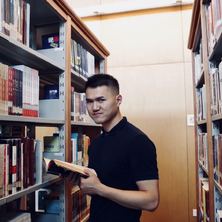
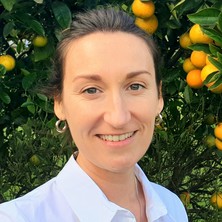
Ming Yong is a Postdoctoral Research Fellow at the UQ Dow Centre for Sustainable Engineering Innovation and the School of Chemical Engineering, University of Queensland, under the mentorship of Prof. Xiwang Zhang since February 2025. He obtained his Ph.D. in Chemical Engineering from Monash University (2021–2025), where he worked under the supervision of Dr. Zhikao Li, Prof. Xiwang Zhang, and Prof. Huanting Wang. At UQ, Ming’s current research focuses on developing high-performance porous membranes for applications in protein purification, lithium recovery, and redox flow batteries.
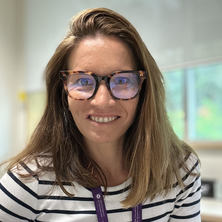
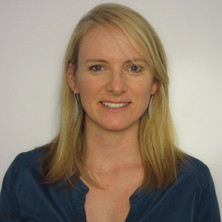
Emily is an experienced evaluator and policy analyst whose experience is designing, collecting and interpreting high quality evidence to improve outcomes for priority groups. She has deep, strategic knowledge of the Australian public sector, working alongside government agencies to design, implement and evaluate large, complex social policy initiatives.
Emily's motivated by helping her clients to use evaluation and research to understand the people they serve - conumers, service providers, Executive sponsors, advocacy groups - to deliver tailored programs and achieve better outcomes both for people and human service systems.
Her ability to build rapid rapport, synthesise complex information and balance perspectives means she is an in-demand strategic facilitator and trusted advisor to the executives of government agencies.
Her work creates impact because of her ability to connect information and people. She's great at taking complex information and making it simple and easy to action.
Affiliate of Centre for Environmental Responsibility in Mining
Centre for Environmental Responsibility in Mining
Faculty of Engineering, Architecture and Information Technology
Senior Research Fellow
Sustainable Minerals Institute
Faculty of Engineering, Architecture and Information Technology
Availability:
Available for supervision
I have over 10 years of research and work experience in the field of mining land rehabilitation, acquiring a total of>3.5 million in fund support from the Australian government, research council and mining companies. My extensive experience in industrial engagement, field trial design and application also increased my growth as the leader in sustainable mining waste management.
I am an Advanced Queensland research fellow in the leading global research group of Ecological Engineering of Mine Wastes at the Sustainable Mineral Institute (SMI). My research interest is investigating important molecular and cellular processes in eukaryotes that first arose in bacteria and archaea, and microbial metabolic activities control numerous geochemical cycles in soil formation for sustainable mineral waste management. I have intensive work experience on multiple representative mining wastes, including Cu-Au, Pb-Zn, Iron ore, Uranium mine waste rock and bauxite tailings and residues.
My research strength lies in my multidisciplinary work and research program spans the interface between environmental microbiology, geochemistry, and plants. My expertise includes 1) mineral characterization, 2) soil and rhizosphere element cycling, 3) next-generation sequencing and online-controlled bioreactor techniques. Through the integrated application of environmental 'omics approaches, stable isotope analysis and imaging would give new insights into the fundamental element cycling processes of mined land mining wastes, and upon which I could develop novel biotechnology and methodology to prime sustainable mined land management and bioinoculum product with the field validated designated performance.
Liz Young is the Research Director of the Queensland Decarbonisation Hub and an applied researcher focused on climate transitions, sectoral decarbonisation, and policy innovation. She brings over 20 years of experience in the Queensland Government, including more than a decade in senior leadership roles shaping environmental and climate policy.
Before transitioning to academia, Liz played a central role in major state-wide initiatives such as the Clean Economy Jobs Bill, which legislated Queensland’s 2035 and 2050 emissions reduction targets; the introduction of bioregional planning as part of national environmental reforms; and the development of Queensland’s Protected Area Strategy. Her leadership has spanned a broad policy portfolio including climate adaptation, environmental planning, protected areas, First Nations economic transition, and sustainability planning for the Brisbane 2032 Olympic and Paralympic Games.
Liz holds a PhD in Political Science and an Executive Master of Public Administration (ANZSOG), and was an Australian Parliamentary Fellow. She brings deep expertise in how public policy, institutional settings, and stakeholder dynamics shape environmental outcomes, and is committed to bridging the gap between research and policy through co-production, public sector capability-building, and institutional change.
Charlotte Young is a research fellow at the Institute for Social Science Research at The University of Queensland. Charlotte is a qualitative researcher with interdisciplinary interests spanning sociology, public health, health promotion, and migration studies. Her research focuses on the systemic drivers of migrant health inequities and how they can be redressed. Charlotte is also interested in the ways migrants adapt and respond to systemic and structural drivers of inequity. Recently, she has been exploring how the COVID-19 pandemic has impacted migrant and refugee background tertiary students and how young culturally and linguistically diverse social media influencers have been promoting COVID-safe behaviours online. Charlotte also explores immigrant organisations as critical settings to influence health and wellbeing. She is passionate about producing impactful research to affect positive change and tackling migrant health problems in solidarity with the communities they affect. Charlotte also has experience conducting evaluation research for large-scale health interventions.
Faculty of Health, Medicine and Behavioural Sciences
Affiliate of Leading for High Reliability Centre
Leading for High Reliability Centre
Faculty of Engineering, Architecture and Information Technology
Affiliate of Social Identity and Groups Network (SIGN) Research Centre
Social Identity and Groups Network
Faculty of Health, Medicine and Behavioural Sciences
Availability:
Available for supervision
Media expert
Dr Tarli Young is a Research Fellow in the Social Identity and Groups Network (SIGN) at the University of Queensland, specialising in wellbeing science and social identity interventions. Her work focuses on promoting thriving and flourishing in individuals and groups through innovative, evidence-based approaches.
With expertise in social connection, mindfulness, Acceptance and Commitment Therapy (ACT), and positive psychology, Tarli develops and tests interventions to enhance mental health across diverse populations, including aid workers, veterans, and elite athletes transitioning into retirement. Her research explores expansive identities and ethics, and their impact on wellbeing and morailty.
Key areas of expertise include:
Social identity and health
Mindfulness and ACT-based interventions
Aid worker and veteran mental health
Positive psychology and wellbeing science
Thriving, flourishing, and social connection
Expansive identities
The connection between ethics and wellbeing
Tarli is a recipient of multiple research awards and grants and serves as Deputy Director of SIGN and Associate Editor of the International Journal of Wellbeing. Her work bridges academia and real-world impact, fostering connection, wellbeing, and resilience in high-meaning, high-stress careers.
I have a keen interest in the evolutionary relationships that underpin symbioses, particularly those involved in plant disease. There are countless examples of how diseases have impacted different crops throughout history, and this is an ongoing issue that deleteriously impacts food security. My research involves developing a better understanding of the epidemiology of plant diseases and pests, and delivering improved diagnostics and field management. Working with collaborators and international experts, my work involves research on a broad range of plants that are affected by bacteria, fungi, oomycetes, viruses, nematodes and arthropod pests. I have a strong interest in the biotic factors that govern soil health and the methods by which we can promote the development of beneficial microbial communities.
I obtained my BSc.(Hons) from the University of New South Wales in Australia, then went on to pursue a PhD at the Australian National University’s Research School of Chemistry under the supervision of Professor Anthony Hill. After stints at the University of Oxford and the University of Edinburgh as a research fellow in groups of Andrew Weller and Polly Arnold respectively, I began my independent career at the National University of Singapore in 2014. Since then I have focused on methodology development using pincer complexes and frustrated Lewis pairs to address challenges in small molecule activation, in particular the selective activation of carbon-halide and carbon-chalcogen bonds. My achievements have been recognized with research awards including Asian Chemistry Prizes from Japan and China (2018) and the Thieme Chemistry Journal Award in 2019. In 2022 I was awarded an ARC Future Fellowship, which I assumed at the University of Queensland in mid-2023. The theme of the research for this fellowship is the recycling and repurposing of fluorocarbons through selective activation using organometallic techniques.
Faculty of Health, Medicine and Behavioural Sciences
Availability:
Not available for supervision
Media expert
I am an Advanced Accredited Practicing Dietitian (AdvAPD), and currently hold positions at the Royal Brisbane and Women’s Hospital (Research Coordinator, Nutrition and Dietetics), and University of Queensland (Senior Research Fellow, Centre for Health Services Research).
My research program aims to improve nutrition care in Australian hospitals to prevent avoidable hospital-acquired complications and optimise patient outcomes, particularly for older inpatients. My research program consists of extensive observational research to establish the size and impact of the problem, qualitative research to understand patient, caregiver and staff perspectives and opportunities, and pragmatic implementation research to test, compare and evaluate different models of nutrition care in practice. Through my research, I am to improve care of people accessing health services across the continuum of care, with a particular interest in frailty, preventing delirium and functional decline, and person-centred care.
My research has been of interest nationally and internationally, receiving Research in Practice awards at national Dietitians Australia conferences, Young Achiever Award by the Dietitians Association of Australia in 2014 and New Researcher Award at the International Congress of Dietetics in 2012. My leadership and contribution to the dietetics profession was recently recognised through receiving the prestigious Barbara Chester Memorial Award.
I have an interest and developing expertise in consumer engagement in research and health service improvement, and I am regularly asked to speak on this topic at conferences, forums and panel discussions. I am proud of work I co-led with a health consumer to develop a co-design framework in Metro North Health. This framework is freely available online for anyone to use: https://metronorth.health.qld.gov.au/get-involved/co-design.
I am an implementation scientist and have facilitated workshops on this topic at UQ, QUT, University of Adelaide and Metro North HHS within a team of local and international experts. I was part of the team that developed the Allied Health Translating Research into Practice (AH-TRIP) initiative, which aims to increase knowledge translation capacity for health professionals. https://www.health.qld.gov.au/clinical-practice/database-tools/translating-research-into-practice-trip/translating-research-into-practice.
As a passionate advocate for the training and career pathways for clinician-scientists, I have supervised 3 PhDs to completion, and is currently supervising 6 research higher degree candidates (5 of whom are embedded health professionals within the health system), 4 early career research fellows and nearly 40 dietetics research honours students.
I am a researcher in atmospheric and climate science, focusing on tropical cyclone detection and projection. I completed my Ph.D. at the City University of Hong Kong, where I studied the decadal variability of tropical cyclone activity over the Northwest Pacific and its connection with ocean-atmosphere interactions. Before that, I earned my M.Sc. in Meteorology from Lanzhou University and a B.Sc. in Atmospheric Science from Nanjing University of Information Science and Technology.
My current research revolves around three interconnected themes: simulating and predicting tropical cyclones, assessing their associated landfall hazards, and providing climate services to the public.
Dr Joyce Xin Yu is an Associate Professor at UQ Business School. She received her PhD degree from The Chinese University of Hong Kong and her BA from Fudan University. Her research focuses on corporate governance issues in three areas: family business, corporate social responsibility, and accounting disclosure. Her publications have appeared in various journals, including Journal of Law and Economics, Journal of Corporate Finance, European Accounting Review, Journal of Business Finance & Accounting, British Accounting Review, and Journal of Business Ethics. Dr Yu's teaching speciality is financial accounting.
Australian Institute for Bioengineering and Nanotechnology
Availability:
Available for supervision
Media expert
Professor Chengzhong (Michael) Yu is an internationally recognised expert in nanotechnology, chemistry and materials science. He is the author of over 400 scientific publications with over 36,000 citations. He has received National Health and Medical Research Council (NHMRC) Leadership (L3) and Australian Research Council (ARC) Future Fellowship.
His research interest includes functional nanomaterials and their applications in healthcare, agriculture, and energy storage. He is working with industrial partners to provide innovative solutions for challenging problems in our society.
Australian Institute for Bioengineering and Nanotechnology
Availability:
Available for supervision
Dr Meihua Yu is a Research Fellow in Cancer Immunotherapy at the Australian Institute for Bioengineering and Nanotechnology (AIBN). She received her PhD in Biomedical Engineering from AIBN, UQ in 2014. Throughout her research career, she has held full-time research positions from 2014 to 2021 at UQ following completion of her PhD, followed by a position as Research-Teaching Associate Prof at Shanghai University, China (2021-2025). She returned to AIBN in 2026 to continue her research program.
Dr Yu's current research focuses on materials-immunology for cancer treatment and prevention of infectious diseases. Dr Yu has published 95 papers (H-index, 40) in top international journals including Science Advances, Angewandte Chemie International Edition, Advanced Materials, Journal of the American Chemical Society, Journal of Immunology, and Chemical Society Reviews. Her innovative research has resulted in 1 international patents and 14 Chinese patents.
Dr Yu has secured competitive research funding over $1.0M from the ARC, NHMRC, Queensland Government, National Natural Science Foundation of China, Shanghai Municipality, and Zhejiang Province (e.g., UQ Early Career grants, ARC Linkage projects, Queensland Biomedical Assistance Fund, and the 2017 UQ Foundation Research Excellence Award).
Dr Yu has been awarded four prestigious national and state fellowships, including 2017 NHMRC Early Career Fellowship, 2016 Advance Queensland Early Career Research Fellowship, 2021 Shanghai Excellent Overseas Young Scientists, and 2022 Zhejiang Overseas Thousand Talents Program (relinquished). She has actively pursued commercial translation of her discoveries through strategic collaborations with industry partners, including Ridley, Ellume, and Jingang Medicines.
Dr Yu serves as an invited reviewer for national competitive grants and manuscripts for more than 40 international journals, including Med, ACS Nano, and Advanced Materials.