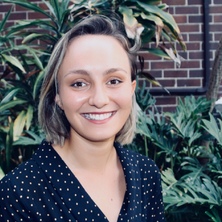
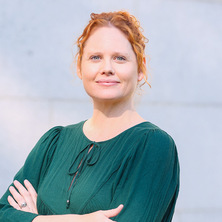
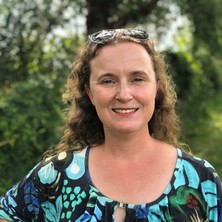
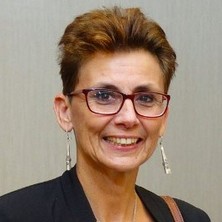
Elizabeth-Rose Ahearn is a Postdoctoral Research Fellow in the School of Social Sciences at the University of Queensland (UQ). Her research centres on measuring and evaluating the impact of charitable not-for-profit organisations, as well as other purpose-driven entities, including those in the public sector, social enterprises, corporate social responsibility efforts, and social impact bonds. She has a particular interest in leveraging digital technologies to enhance impact measurement, improve management processes, and support evidence-based decision-making. Elizabeth-Rose has extensive experience as an evaluator, having collaborated with a diverse range of for-purpose organisations, including a research secondment with the Department of Social Services focused on digital tools for advancing Australia's social impact investing sector. Alongside her role at UQ, she serves as the Co-Chair of the Queensland chapter of the Social Impact Measurement Network of Australia (SIMNA).
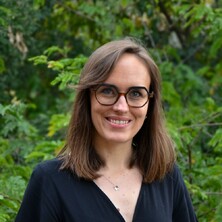
Christina Bornatici is a Postdoctoral Research Fellow working on the ARC Kathleen Fitzpatrick Laureate Project Bringing Equality Home: A New Gender Agenda. Her broader research interests include gender inequality, family dynamics, paid employment and unpaid work, social policy, and quantitative research methods.
Her research examines how gender inequalities are produced, sustained, and challenged across the life course and over historical time, with a particular focus on gender attitudes and the division of labour within couples. She uses longitudinal quantitative and comparative methods to analyse how attitudes, couple dynamics, institutional contexts, and gender norms shape social outcomes.
Christina holds a PhD in Social Sciences from the University of Lausanne, Switzerland. Prior to joining ISSR, she was a researcher at FORS – the Swiss Centre of Expertise in the Social Science.
Affiliate of ARC COE for Children and Families Over the Lifecourse
ARC COE for Children and Families Over the Lifecourse
Faculty of Humanities, Arts and Social Sciences
Postdoctoral Research Fellow
Institute for Social Science Research
Faculty of Humanities, Arts and Social Sciences
Availability:
Available for supervision
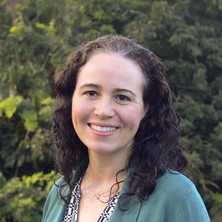
Dr Sandra Buchler is the Mary Lee Family Dynamics Fellow at the ARC Centre of Excellence for Children and Families over the Life Course. She is currently undertaking a research project on the life course trajectories of sole parents in Australia. Sandra holds a PhD in Sociology from the University of Queensland. Her broader research interest lies in the role of gender ideology and labour market stratification in perpetuating gender inequality. Her areas of research and expertise include life course transitions, families, gender inequality, female labour force participation, gender ideologies, education, qualitative evaluation and quantitative research methods. Sandra was a Lecturer at the University of Bamberg from 2011 to 2013 and a Senior Lecturer at the Goethe University Frankfurt (2014 – 2024).
Affiliate of Centre for Digital Cultures & Societies
Centre for Digital Cultures & Societies
Faculty of Humanities, Arts and Social Sciences
Availability:
Available for supervision
Media expert
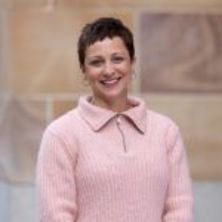
Dr Renée Mickelburgh is a communication scholar at the University of Queensland (UQ). With over two decades of experience in communication — from journalism and political communication, through to civil society and now academia — Renée lectures and coordinates courses in media strategies and strategic communication. Her research considers how emotions circulate in the communication of wicked problems: specifically, gender violence and environmental justice. She is also concerned with how emerging technologies — particularly artificial intelligence — are reshaping strategic communication, advocacy, and public discourse.
Renée is the author of The ecofeminist storyteller: environmental communication through women's digital garden stories and has co-authored book chapters and journal articles focussed on the communicaiton of sexual consent among young adults. She has worked as a research fellow for UQ’s Sexual and Gender Violence Research Network and is now deputy lead of the School of Communication and Arts AI working Party. The AI Working Party aims to connect teachers, researchers and industry experts across disciplines including strategic communication, creative writing, literary studies, drama, digital media, and museum studies and provide a coordinated response to the opportunities and risks posed by AI. As an affiliate of UQ’s Centre for Communication and Social Change, she contributes to discussions on AI for public good and AI's impact on women.
Renée follows the transformative approaches of leading feminist writers and scholars by engaging with creative methods of inquiry in her teaching and research.
Renée is open to supervision and welcomes inquires from potential post-graduate students in the following areas:
Affiliate of ARC COE for Children and Families Over the Lifecourse
ARC COE for Children and Families Over the Lifecourse
Faculty of Humanities, Arts and Social Sciences
Affiliate of Parenting and Family Support Centre
Parenting and Family Support Centre
Faculty of Health, Medicine and Behavioural Sciences
Availability:
Available for supervision
Media expert
Cameron is an Australian Research Council Industry Fellow in partnership with Micah Projects.
Cameron’s research spans three linked areas of society. The first theme examines social problems. Cameron is interested in how social problems are framed, experienced, and contribute to the alienation of people affected and social dislocation. Cameron’s second theme of enquiry engages the myriad things society does about social problems. He is interested in the link between the framing and experience of social problems and the funded and practice solutions delivered. This includes both formal human services and voluntary and ground up community actions. The third theme of Cameron’s research seeks to uncover and extend empirical, theoretical, and ethical ideas for what a society that ends and prevents social problems would look like. This body of work is interested in not only how competing ideas for social cohesion can co-exist, but also how people holding competing ideas can come together to progress social cohesion through a diversity of disagreement.
In his first book, The Homeless Person in Contemporary Society, Cameron sought to highlight how the representation of people who are homeless as distinct informs a policy and practice agenda that he characterised as a poverty of ambition. Cameron's second book with Andrew Clarke and Francisco (Paco) Perales, Charity and Poverty in Advanced Welfare States, takes on the question how can we be just by soothing the consequences of poverty without addressing the causes of poverty.
Cameron's most recent book published by Polity Press, Homelessness, demonstrates that homelessness is a punishing, predictable, yet solvable social problem.https://www.politybooks.com/bookdetail?book_slug=9781509554492
Dr Stefanie Plage is an ARC DECRA Fellow at the School of Social Science researching health and social care in the context of housing instability. Prior to her DECRA Fellowship, she was a Research Fellow with the Life Course Centre at the School of Social Science at UQ. Her expertise is in qualitative research methods, including longitudinal and visual methods. Her research interests span the sociology of emotions, disadvantage and health and illness. Stefanie has taught introductory and advanced courses in sociology and medical sociology, research design and qualitative inquiry, including the use of software for qualitative research (i.e. NVivo). Her work is multi-disciplinary. She completed her PhD at the Centre for Social Research in Health at The University of New South Wales. In her study she employed a mix of longitudinal qualitative interviews and visual elicitation methods to explore the lived experience of people with cancer.
As part of her DECRA, UQ offers a PhD opportunity. While the DECRA itself is not focussed on Aboriginal and Torres Strait Islander peoples, the project will support a PhD Candidate to address their experiences. The scholarship is advertised here https://study.uq.edu.au/study-options/phd-mphil-professional-doctorate/projects/dying-dignity-caring-people-without-home-end-life . Please reach out to Stefanie directly for more information.
Deputy Associate Dean (Academic) - StudentsDeputy Associate Dean (Academic) - Students
Faculty of Humanities, Arts and Social Sciences
Director of Teaching and Learning of School of Social Science
School of Social Science
Faculty of Humanities, Arts and Social Sciences
Associate Professor
School of Social Science
Faculty of Humanities, Arts and Social Sciences
Availability:
Not available for supervision
Associate Professor Lynda Shevellar has over 20 years in tertiary education. She joined The University of Queensland in 2009. Based in the School of Social Science, Lynda is the winner of an Australian Award for University Teaching Excellence (AAUT) in Society and Culture (2025). Previously she has won an early career award for teaching excellence in 2011, a University of Queensland Award for Teaching Excellence in 2019, and an Australian Award for University Teaching (AAUT) Citation for Outstanding Contributions to Student Learning (2019). She is a Senior Fellow of the Higher Education Academy, the Principal Practitioner - Participation and Engagement (Institute for Teaching and Learning Innovation), and is one of the Deputy Associate Deans (Academic) - Students, for the HASS Faculty. Lynda has previously held roles in government and the community sector and is influenced by over thirty years of experience in community development, the disability sector, mental health, education, and psychology.
Lynda's research explores three closely aligned agendas: understanding the experience of people who live with heightened vulnerability; developing the awareness, agency and capacity of communities to respond to social disadvantage and inequality; and aligning community development theory and education to inform practice in working alongside people who live with heightened vulnerability. Lynda has a particular interest in the development of inclusive learning communities, through creative teaching practices, participative research strategies, and engaged citizenship.
Lynda currently coordinates the courses SOSC2288: Community Development - Local and International Practice; and SOCY1070: Inequality, Society and the Self.
Affiliate of ARC COE for Children and Families Over the Lifecourse
ARC COE for Children and Families Over the Lifecourse
Faculty of Humanities, Arts and Social Sciences
Research Fellow
School of Nursing, Midwifery and Social Work
Faculty of Health, Medicine and Behavioural Sciences
Availability:
Available for supervision
Dr Laura Simpson Reeves is a Research Fellow in the School of Nursing, Midwifery, and Social Work at The University of Queensland. Her program of research explores how structural and cultural forces shape experiences of inequality and disadvantage, working at the intersection of culture, community, and care. Her work seeks to contribute to positive outcomes for children and families through strengthening evidence-based practice.
Laura's research is grounded in a deep commitment to social justice, equity, and inclusion, with a strong interdisciplinary focus that spans sociology, community and international development, communication studies, and social work. Her work is characterised by applied, impact-driven practice and methodological rigor, especially in qualitative and visual/arts-based methods, with a sustained focus on vulnerable and marginalised populations. She is passionate about translating research into practice and amplifying voices of those with lived/living experience.
In addition to her research, Laura is passionate about creating safe and inclusive spaces in which research and teaching can be grounded and learning shared. She has a strong history of service and mentoring with students and early career academics, especially those returning to study or coming from non-traditional or marginalised backgrounds.
Affiliate of Centre for Digital Cultures & Societies
Centre for Digital Cultures & Societies
Faculty of Humanities, Arts and Social Sciences
UQ Amplify Senior Research Fellow
Institute for Social Science Research
Faculty of Humanities, Arts and Social Sciences
Availability:
Not available for supervision
Kiah Smith is a Sociologist with expertise in environment, sustainable development and food justice. With a strong record of international publications on food justice, food security, climate resilience, financialisation, ethical trade, green economy, sustainable livelihoods, gender empowerment and food system governance, Kiah’s work contributes new understandings of the social dimensions of food system transformation at the intersection of multiple crises. Using mostly qualitative, participatory methodologies (such as action research and future scenario planning), her research emphasises the role that civil society plays in transformative policy making that is systems-focused and inclusive of social-ecological perspectives. For example, her ARC DECRA study - Fair Food, Civil Society and the Sustainable Development Goals - examined how civic stakeholders are able to resist, reshape or redefine what a just and sustainable food system might look like, based on co-design and collaboration with civil society, local government, advocacy groups and grassroots food actors (food hubs, community gardens, and food charities) in Australia. This interdisciplinary research agenda can best be summarised as one where ‘food futures’ are closely connected with ‘deep’ sustainability, rights, justice and empowerment, within the growing field of ‘sustainability transitions’.
Other past and present studies include: Multifunctional horticulture - land, labour and environments; Ethical consumption and COVID; Responsible innovation in digital agriculture; Employment policy and indigenous food sovereignty in remote Australia; Financialisation of food and farmland in Australia; Resilience and governance of Australian food systems during crisis; and Mapping civil society, human rights and the SDGs. Kiah has conducted research in Australia and internationally, she has worked with local NGOs (in Africa and Australia), with the United Nations Research Institute in Geneva, and in multidisciplinary research teams spanning the social and natural sciences both here and abroad. Kiah is also a Future Earth Fellow, treasurer of the Australasian Agrifood Research Network, and executive member of the RC40 on Food and Agriculture in the International Sociological Association. Her work at the nexus of academia and policy/advocacy contributes to the growing movement for the right to food in Australia and globally.
Discipline Lead for Agribusiness, International Development and Economics of School of Agriculture a
School of Agriculture and Food Sustainability
Faculty of Science
Affiliate of ARC Training Centre for Bioplastics and Biocomposites
ARC Training Centre for Bioplastics and Biocomposites
Faculty of Engineering, Architecture and Information Technology
Associate Professor in Rural Dev. & Agriculture
School of Agriculture and Food Sustainability
Faculty of Science
Availability:
Available for supervision
Media expert
Bio: Dr. Severine van Bommel is a Senior Lecturer at the University of Queensland's School of Agriculture and Food Sustainability. With a keen interest in rural development and agricultural extension, her research focuses on understanding the role of experts and expertise in orchestrating effective governance performances for systemic transformation of natural resource dilemmas and competing claims. Through an interpretive lens, her research aims to support experts in communicating and collaborating with farmers and communities in situations of social learning, multi-stakeholder partnerships, farmer field schools, community-based NRM or co-inquiry and co-design.
Research Interests:
Rural development
Agricultural extension
Sustainable development
Indigenous engagement
Environmental credentials verification
Current Projects:
- the co-design of a virtual platform for verifying environmental credentials for Australian beef producers
- developing indigenous engagement methods (storian) for Australian researchers working with Ni-Vanuatu livestock farmers
- making visible and challenging gender norms in transdisciplinary research and development practice
- facilitating more-than-human participatory research and practice
Publications: Dr. van Bommel has contributed to significant works in her field, including:
"Rural Development for Sustainable Social-Ecological Systems: Putting Communities First" (Palgrave)
"Forest and Nature Governance: A Practice-Based Approach" (Springer)
Her research contributions have been published in prestigious journals and presented at international conferences such as IPA, MOPAN, IFSA, and APEN.
Teaching: In addition to her research, Dr. van Bommel teaches courses on:
Leadership in rural industries (MSc)
Effective stakeholder engagement (MSc)
Human-wildlife interactions (MSc and BSc)
Mentorship and Community Engagement: Dr. van Bommel is dedicated to mentoring early career researchers interested in interpretive methods within the APSA mentoring program. She also runs an International Virtual Community of Practice for Interpretive Practitioners, fostering collaboration and knowledge exchange in the field.
Associate Professor Elske van de Fliert leads the Communication and Social Change Researcg Group and facilitates the Communication for Social Change field of study of the Master of Communication program. She obtained a PhD in Communication & Innovation in 1993 from Wageningen University, The Netherlands. She joined the UQ School of Journalism and Communication (now School of Communication and Arts) in July 2006. Prior to this, Elske worked for two decades in research, development and teaching positions in Indonesia, Vietnam and Sri Lanka, with work also across China, Kenya, Uganda, Philippines and Kyrgyzstan.
Elske’s research interests include participatory development communication, facilitation of transdisciplinary research for sustainable development, and impact assessment of social change processes. Over the years at UQ, she has been conducting research projects in Indonesia, Timor Leste, Philippines and Mongolia. She has published widely on a range of topics related to participatory research and communication in sustainable rural development.