Faculty of Engineering, Architecture and Information Technology
Affiliate of School of Chemical Engineering
School of Chemical Engineering
Faculty of Engineering, Architecture and Information Technology
Affiliate of Australian Centre for Water and Environmental Biotechnology (formerly AWMC)
Australian Centre for Water and Environmental Biotechnology
Faculty of Engineering, Architecture and Information Technology
Affiliate of ARC Training Centre for Bioplastics and Biocomposites
ARC Training Centre for Bioplastics and Biocomposites
Faculty of Engineering, Architecture and Information Technology
Availability:
Available for supervision
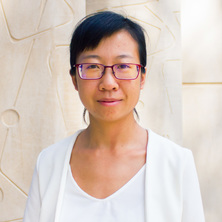
Dr Lisa Bai is a Research Fellow in the School of Chemical Engineering and the Australian Centre for Water and Environmental Biotechnology (ACWEB) at the University of Queensland. She is chief investigator for multiple projects advancing sustainable waste and wastewater management, with a focus on resource recovery to produce bioenergy and value-added bioproducts such as biodegradable plastics (PHA).
Dr Bai holds a background in bioengineering and environmental engineering. Prior to joining UQ, she worked for four years in environmental consultancy in North Queensland, developing macroalgae-based bioremediation systems and valorising waste streams into biomass for aquaculture feed, fertilisers, and bioactive products.
Faculty of Health, Medicine and Behavioural Sciences
Availability:
Available for supervision
Media expert
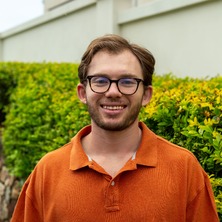
I am a motivated and enthusiastic Accredited Practising Dietitian and Accredited Sports Dietitian. I am interested in building sustainable foodservices worldwide, sports nutrition for recreational runners and seperate entrepreneurial ventures. I have a passion for clinical research and quality improvement projects in hospital dietetic services. Currently I want to help build sustainable foodservice systems for public/private entities that consider the future of human and planetary health. I am an ambitious individual who loves networking and who is eager to collaborate, please reach out.
My PhD research has focussed on the measurement and management of food waste in hospital foodservices through aggregate food waste audit activities and diverting food waste from landfill.
Faculty of Engineering, Architecture and Information Technology
Availability:
Available for supervision
Biography
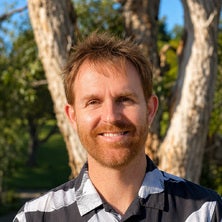
Senior Lecturer Dr Ramon Ganigué leads a research program on microbial biotechnologies for sustainable manufacturing, addressing critical challenges such as climate change and circular resource management for the benefit of people and planet.
He obtained his PhD in Environmental Engineering from the University of Girona, Spain. Prior to joining The University of Queensland (UQ), Ramon held academic and research positions across Europe and Australia, including Assistant Professor (2017–2022) and Associate Professor (2022–2026) in the Department of Biotechnology at Ghent University, Belgium, alongside postdoctoral appointments at Ghent University, the University of Girona, and UQ.
He has published over 100 peer‑reviewed articles and established extensive international collaborations spanning Europe, Australia, China, and North America. Ramon has led multiple large-scale, multi-partner research projects and, over the past five years, has secured approximately AUD 10 million in competitive European funding to support his team’s activities. In 2024, he was appointed Associate Editor of Frontiers in Bioprocess Engineering.
Research
Vision: To harness the diversity and functionality of microbial systems to enable sustainable, circular manufacturing processes that decouple production from fossil resources and support the transition to a net-zero bioeconomy.
Mission: To engineer robust, scalable microbial bioprocesses that convert complex, non-refined feedstocks into high-value products for the benefit of people and planet. His team integrates microbial physiology, community engineering, and process design to unlock the potential of non-model microorganisms and microbiomes, while developing intensified and industrially relevant bioprocess platforms.
Dr Ramon Ganigué’s research lies at the intersection of microbial biotechnology, chemical engineering, and sustainability, with a focus on engineering microbial bioprocesses for sustainable production systems. His team applies an integrated toolbox spanning microbial physiology, community engineering, metabolic and process modelling, and bioprocess intensification to develop next-generation biotechnologies.
Central to this approach is a deep understanding of microbial physiology and metabolism. The research places particular emphasis on non-model microorganisms, including anaerobes, extremophiles, and complex microbiomes, which offer unique and underexploited capabilities for sustainable bioproduction. These systems are leveraged to convert non-refined and complex feedstocks into value-added products, such as biochemicals, biofuels, bioplastics, and alternative proteins.
A key focus of the program is addressing the operational and engineering challenges that limit industrial deployment. This includes the development of continuous, intensified, and non-axenic bioprocesses, as well as innovative reactor configurations designed to enhance robustness, efficiency, and scalability. Through this integrated approach, the research aims to bridge the gap between fundamental microbiology and industrial application, enabling practical and scalable solutions for sustainable manufacturing.
While sustainable biomanufacturing remains a core focus, the group actively explores the application of its microbial biotechnology toolbox to other systems and challenges aligned with sustainability goals for people and planet.
Teaching & learning contributions
Ramon is an experienced educator contributing across undergraduate and postgraduate programs. He currently lectures in key courses including Principles of Biomedical and Bioprocess Engineering (BIOE1001), Environmental Systems (ENVE2501), and the capstone Process Engineering Design Project (CHEE4001). He is also co-editor of the 2024 IWA Scientific Book Resource Recovery from Water: Principles and Application, and has contributed to MOOCs on resource recovery from wastewater and carbon capture and utilisation technologies.
Affiliate of Dow Centre for Sustainable Engineering Innovation
Dow Centre for Sustainable Engineering Innovation
Faculty of Engineering, Architecture and Information Technology
Affiliate of ARC Training Centre for Bioplastics and Biocomposites
ARC Training Centre for Bioplastics and Biocomposites
Faculty of Engineering, Architecture and Information Technology
Affiliate of Centre for Marine Science
Centre for Marine Science
Faculty of Science
Professor
School of Chemical Engineering
Faculty of Engineering, Architecture and Information Technology
Availability:
Available for supervision
Media expert
BIO:
Noun (n): I am a Professor in polymer processing in Chemical Engineering, a chief investigator in Advanced Materials Processing and Manufacturing (AMPAM) centre, a chief investigator/director of external links of the ARC industrial transformation training centre (ITTC) in bioplastics and biocomposites, a chief investigator in food and beverage accellerator (FaBA).and a chief investigator in the solving plastic waste cooperative research centre (spwCRC).
Verb (v): I work at the translational research interface between universities and industry. Specifically my research involves rheology, processing and product design of bio-based materials, polymers and nanocomposite materials. I lead translational research projects in biopolymers and biofluid platforms for agrifood, biomedical and high-value manufacturing sectors which attract government and industry funding; and produce patents, licences. industrial know-how as well as fundamental papers.
History (h): I have worked in industry (SRI international, Sola Optical, Moldflow), have worked in five cooperative research centres (CRCs -Food Packaging, Sugar Innovation, Polymers, Fighting Food Waste, Solving Plastic Waste), have acquired and managed continuous government and industry research projects since 1994, was heavily involved in the spinoff of Plantic Technologies from the CRC food packaging in 2002 (and ongoing research support with them until 2016), and was involved in the research that led to the TenasiTech (TPU nanocomposite) spinoff from UQ in 2007.I am a fellow of the institute of chemical engineers (IChemE) and a fellow of the Royal Australian Chemical Institute (RACI). I am on the editorial board of the Plastics, Rubbers and Composites, Starch, the Journal of Renewable Materials, Green Materials and Functional Composite Materials-Springer-Nature. I have experience on the boards of the UQ Dow Centre, the UQ RTA Centre, and the UQ-HBIS Sustainable Steel Innovation Centre. I won IChemE Shedden Uhde Award and Prize for excellence in Chemical Engineering (2004), the CRC Sugar innovation award (2008), the CRCPolymers Chairman’s award for research and commercialisation (2011), and have received the CRC Association Technology Transfer Award, twice, in 2002 and 2015.
Research:
Current projects are focused on developing new sustainable and bio-based polymers and biochemicals from formulation through to degradation/disposal, understanding processing of nanostructured polymers, developing smarter biopolymers and materials for biomedical, drug delivery, food and high value applications, understanding rheology and processing of a range of polymer, foods and liquids and is involved in new initiatives in circular plastics.
Teaching and Learning:
My teaching has spanned Introduction to Engineering Design, Engineering Thermodynamics, Polymer Engineering, Process Economics, Research Thesis and Engineering Management. I am developing new courses in Sustainability and the Circular Economy. My overall teaching goal is to be a relevant, well organised, enthusiastic and empathetic enabler of learning using multiple teaching and learning modes, and be highly connected to current industrial practices and cutting edge research.
International links
I have been a visiting or invited professor at ENSICAEN-University, Caen, Normandy, University of Nottingham, Queen’s University Belfast, the University of Strasbourg and Institut national des sciences appliquées (INSA) de Lyon in France. I have strong international collaborations with the US Department of Agriculture, Albany, USA; Colorado School of Mines, USA; AnoxKaldnes, Sweden; University of Bradford, University of Warwick, University of Nottingham, University of Sheffield, UK, SCION, NZ; Michigan State University, USA, and many Australian universities.
Dr Anthony Halog: Expert in Circular Economy, Life Cycle Thinking, and Sustainable Systems
Dr. Anthony B. Halog is a professor at the University of Queensland specialising in circular economy, sustainability engineering, industrial ecology, and life cycle assessment (LCA/LCSA). His current work focuses on designing low-carbon, net-zero, and resource-efficient systems to address climate change, waste reduction, and sustainable development.
Dr. Halog works across energy, materials, food, waste, and policy systems, applying systems thinking, life cycle sustainability assessment, digital twins, and artificial intelligence for sustainability. His research helps governments, industries, and communities make evidence-based decisions that reduce emissions, improve resource efficiency, and avoid unintended environmental impacts.
A core focus of his work is transforming linear value chains into circular value chains, supporting green hydrogen, bioenergy, circular bioeconomy, agricultural waste valorisation, waste-to-energy, and sustainable materials. These solutions contribute to decarbonisation, climate resilience, sustainable supply chains, and the green economy.
Key areas of expertise
Circular economy and industrial ecology
Life cycle assessment and sustainability metrics
Green hydrogen, bioenergy, and clean energy transitions
Sustainable waste management and circular bioeconomy
Systems modelling, AI-enabled tools, and sustainability policy
Dr. Halog collaborates with policymakers, industry partners, SMEs, and Indigenous communities in Australia and internationally to deliver practical climate solutions and support the transition to decarbonised circular economies.
Faculty of Engineering, Architecture and Information Technology
Availability:
Available for supervision
Media expert
Dr Danish Kazmi completed his PhD in Geotechnical Engineering at The University of Queensland (UQ) in Australia. His PhD research investigated the potential use of crushed waste glass as a sustainable alternative to depleting traditional construction sands (both natural and quarried) to backfill granular columns for in-situ ground improvement. He is a global pioneer in researching the potential use of crushed waste glass to backfill granular columns for ground improvement in clayey soil.
His research primarily focuses on developing sustainable geomaterials by recycling ever-increasing wastes as alternatives to diminishing and increasingly expensive natural aggregates in geotechnical construction, helping the transition to a circular economy.
Danish is a TEDx Speaker and delivered a TEDx Talk at TEDxBrisbane. He is also one of the youngest researchers ever from his centre at UQ to receive a PhD.
Danish won the prestigious Career Development Fellowship at UQ, funded by the Australian Government. He received the coveted UQ Global Change Scholar Award. He won the Young Science Ambassador Award for the Wonder of Science Program in Australia to help promote a STEM culture in Queensland schools. He is a passionate science communicator and a double award winner at the Three Minute Thesis Competition (3MT®) at UQ’s School of Civil Engineering. His PhD research has been featured in several Australian and international magazines and has led him to win several scholarships, alongside his selection to present at well-reputed live science communication events. Danish has published three high-definition UQ-branded Video Abstracts to communicate his research to the broader society and help maximise science outreach. Danish was interviewed by Inspiring Australia as part of Australia's National Science Week celebrations to help spark the interest of students in STEM education. He has successfully initiated cross-institutional research collaborations with world-leading organisations and is an invited peer reviewer for various top-ranking scientific journals and conferences.
Danish currently works as a full-time Senior Adviser - Marine Strategic Planning at Redland City Council in Queensland Local Government. Before this role, he worked as a full-time Geotechnical Engineer in the Tunnels & Geotechnical Team (South Queensland Region) at GHD for over 2 years in the Australian industry. Previously, he worked as a full-time Lecturer in Geotechnical Engineering at UQ.
Throughout his work experience in both the Australian industry and academia (university), Danish has developed a wide-ranging skill set in civil geotechnical engineering, strategic asset planning and management, and leadership, enriched by experiences gained across the Australian public and private sectors. He is passionate about developing transformative civil and geotechnical engineering solutions through leading-edge research, leveraging university-industry collaborations.
Danish is a UQ Global Change Scholar and Green Office Representative. He is a recognised UQ Future Leader awardee. He is an accredited Mental Health First Aider and a UQ Mental Health Champion. He is also a certified Carbon Literate. Danish cares deeply about the environment and believes that planet Earth is our most valuable asset. Outside work, he enjoys volunteering for sustainability, social initiatives, and science communication, connecting with nature, and spending time at the beach.
Australian Work Experience Summary (full-time roles only)
Danish's career connects Australian academia, private-sector engineering, and public-sector strategic planning and leadership (Queensland Local Government):
Senior Adviser - Marine Strategic Planning at Redland City Council (May 2025 to date)
Geotechnical Engineer at GHD (Jan 2023 to May 2025)
Lecturer in Geotechnical Engineering at The University of Queensland (Jan 2022 to Jan 2023)
Australian Industry Experience Highlights
Lead strategic marine and coastal planning within Marine Infrastructure Asset Management, developing strategies, guidelines, and decision-support frameworks informed by marine geotechnics insights.
Implement evidence-based techniques to optimise site inspection workflows and enhance data-driven asset management, improving asset monitoring, performance, and tracking.
Manage budgets and support financial planning for capital, operational, and maintenance works delivery (CAPEX and OPEX).
Lead beach nourishment, coastal erosion mitigation, and foreshore access planning initiatives.
Drive strategic planning, communication, stakeholder engagement, cross-functional collaboration, and community service delivery initiatives.
Construction quality assurance and compliance (QA/QC), applying value engineering across project lifecycles.
Asset and dam inspections, monitoring, regulatory compliance and high-level reporting
Geotechnical site investigations (including sonic drilling, auger drilling, etc.)
Borehole and test pit logging
In-situ sampling of soils and rocks
Standard Penetration Test (SPT)
Concrete and asphalt core sampling and logging with borehole reinstatement (Airport taxiways, rigid aircraft pavement design, etc.)
Dynamic Cone Penetration Test (DCP) and PANDA® Lightweight Dynamic Cone Penetration Test
Packer Test (to determine the average hydraulic conductivity of underground rock formations)
Geotechnical instrumentation (standpipe and vibrating wire piezometers, data loggers, telemetry, etc.)
Geotechnical cost estimation, report writing and proposal development
Australian Industry Certifications or Licenses (Shortlisted)
Queensland White Card (Construction Induction)
Class C Manual Driver License (Open) (Queensland)
Professional Certificate in Asset Management Planning, issued by the Institute of Public Works Engineering Australasia (IPWEA)
Provide Cardiopulmonary Resuscitation (HLTAID009)
Provide basic emergency life support (HLTAID010)
Provide First Aid (HLTAID011)
Operate and maintain a four wheel drive vehicle (RIIVEH305F)
Undertake first response to fire incidents (MSMWHS212)
Communicate in the workplace (RIICOM201E)
Apply initial response First Aid (RIIERR205D)
Respond to local emergencies and incidents (RIIERR302E)
Comply with site work processes/procedures (RIIGOV201E)
Conduct local risk control (RIIRIS201E)
Work safely & follow WHS policies and procedures (RIIWHS201E)
Faculty of Engineering, Architecture and Information Technology
Availability:
Available for supervision
Dr Evgenii Nekhoroshev is a Postdoctoral Research Fellow at the School of Chemical Engineering and a member of the Pyrometallurgy Innovation Centre led by Prof. Evgueni Jak.
He graduated with a Master in Chemistry (chemical thermodynamics) from Lomonosov's Moscow State University, Deparment of Chemistry in 2012. His Master's Thesis was "Thermodynamic optimization of the NaOH-Al(OH)3-Na2SiO3-H2O system for applications in Bayer's process of bauxite treatment" as part of a bigger project initiated in collaboration with Rusal company aimed at utilisation/valorisation of red mud residues accumulated during the production of aluminium oxide from bauxite ores.
In 2019, he completed a PhD in Metallurgical Engineering at Ecole Polytechnique of Montreal, Canada within The Centre For Research in Computational Thermodynamics (CRCT), where he acquired expertise in FactSage software, multicomponent database development, and was included in the list of official collaborators of FactSage. His PhD thesis was "Thermodynamic optimization of the Na2O-K2O-Al2O3-CaO-MgO-B2O3-SiO2 system" sponsored by Glass Consortium including Corning and SCHOTT glass producers. The purpose of the database he developed was to assist the industry in designing new glasses with special properties: chemically hardened glasses (smartphones), technical glasses with high thermal and chemical resilience (boron-containing glasses), chemically inert glasses, etc.
Short after receiving his PhD, Dr Evgenii Nekhoroshev accepted a position at The University of Queensland as part of the Pyrometallurgy Innovation Centre's team where he has an official title of Theme Leader in Thermodynamic Computations, combining his broad expertise in metallurgy, chemical engineering, applied mathematics, and programming.
Dr Evgenii Nekhoroshev has always been passionate about formalisation and automation of big research tasks. He started working on developing an automated solver for thermodynamic optimisation during his PhD thesis which was improved and finalised using the ideas of Prof. Evgueni Jak about real-time derivative matrix optimization and sensitivity analysis applicable to large multicomponent systems. His contribution to the Centre allowed to make transition to a continuous optimization approach when experimental and modelling streams of work in the Centre are efficiently combined together. It allows to include the most recent experimental datasets into a self-consistent database update with minimal time delays.
Faculty of Engineering, Architecture and Information Technology
Affiliate of Minerals Industry Safety and Health Centre
Minerals Industry Safety and Health Centre
Faculty of Engineering, Architecture and Information Technology
Affiliate of W.H. Bryan Mining and Geology Research Centre
WH Bryan Mining Geology Research Centre
Faculty of Engineering, Architecture and Information Technology
Research Fellow
Sustainable Minerals Institute
Faculty of Engineering, Architecture and Information Technology
Availability:
Available for supervision
Dr. Eric O.Ansah is a hydrometallurgist with geochemistry expertise focused on developing sustainable solutions for enhanced metal extraction and improved mine closure outcomes. His research integrates innovative technologies to advance eco-efficient mineral processing and mine waste repurposing.With extensive expertise in geochemistry, hydrometallurgy, and heap leaching, Eric has a proven track record in technology development. As part of BHP’s Think & Act Differently (TAD) Essential Minerals Cohort, he pioneered protonated brine lixiviant technology for copper heap leaching, stemming from his PhD research at the University of Melbourne on coupled chalcopyrite dissolution and reprecipitation. This work has driven advancements in sustainable metal extraction.
Eric’s research and projects encompass:
Metals: Copper, gold,zinc, cobalt, uranium, rare earth elements (REE) etc.
Applications: Metallurgical research, plant operations, and translating laboratory innovations into industrial applications.
Focus: Sustainable heap and in-situ leaching, mine waste management through reuse and repurposing, and mineral carbonation for environmental benefits.
His interdisciplinary approach bridges research and industry, delivering solutions that balance economic and environmental goals. Eric collaborates globally to innovate mineral processing technologies, ensuring efficient resource recovery and responsible mine closure.