Affiliate Associate Professor of Queensland Alliance for Agriculture and Food Innovation
Queensland Alliance for Agriculture and Food Innovation
Discipline Lead - Crop Science of School of Agriculture and Food Sustainability
School of Agriculture and Food Sustainability
Faculty of Science
Professor
School of Agriculture and Food Sustainability
Faculty of Science
Availability:
Available for supervision
Media expert
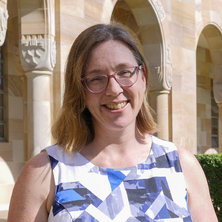
Professor Jaquie Mitchell's activities are focused around two core themes. Jaquie has worked on various Research for Development (R4D) projects based in South-East Asia with the aim of improving productivity and livelihoods of smallholder farmers. Currently she leads an R4D project focused on developing an integrated weed management package for mechanised and broadcast lowland crop production systems in Laos and Cambodia. In addition, she recently led and completed a public-private partnership project between ACIAR and a private agribusiness company that established the foundations for a highly productive, sustainable, traceable and quality-assured rice value chain in the Mekong Delta, Vietnam, benefiting rice-farming households while meeting the quality and traceability requirements of international markets.
The second research theme includes examining genetic variation for resistance to abiotic stress, such as high and low-temperature tolerance at the reproductive stage in rice, the advantage of reduced-tillering gene in wheat grown under terminal drought, the effect of salinity and water-deficit on production of volatile compounds in aromatic rice. In close collaboration with the Australian rice industry, Jaquie currently leads two AgriFutures funded pre-breeding projects aimed to improve lodging resistance, cold tolerance and aerobic adaptation for high water productivity rice. In addition to exploring genetic variation in physiological traits and genomic regions of importance to improved water productivity, genomic tools are under development to improve breeding efficiency for the Riverina. Based at The University of Queensland, School of Agriculture and Food Sustainability, Jaquie provides specialist guidance and assistance to undergraduate and postgraduate research students within crop physiology and agronomy with extensive experience conducting research projects focused on abiotic stress, pre-breeding and rice-based cropping systems research.
Postdoctoral Research Fellow - Sustainability Assessment
Queensland Alliance for Agriculture and Food Innovation
Availability:
Available for supervision
Dr Cresha Gracy Nadar is a Postdoctoral Research Fellow at the Centre for Crop Science, Queensland Alliance for Agriculture and Food Innovation (QAAFI), The University of Queensland. Her work sits at the interface of biotechnology, bioprocess engineering, and sustainability assessment, advancing solutions for a more resilient and low-carbon agri-food future.
Cresha’s research focuses on emerging biotechnologies; ongoing projects include precision fermentation for alternative food proteins, plant tissue culture for sustainable propagation, and seaweed valorisation for functional ingredients. She combines process modelling, life-cycle assessment (LCA) and techno-economic analysis (TEA) to evaluate the environmental and economic performance of innovative biomanufacturing systems.
Her PhD, jointly awarded by IIT Bombay (India) and Monash University (Australia), developed an integrated fruit waste biorefinery and assessed its sustainability through LCA and TEA. At UQ, she continues to bridge engineering realism with sustainability metrics, collaborating with academic and industry partners to translate laboratory innovations into scalable, commercially viable, and environmentally responsible technologies.
Nutritional Biochemistry, grazing and intensive production of cattle, sheep, goats.
My passion for agriculture and animal science comes from growing up amongst relatives in country Victoria, from Yea in the north, Korumburra in Gippsland and Heywood in the Western District. My career in agricultural science began at Melbourne University in 1960, with a defining year (1961) at Dookie Agricultural College, and subsequently with studies at The University of Sydney (1964-1969), University of New England (1970-72) and since 1973 at The University of Queensland. Promoted to Associate Professor in 1984, appointed Head of School of Agriculture in 1993 and the Head of School of Land and Food (1998-1999). Promotion to Professor was denied in 1997 and again in 2000. Retired from the University in 2006, but have maintained academic and research activity by managing ACIAR and other grants in Papua New Guinea and Vietnam. Publications since retirement have included books on family history, goat production in Vietnam and other biographies. Latest publications were on goat nutrition in 2022, in collaboration with Dr Simon Quigley's team at UQ, This year, 2023, celebrates 50 years of service to the University of Queensland.
Faculty of Engineering, Architecture and Information Technology
Availability:
Not available for supervision
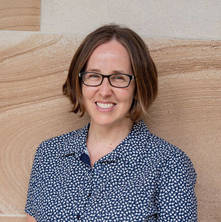
Marguerite Renouf BSc(Hons)/BA, PhD (Env Man) UQ is a Research Fellow at the School of Chemical Engineering's Water-Energy-Carbon Research Group (www.chemeng.uq.edu.au/water-energy-carbon).
She has worked in environmental research at UQ for 20 years, with a particular interest in the environmental evaluation of production systems and urban systems using environmental life cycle assessment (LCA), urban metabolism evaluation and eco-efficiency analysis. She is interested how we can produce and consume with less drain on the environment.
Since completing a PhD in 2011, she has driven a stream of research that evaluates the environmental performance of agri-based product supply chains and products (bio-fuels, bio-materials, food, beverages) using LCA. She has collaborated with industries and researchers in Australia and overseas to develop LCA tools for industry to support the identification of more environmentally-friendly production practices and processes.
Prior to this, her research was concerned with eco-efficiency in manufacturing industries (food processing, metal industries, retail and tourism sectors) and was a long-term contributor to UQ’s Working Group for Cleaner Production (now operating as the Eco-Efficienc Group), and its Director for three years (2009-2012).
Currently, Marguerite is a lead researcher with the CRC for Water Sensitive Cities, develop methods and metrics for quantifiying the water water-sensitive performance of Australian cities, using urban metabolism approaches. In this work she collaborates cloesely with urban planners, water manager and architects.
Queensland Alliance for Agriculture and Food Innovation
Availability:
Available for supervision
Dr Maral Seididamyeh is a food scientist whose research focuses on utilising natural metabolites to develop antimicrobial and preservation technologies, including photodynamic treatment and edible coatings, to enhance food safety, quality, and shelf life.
Her research also explores the valorisation of agricultural and food industry by-products through bioactive extraction, fermentation, and micro/nano-delivery systems to develop functional ingredients and nutraceuticals for healthier food products.
Faculty of Engineering, Architecture and Information Technology
Availability:
Not available for supervision
Media expert
Heather attained her Bachelor of Technology degree in food engineering from Massey University. She then spent 10 years in gelatine manufacture in various roles including quality assurance, production management and process improvement engineering. In 2015 she completed her PhD study into the rheology of biopolymer soft particle suspensions, supervised by Professor Jason Stokes at the University of Queensland. She has since continued at UQ in postdoctoral roles investigating the relationship between rheological properties, food structure and sensory perception of real food products and model soft particle suspensions with a focus on dairy protein systems. The key outcomes from the project have allowed our industry partner to move towards the rational design of food products.
FaBA Senior Research Fellow, Food & Beverage Fermentation Biotechnology
Queensland Alliance for Agriculture and Food Innovation
Availability:
Available for supervision
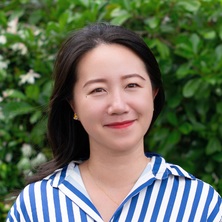
With a strong foundation in food science, fermentation, analytical chemistry, and sustainable food systems, Jiahua’s work focuses on microbial transformation of natural food into high-value functional food products using advanced fermentation technologies, including food grade fermentation and solid-state fermentation. Her research helps address critical industry challenges such as food waste reduction, upcycling of processing residues, development of novel food ingredients, and improvement of nutritional profiles in food and beverage products. Another key focus of Jiahua’s role is developing innovative food products and conducting shelf life testing. She transforms novel ideas into market-ready products by carefully balancing functionality, nutrition, sensory quality, and commercial feasibility.
Jiahua has led and contributed to numerous nationally and internationally funded research projects, collaborating with food industry partners, government agencies, and research institutions across Australia, China, Singapore, and Denmark. Her translational research supports industry needs in product innovation, ingredient development, and sustainable processing. Since 2015, Jiahua has attracted 6 research grants (>1.2 million) as chief investigator (lead CI and/or co-CI).
Jiahua recently secured a $5.6 million research project in May 2025 as the Lead Chief Investigator for “Premium Oat Innovations: Developing High-Value Oat-Based Food Products for Emerging Markets.” This project aims to create innovative, oat-based solutions tailored to evolving global consumer needs, with a strong focus on nutrition, sensory quality, and market differentiation.
Queensland Alliance for Agriculture and Food Innovation
Availability:
Available for supervision
Media expert
Professor Heather Smyth helps industry understand what makes food taste great - and how to deliver it consistently. Her research integrates sensory science, flavour chemistry, food structure, and consumer insights to identify the drivers of consumer acceptance and translate these into product innovation and optimisation.
She works across the agri-food value chain - linking primary production, processing and formulation to consumer experience - supporting the development of differentiated, high-value Australian products. Her research spans formulated foods, horticultural produce, meat, seafood and cereals, as well as premium foods including wine, coffee and high-value speciality crops. She has a particular interest in supporting ‘Brand Australia’ by defining and communicating the unique quality, provenance and sensory characteristics of Australian foods. Professor Smyth is a Fellow of the Australian Institute of Food Science and Technology (AIFST).
Professor Smyth is particularly focused on anticipating future consumer needs and supporting industry to respond, guiding the development of products and agri-food systems that align with evolving expectations around quality, health, sustainability and experience.
Program Lead, Premium Food and Beverages within the Food and Beverage Accelerator Program (FaBA) of
School of Chemical Engineering
Faculty of Engineering, Architecture and Information Technology
Professor
School of Chemical Engineering
Faculty of Engineering, Architecture and Information Technology
Availability:
Available for supervision
Media expert
Professor Jason Stokes is a Professor in the School of Chemical Engineering at The University of Queensland and Program Lead for Premium Food and Beverages within Australia’s Food and Beverage Accelerator (FaBA), providing leadership across a nationally coordinated, industry‑focused research program. His work sits at the interface of chemical engineering, soft matter science and food systems, combining fundamental research with strong industry engagement.
Jason is internationally recognised for his expertise in rheology, tribology and interfacial phenomena, with particular emphasis on how structure, flow and deformation govern the behaviour of complex fluids and soft materials. He is known for pioneering experimental approaches in soft‑contact tribology and aqueous lubrication, providing new physical insight into oral processing, mouthfeel, texture and material performance across multiple length scales.
With more than 25 years’ experience working in and with industry, Jason has led long‑term research partnerships spanning food and beverage manufacturing, materials processing and sustainability‑driven innovation. Prior to joining UQ in 2008, he worked as a Research Scientist at Unilever R&D in the United Kingdom. His current research supports the rational design of next‑generation food and beverage products, including plant‑based and value‑added formulations, by integrating processing, structure and performance.
Jason was named among Australia’s Top 250 Researchers by Research Magazine (The Australian, 2026), ranking first nationally in Dispersion Chemistry within Chemical and Materials Sciences. He has an h‑index of 60 (Google Scholar), reflecting sustained international impact across rheology, tribology and food engineering.
Teaching and research training
Jason’s teaching and supervision are strongly research‑led and industry‑engaged, with a focus on developing deep physical intuition, independent thinking and problem‑solving capability in chemical engineering graduates. He has extensive experience in HDR supervision and research training, mentoring PhD, Masters, Honours students and postdoctoral researchers across interdisciplinary projects in food engineering, soft matter and materials processing.
His teaching is grounded in fluid mechanics and transport phenomena, with long‑standing involvement in undergraduate fluid‑flow and particle‑based courses, as well as undergraduate research‑thesis coordination and supervision. He is widely recognised by students for clear, structured explanations of complex concepts, an enthusiastic and approachable teaching style, and for integrating real‑world engineering context into learning. He places strong emphasis on scientific rigour, career development and an inclusive, supportive research culture, and has contributed to researcher development and wellbeing through leadership roles within the School and Faculty.
Jason currently coordinates and teaches Transport Phenomena (CHEE4009) and Engineering Placement (ENGG7292).
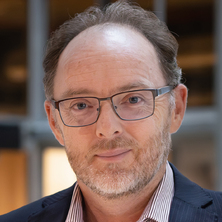
Mark is a Professor of food microbiology and serves as the current Discipline Head of Food Science & Technology in the School of Agriculture and Food Sustainability. Between 2019 and 2025 he held the position of Deputy Head of School where he played (and continues to play) a significant role in staff mentoring and the preparation of academic staff for probation and promotion. Mark is also currently a Deputy Lead of the Innovative Ingredients program at the Food and Beverage Accelerator (FaBA), funded by the Australian Trailblazer university program scheme. He leads a research team focused on food safety, quality, and fermentation. After completing his PhD at Queensland University of Technology (QUT) he underwent postdoctoral training at Cornell University, USA (1999-2000), and at the CRC for Diagnostic Technologies, QUT (2000-01). He subsequently supported his position through a Dairy Australia Fellowship (2001-03) and an NHMRC New Investigator Grant (2004-06). In 2007, he joined UQ as an academic specialising in food microbiology.
Mark's research is currently funded by Hort Innovation, and he has received past funding from ARC Discovery, ARC Linkage, ARC Industrial Transformation Research Hub and ARC Industry Transformation Training Centre schemes. He has also been supported by Agrifutures Australia, Dairy Innovation Australia Ltd (DIAL), and the Geoffrey Gardiner Dairy Foundation (GGDF). His research primarily focuses on foodborne pathogen source tracking using WGS, lactic acid bacteria applications, plant-based dairy alternative fermentations, beer fermentation microbiology, precision fermentation and biocontrol food applications targeting pathogens like Campylobacter and Listeria monocytogenes. He has successfully supervised 25 PhD and MPhil students to completion.
Mark was the Director of the Master of Food Science & Technology program from 2008-2018. He contributes to teaching in food microbiology, food safety, and food biotechnology subjects at UQ. He is a Fellow of both the Australian Society for Microbiology (FASM) and the Australian Institute of Food Science and Technology (FAIFST), and serves on the editorial boards the Journal of Food Protection and Fermented Foods. He was the recipient of the 2017 Keith Farrer Award of Merit and the 2023 President's Award from the Australian Institute of Food Science and Technology (AIFST) for service to the food industry and the Institute. Additionally, Mark currently holds the position of President of the Australian Association for Food Protection (AAFP), an affiliate of the International Association for Food Protection (IAFP). He is also currently co-Convenor of the AIFST Education Special Interest Group, coordinating national activities to promote and support excellence in food science and technology education across tertiary and vocational education and training sectors.
Queensland Alliance for Agriculture and Food Innovation
Availability:
Available for supervision
Dr Chao Xue is a food scientist specialising in food structure design, sensory quality enhancement, and the development of innovative food systems. His research spans a range of food products, including plant-based cheese, plant-based meat, and surimi-based products, with a particular focus on understanding how differetn food ingredients interact within complex matrices to influence structure, functionality, nutritional quality, and sensory perception. By integrating food material characterisation, instrumental analysis, and sensory science, Chao's research provides insights into the relationships between food structure, flavour release and eating quality. His work aims to support the development of foods with improved texture, flavour, nutritional value, and overall consumer acceptability.
Chao is particularly passionate about working with industry partners, food producers, and manufacturers to address practical product-development challenges. Through the application of advanced structural characterisation, analytical techniques, and sensory approaches, he works closely with industry to identify the mechanisms behind product performance and translate scientific understanding into practical strategies for developing higher-quality and more appealing food products.
Queensland Alliance for Agriculture and Food Innovation
Availability:
Available for supervision
Associate Professor Sudhir Yadav leads research at the interface of agricultural science, sustainability assessment, and market analysis at the Queensland Alliance for Agriculture and Food Innovation (QAAFI) institute of the University of Queensland. Based in the Centre for Crop Science of QAAFI, he investigates how agricultural and bio-based innovations can deliver environmental benefits, economic value and credible pathways to adoption at scale.
He leads QAAFI’s Systems Assessment, Market Insights and Circular Economy (SMICE) Translation for Impact Platform, bringing environmental, economic, market and adoption evidence together to guide research and investment decisions. His work uses life cycle assessment, techno-economic analysis, bioprocess and systems modelling, market research, and monitoring, evaluation, research and learning (MERL). His team focuses on applying these methods to assessing biotechnologies (precision fermentation, plant tissue culture), seaweed biorefining, broadacre farming and grain value chains, and the conversion of agricultural residues and green waste into bioenergy and bioproducts. He works with researchers, government and industry to examine trade-offs, test economic and market assumptions, and inform decisions on research, product development and adoption.
Before joining UQ, A/Prof Yadav worked at the International Rice Research Institute in the Philippines, where he conducted research on irrigation and water management, environmental pollution, mixed farming systems, sustainability assessment and the scaling of agricultural innovations.
Queensland Alliance for Agriculture and Food Innovation
Availability:
Available for supervision
Media expert
Jiale Zhang is a researcher in food science and nutrition at The University of Queensland, with expertise in functional foods, food processing, and bioactive compounds. My current work focuses on how food components change during processing, digestion, and fermentation, and how these changes influence nutrition, gut health, and product quality. I am also working on the product development.
My research brings together food chemistry, metabolomics, and microbiome science to better understand the relationship between food composition and health outcomes. I have worked extensively on Australian native fruits with a particular interest in developing value-added food products and sustainable food materials.