Faculty of Engineering, Architecture and Information Technology
Affiliate Research Fellow of School of the Environment
School of the Environment
Faculty of Science
Affiliate of UQ Centre for Natural Gas
UQ Gas & Energy Transition Research Centre
Faculty of Engineering, Architecture and Information Technology
Availability:
Available for supervision
Media expert
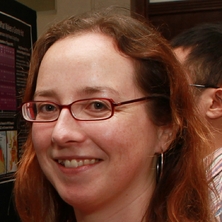
Julie’s research is mainly focussed on gas-water-rock core reactivity at reservoir conditions using experimental, field, and geochemical modelling techniques. Recent projects have been in the application of carbon dioxide geological storage in which CO2 is captured and stored in formations generally contained by low permeability cap-rock. The safe containment of the injected CO2 and the potential changes to rock porosity, permeability, and water quality should be determined. Recent and current projects with a focus on a demonstration site in the Surat Basin (Precipice Sandstone) include the impacts of impurity or acid gases present in industrial CO2 streams (collaboration with D. Kirste, SFU), inducing carbonate precipitation (in collaboration with S. Golding), and understanding dissolved metal sources and fate. Julie has also worked closely with the CO2CRC, CTSCo, Glencore, SEAL, the NSW government, CI-NSW, and ANLEC R&D, and provided expert opinion to the Queensland Government, and input to Environmental Impacts Assessments.
Julie is currently working with landholders, the QLD regional government, RDMW, councils and industry to understand the sources of methane in aquifers of the Great Artesian Basin, especailly those overlying coal seam gas reservoirs (CSG) (with Arrow Energy, SANTOS, APLNG, H. Hoffman, K, Baublys).
Other projects include gas-water-rock or acid-rock reactivity that modify nano-porosity and gas flow in gas or oil bearing shales.
Julie Pearce graduated with an MCHEM (Hons) degree in Chemistry from the University of York, UK. She then moved to the University of Bristol to complete a Ph.D. in 2007 focusing on laser spectroscopic studies to understand the detailed reaction dynamics of atmospheric processes. From 2007 – 2009 she accepted a Japan Society for the Promotion of Science Postdoctoral Fellowship, hosted at Nagoya University, Japan. There she measured delta 13C and delta 18O isotopic signatures of CO2 simultaneously in real time in the atmosphere using a laser spectroscopic technique to understand anthropogenic and biogenic sources of CO2. After taking a career break to travel in 15 countries in Asia, she moved to Brisbane in 2010 where she is enjoying the surrounding natural beauty of Queensland.
Affiliate of Centre for Environmental Responsibility in Mining
Centre for Environmental Responsibility in Mining
Faculty of Engineering, Architecture and Information Technology
Centre Director of The Remote Sensing Research Centre
Earth Observation Research Centre
Faculty of Science
Affiliate of Centre for Marine Science
Centre for Marine Science
Faculty of Science
Professor
School of the Environment
Faculty of Science
Availability:
Not available for supervision
Media expert
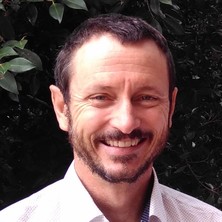
Stuart is a scientist, educator, and leader who builds and applies methods to measure and understand how our environments are changing at multiple scales (www.eorc.org.au ). He works across collaborative, multi-disciplinary teams and organisations to deliver quality science that draws upon field-work, satellite-image data, and modelling, through: founding directorships of Australia national earth observation coordination body (www.eoa.org.au) and collaborative research infrastructure (www.tern.org.au ) and a world-leading research to operational program that supports government environmental monitoring (www.jrsrp.org.au ); and program leadership of industry-driven research (www.smartsatcrc.com ). Stuart’s work provides solutions to support sustainable development and resource use for all levels of government, various industries, and communities.
Queensland Alliance for Agriculture and Food Innovation
Availability:
Available for supervision
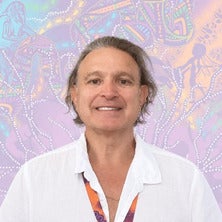
Professor Andries B. Potgieter is a Principal Research Fellow at the Queensland Alliance for Agriculture and Food Innovation (QAAFI), University of Queensland, and an international leader in Digital Agriculture. With a career spanning over 35 years across government, industry, and academia, his research integrates remote sensing, climate forecasting, and crop–climate modelling to support resilient, data-driven decision-making in agriculture. He is currently a key research collaborator in the $36 million GRDC-funded Analytics for the Australian Grains Industry (AAGI) initiative, where he leads digital analytics activities within UQ.
Professor Potgieter’s work focuses on developing predictive tools that combine satellite Earth observation, machine learning, and crop simulation to improve seasonal forecasting, crop monitoring, and risk management. He has pioneered widely adopted innovations such as the CropID tool, now commercialised via Data Farming Pty Ltd, and his models have influenced decision frameworks at Statistics Canada and the FAO. His 114 peer-reviewed publications have accrued over 4,000 citations, and his Field-Weighted Citation Impact (FWCI) places him in the top 5% of researchers globally.
He has built a thriving interdisciplinary research program and mentoring pipeline, supervising PhD, Masters, and MoDS students, and supporting postdoctoral researchers who now work at AWS, Sugar Research Australia, and the Chinese Academy of Agricultural Sciences. His leadership in global partnerships has positioned UQ as a preferred academic collaborator for international institutions tackling climate-smart agriculture.
Current projects
Analytics for the Australian Grains Industry (AAGI) – Digital analytics for yield forecasting and decision tools for grain growers (GRDC)
CropVision – Satellite remote sensing and AI for field-scale crop production forecasting (ARC Linkage)
RiskSSmart – Integration of Earth observation and climate models for sorghum risk mitigation (SmartSat CRC)
Root Phenomics – Linking above-ground sensing to root system architecture to accelerate phenotyping of drought-tolerant cereals (GRDC; Chief Investigator)
ARC Training Centre for Predictive Breeding in Agricultural Futures – Developing next-generation tools and training pathways for climate-resilient crop improvement (ARC Industrial Transformation Training Centres; Collaborating Investigator)
Previous research highlights
Late Maturity Alpha Amylase (LMA) Risk Modelling – National-scale risk prediction framework for wheat quality (GRDC)
CropPhen – High-throughput phenotyping for crop type and growth stage detection via drone/UAV (GRDC)
SIMLESA and YieldShield – Groundbreaking work in food insecurity mapping and climate risk insurance across eastern and southern Africa
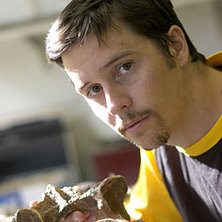
Gilbert Price is a Senior Lecturer in Palaeontology at The University of Queensland. He is a vertebrate palaeoecologist and geochronologist, particularly interested in the evolution and emergence of our planet’s unique ecosystems and fauna, and their response to prehistoric climatic changes. His major research focus has been on the development of palaeoecological models for Australia’s Cenozoic, especially the Quaternary megafauna. Critically, this also involves the production of reliably-dated records for the fossils that he studies. You can follow Gilbert on Twitter (@TheFatWombat) and read his reserach blog at www.diprotodon.com.
Dr David Pullar's research interests are in: Geographical Information Science (Spatial analysis, Spatial modelling languages and frameworks, 3D visualisation, Environmental database applications) and Landscape Modelling (Catchment hydrology, Landuse change, Landscape dynamics).
David Pullar received his PhD from the University of Maine in 1994. His current research projects are in the fields of:
Incorporating Level Set Methods in Geographical Information Systems (GIS) for Land-Surface Process ModellingUsing Spatial Simulation to Create a Process Classification of Provincial BioregionsEnvironmental Database Management and IntegrationHis collaborators include:Coastal CRCIntelligent Real-time Imaging and Sensing (IRIS)The Ecology CentreHigh Performance Computing, VisAC Lab
Dr Mojtaba Rajabi has over 15 years of extensive experience in crustal stress analysis, geomechanics, geomechanical-numerical modelling, hydrogeology and petrophysics. He graduated with a Ph.D. in Earth Sciences from the University of Adelaide in 2017. Dr Rajabi has worked on the geomechanical analyses of >30 sedimentary basins from across the world including Australia, New Zealand, Middle East, Mozambique, Iceland and Western Mediterranean. Since 2012, Dr Rajabi has worked on the Australian and World Stress Map projects, and currently is the Deputy-Head of the World Stress Map project. Dr Rajabi has received over 15 prestigious awards and prizes for his research including the ARC-DECRA Award, the Australian SEG Early Achievement Award, EAGE Louis Cagniard Award, EGU TS Division Outstanding Early Career Scientist Award, the Royal Society of South Australia's H.G. Andrewartha Medal, and the International Lithosphere Program’s Flinn-Hart Award.
Affiliate of Queensland Alliance for Environmental Health Science
Queensland Alliance for Environmental Health Sciences
Faculty of Health, Medicine and Behavioural Sciences
Affiliate of Minderoo Centre for Plastics and Human Health
Minderoo Centre for Plastics and Human Health
Faculty of Health, Medicine and Behavioural Sciences
Senior Research Fellow
School of Pharmacy and Pharmaceutical Sciences
Faculty of Health, Medicine and Behavioural Sciences
Availability:
Available for supervision
Media expert
Cassandra is a Senior Research Fellow at the Queensland Alliance for Environmental Health Sciences (QAEHS), joining the group in 2019. She is the microplastics project lead in the Minderoo Centre-Plastics and Human Health, investigating human exposure to microplastics and developing new methods for detecting micro and nanoplastics in human matrices. Her other research interests include the impact of tyre road wear particles and their chemical additives on the environment and developing novel biomonitoring methods for assessing human exposure to chemicals of concern.
Affiliate of Dow Centre for Sustainable Engineering Innovation
Dow Centre for Sustainable Engineering Innovation
Faculty of Engineering, Architecture and Information Technology
Availability:
Available for supervision
Media expert
Dr Saphira Rekker is a Senior Lecturer (Assistant Professor) in Sustainable Finance and an ARC DECRA Fellow at The University of Queensland Business School. She holds a PhD in Finance and is internationally recognised for her work on corporate climate performance measurement and the development of science-based emissions reduction methodologies.
Saphira’s research focuses on building robust tools to measure, verify, and benchmark the credibility of corporate decarbonisation actions and commitments. She is widely regarded for her expertise in carbon-budget-based assessment frameworks and corporate climate benchmarking. During her 2019 secondment at Princeton University, she co-developed the Rapid Switch Australia project within Princeton’s global Rapid Switch initiative. She now leads the Carbon Budget Tracker, a collaborative platform linking researchers from UQ, Oxford, Princeton, LSE, and Utrecht to assess corporate and portfolio alignment with the Paris Agreement.
Saphira contributes her expertise to major international standard-setting and policy processes. She serves as an Australian delegate to the ISO Net Zero standard and previously served on both the Scientific Advisory Group and the Technical Working Group of the Science Based Targets initiative (oil and gas), where she contributed to the development of methodologies underpinning credible, science-aligned targets. Although the SAG was dissolved in 2024/2025, she remains engaged in methodological guidance and advisory work for science-based target-setting. She also played a significant role in shaping the EU Climate Benchmarking Regulation, where her quantitative contribution remains a central component after multiple revisions. In addition, she advises on climate-related litigation, including work with the Environmental Defenders Office.
Her research is cross-disciplinary and published in leading academic journals including Nature Climate Change and Nature Communications. Her 2022 Nature Communications article attracted international attention and led to a collaboration with Norges Bank Investment Management, one of the world's largest sovereign wealth funds, to evaluate steel-sector Paris alignment. Her recent Nature Climate Change Comment proposes “structured pluralism with budget compliance” as a way to strengthen corporate climate benchmarking practices. She maintains active collaborations with Oxford, Princeton, LSE, and Utrecht, as well as industry partners such as Fidelity, Ernst & Young, and NBIM.
Saphira has received numerous awards and competitive funding, including the prestigious ARC DECRA (over $430,000, 2024–2027), the 2024 UQ BEL Commendation for Enhancing Employability and the UQ Business School Award for Excellence in Student Engagement (for SMIF), the Green Gown Awards Australasia 2022 and UQBS Excellence in Innovation Award 2021 for co-founding Australia’s first Carbon Literacy course, the Business & Society Best Paper Award (2021), the UQBS Excellence in PRME Award (2023), first place in the UN PRI Essay Competition (2018), and a UQ Teaching Award (2017).
She is deeply committed to embedding sustainability into finance education. Saphira co-led UQ’s Student Managed Investment Fund (A$260,000+) from 2021–2023, integrating climate-risk analysis into portfolio management and competition preparation. She co-founded Australia’s first Carbon Literacy course and co-authored two open-access UQ Press textbooks. Her teaching evaluations are consistently outstanding. She supervises Honours, Masters, and PhD students, postdoctoral researchers, and industry-linked projects.
Saphira also serves as the elected UQ academic representative to UniSuper (188/211 votes) and coached the UQ team that placed second in the Global Business Challenge (2019, $15,000). She is a frequent speaker at conferences such as the UN PRI Annual Conference and the Princeton E-ffiliates Retreat, and is a regular reviewer for journals including Nature Climate Change, Nature Sustainability, and Nature Communications.
Affiliate of Centre for Environmental Responsibility in Mining
Centre for Environmental Responsibility in Mining
Faculty of Engineering, Architecture and Information Technology
Affiliate of Leading for High Reliability Centre
Leading for High Reliability Centre
Faculty of Engineering, Architecture and Information Technology
Senior Research Fellow
Sustainable Minerals Institute
Faculty of Engineering, Architecture and Information Technology
Availability:
Available for supervision
Louisa is a hydrogeologist with twenty years of experience. She has had a diverse career working in research, consulting, and government. Louisa’s main areas of expertise include hydrogeological investigations, impact assessment, groundwater resource management, and contaminated land management. She has worked across a range of sectors including mining, energy, transport, and agriculture and her experience includes developing water resources legislation and policy and leading complex groundwater and surface water investigations for project approvals, operations, and compliance.
Louisa is currently working as a Senior Research Fellow at the Centre for Environmental Responsibility in Mining (CERM). The role involves leading the hydrogeological research, training, and consulting services that CERM provide to the minerals industry in Australia and globally and working with a team of water resource management specialists to contribute to a range of inter-discplinary projects. She has recently completed a project for The Australian National University developing draft National Guidelines for Groundwater Monitoring in Australia.
Affiliate of Centre for Biodiversity and Conservation Science
Centre for Biodiversity and Conservation Science
Faculty of Science
Associate Professor
School of the Environment
Faculty of Science
Availability:
Available for supervision
Media expert
Research interest: Monitoring ecosystem health of coral reefs and seagrass habitats, integrating field and remote sensing image datasets, and the developing applied cost-effective mapping and monitoring approaches. Developed approaches have been adopted as standard practice globally, making a difference in conservation of these valuable habitats. The long term monitoring studies at Heron and Moreton Bay formed the basis for the development of mapping and monitoring over time and space at local to global scale. See here major research impact
Major projects:
Long term monitoring of benthic composition at Heron Reef (2002-ongoing).
Long term monitoring of seagrass composition and abundance in Moreton bay Marine Park (2000-ongoing).
Smart Sat CRC Hyperspectral Remote Sensing of Seagrass and Coral Reefs 2023-2027.
Developement of Underwater Field Spectrometry and Benthic Photo Collection and Analysis
3D GBR Habitat Mapping Project 2015 - ongoing:
Global habitat mapping project 2019-2023 Allen Coral Atlas .
Current position: Associate Professior in Marine Remote Sensing leading the Marine Ecosystem Monitoring Lab. . Academic Director Heron Island Research Station and affiliated researchers with Centre for Marine Science and Centre for Biodiversity and Conservation Science
Capacity Building and Citizen Science: Capacity: under/post graduate courses; Msc/PhD supervision, workshops/courses; Remote Sensing Educational Toolkit, and online courses (e.g. TNC).Strong supporter of citizen science based projects, as trainer, organiser and advisor for Reef Check Australia, CoralWatch, Great Reef Census and UniDive.
Affiliate of Centre for Geoanalytical Mass Spectrometry
Centre for Geoanalytical Mass Spectrometry
Faculty of Science
Professor
School of the Environment
Faculty of Science
Availability:
Available for supervision
Media expert
Gideon Rosenbaum's research interests are in the fields of structural geology and tectonics. He is particularly interested in the geodynamics of convergent plate margins.
Dr Steve Salisbury is an Associate Professor in the School of the Environment at The University of Queensland, where he is head of the UQ Dinosaur Lab and Director of Indigenous Engagement. He is also Research Associate at the Carnegie Museum of Natural History, Pittsburgh, Pennsylvania, USA, Associate Editor for the Journal of Vertebrate Paleontology, and a Scientific Board member of the Jurassic Foundation. He currently Chairs the Faculty of Science Indigenising Curriculum Working, and is the Faculty of Science represenative on the Indigenous Learning Sub-Committee of CAPP.
Steve is of Dutch-Indonesian and English descent, but was born and grew up in the cool, misty mountains of Dharug and Gandangarra Country. He studied biology and geology at the University of Sydney, receiving the Edgeworth David Award for Palaeontology in 1993. He then moved to the University of New South Wales (UNSW), where he completed his Honours thesis on fossil crocodilians from Murgon, south-eastern Queensland. Continuing at the UNSW, Steve travelled to Germany and the UK to complete a PhD on crocodilian locomotor evolution. He returned to Australia in 2000 to pursue a life-long dream of searching for Australian dinosaurs, and joined The University of Queensland in 2003 as a Postdoctoral Fellow. He currently lives in Tulmar (Ipswich) on Yagara/Ugarapul Country.
Steve's research focuses on the evolution of Gondwanan continental vertebrates, in particular dinosaurs and crocodilians. He is also interested in vertebrate biomechanics and using extant animals to better understand the anatomy, behaviour and evolution of extinct ones. His field-based research takes him to various parts of Queensland, the Kimberley, New Zealand and Antarctica.
For over 15 years, Steve has partnered with First Nations communities in the Saltwater Sundown Country of the West Kimberley to better understand the region’s natural and cultural heritage, in particular its dinosaur tracks. He is passionate about decolonising and transforming aspects of palaeontology and empowering First Nations voices in the natural sciences. He is now trying to use some of his experiences in palaeontology to help develop and implement teaching and research practices that are more respectful and understanding of First Nations sovereignty, perspectives and ways of knowing.
Faculty of Health, Medicine and Behavioural Sciences
Availability:
Not available for supervision
Media expert
I build quantitative systems for understanding how humans move, perform, using data from wearable sensors in real-world conditions.
My work sits at the intersection of machine learning, signal processing, and sports and health science. I develop the analytical infrastructure that makes large-scale, free-living sensor research feasible: pipelines for IMU and GNSS data, predictive models for physical activity and pain dynamics, and validation frameworks for wearable devices.
At UQ, I contribute to the CIPHeR program (NIH/NHMRC-funded), investigating mechanisms of chronic low back pain through longitudinal modelling of movement, sleep, stress, and pain. I also lead Metric Trails, an applied R&D initiative developing high-precision geospatial standards for trail and mountain running.
My background spans academia and industry. Before UQ, I led data science teams at LATAM Airlines and built research programs in wearable analytics and geospatial modelling at Adolfo Ibáñez University in Chile, where I supervised 19 postgraduate theses.
I work across disciplines, with physiotherapists, sports scientists, engineers, and clinicians, and across an international network of collaborators in Australia, Chile, Norway and Spain.
Affiliate of W.H. Bryan Mining and Geology Research Centre
WH Bryan Mining Geology Research Centre
Faculty of Engineering, Architecture and Information Technology
Research Fellow
Sustainable Minerals Institute
Faculty of Engineering, Architecture and Information Technology
Availability:
Available for supervision
Katerina is a geologist with a specialization in hyperspectral data analysis as applied to mineral identification and interpretation, with big data integration. She has 15 years of hands-on experience working on both ground-breaking research and commercial activities for greenfield, brownfield and mining projects of various scales around the world. While with Corescan, she pioneered innovation in hyperspectral data acquisition, interpretation, and presentation. She developed and interpreted the results of complex algorithms associated with various mineral hyperspectral signatures. As part of her work, she contributed to geochemical and geotechnical research as applied to hydrothermal mineral alteration patterns associated with several world-class deposits, deposit delineation initiatives, new exploration projects, as well as geoenvironmental studies of acid-rock drainage and mining waste characterization. In her earlier roles, as an exploration geologist, she worked on uranium deposits in Canada, the USA, and Australia, with a focus on the system controls and definition of hydrothermal alteration mineral zonation and spatial patterns. Currently, Katerina is collaborating on several long-term projects with different challenges related to geological and mining industries at the W.H. Bryan Mining and Geology Research Centre, SMI including critical minerals research, mineral and textural characterization as applied to mine waste and tailings, as well as development of educational material and short-course delivery. Specific areas of research and interest include:
Hydrothermal alteration mineralogy and its characterization using high-resolution hyperspectral data in combination with other micro-analytical techniques
Remote sensing techniques and data interpretation
Detailed investigation of a variety of geological environments and mineral deposit settings including epithermal, unconformity-associated uranium, orogenic gold, porphyry, skarn, as well as IOCG
Minerals and mineral groups, their chemical composition and variations, recognizing hydrothermal alteration patterns and identifying vectors to mineralization
Establishment of new mineralogical and hyperspectral reflectance tools for drill core characterization for various mining applications
Broad remote sensing skills across terrestrial and aquatic environments. Working to democratise spatial data access and use. Happiest when producing and delivering automated, operational and validated national and global scale products that can be used by scientists, policy and the public.
Affiliate of Julius Kruttschnitt Mineral Research Centre
Julius Kruttschnitt Mineral Research Centre
Faculty of Engineering, Architecture and Information Technology
Research Fellow
Sustainable Minerals Institute
Faculty of Engineering, Architecture and Information Technology
Availability:
Available for supervision
Dr Qi Shao is a Postdoctoral Research Fellow at the Julius Kruttschnitt Mineral Research Centre (JKMRC), where his primary research focus is on modelling mineral separation processes using Computational Fluid Dynamics (CFD) simulations. His recent work has applied CFD to a range of mineral separation equipment, including the Teeter Bed Separator, CrossFlow, HydroFloat, conventional mechanical flotation cells, and the Jameson Cell. By examining hydrodynamics and performance across varying operating conditions and equipment designs, his research aims to enhance separation efficiency, reduce energy consumption, and boost productivity.
Dr Shao earned his PhD in Environmental Engineering from The University of Queensland, where he developed numerical models using Cellular Automata to simulate hydrological processes in mining landforms. Following his PhD, he continued at UQ as a Postdoctoral Research Fellow, investigating fluid-particle interactions in hydraulic erosion of granular structures through coupled CFD and Discrete Element Method (DEM) simulations.
Prior to his current role, Dr Shao conducted research at the University of Melbourne, focusing on numerical simulations of solute transport and multiphase flows in heterogeneous porous media. His work addressed critical environmental and engineering challenges, including contaminant transport, geological CO₂ sequestration, and groundwater flow dynamics.
Dr Shao’s expertise spans a wide array of numerical methods, including Finite Element Method (FEM), Finite Volume Method (FVM), DEM, Cellular Automata, and Discrete Event Simulation, which he applies to solve complex problems across environmental and mineral engineering domains.
Tina is a quantitative marine and coral reef ecologist focused on understanding the drivers of reef community dynamics, from food-web structure and energy flow to habitat connectivity and population processes. She integrates field ecology, laboratory analyses, and big-data modelling to answer applied questions for conservation, with particular expertise in stable isotope ecology and ecosystem modelling.
Based at the University of Queensland and affiliated with the Centre for Marine Science and the Centre for Biodiversity and Conservation Science, she currently models Crown-of-Thorns Starfish outbreak dynamics on the Great Barrier Reef to identify strategies that maximise the effectiveness of limited manual control resources. This work contributes directly to management through the COTS Control Innovation Program with the Great Barrier Reef Foundation and national partners.
She has over a decade of international experience leading cross-sector collaborations with governments, NGOs, research institutions, Indigenous peoples, and local communities across Australia, the Pacific, and the Caribbean, and is committed to translating complex biodiversity data into decisions that benefit both people and nature. She is also passionate about communicating science to diverse audiences and engaging the next generation in marine research.
Associate Professor - Pollution Science in Aquatic and Marine Environments
School of the Environment
Faculty of Science
Availability:
Available for supervision
Media expert
Associate Professor Ryan Turner is the Director of the Reef Catchments Science Partnership at the University of Queensland (a partnership with the Department of the Environment, Tourism, Science and Innovation). Ryan was previously the Department's Principal Scientist for Water Quality and Investigations and held an Adjunct Associate Professor role at Queensland University of Technology in the Managing for Resilient Landscapes, Institute for Future Environments. For 14 years, Ryan managed multimillion-dollar water quality monitoring programs that assessed the impacts of sediments, nutrients, and pesticides in numerous catchments along the Queensland coast, which discharge into the Great Barrier Reef and Moreton Bay. Ryan has served on several steering committees and technical advisory panels, including the Great Barrier Reef Foundation's Technical Advisory Panel. He has published extensively (>80 papers and reports) and led several collaborative research projects between the Queensland Government and academia. Ryan previously supervised analytical chemistry and microbiology laboratories in the private and public sectors. Ryan has developed numerous methodologies and standard operating procedures for analytical and monitoring techniques (water quality, sediments and soils). Ryan’s passion for the future of water security is what keeps him striving forward.
Affiliate of Centre for Geoanalytical Mass Spectrometry
Centre for Geoanalytical Mass Spectrometry
Faculty of Science
ARC Future Fellow
School of the Environment
Faculty of Science
Affiliate of Minerals Industry Safety and Health Centre
Minerals Industry Safety and Health Centre
Faculty of Engineering, Architecture and Information Technology
Availability:
Available for supervision
Media expert
I am a volcano scientist with a passion for understanding magma storage and transport through the Earth's upper mantle and crust. I develop high-resolution geochemical techniques to interrogate magmatic crystals and their carrier melts, providing a better understanding of past eruptions as keys to future activity. My team's research constrains the drivers of volcanic eruptions and the processes leading to the accumulation of metals that are critical for the green energy transition.
I joined UQ in July 2016, after holding a postdoctoral fellowship at Trinity College Dublin. I undertook my postgraduate research in Spain and The Netherlands (Vrije Universiteit Amsterdam) and received my PhD from the University of Zaragoza in December 2013. I was born and raised by the sea, in San Sebastián, and I am fortunate to study a wide range of active and past volcanic systems in different tectonic settings around the world.