Affiliate of Centre for Public, International and Comparative Law
Centre for Public, International and Comparative Law
Faculty of Business, Economics and Law
Senior Lecturer
School of Law
Faculty of Business, Economics and Law
Availability:
Available for supervision
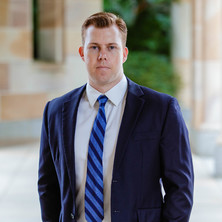
Dr Matt Watson is a Lecturer in the TC Beirne School of Law, The University of Queensland. Dr Watson teaches Jurisprudence and Administrative Law. His research interests lie primarily in the fields of legal and political philosophy. Dr Watson’s core research areas include multiculturalism and minority rights (with an emphasis on minority language rights and language policy), constitutionalism, the intersection of law and politics, the liberal philosophical tradition, and all aspects of the philosophy of law. Dr Watson is currently working on a research project that enquires into the legal and moral permissibility of taking account of religious and cultural membership in refugee resettlement determinations.
Dr Watson completed his doctoral studies in law at the University of Oxford in 2016. His DPhil thesis, written under the supervision of Professor Leslie Green, inquired into the philosophical foundations of minority language rights. While at Oxford, Dr Watson led tutorials in Jurisprudence.
School of Political Science and International Studies
Faculty of Humanities, Arts and Social Sciences
Availability:
Available for supervision
Media expert
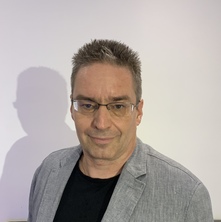
Martin Weber’s main research clusters are in International Social and Political Theory, in (International) Environmental Politics, and in PE/IPE. His work has focussed on contributions that Critical Theory can make to developments in normative International Political Theory, and to the ‘social turn’ in IR theory in general. It is also concerned with limitations and lacunae in critical theoretic approaches, and how these may be addressed. These theoretcial interests are complementary to the more empirically oriented other clusters, informs these, and are in turn informed by them (see articles in European Journal of International Relations, Review of International Studies, Alternatives, Globalizations, as well as in contributions to edited volumes). In Environmental Politics, and PE/IPE, his work has focussed on the political analysis of global governance, and in particular on global health governance and global environmental governance. He has published book-chapters and articles in key journals on these issues (Review of International Political Economy, Global Environmental Politics, Global Governance), and is currently finishing on a monograph on ‘Critical Theory and Global Political Ecology’.
Director of HDR Students of School of Political Science and International Studies
School of Political Science and International Studies
Faculty of Humanities, Arts and Social Sciences
Associate Professor
School of Political Science and International Studies
Faculty of Humanities, Arts and Social Sciences
Availability:
Available for supervision
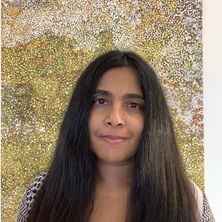
Heloise Weber’s research is animated by an interest in the historical and contemporary politics of inequalities and injustices in the organization of development globally. She approaches questions over development from a critical perspective, which considers ‘the international’ as a product of development, and the 'development' we experience as advanced crucially also through the ‘international’. Her research addresses how knowledge-production and representation shape and justify framings of ‘development’ at a macro-political level, and what this means for people. A correlate of this is her interest in struggles against such schemes, and for ‘development otherwise’. The conceptual and theoretical concerns raised in this context form the basis of her interest in the politics of method and methodological choices, notably with regard to social science staples such as the (formal) comparative method, and its consequences and implications. Her theoretical and analytical approaches are informed by a critical interest in colonialism and its legacies, and post-colonial and decolonial thought and politics. She is also interested in how such insights can contribute to contemporary critical revisions of global public political histories.
Research
Critical Development Theory and International Relations
Politics of the Comparative Method
Colonialism, Post-colonial Relations, and Decolonial Politics
Critical Approaches to Human Rights and Inequality
Critical Approaches to Security and Development
Global Political Economy, Finance, and Development
Politics and Political Economy of Microcredit and Microfinance
Trade, Development and Inequality
The UN 2030 Sustainable Development Goals
Heloise has been an active member of the Global Development Studies Section(GDS) of the International Studies Association(ISA), has twice served as Section and Program Chair, and serves on the GDS Eminent Scholar Committee. She is a founding member of the GDS/ISA Edward Said Graduate Paper Award.
In 2022, Heloise was elected President of the Development Studies Association of Australia (DSAA), serving a full term until 2024. She facilitated the organisation of the Third Biennial Conference held at the University of Melbourne and, among other initiatves and responiosbilties associated with the role introduced the inaugural biannual online seminar series with a presentation by Adjunct Prof. Mary Graham and Associate Prof. Morgan Brigg.
She is a member of the editorial boards of Contexto Internacional- Journal of Gobal Connections, and of Globalizations.
She has served as Associate Editor of International Political Sociology (2017-2021). IPS is an official journal of the International Studies Association.
Books:
Co-authored
Phillip McMichael & Heloise Weber, Development and Social Change – A Global Perspective – 7thEdition. Thousand Oaks, CA: Sage Publishing, 2021 (copyright 2022).
Mark T. Berger & Heloise Weber,Rethinking the Third World: international development and world politics Basingstoke: Palgrave Macmillan, 2014.
Edited volumes
The politics of development: A survey London, U.K.: Routledge, 2014.
Co-Edited volumes
War, peace and progress in the 21st century: Development, violence and insecurity London United Kingdom: Routledge, 2011. (With Mark T Berger)
Recognition and Redistribution: Beyond International Development London: Routledge, 2009. (With Mark T Berger) *This was originally a Special Issue of Globalizations.*
Book Chapters
Afterword:Imperialism and Global Inequalities. in G. Bhambra & J. McClure Imperial Inequalities: The politics of economic governance across European empires (forthcoming 2022). Manchester, Manchester University Press .
The political significance of Bandung for development: challenges, contradictions and struggles for justice (2016). In Quynh N. Pham and Robbie Shilliam (Ed.), Meanings of Bandung: postcolonial orders and decolonial visions (pp. 153-164) London, United Kingdom: Rowman & Littlefield.
From land grabs to food sovereignty (2016) In Jan Aart Scholte, Lorenzo Fioramonti and Alfred G. Nhema (Ed.), New rules for global justice: structural redistribution in the global economy (pp. 109-124) London, United Kingdom: Rowman & Littlefield.
Gender and microfinance/microcredit (2016). In Jill Steans and Daniela Tepe-Belfrage (Ed.), Handbook on gender in world politics (pp. 430-437) Cheltenham, United Kingdom: Edward Elgar.
Introduction (2014) In Heloise Weber (Ed.), The Politics of Development: A Survey (pp. 3-9) London, United Kingdom: Taylor and Francis. doi:10.4324/9780203804919
Global politics of human security (2013) In Mustapha Kamal Pasha (Ed.), Globalization, difference, and human security (pp. 27-37) Abingdon, Oxon, United Kingdom: Routledge. doi:10.4324/9781315886923
Global Poverty, Inequality and Development (2012) In Richard Devetak, Anthony Burke and Jim George (Ed.), An introduction to international relations 2nd ed. (pp. 372-385) Port Melbourne Vic., Australia: Cambridge University Press.
Global poverty and inequality. (2007) In Richard Devetak, Anthony Burke and Jim George (Ed.), An introduction to international relations: Australian perspectives (pp. 283-294) Cambridge, England: Cambridge University Press.
Microcredit Schemes (2007) In Roland Robertson and Jan Aart Scholte (Ed.), Encyclopedia of Globalization (pp. 780-783) New York, USA: Routledge.
The global political economy of microfinance and poverty reduction: locating local 'livelihoods' in political analysis(2006) In Jude L. Fernando (Ed.), Microfinance: Perils and prospects (pp. 43-63) London and New York: Routledge Taylor and Francis.
Global governance and poverty reduction: the case of microcredit (2002) In Steve Hughes and Rorden Wilkinson (Ed.), Global governance: critical perspectives (pp. 132-152) Abingdon, United Kingdom: Taylor & Francis. doi:10.4324/9780203302804_chapter_8
Journal Articles
Poverty is not ‘another culture’: Against a right of children to work to live. Review of International Studies (published online, Feb 5, 2022). *With Aliya Abasi.
Contribution to the Giucciardini Prize Forum: Racist Origins of IR: Thakur and Vale on South Africa's formative influence on the discipline. Cambridge Review of International Affairs (published online Oct 26, 2021)
Colonialism, genocide and International Relations: the Namibian–German case and struggles for restorative relations, (2020) European Journal of International Relations Vol. 26 (S1): 91-115. DOI: 10.1177/1354066120938833 .*With Martin Weber.
When Means of Implementation meet Ecological Modernization Theory: A critical frame for thinking about the Sustainable Dvelopment Goals initiative. (2020) World Development.*With Martin Weber.
Global development and precarity: a critical political analysis (2019) Globalizations, 16 4: 525-540. doi:10.1080/14747731.2018.1463739 *With Samid Suliman.
Collective discussion: Diagnosing the present (2018) Walker, R. B. J., Shilliam, Robbie, Weber, Heloise and Du Plessis, Gitte (2018) Collective discussion: Diagnosing the present. International Political Sociology, 12 1: 88-107. doi:10.1093/ips/olx022
Politics of ‘leaving no one behind’: contesting the 2030 sustainable development goals agenda (2017) Globalizations,14 3: 1-16. doi:10.1080/14747731.2016.1275404
The ‘Bandung spirit’ and solidarist internationalism (2016) Australian Journal of International Affairs, 70 4: 391-406. doi:10.1080/10357718.2016.1167834 *With Poppy Winati*
Is IPE just ‘boring’, or committed to problematic meta-theoretical assumptions? A critical engagement with the politics of method (2015) Contexto Internacional: Journal of Global Connections, 37 3: 913-943. doi:10.1590/s0102-85292015000300005
Reproducing inequalities through development: the MDGs and the politics of method (2015) Globalizations, 12 4: 660-676. doi:10.1080/14747731.2015.1039250
Global Politics of Microfinancing Poverty in Asia: The Case of Bangladesh Unpacked. (2014) Asian Studies Review,38 4: 544-563. doi:10.1080/10357823.2014.963508
When goals collide: politics of the MDGs and the post-2015 sustainable development goals agenda.(2014) SAIS Review of International Affairs, 34 2: 129-139. doi:10.1353/sais.2014.0026
Politics of global social relations: Organising 'everyday lived experiences' of development and destitution (2010)Australian Journal of International Affairs, 64 1: 105-122. doi:10.1080/10357710903460048
Human (in)security and development in the 21st century (2009) Third World Quarterly, 30 1: 263-270. doi:10.1080/01436590802623001 *With Mark T. Berger*
War, peace and progress: Conflict, development, (in)security and violence in the 21st century (2009) War, peace and progress: Conflict, development, (in)security and violence in the 21st century. Third World Quarterly, 30 1: 1-16. doi:10.1080/01436590802622219 *With Mark T Berger*
A political analysis of the formal comparative method: Historicizing the globalization and development debate (2007)Globalizations, 4 4: 559-572. doi:10.1080/14747730701695828
Conclusion: Towards recognition and redistribution in global politics (2007) Globalizations, 4 4: 603-605. doi:10.1080/14747730701695869 *With Mark T. Berger*
Introduction: Beyond international development (2007) Globalizations, 4 4: 423-428. doi:10.1080/14747730701695612 *With Mark T. Berger*
A political analysis of the PRSP initiative: Social struggles and the organization of persistent relations of inequality(2006) Globalizations, 3 2: 187-206. doi:10.1080/14747730600702998
Beyond state-building: global governance and the crisis of the nation-state system in the 21st century Third World Quarterly, 27 1: 201-208. doi:10.1080/01436590500370095 *With Mark T. Berger*
GATS in context: development, an evolving lex mercatoria and the Doha Agenda (2005) Review of International Political Economy, 12 3: 434-455. doi:10.1080/09692290500170809 *With Richard Higgott*
Beyond US grand strategy?: Critical analysis and world politics (2005). Critical Asian Studies, 37 1: 95-102. doi:10.1080/1467271052000305287 *With Mark T Berger*
The new economy and social risk: Banking on the poor (2004) Review of International Political Economy, 11 2: 356-386. doi:10.1080/09692290420001672859
Reconstituting the 'Third World'? poverty reduction and territoriality in the global politics of development (2004)Third World Quarterly, 25 1: 187-206. doi:10.1080/0143659042000185408
The imposition of a global development architecture: The example of microcredit (2002) Review of International Studies, 28 3: 537-555. doi:10.1017/S0260210502005375
Affiliate of Australian Women's and Girls' Health Research Centre
Australian Women and Girls' Health Research Centre
Faculty of Health, Medicine and Behavioural Sciences
Research Program Manager
School of Public Health
Faculty of Health, Medicine and Behavioural Sciences
Availability:
Available for supervision
Maiden name: Ellen Maree Leslie
Dr Ellen Wessel is a Research Fellow in the School of Public Health, with backgrounds in both public health and criminology. Her research interests include women's health, alcohol and other drug use, and policing.
Affiliate of ARC COE for Children and Families Over the Lifecourse
ARC COE for Children and Families Over the Lifecourse
Faculty of Humanities, Arts and Social Sciences
Emeritus Professor
Faculty of Humanities, Arts and Social Sciences
Availability:
Not available for supervision
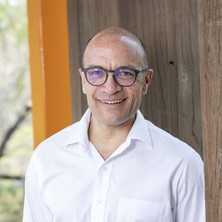
Mark Western's various roles at The University of Queensland included Senior Lecturer to Professor in Sociology, co-Director of The University of Queensland Social Research Centre (2003-2008), Founding Director of the Institute for Social Science Research (ISSR, 2009 - 2022), Research Director for The Queensland Commitment (2023 - 2025) and Director of HASS Research Infrastructure (2025). As Founding Director of ISSR, Mark led Australia's largest multidisciplinary social science research institute with a track record of advanced academic social science research and high impact research and policy engagement with government, industry and the not-for-profit sector. As Research Director for The Queensland Commitment, Mark contributed to the design and implementation of The Queensland Commitment at UQ, and its supporting research and evaluation program.
Mark has a personal research program that spans academic publishing across sociology and cognate social science disciplines. He has also led and contributed to major research and evaluation programs and projects for external government and non-government partners. He is a former Chief Investigator on the ARC Centre of Excellence for Policing and Security and the ARC Centre of Excellence for Children and Families Over the Life Course.
Mark is a current member of the National Research Infrastructure (NRI) Advisory Group, advising the Australian government on NRI policy and strategy, a Fellow of the Academy of Social Sciences, Chair of the Academy's Policy Committee, and a member of its Board of Directors. He is a former member of the ARC College of Experts, ERA Chair, and Engagement and Impact Deputy Chair.
He has edited and authored 7 books, and over 120 book chapters, journal articles and commissioned reports and held research grants and contracts worth approximately $120 million.
Kanchana is a Research Fellow at the Centre for Policy Futures with a background in economics. Her research focuses on labour market vulnerability, tourism resilience, disaster risk management, climate adaptation, and economic security. She has experience across academia, government policy research, and economic consulting, with expertise in both quantitative and qualitative research methods. Her work seeks to generate evidence that informs policy development and helps address emerging social and economic challenges.
Beck Wise teaches and researches in professional, technical and academic writing, with specialisations in the rhetoric of science, multimodal writing, writing in digital environments, and feminist rhetorics.
Emily is an experienced evaluator and policy analyst whose experience is designing, collecting and interpreting high quality evidence to improve outcomes for priority groups. She has deep, strategic knowledge of the Australian public sector, working alongside government agencies to design, implement and evaluate large, complex social policy initiatives.
Emily's motivated by helping her clients to use evaluation and research to understand the people they serve - conumers, service providers, Executive sponsors, advocacy groups - to deliver tailored programs and achieve better outcomes both for people and human service systems.
Her ability to build rapid rapport, synthesise complex information and balance perspectives means she is an in-demand strategic facilitator and trusted advisor to the executives of government agencies.
Her work creates impact because of her ability to connect information and people. She's great at taking complex information and making it simple and easy to action.
Charlotte Young is a research fellow at the Institute for Social Science Research at The University of Queensland. Charlotte is a qualitative researcher with interdisciplinary interests spanning sociology, public health, health promotion, and migration studies. Her research focuses on the systemic drivers of migrant health inequities and how they can be redressed. Charlotte is also interested in the ways migrants adapt and respond to systemic and structural drivers of inequity. Recently, she has been exploring how the COVID-19 pandemic has impacted migrant and refugee background tertiary students and how young culturally and linguistically diverse social media influencers have been promoting COVID-safe behaviours online. Charlotte also explores immigrant organisations as critical settings to influence health and wellbeing. She is passionate about producing impactful research to affect positive change and tackling migrant health problems in solidarity with the communities they affect. Charlotte also has experience conducting evaluation research for large-scale health interventions.
Tomasz Zając is a Senior Research Fellow at the Institute for Social Science Research (ISSR) at the University of Queensland (UQ) and the Deputy Lead of the Opportunities research program at the Australian Research Council Centre of Excellence for Children and Families over the Life Course (the Life Course Centre). Tomasz holds an MA and PhD in Sociology from the University of Warsaw, Poland. Before joining ISSR, he was an Assistant Professor in Sociology at the University of Warsaw and a Researcher at the National Processing Institute (OPI) in Warsaw, where he developed the Polish Graduate Tracking System (ELA) on behalf of the Polish Ministry of Science and Higher Education. He was also a visiting scholar at the Center for Studies in Higher Education, University of California, Berkeley and The Bamberg Graduate School of Social Sciences (BAGSS), University of Bamberg, Germany.
Tomasz's research interests include social stratification and inequality, migration, gender, and life-course research, especially individual educational trajectories and their links with labour market outcomes. He specialises in quantitative methods, particularly in using population-wide linked administrative data.
Moreover, he has been involved in developing research infrastructure. He currently leads two activity streams with the Social Science Research Infrastructure Network supported by the Australian Research Data Commons.
Faculty of Engineering, Architecture and Information Technology
Availability:
Available for supervision
As a quantitative urban data scientist and planner, I specialise in analysing and modelling complex urban systems (including housing, transport, and infrastructure) in an increasingly intelligent and data-driven world to inform evidence-based public policy and planning practices. My research addresses critical challenges such as housing financialisation and affordability, transport equity and sustainability, and climate-resilient, liveable communities in both Australian and global contexts. Through interdisciplinary research, industry partnerships, and innovation-led education, I translate complex urban data into practical solutions while mentoring the next generation of urban researchers through PhD, Master's, and Honours supervision.