Affiliate of Centre for Community Health and Wellbeing
Centre for Community Health and Wellbeing
Faculty of Health, Medicine and Behavioural Sciences
Affiliate of Centre of Architecture, Theory, Culture, and History
Centre of Architecture, Theory, Culture and History
Faculty of Engineering, Architecture and Information Technology
Senior Lecturer in Planning
School of Architecture, Design and Planning
Faculty of Engineering, Architecture and Information Technology
Availability:
Available for supervision
Media expert
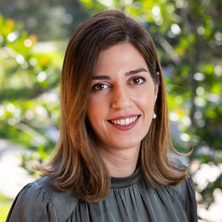
My research centers on the intersections of Urban Planning and Public Health, with a strong emphasis on interdisciplinary collaboration and practical application. I deliver transdisciplinary solutions to some of the most compelling challenges of our time, 'housing equity' and 'healthy cities'. My work stands out through the application of Systems Thinking to complex planning issues and I explore the connections between planning and the physical, mental, and social health of individuals and communities. My primary focus is on developing resilient cities, capable of maintaining their liveability over time, especially amidst disruptive events and shocks.
Faculty of Engineering, Architecture and Information Technology
General Manager, AusCERT
Information Technology Services
Senior Lecturer
School of Business
Faculty of Business, Economics and Law
Availability:
Available for supervision
Media expert
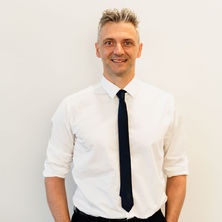
Ivano is a researcher, consultant, author, and speaker whose work focuses on the managerial and business implications of Cybersecurity.
He is the General Manager of AUSCERT, a not-for-profit organisation affiliated with UQ that delivers cybersecurity services to public and private sector organisations across Australia and New Zealand.
Ivano is also a Senior Lecturer in Cybersecurity Management with the UQ Business School and a member of UQ Cyber.
Ivano helps business leaders and executives make evidence-based decisions in cybersecurity. With a professional background in risk and security management, Ivano’s work bridges the gap between technical cybersecurity and its repercussions across organisations. He has advised ministers, policy-makers, board members, and senior executives on strategies, governance structures, policies, and training programs for effective cybersecurity management. Ivano is also an experienced facilitator in the fields of Design Thinking and Design-Led innovation, having run since 2015 more than 50 design-led workshops and longer projects for public and private sector organisations.
Prior to AUSCERT and UQ, Ivano worked as a Research Fellow with the Adam Smith Business School (University of Glasgow) and a Postdoctoral Fellow with the PwC Chair in Digital Economy (QUT). In this role, he worked with public and private sector organisations in projects aimed at facilitate their transition into the Digital Age. Ivano obtained his PhD from QUT in 2016, with a thesis on safety and security management in Australian airports. His academic career includes stints with Bocconi University and SDA Bocconi School of Management (Milan), where he worked as a faculty member and consultant for three years.
He also worked as a Deputy Venue Security Manager at the XX Winter Olympic Games - Turin 2006 and as a Police Officer for the Italian Ministry of Interior.
He has a double MSc in Management of Public Administrations and International Institutions (Bocconi University, Milan) and International Security (Sciences Po, Paris).
A father of one and an eager snowboarder, Ivano loves soccer, American football, and writing novels and poems.
Affiliate of Centre of Architecture, Theory, Culture, and History
Centre of Architecture, Theory, Culture and History
Faculty of Engineering, Architecture and Information Technology
Senior Lecturer in Design (Built Environment)
School of Architecture, Design and Planning
Faculty of Engineering, Architecture and Information Technology
Availability:
Available for supervision
Dr Liz Brogden is a Senior Lecturer and researcher in the UQ School of Architecture, Design and Planning. Through her work, she advances climate action and sustainability in architecture by leveraging shared goals across university education, professional development and training, and government initiatives. Liz is an advocate for architecture education as a driver of lifelong learning, advanced professional capabilities and collaborative partnerships that build climate agency and sustainability outcomes across the profession. With over ten years of experience designing and delivering climate-, resilience- and sustainability-focused education, Liz has worked from undergraduate through to master’s level programs and led projects in interdisciplinary curriculum development and professional development education. Her teaching and leadership excellence have been recognised with a Faculty Leadership Excellence award at UQ, two Vice-Chancellor Awards at QUT, and, as part of the team that was awarded the overall QS Reimagine Global Education Award in 2021. A 2022 Churchill Fellow and recipient of the Australian Institute of Architects 2026 National Leadership in Sustainability prize, Liz currently serves on the National Education Committee of the Australian Institute of Architects and as Chair of the Education Committee for its Queensland State Chapter.
Faculty of Health, Medicine and Behavioural Sciences
Availability:
Not available for supervision
Dr Sandra Brosda is a Research Fellow within the Surgical Oncology group at the Frazer Institute, UQ.
Dr Brosda was awarded a PhD in bioinformatics and cancer genetics from the University of Queensland in November 2020. Her research focuses on biomarker discovery and intra-tumour heterogeneity and tumour evolution in oesophageal adenocarcinoma (OAC). In 2021, Dr Brosda was awarded a Cure Cancer Australia PdCCRS grant and an MSH project grant to further investigate tumour evolution to improve precision medicine in OAC.
She has been involved in research projects covering genetics, epigenetics, spatial transcriptomics, radiomics, ctDNA and quality of life assessments in the context of cancer. Overall, her research applies bioinformatics tools and approaches to cancer genomics to improve precision medicine and health outcomes for patients with melanoma, oesophago-gastric cancer and pancreatic cancer.
Dr. Buning is a Senior Lecturer in the Tourism discipline at the UQ Business School and Research Lead of the UQ Micromobility Research Cluster. He is recognised as one of Australia’s leading voices on micromobility, e-mobility and global scholar for cycling tourism. His research focuses on active living, tourism systems, and destination development, with a particular attention to both residents and visitors.His research agenda examines how tourists and residents engage in physical activity both as a driver of tourism behaviour and community health (e.g., active lifestyle sports, sports club participation) and as a feature of destination mobility systems (e.g., active transport).
His work on active transport investigates how bikeshare, e-scooters, and micromobility more generally enable healthier, more active, and more sustainable communities for residents and visitors. This work directly informs public policy and industry strategy. His research on active lifestyle sports contributes to scholarship in active sport tourism, including mountain biking, cycling, running, rock climbing, and hiking. Research outcomes have contributed to improved economic performance, increased visitor dispersal, reduced congestion pressures, enhanced public health outcomes, and strengthened community wellbeing in destination contexts through sustainable transport and active tourism strategies.
Dr. Buning has worked extensively with active transport providers, sporting organisations, and state and local governments across Australia and the United States. He regularly consults on data-driven strategy development for active mobility systems, events, and community-based tourism initiatives. His work regularly appears in leading tourism, sport, and transport journals and popular press outlets around micromobility, active transport, sport tourism, and event management.
Are you a government, industry or an academic interested in collaborating on research or teaching projects to get people moving? Please get in touch
Affiliate of Minerals Industry Safety and Health Centre
Minerals Industry Safety and Health Centre
Faculty of Engineering, Architecture and Information Technology
Professorial Research Fellow
Sustainable Minerals Institute
Faculty of Engineering, Architecture and Information Technology
Availability:
Available for supervision
Experienced human factors and ergonomics researcher and consultant across a range of industries particularly mining. Currently seconded to the BHP Think and Act Differently team with support from the Resources Technology and Critical Minerals Trailblazer and the Commonwealth Government through the Trailblazer Universities Program to undertake a Human Systems Integration project.
Robin Burgess-Limerick is Professorial Research Fellow in the Human Factors within the Minerals Industry Safety and Health Centre. He has been a member of academic staff since 1995, and prior to that has held research positions in a number of organisations including the Division of Workplace Health & Safety, and the Medical Research Council Applied Psychology Unit (UK). Prof Burgess-Limerick completed his Bachelor of Human Movement Studies, and Hons degrees at The University of Queensland, and returned to the University to undertake his PhD in the area of manual lifting coordination. He is a Certified Professional member, past-president, and elected Fellow, of the Ergonomics Society of Australia Inc.
Research Interests
Prof Burgess-Limerick has eclectic research interests ranging across the broad scope of human factors and ergonomics from visual perception and movement control, through workplace interventions to prevent injuries due to manual tasks, and the design of mining equipment to reduce injury risks. His research has been funded by grants from the National Occupational Health and Safety Commission, ARC, NHMRC, Workcover Queensland (QComp), the Coal Services Health and Safety Trust (NSW), and the Australian Coal Association Research Program.
School of Electrical Engineering and Computer Science
Faculty of Engineering, Architecture and Information Technology
Availability:
Available for supervision
My research explores how Virtual and Augmented Reality technologies enable users to better understand and interact with complex data. I also focus on the engineering and evaluation of interactive visualisation systems and the design of Augmented Reality interfaces for industry applications. I have authored 60+ publications in top-ranked Human Computer Interaction and Information Visualisation conference proceedings and journals, including in ACM CHI, ACM UIST, ACM ISS, IEEE InfoVis/TVCG, IEEE VR.
In 2021 and 2022, I was nominated Australia’s Field Leader researcher in Computer Graphics (The Australian Research magazine yearly ranking).
Affiliate of Centre of Architecture, Theory, Culture, and History
Centre of Architecture, Theory, Culture and History
Faculty of Engineering, Architecture and Information Technology
Senior Lecturer
School of Architecture, Design and Planning
Faculty of Engineering, Architecture and Information Technology
Availability:
Available for supervision
Media expert
Dr. Sébastien Darchen holds a PhD in Urban Studies obtained in 2008 at Institut de la Recherche Scientifique (INRS-Urbanisation) in Montreal, Canada.
His main research area is about the political economy of the built environment. He studies the strategies of urban stakeholders (Developers, City Planners, Urban Designers) involved in the provision of the built environment especially in urban regeneration contexts He is also interested in cultural planning and in developing practical solutions to sustain creativity in cities and create great places in cities (place-making).
Topics: Urban regeneration; Land-use planning; Political economy of the built environment; Cultural history of cities; Place-making
Senior Research Fellow - Frailty & Hospital Outcomes Research
Frazer Institute
Faculty of Health, Medicine and Behavioural Sciences
Affiliate of Centre for Online Health
Centre for Online Health
Faculty of Health, Medicine and Behavioural Sciences
Availability:
Available for supervision
Media expert
I am an early career researcher with 5 years post-PhD and estimated research time relative to opportunity of 3 years. Currently, I am a Senior Research Fellow at The University of Queensland’s (UQ) Australian Frailty Network. I have years of study and work experience, including consumer and community involvement, in various healthcare settings in Brazil (2009-2019), the UK (2003-2008) and Australia (2019-present). I came to Australia in December 2019 for a 12-month PhD research placement at UQ after winning a highly competitive scholarship from the Brazilian Government. I have a Bachelor of Pharmacy, a Graduate Certificate in Project Management, a Master of Philosophy in Public Health, a Diploma of Higher Education in Youth and Community Studies and an OCN Level 3 Certificate in Community Development. I completed my PhD in Public Health in 2021.
I have a proven track record for delivering high-quality projects, with national significance, including policy change and integration into the national strategy in Brazil, and the implementation of a digital model of care developed in Australia. My track record demonstrates a rising career trajectory. My research interests are telehealth, virtual care and digital health, including digitally disrupted models of care for chronic conditions, trust and confidence in telehealth and digital health, digital health literacy, health services research, including implementation and evaluation strategies, mixed-methods, cross-sectional studies, co-design and qualitative inquiry, community and consumer involvement in research and service redesign.
Affiliate Research Fellow of School of Information Technology and Electrical Engineering
School of Electrical Engineering and Computer Science
Faculty of Engineering, Architecture and Information Technology
Senior Lecturer
Graduate Research School
Senior Lecturer
School of Communication and Arts
Faculty of Humanities, Arts and Social Sciences
Availability:
Available for supervision
Media expert
Skye Doherty is a senior lecturer in the School of Communication and Arts at UQ. She is an expert in using creative and design-led research methods to explore alternative futures and address wicked problems. Her work has responded to issues in the news media, law, disaster resilience, and energy and water security, among others, and has led to both conceptual and practical outcomes.
Her design artefacts include the NewsCube, an award-winning storytelling tool, Vim, a tangible energy story, a suite of concepts for community-led bushfire management, and Wicked Thinking, an independent magazine. She has developed frameworks for journalism innovation and used codesign methods to improve the experiences of injured workers, a project that led to legislative change.
Her current and recent projects include the GEF-funded Coral Reef Rescue project and the ARC Training Centre for Climate-Resilient Water. She is the current Treasurer of the International Association for Media and Communication Research (IAMCR) and is a member of UQ’s Human-Centred Computing research group in the School of Electrical Engineering and Computer Science. Previously, she led the Global Change Scholars Program in the UQ Graduate School – a year-long PhD experience focused on industry research collaboration and impact.
She came to academic research after an international career as a journalist, and her experience spans leading international media companies as well as startups.
Faculty of Engineering, Architecture and Information Technology
Associate Professor in Design (Built Environments)
School of Architecture, Design and Planning
Faculty of Engineering, Architecture and Information Technology
Availability:
Available for supervision
Media expert
Assoc Prof Fred Fialho Teixeira is an architect, media artist and associate professor at University of Queensland, School of Architecture, Design and Planning and director of the UQ VisLab. He has been working in the fields of computational architecture, biodesign and immersive environments for the last 20 years. He has been awarded the Dean's Fellowship from the University of California where he initiated is PhD and developed innovative biological-based design strategies at the California Nano Systems Institute. He's an alumni of the Architectural Association, School of Architecture (AA) and accredited architect by Royal Institute of British Architects (RIBA) and Portuguese Chamber of Architects (OA) and also practiced for high profile offices such as Zaha Hadid Architects. Presently his research work on bio-design and spatial computation combines the use of mixed reality, advanced manufacturing and biomaterials to enable the next generation of built environments
Memberships
Architectural Association, School of Architecture (UK),Royal Institute of British Architects (UK), Chamber of Architects (PT), Australian Smart Communities Association (AU), UQ CyberResearch Centre
Affiliate of Centre for Research in Social Psychology (CRiSP)
Centre for Research in Social Psychology
Faculty of Health, Medicine and Behavioural Sciences
Affiliate of Social Identity and Groups Network (SIGN) Research Centre
Social Identity and Groups Network
Faculty of Health, Medicine and Behavioural Sciences
Affiliate of Centre for Marine Science
Centre for Marine Science
Faculty of Science
Professor
School of Communication and Arts
Faculty of Humanities, Arts and Social Sciences
Affiliate of Queensland Alliance for Environmental Health Science
Queensland Alliance for Environmental Health Sciences
Faculty of Health, Medicine and Behavioural Sciences
Availability:
Available for supervision
Kelly Fielding's research focuses broadly on understanding the social and psychological determinants of environmental sustainability. She seeks to understand environmental decisions and behaviours and to develop communication and behaviour change strategies that can promote greater environmental sustainability. A key focus of her current reseach is on sustainable urban water management, specifically, how we can engage communities with this issue, how we can communicate about new water technologies such as recycled waater, how we can promote water conservation, and how we can understand and communicate about drinking water supplies. Her research is also focused on understanding climate change beliefs as well as identifying ways to address climate change skepticism and inaction. In the past she has conducted research in the areas of sustainable natural resource management, domestic and public place recycling, and environmental activism. She takes an interdisciplinary approach to her research and has worked with local council, State Government, and catchment management authorities to undertake this research.
Affiliate of Centre of Architecture, Theory, Culture, and History
Centre of Architecture, Theory, Culture and History
Faculty of Engineering, Architecture and Information Technology
Senior Lecturer, Indigenous Engagement
School of Architecture, Design and Planning
Faculty of Engineering, Architecture and Information Technology
Availability:
Available for supervision
Carroll Go-Sam is Dyirbal gumbilbara bama of Ravenshoe, North Queensland. A graduate with B.Arch (Hons) UQ in 1997 and lectures in the School of Architecture. She has research interests in Indigenous architecture where it intersects with public, civic, social and institutional architecture. Carroll is engaged in research, consultation and design practitice with specific interests in Indigeneity in architecture, civic spaces and Indigenous-led models of housing. She co-led the Gununa Futures research project (2022-2024) and UQ's Campuses on Countries Aboriginal and Torres Strait Islander Engagement and Design Framework (2020-21).
Carroll has presented at national and international events, symposia and conferences including Asis Pacific Architectural Forum, SAHANZ, IASTE, Brisbane Writers Festival, academic symposia and MPavillion Blakitecture. She was formerly Indigenous Design Place researcher (2017-2019) and worked on the research consultancy about safe drinking water in the Torres Strait Islands. The recipient of an ARC Discovery Indigenous Award (2014-2016) on Defining the Impact of Regionalism on Aboriginal Housing and Settlement.
Affiliate of Centre of Architecture, Theory, Culture, and History
Centre of Architecture, Theory, Culture and History
Faculty of Engineering, Architecture and Information Technology
Associate Professor
School of Architecture, Design and Planning
Faculty of Engineering, Architecture and Information Technology
Availability:
Available for supervision
Media expert
Dr Kelly Greenop is an Associate Professor within the School of Architecture and is co-Director of the Architecture Culture Theory History (ATCH) Research Centres within the School. Her research has focused on work with Aboriginal and Torres Strait Islander people in urban Brisbane, using ethnographic techniques to document the place experiences and attachment, and the importance of architecture, place, family and country for urban Indigenous people. She also conducts research into the intercultural place heritage of the Brisbane region, and the urban cultural history of Brisbane’s suburbs.
Kelly's latest research is in Digital Cultural Heritage, utilising 3D laser scanning of heritage environments and buildings in South East Queensland. She has been working with researchers from ATCH, School of Architecture, CSIRO and site managers at Queensland Parks and Wildlife Service to scan and archive fragile, remote and at risk sites, and research the use of scanning in architectural heritage practice.
With colleagues from AERC she has also conducted research into Aboriginal housing, particularly with respect to crowding and homelessness. Kelly’s research has been supported by grants from the Australian Institute of Aboriginal and Torres Strait Islander Studies (AIATSIS), the Queensland Government, the Australian Federal Government and the Australian Housing and Urban Research Institute (AHURI).
Awards
National Trust (Queensland) John Herbert Memorial Award (best heritage project in the state) for Agency Programs, in collaboration with Queensland Rail, 2018
National Trust (Queensland) Gold Award for Agency Programs, in collaboration with Queensland Rail, 2018
Queensland Premier’s Sustainability Awards for Heritage: ‘Highly Commended’ for Moreton Bay Digital Cultural Heritage Projects, 2014
Best Paper, Society of Architectural Historians, Australia and New Zealand Conference, 2013
Memberships
Member, International Association for People Environment Studies (IAPS)
Member, Society of Architectural Historians (US)
Member, Society of Architectural Historians Australia New Zealand (SAHANZ)
Member, Architectural Humanities Research Association (AHRA)
Member, Association of Critical Heritage Studies Member (Appointed), Australian Institute of Aboriginal and Torres Strait Islander Studies
Dr Anthony Halog: Expert in Circular Economy, Life Cycle Thinking, and Sustainable Systems
Dr. Anthony B. Halog is a professor at the University of Queensland specialising in circular economy, sustainability engineering, industrial ecology, and life cycle assessment (LCA/LCSA). His current work focuses on designing low-carbon, net-zero, and resource-efficient systems to address climate change, waste reduction, and sustainable development.
Dr. Halog works across energy, materials, food, waste, and policy systems, applying systems thinking, life cycle sustainability assessment, digital twins, and artificial intelligence for sustainability. His research helps governments, industries, and communities make evidence-based decisions that reduce emissions, improve resource efficiency, and avoid unintended environmental impacts.
A core focus of his work is transforming linear value chains into circular value chains, supporting green hydrogen, bioenergy, circular bioeconomy, agricultural waste valorisation, waste-to-energy, and sustainable materials. These solutions contribute to decarbonisation, climate resilience, sustainable supply chains, and the green economy.
Key areas of expertise
Circular economy and industrial ecology
Life cycle assessment and sustainability metrics
Green hydrogen, bioenergy, and clean energy transitions
Sustainable waste management and circular bioeconomy
Systems modelling, AI-enabled tools, and sustainability policy
Dr. Halog collaborates with policymakers, industry partners, SMEs, and Indigenous communities in Australia and internationally to deliver practical climate solutions and support the transition to decarbonised circular economies.
Faculty of Engineering, Architecture and Information Technology
Availability:
Available for supervision
Baojie is a (Full) Professor of Urban Climate and Sustainable Built Environment with the School of Architecture and Urban Planning at Chongqing University, China.
Email: baojie.he@uq.edu.au; baojie.he@cqu.edu.cn
He is currently leading the Centre for Climate-Resilient and Low-Carbon Cities with the focus on Heat-Resilient and Low-Carbon Urban Planning and Design. Baojie has published more than 200 peer-reviewed papers in high-ranking journals and delivered more than 100 invited talks in reputable conferences/seminars. Baojie has a SCOPUS H-index of 57 (Scopus). Baojie has been involved in several large research projects on urban climate and built environment in China and Australia. Baojie has been invited to act as Editor-in-Chief and Associate Editors of several international reputuable journals. Baojie received the received the Most Cited Chinese Researchers Title in 2024 and 2025, Highly Cited Researcher Title (Clarivate) in 2022, 2023, 2024, and 2025, the Sustainability Young Investigator Award in 2022, the Green Talents Award (Germany) in 2021, and National Scholarship for Outstanding Study Abroad Students (China) in 2019. Baojie was ranked as one of the Top 2% Scientists by the Mendeley from 2020 onwards.
Affiliate of Centre of Architecture, Theory, Culture, and History
Centre of Architecture, Theory, Culture and History
Faculty of Engineering, Architecture and Information Technology
Senior Lecturer in Architecture
School of Architecture, Design and Planning
Faculty of Engineering, Architecture and Information Technology
Availability:
Available for supervision
Susan is an architect, educator and researcher at the University of Queensland with expertise in architectural design histories and theories, heritage and sustainability, and design governance and policy. Susan has experience in leading cross-disciplinary research involving stakeholders in academia, industry and government. She has been involved in large-scale national and international funded research projects and has ongoing collaborations at the University of Ghent, supported by the UQ-UGhent Strategic International Partnership. At UQ she is a member of the ATCH Research Centre (Architecture, Theory, Culture, History).
Prior to her academic career Susan worked in architectural practice for over 10 years in Australia and the UK, gaining experience on a range of project scales and types including community, civic, housing and urban design. She maintains strong connections to industry and is a Fellow of the Australian Institute of Architects and has contributed to its education and gender equity committees, and regional and state awards programs in urban design, public architecture, residential design and art-architecture. She currently contributes to the AIA National Gender Equity Committee Research and Publication Taskforce.
Susan’s current research follows three themes, which are explained further under Available Projects:
Material Values of the Built Environment: Heritage, Maintenance, Demolition, Salvage, Storage;
Design Expertise, Design Governance and the Architecture Profession; and
Quality in Architecture: Statements, Settings, Substance.
Susan is an author, editor or contributing author to 9 books. Her research and criticism is widely published in academic, professional and industry journals including Journal of Architecture, Interstices, European Journal of Creative Practices in Cities and Landscapes, AA Files, Leonardo, Fabrications and Architecture Australia. She regularly presents her research in national and international forums, including academic and industry conferences, at cultural institutions, and for continuing professional development. Susan has been an invited guest lecturer, guest critic and RHD guest critic at Ghent University, Monash University, and Griffith University. She has also been an invited chair and contributor to expert panels at the SCCI Architecture Hub Sydney, Museum of Brisbane, the UQ Art Museum and for the Committee for Brisbane. In 2012 Susan was a Visiting Professor in the VAMA (Visual Arts Media and Architecture) Masters Programme at the Vrije Universiteit Amsterdam. In 2013 she was an invited scholar at the Deutsches Forum für Kunstgeschichte in Paris. In 2018 and 2023 Susan was a visiting researcher at UGhent. Susan has extensive experience in research collaboration, research mentorship and research leadership, and she regularly co-authors with academic and industry collaborators and students.
Susan has been the recipient of a number of competitive awards and grants for her research. She was a Chief Investigator on the ARC funded Discover Project Is Architecture Art?: A history of categories, concepts and recent practices(2016-2022) which analyses the changing place of architecture in culture and cultural administration. This project produced three books: Pavilion Propositions: Nine Points on an Architectural Phenomenon (2018), Trading Between Architecture and Art: Strategies and Practices of Exchange (2019) and Valuing Architecture: Heritage and the Economics of Culture(2020), numerous academic and industry publications, and convened two conferences. Susan was also a Chief Investigator on the ARC funded Discovery Project Campus: Building Modern Australian Universities (2016-2020), which brought together experts from five Australian Universities in an inter-disciplinary team to research the landscape, architecture, planning and heritage of modern univeristy campuses in Australia. She is a contributing author to Campus: Building Modern Australian Universities (UWA Press, 2023). In 2021-24 Susan is leading research on the participation and career experience of women in design leadership roles in Australia, with support from the Australian Institute of Architects. Her ongoing research with UGhent collaborators has recieved support from the UQ Global Strategy and Seed Funding Scheme.
Susan has contributed extensively to the leadership of the Architecture, Design and Planning School at UQ, most recently as Chair of Research (2022), Chair of Teaching and Learning (2018-21) and Academic Advisor for the Master of Urban Development and Design Program (2021). Her research also informs teaching and curriculum development in the Faculty of Engineering, Architecture and Information Technology at UQ. In 2021 Susan contributed to two projects to develop Indigenous and inter-cultural content for built environment and design education, as part of teams led by indigenous experts.
Awards
2023 UQ Global Strategy and Partnerships Seed Funding (with Ashley Paine and John Macarthur)
2019 UQ Promoting Women Fellowship
2010 David Saunders Founders Grant Award (SAHANZ) (with Jared Bird)
2000 QIA Medallion (Australian Institute of Architects, Qld Chapter)
2000 Board of Architects Prize (Board of Architects, Queensland)
Memberships
Registered Architect, Board of Architects Queensland
Fellow, Australian Institute of Architects (FRAIA)
Society of Architectural Historians Australia and New Zealand (SAHANZ)
Laurel is a spatial and social planner with over 30 years of experience as a practitioner and an educator/researcher. Laurel has led, designed and participated in over 60 applied research projects. Many of those research projects guide and influence the policies and programs of various Australian Local and State governments and non-Government organisations in the fields of social infrastructure, social planning, urban planning and transport provision.
Faculty of Engineering, Architecture and Information Technology
Availability:
Available for supervision
Media expert
Professor Sandra Kaji-O'Grady is an architectural educator, academic leader and researcher with a PhD in Philosophy from Monash University (2001) and professional architectural qualifications and experience. She led the design and delivering of a new progressive design education while Head of School at UTS (2005-2009) and in September 2013 commenced as Head of School and Dean of Architecture at the University of Queensland. She is committed to critical approaches to design learning and to preparing students for a radically volatile professional future.
Sandra's research is in the architectural humanties and seeks to understand the political and philosophical contexts for contemporary architecture. She has recently completed a project with Chris L. Smith on the architectural expression of contemporary science and its ideologies in laboratory buildings. This research was supported by the Australian Research Council, through the Discovery Grant ‘From Alchemist’s Den to Science City: Architecture and the Expression of Experimental Science’. Laboratory Lifestyles, the first of two major book outcomes from the study, examines the history, ambitions and and effects of the addition of gymnasia, cafes, and social spaces to scientific esearch campuses and will published by MIT Press in 2018. Life science laboratories also incorporate Animal Houses and our consideration of these has led to a new research project, in its early stages. This research will explore the ways in which buildings designed to house animals evidence and determine the relationships we have with non-human animals. Previous work has been published in leading journals including the Journal of Architecture, The Journal of Architectural Education, Architecture &, and le Journal Spéciale’Z. She has presented invited lectures and peer-reviewed conference papers in the USA, Japan, Australia and New Zealand, Finland, Amsterdam, France, Belgium, Germany, England and Scotland, where she was a Visiting Fellow at the University of Edinburgh (2012). Her own artwork investigating serial systems using pianola rolls and commercial paint samples has been exhibited in Singapore and Australia.
Sandra has been a member of the College of Experts of the Australian Research Council (2010-2011) and has reviewed submissions for several scholarly journals and sits on the editorial boards of Architecture and Culture, Studies in Material Thinking, Ardeth, and Architecture Theory Review. She is a reviewer for DrawingOn Journal and regularly contributes as a critic to Architecture Australia, Architecture Review Australia, Monument and Artichoke. Actively engaged with the architectural profession, she has written over fifty reviews for the design press and co-directed the AIA National Conference in 2013.
Faculty of Engineering, Architecture and Information Technology
Availability:
Available for supervision
Dr Charlotte Kessler is a transdisciplinary Design Researcher and Lecturer in Design. She sees design as a powerful change-making tool relevant to addressing complex issues, and applicable across a variety of contexts.
Charlotte holds a Bachelor & Master in Product & Service Design (ENSAAMA & Ecole Boulle, France), a Master in Design Futures (Griffith University), and a PHD (Queensland University of Technology) completed in 2022. Her thesis, Developing curricula that equip designers with capabilities to enact sustainable futures: A matter of ethos, draws from the voices of academics and graduate designers from four sustainability-focused design programs internationally to propose theoretical guidelines supporting design educators to develop, enable and sustain design programs that are responsive to a rapidly changing world, in turn equipping design graduates with relevant capabilities to create change towards sustainable futures.
Charlotte has worked on a range of sustainability-focused design and design research projects internationally. Her research is situated at the nexus between design, education, and sustainability. She believes that design education has an important role to play in situating design as key, change-making practice, in the context of sustainability transitions. She is interested in research that informs academics as they develop and implement sustainability-centred curricula and pedagogies, and that supports sustainability transitions in design practice. Charlotte has recently become involved in a research project on climate literacy in architecture in partnership with the Australian Institute of Architects, and the Association of Architecture Schools of Australasia.
Charlotte is currently working as Lecturer in Design in the School of Architecture, Design, and Planning at The University of Queensland. Previously, she was the Program Convenor for Design and Educational Design Lead at Griffith College, where she coordinated the accreditation and curriculum development processes for the new design program. Charlotte has developed and coordinated sustainability-focused higher education courses in the design field across multiple universities. She has taught in award winning courses including Impact Lab 3 Studio - Planet (QUT) awarded Vice Chancellor Award for Excellence and Wharton - QS (London) Re-Imagine Education Award for Design for Transformative learning through transdisciplinary collaborations, along with the Spatial History Unit awarded QUT Faculty of Creative Industries Teaching Award for Teaching Innovation and Excellence. She is a Senior Fellow of the Higher Education Academy (SFHEA). She specialises in developing sustainability-centred Higher Education curricula and professional development resources for academic staff.