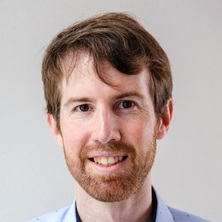
Paul Dennis leads an exciting research group that applies cutting-edge technologies to understand the roles of microorganisms and their responses to environmental change.
He is also a passionate educator and public speaker who advocates for the importance of biological diversity and evidence-based environmental awareness. He has talked about his research on ABC Radio and a range of other media outlets.
His teaching covers aspects of ecology, microbiology, plant and soil science, and climatology. He considers these topics to be of fundamental importance for the development of more sustainable societies and takes pride in helping others to obtain the knowledge and skills they need to build a better future.
Paul's research has taken him to Antarctica, the Amazon Rainforest, high mountains and oceans. The approaches used in his lab draw on a wide range of expertise in molecular biology, ecology, statistics, computer science, advanced imaging and soil science. He applies these skills to a wide-range of topics and systems including plant-microbe interactions, Antarctic marine and terrestrial ecology, biogeography, pollution and human health.
Affiliate of Queensland Alliance for Environmental Health Science
Queensland Alliance for Environmental Health Sciences
Faculty of Health, Medicine and Behavioural Sciences
Senior Research Fellow
School of Pharmacy and Pharmaceutical Sciences
Faculty of Health, Medicine and Behavioural Sciences
Availability:
Available for supervision
Media expert
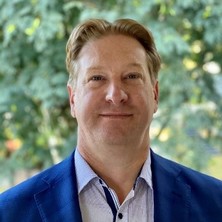
Doctor Jake O’Brien is Senior Research Fellow and NHMRC Emerging Leadership Fellow at the Queensland Alliance for Environmental Health Sciences (QAEHS). His main field of interest is in wastewater-based epidemiology, but he also has interest in developing analytical methods for chemicals of emerging concern within biological and environmental samples. Doctor O'Brien is a strong advocate for collaborative research having co-authored with more than 300 collaborators worldwide on over 170 publications. Jake is strongly supportive of early career researcher development and is the former chair of the EMCR@UQ Committee. He is also a Chief Investigator of the National Wastewater Drug Monitoring Program since its establishment in 2016.
Affiliate of Queensland Alliance for Environmental Health Science
Queensland Alliance for Environmental Health Sciences
Faculty of Health, Medicine and Behavioural Sciences
ARC DECRA Research Fellow
School of Pharmacy and Pharmaceutical Sciences
Faculty of Health, Medicine and Behavioural Sciences
Availability:
Available for supervision
Media expert
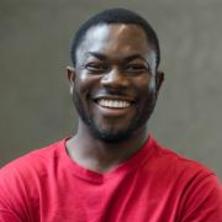
Dr. Elvis Okoffo is a Research Fellow at the Queensland Alliance for Environmental Health Sciences (QAEHS), The University of Queensland, Australia. His research is centred on developing innovative analytical methods to characterize and monitor environmental and human exposures associated with plastics. He has pioneered novel sampling approaches and analytical techniques for the rapid screening and monitoring of various types of plastics, including microplastics, nanoplastics, and biodegradable plastics in environmental samples (e.g., drinking water, wastewater, biosolids, seafood, marine water and sediments, compost, food, road dust, among others). By leveraging cutting-edge technologies (such as pressurised liquid extraction, ultrafiltration and pyrolysis gas chromatography coupled to mass spectrometry) and scientific methodologies, his research aims to provide valuable insights into the distribution, abundance, and impacts of plastic pollution, ultimately contributing to the development of effective strategies for mitigating the adverse effects of plastic pollution on ecosystems and human health.
Associate Professor - Pollution Science in Aquatic and Marine Environments
School of the Environment
Faculty of Science
Availability:
Available for supervision
Media expert
Associate Professor Ryan Turner is the Director of the Reef Catchments Science Partnership at the University of Queensland (a partnership with the Department of the Environment, Tourism, Science and Innovation). Ryan was previously the Department's Principal Scientist for Water Quality and Investigations and held an Adjunct Associate Professor role at Queensland University of Technology in the Managing for Resilient Landscapes, Institute for Future Environments. For 14 years, Ryan managed multimillion-dollar water quality monitoring programs that assessed the impacts of sediments, nutrients, and pesticides in numerous catchments along the Queensland coast, which discharge into the Great Barrier Reef and Moreton Bay. Ryan has served on several steering committees and technical advisory panels, including the Great Barrier Reef Foundation's Technical Advisory Panel. He has published extensively (>80 papers and reports) and led several collaborative research projects between the Queensland Government and academia. Ryan previously supervised analytical chemistry and microbiology laboratories in the private and public sectors. Ryan has developed numerous methodologies and standard operating procedures for analytical and monitoring techniques (water quality, sediments and soils). Ryan’s passion for the future of water security is what keeps him striving forward.
Faculty of Engineering, Architecture and Information Technology
Availability:
Available for supervision
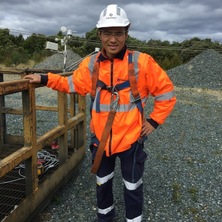
Dr Chenming Zhang is a specialist in monitoring and modelling hydrological processes in coastal/terrestrial groundwater systems and tailings storage facilities, in particular the evaporation induced mass and heat transport in soil/tailings, hydrogeochemical dynamics in aquifer systems and wast rock dumps. He has been developing IoT-based geotechnical and environmental instruments to monitor continuously and in real-time the weather, soil and water conditions.