My research draws on sociological theories to examine how organizations and their leaders justify controversial practices, engage with stakeholders, and respond to scandals both rhetorically and with practical actions. This work falls under the theoretical umbrella of organizational legitimacy and helps understanding how business ethics practices evolve over time. Empirically, my areas of interest span a wide variety of contexts, from the emergence of responsible taxation to the implementation of ethics management systems, from the integration of Indigenous values in Western management thinking to the protection of not-for-profits from trust failures, and from the governance of sport organizations to the evolution of ESG reporting. My approach to research is quite eclectic, including qualitative, quantitative, and conceptual work, yet I rely primarily on qualitative methodologies: chiefly interviews, archival material. and observations. Conducting this type of research has taken me across many countries including, Australia, Europe, China, the US, and Madagascar. Ultimately my work is aimed at providing guidance on how organizations can keep pace with the evolution of societal norms and stakeholder expectations.
My work has published in a variety of top journals including Journal of Management Studies (on how corporate leaders respond and adapt to critique during crises), Journal of Business Ethics (on the successes and failures of ethics control systems), Accounting, Organizations and Society (on changes of stakeholder expectations with regards to corporate taxation). These and other pieces have received multiple international recognitions, among others the R. Edward Freeman Journal of Business Ethics Philosophy in Practice Best Paper, the Amartya Sen Essay Prize by Academics Stand Against Poverty, and the Academy of Management Carolyn Dexter Award.
In teaching, I am best known for delivering courses in critical thinking, ethics, philosophy, leadership, sustainability, anthropology, and for integrating Indigenous knowledge. My teaching experience spans across undergraduate and postgraduate levels, with a decade of involvement in MBA and executive education programs. My passion for teaching was recognised with the student-nominated 2024 Beta Gamma Sigma Academic of the Year Award.
Before joining UQ, I was lecturer and then senior lecturer at the School of Strategy, Innovation, and Technology at the University of Sydney Business School. Prior to academia, I spent a decade working in the sport event management industry as a consultant. I also worked at the United Nations Global Compact in New York focusing on sustainability and anti-corruption practices. and in my family business as taxation and labour consultant.
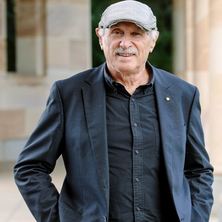
Neal M. Ashkanasy OAM, PhD is an Emeritus Professor of Management at the UQ Business School at the University of Queensland in Australia. He came to academe in after an 18-year career in water resources engineering. He received his PhD in social/organizational psychology from the same university. His research is in leadership, organizational culture, ethics, and emotions in organizations, and his work has been published in leading journals including the Academy of Management Journal and Review, the Journal of Organizational Behavior, and the Journal of Applied Psychology. He is Associate Editor for Emotion Review and Series Co-Editor of Research on Emotion in Organizations. He has served as Editor-in-Chief of the Journal of Organizational Behavior and Associate Editor for the Academy of Management Review and Academy of Management Learning and Education. Prof. Ashkanasy is a Fellow of the Academy for the Social Sciences in the UK (AcSS) and Australia (ASSA); the Association for Psychological Science (APS); the Society for Industrial and Organizational Psychology (SIOP); Southern Management Association (SMA), and the Queensland Academy of Arts and Sciences (QAAS). In 2017, he was awarded a Medal in the Order of Australia.
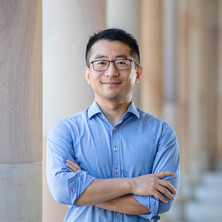
Dr. Tao Bai is a Senior Lecturer in International Business. His research focuses on multinational firm strategy, non-market strategy - including corporate political and social activities - and their intersection. His recent work examines how geopolitical dynamics shape firm strategy and behavior. He serves as an Associate Editor for the Journal of International Management.
His research has been published in leading journals such as Strategic Management Journal, Journal of International Business Studies, Journal of Management Studies, Journal of World Business, Research Policy, Long Range Planning, as well as in other international business and strategy journals and leading Chinese academic and practitioner journals.
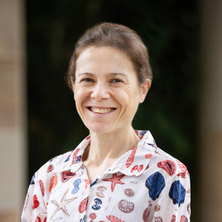
Caroline Knight is a Senior Lecturer at The University of Queensland Business School. Caroline’s research focuses on understanding how we can design work which is optimally healthy for individuals and organisations. Her focus is on work design, remote and hybrid work, work redesign interventions, and well-being. She collaborates with researchers, practitioners and industry partners internationally and has attracted funding worth over AUD$1,000,000, most recently leading a successful Australian Research Council Discovery Grant worth over AUD$650,000. Caroline currently serves as an Associate Editor for the Journal of Organizational Behavior and has published in several leading top-tier academic journals including the Journal of Organizational Behavior, Human Relations, Human Resource Management, the Journal of Vocational Behavior, and Work & Stress, as well as practitioner journals such as Harvard Business Review, and MIT Sloan Management Review.
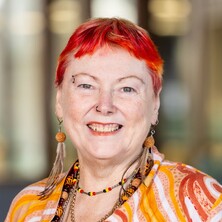
I am a Saltwater woman and a descendant of Matora (Awabakal) and Bungaree (Garigal/Darug), with family ties through Diana Mudgee to the Wiradyuri Nation. I am an Associate Professor in the UQ Business School and Director of the Indigenous Business Hub, and serve as Associate PRME Director – Indigenous Engagement for the UQ Business School.
I have more than 40 years of experience across academia, government, industry and community, with professional and academic work spanning Indigenous employment, Indigenous business, equity and inclusion, organisational change, industrial relations and Indigenous economic participation. My work brings together academic research, professional practice, community relationships and policy engagement, with a focus on creating practical and sustainable pathways for Aboriginal and Torres Strait Islander peoples, organisations and businesses.
My research centres on Indigenous employment, Indigenous business, Indigenous leadership and organisational transformation. My scholarship examines how colonial structures, institutional practices and workplace systems shape the experiences and opportunities of Aboriginal and Torres Strait Islander peoples. Drawing on Indigenous standpoint theory, Indigenous methodologies, Indigenous feminist perspectives and decolonial approaches, my research develops relational and culturally grounded approaches to employment, leadership, business and organisational change.
My research program spans industrial relations, human resource management, business education, leadership, Indigenous governance and economic participation. A consistent feature of my work is the connection between research, policy and practice. My research has informed policy processes and has been cited in Ministerial papers and Bills introduced into Parliament. I have also contributed to national policy and advisory processes concerning Indigenous employment, higher education, Indigenous entrepreneurship, workforce participation and organisational change.
As Director of the Indigenous Business Hub, I connect research, education, industry and community. The Hub supports research and engagement with Aboriginal and Torres Strait Islander businesses, organisations, governments and communities, and provides pathways for Indigenous knowledge, business expertise and community priorities to inform business education and research at UQ.
I established the International Journal of Indigenous Business through the Indigenous Business Hub and serve as Editor-in-Chief. The journal provides an international scholarly platform for Indigenous business research and centres Indigenous voices, Indigenous knowledges and priorities across business, enterprise, governance, policy, education and leadership.
I completed my Doctor of Philosophy (Business) at the University of Newcastle in 2016. My doctoral thesis, Private-sector employment programs for Aboriginal and Torres Strait Islander peoples: Comparative case studies, examined approaches to Indigenous employment in the private sector. I was the first Aboriginal person to be awarded a PhD in Business from the University of Newcastle.
I completed my Honours thesis in 2006, examining mentoring as a human resource strategy to address labour market disadvantage for Indigenous Australians through a qualitative study of mentoring outcomes for Indigenous trainees at the University of Newcastle.
My work is grounded in reciprocity, relational accountability and Indigenous self-determination. Across academic, community, industry and policy settings, I seek to create opportunities through which knowledge, relationships and resources can move in both directions — strengthening UQ while contributing to outcomes for Aboriginal and Torres Strait Islander communities, businesses, organisations and students.
Thomas Maak is Professor of Leadership and the inaugural Professorial Chair in Ethics at the University of Queensland Business School. A business ethicist by training, he previously served as Director Centre for Workplace Leadership and Professor of Leadership at the University of Melbourne. Thomas is global authority in the field of responsible leadership, business ethics, and the micro-foundations of CSR. His research links the individual, group, and organizational levels, combining ethical theory, political philosophy, relational thinking and stakeholder theory. He conducted the first team neurodynamics study with MBA students in 2012. His work has been published in leading academic journals such as the Academy of Managment Learning & Education, Journal of Management Studies, Human Resource Management, Organizational Research Methods, and the Journal of Business Ethics. He is listed in the Stanford list of the world's most highly cited university professors.
Thomas has extensive experience in leadership development and has worked for several years with PricewaterhouseCoopers on their award-winning senior executive program ‘Ulysses’. He has also worked with other leading companies, including BMW, Volkswagen, Shell, UBS, Dong Energy, and Novo Nordisk. Through his work with leading social entrepreneurs in South Asia and South America, including Gram Vikas, Hagar, and Fundacion Paraguaya, he is also interested in social innovation and the advancement of human dignity in a fractured world. Before coming to Australia, Thomas started his academic career at the University of St. Gallen, home to the world’s best MSc in Management, and is a graduate from the INSEAD International Director’s Program. From 2004-2008 he held an appointment as Senior Research Fellow at INSEAD, France, and co-directed a research stream within the PwC-INSEAD initiative on high-performing organizations, before being appointed Full Professor at ESADE Business School in Barcelona, one of the top-ranked MBA schools in the world, and a leader in corporate executive education. In 2014 he was a visiting professor at the Wharton School, University of Pennsylvania. Thomas is the immediate past president of ISBEE, the International Society of Business, Economics, and Ethics and chaired and co-organized the 2022 World Congress in Bilbao, Spain.
From the politics of climate change to defending democracy, Professor Daniel Nyberg is seeking to understand how corporations, governments, and citizens negotiate different priorities when facing key challenges of our time.
This qualitative researcher takes an interdisciplinary approach to his work across two main areas:
climate change, where he interrogates the links between climate change and corporate capitalism, and
defending democracy, where he seeks to untangle the relationships between industry and government.
“These are some of the biggest threats facing humankind,” he affirms.
“How could you not be interested?”
Climate Change
Professor Nyberg’s interest in climate change came from a growing sense of urgency. As public interest in green products grew, corporations were beginning to address climate change internally, through the design and delivery of green products and services. At the same time, the climate emergency led to attempts to contain or regulate polluting industries, for example through carbon offsets and other measures.
“It’s important to understand what corporations are doing in order to mitigate and/or minimise the effects of climate change,” Professor Nyberg explains.
“We also need to have knowledge about what they’re doing so we can regulate their activities.”
Working alongside Professor Christopher Wright from the University of Sydney's Business School, and Dr Vanessa Bowden from the University of Newcastle's School of Humanities, Creative Industries and Social Sciences, this ground-breaking research has been published in a number of leading international journals. The three colleagues collaborated on the book, Organising Responses to Climate Change: The Politics of Mitigation, Adaptation and Suffering (2022, Cambridge University Press), building on the success of Professor Nyberg and Professor Wright's book, Climate Change, Capitalism, and Corporations: Processes of Creative Self-Destruction (2015, Cambridge University Press), which attracted wide attention across both the social and natural sciences.
Defending Democracy
Building on this work, Professor Nyberg has developed a strong interest in corporate political activity, both in how public policy is interpreted and implemented in practice, as well as in how corporations seek to influence public policy. This shift from the narrow focus on corporate outcomes to the broader understanding of democratic processes, is particularly relevant in the fraught debates around climate policy.
“I’m currently exploring how corporations influence democracy,” he states.
“The clearest example is the Labor Government’s super profit tax proposal of 2010, which the mining industry vehemently opposed. Even though it spent $22 million doing so, calculations by the Australian Financial Review suggest it saved $10 billion by agreeing to a truce with then-Prime Minister Julia Gillard. So, you can see it’s often much easier and cheaper for corporations to deal with public policies than it is for them to deal with their processes.”
Faculty of Engineering, Architecture and Information Technology
Lecturer in Management & Leadership
School of Business
Faculty of Business, Economics and Law
Availability:
Available for supervision
I study how people lead, decide, and organize under the most demanding conditions imaginable, and what those environments reveal about leadership and practice more broadly. My research examines how leaders make consequential decisions under uncertainty and time pressure, how embodied skill and expertise develop in operational settings, and how teams sustain coordinated performance when conditions are most demanding. My central argument is that organizations at the edge of their capability show us things about leadership and human coordination that ordinary settings conceal. This work sits at the intersection of practice-process theory and phenomenology, and draws on my twenty-three years of service across the US Army Infantry, the 75th Ranger Regiment, and Special Forces, experience that affords access to empirical settings and practitioner networks rarely available to management researchers. I bring this research and experience directly into the classroom and engagements with industry, government, defense, and law enforcement partners, using what extreme contexts reveal about leadership to help practitioners in any organizational setting decide, lead, and act more effectively.
Research Hub Leader (Practice and Process Studies) of UQ Business School
School of Business
Faculty of Business, Economics and Law
Professor
School of Business
Faculty of Business, Economics and Law
Availability:
Available for supervision
Paul is a Professor of Strategic Management. His research and teaching focus on how organisations plan for the future and make strategic decisions, helping us to understand how individual behaviour can create meaningful change to the organisation and the people connected to it. Paul’s work cuts across sectors, including high-growth startups, emergency services, health care providers, reinsurance, telecommunication and the petrochemical industry.
Research interests
Paul’s research is grounded in industry and professional practice. He pursues multiple research programs.
Transitioning the energy sector: Paul’s research investigates how organisations plan and coordinate the shift to cleaner energy, examining how the coordination across an industry value chain can make the energy transition more effective for industries, communities and society.
Coordinating responses in the face of extreme weather events: Paul’s work examines enablers and barriers to effective governance needed to coordinate organisational responses to tackle extreme weather events and improve community disaster resilience.
Mechanisms to support creating and scaling startups: Paul’s research explores mechanisms that support creating and scaling high-impact startups.
Effective strategizing: Paul’s research places a particular emphasis on exploring the influence of communication on formulation and execution on the effective delivery of strategy and its impact on the organization and its stakeholders.
Research expertise
Paul is an award-winning, internationally recognised scholar, pioneering new research programs on strategy-as-practice, practice-based institutionalism and routine dynamics; advancing the fields of Strategic Management and Organization Theory.
His research featured in world-leading outlets, including the Academy of Management Journal, Journal of Management Studies, Journal of Business Ethics, Organization Science and Organization Studies, and prestigious handbooks.
Paul's work received several prestigious awards from leading national and international learned professional associations, including the Academy of Management, European Group for Organizational Studies and Australian Centre for Entrepreneurship Research Excellence.
The practical relevance of Paul’s work is demonstrated by industry publications and media.
Fostering strategic management competence
Paul is a leading educator in Strategic Management. He integrates a broad portfolio of cross‑sector research into the design and delivery of evidence‑based strategic management courses, contributing to prestigious programs including the MBA and the Bachelor of Advanced Business (hons). Previously, he designed and delivered the strategic management curriculum to the Master of Business and the Bachelor of Business Management (hons).
To foster strategic management competence to professionals interested in short form credentials, Paul offers a short course ‘Think and Act Strategically’ through UQ’s Executive Education and contributes to the UQ-Oxford Executive Leadership Program; having equipped up-and-coming medical professionals graduating from UQ’s Medical Leadership Program.
Leadership
Paul fosters a thoughtful, inclusive, and collaborative culture within UQ and the academic community, creating environments in which diverse perspectives and constructive intellectual engagement can thrive.
Roles at UQ include
Establish and lead the Practice and Process Studies research hub
Department head, Strategy & Entrepreneurship discipline
Member of the Tenure and Promotions Committee for the Faculty of Business, Economics & Law
Member of the Business School’s Research Committee
Roles in the academic profession included
Senior Editor, Organization Studies (2014-2025)
Editorial board memberships for leading international journals in strategic management, Long Range Planning, Organization Research Methods, Organization Studies, Research in the Sociology of Organizations
Executive Leadership Track, leading the Strategizing, Activities & Practices interest group at the Academy of Management, including Program Chair
Award Committees, such as Chair of the Career Achievement Award, Academy of Management
Faculty of Engineering, Architecture and Information Technology
Affiliate of Centre for Social Responsibility in Mining
Centre for Social Responsibility in Mining
Faculty of Engineering, Architecture and Information Technology
Availability:
Available for supervision
Media expert
Corinne seeks to understand the organizing practices and processes that gradually and invisibly create risks that can worsen over time to become catastrophic. These ‘insidious risks’ were the focus of Corinne’s PhD in the UQ Business School where she identified three ways, on a spectrum of ways these risks are managed: blinkered, law-abiding and attentive. With more than 30 years’ experience in the mining sector, government, consulting and research, Corinne built upon her earth sciences background in mine rehabilitation and closure to become a qualitative researcher through her PhD. This provided a new lens and insights on how organisations manage elongated insidious risks, not only for mine affected water and land disturbance in mining but also during the progressive failure of the insurance market for extreme weather, in her postdoctoral research. In a voluntary capacity Corinne formed and led an ISO standards working group to finalise ISO 24419 Managing Mining Legacies in 2023 providing the first international standard on this topic together with case studies and a bibliography. She represents AusIMM in her standards work. Since 2019 Corinne has been a Board Member of the Victorian Government’s Mine Land Rehabilitation Authority providing oversight for three brown coal mine closures in the Latrobe Valley. Prior to her PhD Corinne developed the field of research in managing abandoned/legacy mines in the Centre for Mined Land Rehabilitation, SMI following her Churchill Fellowship research in 2009.