Deputy Associate Dean Research (Research Partnerships)
Faculty of Science
Affiliate of Australian Centre for Ecogenomics (ACE)
Australian Centre for Ecogenomics
Faculty of Science
Availability:
Available for supervision
Media expert
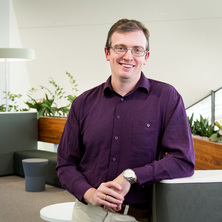
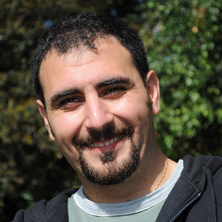
Prof David Ascher is an NHMRC Investigator Leadership Fellow and Deputy Associate Dean (Research Partnerships) in the Faculty of Science at The University of Queensland. He also serves as Deputy Director of the Australian Centre for Ecogenomics and Head of Computational Biology & Clinical Informatics at the Baker Heart and Diabetes Institute. Internationally, he sits on scientific advisory boards for A*STAR (Singapore), Fiocruz (Brazil) and the Tuscany University Network (Italy), and has been recognised with major honours including the Royal Society of Chemistry Horizon Prize.
A global leader in computational biology and personalised medicine, Prof Ascher develops advanced AI- and structure-based approaches to understand how genetic variation alters protein structure, function, and clinical outcomes. His group has built one of the world’s most widely used platforms for interpreting coding variants—over 120 computational tools, accessed more than 12 million times per year from 120+ countries. These tools underpin clinical diagnostics, guide drug development pipelines, and support international public-health responses to antimicrobial resistance and emerging infectious diseases.
His research has led to new molecular insights across infectious disease, rare disease, oncology and cardiometabolic health, and has been translated directly into practice—informing WHO policy, enabling early resistance detection in tuberculosis and leprosy, stratifying patients with hereditary cancers, and supporting vaccine design with partners including Pfizer. Many of his methods are embedded in globally used resources such as Ensembl VEP, PDBe, and the EMBL-EBI KnowledgeBase.
Prof Ascher has a longstanding commitment to interdisciplinary leadership and capability-building across UQ. As Director (Strategy) of the Biotechnology Programs and later as Deputy Associate Dean (Research Partnerships), he has driven initiatives to transform UQ’s biotechnology education, grow industry-embedded training, expand international partnerships, and diversify research income. He has led the development of UQ’s biotechnology–industry placement ecosystem, initiated new professional development programs adopted across multiple Faculties and Institutes, and established major collaborations with government, industry and global research organisations.
He has published more than 250 peer-reviewed papers (over half as senior author: FWCI 2.7), secured more than $40M in competitive research funding, and supervised over 60 HDR students who now hold leadership positions in academia, industry and government. His work appears in leading journals including Nature, Nature Genetics, Science, PNAS and Nature Microbiology, and is cited in over 100 policy documents and 40 patents.
Prof Ascher holds degrees in Biotechnology, Biochemistry, Structural Biology and Law. His research career has spanned Adelaide, Melbourne, Cambridge and Brisbane. After his PhD with Professor Michael Parker, he worked with Sir Tom Blundell at the University of Cambridge, where he led programs in structure-guided drug discovery and protein–protein interaction targeting. He established his independent laboratory at Cambridge and then at the University of Melbourne/Bio21 Institute, before moving to the Baker Institute in 2019 and joining UQ in 2021.
Faculty of Health, Medicine and Behavioural Sciences
Availability:
Available for supervision
Media expert
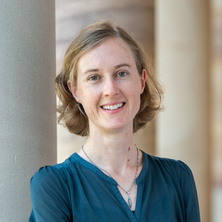
During my postgraduate studies and postdoctoral fellowship, I gained experience in a wide range of chemical biology techniques as well as in initiating and managing collaborations. Building on a background in chemistry and biochemistry, I developed my skills in peptide chemistry and NMR spectroscopy during my PhD in Australia, synthesizing a variety of disulfide-rich cyclic peptides and elucidating their structures and dynamics by NMR spectroscopy. I have gained further experience in protein chemistry, solid phase peptide synthesis and protein ligations during my postdoctoral fellowship in Vienna, collaborating with Syntab Therapeutics on a project involving synthesis and development of synthetic antibodies for cancer therapy. I have recently taken up a UQ Development Fellowship to establish my independent research area in synthesis and structural biology of posttranslationally modified proteins.
Affiliate of ARC COE for Innovations in Peptide and Protein Science
ARC COE for Innovations in Peptide and Protein Science
Institute for Molecular Bioscience
Senior Lecturer
School of Chemistry and Molecular Biosciences
Faculty of Science
Availability:
Available for supervision
Media expert
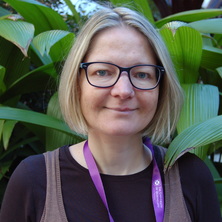
I was awarded my PhD in Computational Biophysics from the University of Western Australia (2012) for my work on combining molecular modelling and simulation approaches with fluorescence spectroscopy experiments to study mechanosensitive ion channels.
Following this, I carried out Postdoctoral work at the University of Queensland and Curtin University, funded by Early Career Fellowships from the Swiss National Science Foundation and the Australian National Health and Research Council (NHMRC). In 2019, I joined UTS under a UTS Chancellor's Postdoctoral Research Fellowship and started my independent research group. In 2021, I returned to the University of Queensland as a Senior Lecturer.
Apart from my research, I am a passionate advocate for mental health in academia and
supporting PhD students. My teaching and supervision are guided by encouraging students to become 'critical thinkers'. I practice mindful leadership and aim to integrate kindness and gratitude into how I lead my research team.
Affiliate of ARC COE for Innovations in Peptide and Protein Science
ARC COE for Innovations in Peptide and Protein Science
Institute for Molecular Bioscience
Associate Professor
School of Chemistry and Molecular Biosciences
Faculty of Science
Availability:
Available for supervision
Media expert
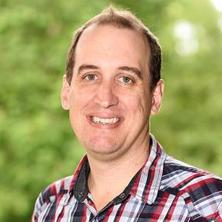
A/Prof Landsberg's undergraudate and Honours studies, majoring in Chemistry, were completed at Central Queensland University and the CSIRO (JM Rendel laboratories) before he moved to the University of Queensland to study a PhD in Biochemistry (awarded 2003). He then moved to a postdoctoral position at the Institute for Molecular Bioscience, spending time as a Visiting Scientist at Harvard Medical School (2008) and securing promotion to Senior Research Officer upon his return to IMB in 2009. He additioanlly spent time as a Visiting Scientist at the Victor Chang Cardiac Research Institute in 2010 and 2011.
In 2016, he joined UQ's School of Chemistry and Molecular Biosciences as a Group Leader in Cryo-EM and Macromolecular Structure and Senior Lecturer in Biochemistry and Biophysics, where he was promoted to Associate Professor in 2019. He has secured >$13.5M in competitive research funding since 2012, including major grants from the Australian Research Council and National Health and Medical Research Council. He his research has been presented at over 70 national and international conferences and research institutions.
Affiliate Professor of School of Chemistry and Molecular Biosciences
School of Chemistry and Molecular Biosciences
Faculty of Science
Affiliate of ARC COE for Innovations in Peptide and Protein Science
ARC COE for Innovations in Peptide and Protein Science
Institute for Molecular Bioscience
Affiliate Associate Professor
Institute for Molecular Bioscience
Professorial Research Fellow
Australian Institute for Bioengineering and Nanotechnology
Availability:
Available for supervision
Media expert
Professor Mobli is a structural biologist and a group leader at the University of Queensland's Australian Institute for Bioengineering and Nanotechnology (AIBN). He is well known internationally for his contributions to the basic theory of multidimensional nuclear magnetic resonance and its applications to resolving the molecular structure of peptides and proteins, as well as studying their physiochemical properties and function. Mehdi's contributions to the field has been recognised by being appointed an Executive Editor of the AMPERE society's journal "Magnetic Resonance", and to the advisory board of the international Biological Magnetic Resonance Data Bank (BMRB) as well as serving on the board of directors of the Australia and New Zealand Society for Magnetic Resonance (ANZMAG). He is a former ARC Future Fellow and recipient of the ASBMB MERCK medal, the Australia Peptide Society's Tregear Award, the ANZMAG Sir Paul Callaghan medal and the Lorne Proteins Young Investigator Award (now Robin Anders Award).
Prof. Mobli's research group focuses on characterising the structure and function of receptors involved in neuronal signalling, with a particular focus on developing new approaches for the discovery and characterisation of modulators of these receptors through innovations in bioinformatics, biochemistry and and biophysics. This work has led to publication of more than 100 research articles attracting over 6,000 citations.
Affiliate Professor of School of Chemistry and Molecular Biosciences
School of Chemistry and Molecular Biosciences
Faculty of Science
Affiliate of ARC COE for Innovations in Peptide and Protein Science
ARC COE for Innovations in Peptide and Protein Science
Institute for Molecular Bioscience
Professorial Research Fellow and Group Leader
Australian Institute for Bioengineering and Nanotechnology
Availability:
Available for supervision
Media expert
Megan O’Mara is a Professor and Group Leader at the Australian Institute for Bioengineering and Nanotechnology (AIBN), UQ. Her group uses multiscale modelling techniques to understand how changes in the biochemical environment of the cell membranes alters membrane properties and modulates the function of membrane proteins. She has research interests in multidrug resistance, computational drug design and delivery, biopolymers, and personalized medicine. Megan completed her PhD in biophysics at the Australian National University in 2005 before moving to the University of Calgary, Canada, to take up a Canadian Institutes of Health Research Postdoctoral Fellowship. In 2009, she returned to Australia to join University of Queensland’s School of Chemistry and Molecular Biosciences as a UQ Postdoctoral Fellow, before commencing an ARC DECRA in 2012 where she continued her computational work on membrane protein dynamics. In 2015, Megan joined the Research School of Chemistry, Australian National University in 2015 as Rita Cornforth Fellow and Senior Lecturer. In 2019 she was promoted to Associate Professor and was Associate Director (Education) of the Research School of Chemistry ANU in 2019-2021. In April 2022 she relocated to AIBN.
I studied Technical Mathematics at the Vienna University of Technology. I also earned a Master's degree in Law and I finished the first ("non-clinical") part of Medical Studies at the University of Vienna. I earned my PhD in Applied Mathematics at the University of Vienna in 2007. My PhD advisor was Christian Schmeiser, my co-advisor was Peter Markowich. I spent several months at the University of Buenos Aires working with C. Lederman and at the ENS-Paris rue d'Ulm in the group of B. Perthame.
Before coming to UQ, I held post-doc positions at the Wolfgang Pauli Insitute (Vienna), University of Vienna and the Austrian Academy of Sciences (RICAM). In 2013 I won an Erwin Schrödinger Fellowship of the Austrian Science Fund (FWF). I was a post-doc researcher in the group of Alex Mogilner first at UC Davis, then at the Courant Institute of Math. Sciences (New York University).
I moved to UQ in Dec. 2016. More recently, in 2024, I spent 4 months at the department of Mathemetics of the U. of Heidelberg as a visiting scientist.
My research interests are centred around the structure and function of venom and silk polypeptides produced by arthropods, and their use in biotechnology and medicine. I am a Postdoctoral Fellow in the King laboratory in the Institute for Molecular Bioscience, the University of Queensland, Australia. Currently, I am investigating the composition, function and evolution of neglected insect venoms produced by assassin bugs (Hemiptera: Reduviidae), robber flies (Diptera: Asilidae) and nettle caterpillars (Lepidoptera: Limacodidae).