Skip to menu Skip to content Skip to footer

Find an expert

4421 - 4440 of 4483 results

Dr Jihui (Aimee) Zhang

Lecturer
School of Electrical Engineering and Computer Science
Faculty of Engineering, Architecture and Information Technology
Availability:
Available for supervision

Dr Jihui (Aimee) Zhang is currently a lecturer (Assistant Professor) in the School of Electrical Engineering and Computer Science, University of Queensland, Australia. She is also an honorary lecturer in the Audio & Acoustic Signal Processing (AASP) group, the Australian National University (ANU), Australia. From 2023 to 2024, she was a lecturer (Assistant Professor) in the Institute of Sound and Vibration Research (ISVR), University of Southampton, the United Kingdom. From 2018 to 2022, she was a Postdoctoral Research Fellow and a Research Fellow in the AASP group, ANU, Australia. From May 2018 to Aug.2018, she was a Research Engineer Intern in SONY, Japan.

Her research interest is mainly in Audio and Acoustic Signal Processing, especially Spatial Active Noise Control, Spatial Audio Solution for Virtual and Augmented Reality, and Microphone Arrays. Her other research interest is in Human-Robot/machine Audio Interactions, especially Audio Solution for Human-Unmanned Aerial Vehicle (UAV) Interactions. She has practical experience in Digital Design and Embedded Systems, especially Embedded Automatic Test & Control Systems and Embedded Audio Systems

She is currently a senior member of the IEEE and Signal Processing Society (SPS), a member of Audio Engineering Society (AES) and Acoustical Society of America (ASA). She serves as Student Activities Chair in the IEEE Queensland Section in 2025. She served as a chair of Women in Engineering Affinity Group in IEEE Australian Capital Territory Section in 2021 and 2022.

Jihui (Aimee) Zhang
Jihui (Aimee) Zhang

Dr Jenny Zhang

Postdoctoral Research Fellow
Institute for Molecular Bioscience
Availability:
Available for supervision
Jenny Zhang

Dr Zhen Zhang

Postdoctoral Research Fellow
Australian Institute for Bioengineering and Nanotechnology
Availability:
Available for supervision

Dr. Zhen Zhang specializes in developing advanced nanotechnology platforms for diagnosing cancers and other pathologies through liquid biopsy. Her research integrates expertise in nanotechnology, bioengineering, and analytical chemistry to create innovative solutions for early detection and disease monitoring. By leveraging cutting-edge techniques such as microfluidics and surface-enhanced Raman spectroscopy (SERS), Dr. Zhang's work aims to enhance the sensitivity and specificity of liquid biopsy methods. Her multidisciplinary approach focuses on translating these technologies into clinical applications, advancing precision medicine for cancer and other complex diseases.

Zhen Zhang
Zhen Zhang

Associate Professor Yao-zhong Zhang

Reader
School of Mathematics and Physics
Faculty of Science
Availability:
Available for supervision
Media expert

A/Prof Yao-Zhong Zhang's research interests are in: Algebraic structures, quantum (super)integrable systems, (quasi-)exactly solvable models, supersymmetry, and conformal field theory.

Yao-Zhong Zhang received his PhD from Northwest University, China, in 1988 under the supervision of Prof Bo-Yu Hou. He spent 12 years in Europe, Japan and Australia as Postdoctoral/Research Fellow, before becoming in 2001 a permament staff member as a Senior Lecturer in Mathematics of the University of Queensland. Since 2006, he has been Reader/Associate Professor in the School of Mathematics and Physics of the University of Queensland.

Yao-zhong Zhang
Yao-zhong Zhang

Dr Run Zhang

Affiliate of Nanomaterials Centre
NanoMaterials Centre
Faculty of Engineering, Architecture and Information Technology
Amplify Senior Fellow
Australian Institute for Bioengineering and Nanotechnology
Availability:
Available for supervision
Media expert
  • 2023-now Joint Senior Research Fellow, Centre for Nutrition and Food Sciences, The Queensland Alliance for Agriculture and Food Innovation (CNFS, QAAFI)
  • 2022-now Senior Research Fellow, AIBN, The University of Queensland
  • 2020-now NHMRC Emerging Leadership Fellow, AIBN, The University of Queensland
  • 2017-2019 ARC DECRA Fellow, AIBN, The University of Queensland
  • 2016-2017 Research Associate, AIBN, The University of Queensland
  • 2013-2015 Macquarie University Research Fellow (MQRF), Department of Chemistry and Biomolecular Science (CBMS), Macquarie University
  • 2012-2013 Postdoc Research Fellow, Department of Physics and Astronomy, Macquarie University
  • July 2012 PhD, Analytical Chemistry, Dalian University of Technology (DLUT), China

Research Team: Dr Zhang is now leading more than 15 researchers, working on the development of responsive molecules/nanomaterials for biosensing and imaging, early disease detection and treatment, food/agricultural/environmental applications. He has collaborations with scientist in Chemistry, Materials Science, Molecular Biology and Biotechnology, Food and Agriculture Science, and Biophotonics from Australia, US, UK, Sweden, India, Russia and China.

Research Support: Since 2011, Dr Zhang has attracted 12 research grants (> 4 million) as chief investigator (lead CI and/or co-CI). These grants include 3 Fellowship (NHMRC Emerging Leadership, ARC DECRA and MQRF to develop responsive probes for redox biomarkers detection within body), 1 NHMRC Project grant in redox quantification in liver cancer chemotherapy, 1 ARC DP to develop nanoparticle with ultra-high MRI signal for sensor applications, 1 UQ ECR grant, 1 NSFC grant, and another 3 grants from universities.

Research Output: Dr Zhang has published about 200 research papers since his first publication in 2010 (~110 papers published as first and/or corresponding author), and 1 patent. He frequently publishes in a number of premier journals, such as Nature Photonics, Nature Plants, Journal of the American Chemical Society (JACS), Angewandte Chemie, Analytical Chemistry, Chemical Society Reviews, and Accounts of Chemical Research. These publications have received more than 11,000 citations with an H-index of 60. He has 9 Highly Cited Papers (7 in the ESI field of Chemistry-Analytical) and 3 Hot Articles.

Service: Dr Zhang is an Editor of TrAC Trends in Analytical Chemistry (Elsevier, 1/106 in Analytical Chemistry) and Methods (Elsevier, 7/85 in Biochemical Research), and Editorial Board Member of several international high impact journals, such as Chemistry-An Asian Journal (Wiley), Aggregate (Wiley), Journal of Pharmaceutical Analysis (Elsevier), Green Analytical Chemistry (Elsevier). He is a referee of >40 international journals (2nd most contributions of all UQ researchers, with >20 awards from RSC and Elsevier journals), and grant assessor for more than 10 country and regions, such as Australia, UK, Europe, Netherland, New Zealand.

Award: Dr Zhang's national and international standing in the fields of chemistry (analytical) and functional nanomaterials is evidenced by the awards of ACS Rising Star in Measurement Science, NJC Emerging Investigator, Biosensors Young Investigator Award, IAAM Scientist Medal, Vebleo Fellow, IAAM Fellow, ARC DECRA, NHMRC EL Fellow, MQRF, and more than 20 TOP Outstanding Reviewer awards from RSC and Elsevier. He has been a World's Top 2% Scientist in Chemistry (Analytical) and Nanoscience & Nanotechnology since 2022 by Stanford/Elsevier World’s Top 2% Scientist Ranking, and top 0.5% of all scholars worldwide for excellence in research productivity, impact and quality by ScholarGPS Ranking (ranked #183 Globally in Biomedical Engineering). He has delivered 40+ invited presentations and keynotes.

Teaching and Supervision: Dr Zhang has a strong commitment to training students. His students have received several awards, such as 5 "Dean’s Commendation for Outstanding Academic Performance", 1 "Dean’s Award for Excellence in Higher Degree Research", 1 "Dean's Award for Outstanding HDR Theses", ANFF-Q students award, 3MT Runner-UP and People's Choice. He has supervised 10 PhD and >20 Masters to completion. He is now co-coordinating and lecturing the MSE PP ENGY7112/7115/7114/7215 in School of Chem. Eng., EAIT. His teaching contributions in UQ are recognised by twice nominations of "Dean’s Commendation for Excellent Teaching Awards" in semesters 1 and 2 in 2022 by the students.

Run Zhang
Run Zhang

Dr Yang Zhang

Lecturer
Mathematics
Faculty of Science
Availability:
Available for supervision
Yang Zhang

Dr Chenming Zhang

Advanced Queensland Industry Research Fellow
School of Civil Engineering
Faculty of Engineering, Architecture and Information Technology
Availability:
Available for supervision

Dr Chenming Zhang is a specialist in monitoring and modelling hydrological processes in coastal/terrestrial groundwater systems and tailings storage facilities, in particular the evaporation induced mass and heat transport in soil/tailings, hydrogeochemical dynamics in aquifer systems and wast rock dumps. He has been developing IoT-based geotechnical and environmental instruments to monitor continuously and in real-time the weather, soil and water conditions.

Chenming Zhang
Chenming Zhang

Associate Professor Cheng Zhang

Principal Research Fellow
Australian Institute for Bioengineering and Nanotechnology
Availability:
Available for supervision
Media expert

Dr Cheng Zhang is an innovative Research Fellow supported by both ARC and NHMRC. He has an outstanding track record in the fields of fluoropolymers, polymer chemistry and materials science. He has made significant contributions to these fields of research through innovative chemistry to build precise fluoropolymer structures and subsequent molecular-level characterisation to understand the structure-property relationship for specific applications including from energy materials e.g. solid electrolytes, sorbent materials for environmental PFAS remediation, to functional biomaterials e.g. imaging and therapeutic agents.

Please read more here at the Zhang Group.

Cheng Zhang
Cheng Zhang

Dr Liwang Zhang

Postdoctoral Research Fellow
Frazer Institute
Faculty of Health, Medicine and Behavioural Sciences
Availability:
Available for supervision

My research aims to improve how we treat cancer and immune-related diseases by uncovering how cells control immune responses at a molecular level. I focus on how cancer cells evade immune attack by altering the localisation of key immune regulatory proteins on their surface.

Liwang Zhang

Dr Jiale Zhang

Research Officer
Queensland Alliance for Agriculture and Food Innovation
Availability:
Available for supervision
Media expert

Jiale Zhang is a researcher in food science and nutrition at The University of Queensland, with expertise in functional foods, food processing, and bioactive compounds. My current work focuses on how food components change during processing, digestion, and fermentation, and how these changes influence nutrition, gut health, and product quality. I am also working on the product development.

My research brings together food chemistry, metabolomics, and microbiome science to better understand the relationship between food composition and health outcomes. I have worked extensively on Australian native fruits with a particular interest in developing value-added food products and sustainable food materials.

My main areas of expertise include:

  • Functional foods and bioactive compounds
  • Digestion and colonic fermentation models
  • Gut microbiota and food–microbe interactions
  • Untargeted and targeted metabolomics
Jiale Zhang

Professor Mingxing Zhang

Affiliate of Centre for Advanced Materials Processing and Manufacturing (AMPAM)
Centre for Advanced Materials Processing and Manufacturing
Faculty of Engineering, Architecture and Information Technology
Professor
School of Mechanical and Mining Engineering
Faculty of Engineering, Architecture and Information Technology
Availability:
Available for supervision
Media expert

Professor Mingxing Zhang’s research interests are in the additive manufactruring of metals and MAX phase mateirals, high entropy alloys, new alloy design through machine learning and application of crystallography to engineering materials, surface engineering of metals, and grain refinement for cast metals.

Prof Zhang is a world leader in the area of crystallography of phase transformations and its applications in engineering materials, and is recognised as one of the top researchers in the areas of phase transformations, grain refinement for cast metals, additive manufacturing of metals, and surface engineering.

Prof Zhang obtained his Bachelor of Engineering from the Inner Mongolian University of Science and Technology and Master of Engineering from Northwestern Polytechnical University, China. In 1997 he was awarded his PhD degree by The University of Queensland. His research expertise and interests include crystallography of phase transformations, grain refinement and alloy development of aluminum and magnesium alloys, surface modification and coatings, bainitic transformation and bainitic steels.

Prof Zhang’s research hopes are to apply his fundamental research results to develop new generation metallic materials and to improve the current materials processing techniques. His research outcomes will also offer materials scientists a totally new way to undertake surface treatment for metallic materials, therefore to significantly improve the surface durability of this type of materials. For example, the recently developed new packed powder diffusion coating technique for titanium alloys will enable the replacement of the highly costive superalloys with Ti alloys. The research also hopes to enhance Australia’s competitive ability in international markets in light metals and contribute significantly to material science with the study of the mechanism of phase transformations in solids.

Mingxing Zhang
Mingxing Zhang

Professor Xiwang Zhang

Centre Director of Australian Research Council Centre of Excellence for Green Electrochemical Transf
ARC COE for Green Electrochemical Transformation of Carbon Dioxide
Faculty of Engineering, Architecture and Information Technology
Centre Director of Dow Centre for Sustainable Engineering Innovation
Dow Centre for Sustainable Engineering Innovation
Faculty of Engineering, Architecture and Information Technology
Endowed Chair in Sustainable Engineering and Director, Dow Centre
School of Chemical Engineering
Faculty of Engineering, Architecture and Information Technology
Availability:
Available for supervision

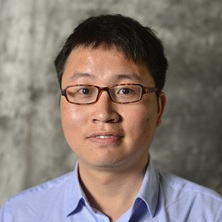
Prof. Xiwang Zhang is the Endowed Dow Chair in Sustainable Engineering Innovation at the University of Queensland, Director of UQ Dow Centre, and Director of ARC Centre of Excellence for Electrochemical Transformation of Carbon Dioxide (GetCO2). He was the Founding Director of ARC Industry Transformation Research Hub for Energy-efficient Separation (EESep) and the Deputy Director of Monash Centre for Membrane Innovation (MCMI) at Monash University before he moved to UQ in early 2022. Prof. Zhang has more than 15 years of R&D experience in both academia and industry with demonstrated achievements in technology development and translation. His research focuses on membrane and advanced oxidation technologies for energy-efficient separation, resource recovery, green chemical synthesis, carbon dioxide conversion and renewable energy generation. Prof. Zhang was the recipient of the prestigious ARC Australian Research Fellowship, Future Fellowship and Monash Larkins Fellowship. In 2024, he was elected as a Fellow of the Australian Academy of Technological Sciences and Engineering (ATSE).

Xiwang Zhang
Xiwang Zhang

Dr Hong Zhao

Postdoctoral Research Fellow
School of Mechanical and Mining Engineering
Faculty of Engineering, Architecture and Information Technology
Availability:
Available for supervision
Hong Zhao

Dr Kong-Nan Zhao

Research Fellow
Australian Institute for Bioengineering and Nanotechnology
Availability:
Available for supervision
Kong-Nan Zhao

Dr Dongxue Zhao

ARC Early Career Research Fellow
Queensland Alliance for Agriculture and Food Innovation
Availability:
Available for supervision

Dr Dongxue Zhao is a Research Fellow within the Queensland Alliance for Agriculture and Food Innovation at The University of Queensland, Australia. Her research aims to contribute to sustainable gains in crop productivity by improving our understanding of how crop-soil interactions determine crop and root growth, water and nutrient uptake, and final yield. In her research, she combines innovative proximal and remote sensing techniques of crops, soils and roots, with predictive modelling and artificial intelligence tools. These include integrating electromagnetic induction (EMI) techniques, and drone and satellite imagery to monitor crop root growth and water use dynamics over time; 3D mapping of soil properties and sub-soil constraints to map resource constraints; time-lapse imaging of soil wetting and drying cycles for applications in irrigated cropping; developing new hyperspectral libraries for the rapid estimation of plant, crop and soil properties; data fusion and machine learning in the landscape mapping of soil carbon, plant water and nutrients availability.

Research Interests

  • Phenotyping crop rooting systems in the field
  • 3D characterization of soil water content and crop water use
  • Developing new spectral databases for measuring and monitoring soil and plant properties
Dongxue Zhao
Dongxue Zhao

Dr Yao Zhao

Lecturer in Business Information Systems
School of Business
Faculty of Business, Economics and Law
Availability:
Available for supervision
Yao Zhao
Yao Zhao

Professor Jianxin Zhao

Affiliate of Centre for Marine Science
Centre for Marine Science
Faculty of Science
Affiliate of Centre for Geoanalytical Mass Spectrometry
Centre for Geoanalytical Mass Spectrometry
Faculty of Science
Professor
School of the Environment
Faculty of Science
Availability:
Available for supervision

Professor Zhao (PhD, ANU, 1993; MSc, Univ Adelaide, 1989; BSc, Nanjing Univ, 1985) has ~30 years research experience in isotope geochemistry and geochronology, with research interests straddling across the fields of geological, geochemical, geographical, environmental, ecological and archaeological sciences. He developed the mass spectrometry U-series dating methods at UQ and applied them to dating coral reefs in the Great Barrier Reef and other parts of the tropical oceans, karstic deposits (stalagmites, stalactites, flowstones, etc) and calcite veins across different continents, as well as important hominid and fauna records in China, South East Asia, Australasia, Europe and Polynesia, which have received widespread recognition and public attention. Most recently, his team has been developing laser-ablation ICP-MS in situ U-Th and U-Pb dating methods for applications in earth, environmental and archaeological research. Since 1991, Zhao have authored >350 refereed publications, won more than 50 competitive grants and contracts, supervised or mentored more than 50 research high-degree students and early-career researchers, and received one ARC APD fellowship (1995), one ARC research/QEII fellowship (1998), one UQ research excellence award (2001), one Chinese National Science Foundation distinguished overseas young scholar award (2000), and the prestigious inaugural Australian Museum Eureka Prize for Outstanding Mentor of Young Researchers (2011).

The Radiogenic Isotope Facility (RIF) that Prof Zhao took charge since 2005 is a ~200 m2 HEPA-filtered, fully-automated, ultra-clean low-blank chemistry and mass spectrometer laboratory, housing two Nu Plasma multi-collector ICP-MS instruments, two Thermo iCap-RQ and one Thermo X-series II quadrupole ICP-MS instruments, and two ASI RESOlution SE laser ablation systems for high-precision radiogenic/metal-stable isotope and trace element analysis in both solution and in situ laser-ablation modes. The facility is unique in its design and capabilities in Australia, representing one of only a small number of establishments with its level of analytical sophistication, range and quality of mass spectrometers and proven ultra-low analytical blank performance. It is widely acknowledged by peers in the field as being among of the most advanced facilities of its kind in the world. It services a multidisciplinary research community on campus, nationally and overseas in traditional earth science research, palaeoclimate, palaeoenvironmental and palaeoecological research, coral reef research, environmental science research, archaeological research, and forensic research.

Jianxin Zhao
Jianxin Zhao

Dr Qiongyi Zhao

Research Fellow
Institute for Molecular Bioscience
Availability:
Available for supervision

I am a senior bioinformatician at the Institute for Molecular Bioscience, The University of Queensland, with over 20 years of experience in next-generation sequencing (NGS) data analysis. My career began with the greenfield development of three major NGS platforms: 454, Illumina, and SOLiD. This early experience laid the foundation for my extensive expertise in bioinformatic analysis across a wide range of NGS data types.

While bioinformaticians are often positioned in service-oriented roles, my work has consistently extended beyond service delivery. For example, as the leader of the bioinformatics core facility at the Queensland Brain Institute from 2012 to 2022, my primary responsibilities included providing bioinformatics support, but I also actively contributed to project design, supervised PhD and Master’s students, and maintained a strong research profile.

To date, I have authored 45 peer-reviewed publications, with more than one-third as first, co-first, or last author. According to SciVal, over 57.8% of my publications rank in the top 10% most cited in their respective fields. My research spans the development of novel bioinformatics tools, such as the TRIAGE R package for regulatory analysis of both bulk and single-cell RNA-seq data (Briefings in Bioinformatics, 2025), as well as studies in single-cell transcriptomics (Nature Communications, 2025; Developmental Cell, 2024), lncRNA analysis (Molecular Psychiatry, 2024; Nature Communications, 2023), integrative analysis of ATAC-seq and lncRNA data (Cell Reports, 2022), de novo transcriptome assembly (Development, 2022), noncanonical Z-DNA structure analysis (Nature Neuroscience, 2020), m6dA DNA modification analysis (Nature Neuroscience, 2019), whole-exome sequencing analysis (Genome Medicine, 2017), and cross-ethnic meta-analysis (Nature Communications, 2017), reflecting a broad and sustained contribution across multiple areas of genomics and computational biology.

Qiongyi Zhao
Qiongyi Zhao

Associate Professor Wenhua Zhao

ARC Future Fellow
School of Civil Engineering
Faculty of Engineering, Architecture and Information Technology
Availability:
Available for supervision

Wenhua Zhao is an Associate Professor at The University of Queensland and a globally recognized expert in offshore hydrodynamics and renewable energy technologies.

He is the recipient of the prestigious ARC Future Fellowship (2024-2028) and DECRA Fellowship (2019-2022), with over 110 publications and six awards influencing both industry and academia. He has helped secure over AUD30 million research funding from both Australian Research Council and industry, contributing to transformative engineering practices in renewable energy sectors and oil & gas industry.

His research focuses on Clean Energy, AI, and Climate Change, with groundbreaking studies on wave-structure interactions -- showcased by his multiple publications in Journal of Fluid Mechanics and industry-focused applications, a rare integration of theoretical research with practical implementation. He pioneers innovations in floating wind energy, floating solar, offshore aquaculture, and green hydrogen, leveraging artificial intelligence to transform offshore renewable energies.

Wenhua has been a Deputy Editor for Ocean Engineering (No. 1 in marine engineering, ISI web), Associate Editor for the renowned ASME's Journal of OMAE, and editorial board member for the Q1 journal Applied Ocean Research. His teaching, particularly the "Design of Offshore Energy Systems" course, has prepared hundreds of students for impactful careers in coastal and ocean engineering.

Wenhua Zhao
Wenhua Zhao

Dr Yan Zhao

Research Fellow
Queensland Alliance for Agriculture and Food Innovation
Availability:
Available for supervision

Dr Yan Zhao is a dedicated researcher in the field of agricultural systems, utilizing remote sensing observations to unveil spatial and temporal patterns and advance earth observation techniques and modelling. He is an integral member of a multi-disciplinary predictive agriculture research group based at QAAFI.

Currently, Dr Zhao's focus lies in the intricate integration of spatial technologies, crop modelling, and climate forecasting systems at various scales. His primary objective is to leverage remote sensing and crop simulation techniques for a comprehensive understanding of Australia's dryland cropping system. In pursuit of this goal, he has successfully developed pipelines for handling volumetric spatial datasets and delivering crucial information on crop types, production, and phenology, spanning from local to national scales.

Engaging actively with agri-business companies, government departments, and local growers, Dr Zhao collaborates closely with stakeholders to validate and implement his research findings in practical applications.

Dr Zhao earned his Doctoral Degree in Natural Science, with a specialized focus on Cartography and Geographic Information Systems. He completed his doctoral research at the Institute of Remote Sensing and Digital Earth, Chinese Academy of Sciences, in 2013.

Yan Zhao
Yan Zhao