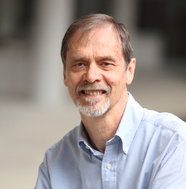
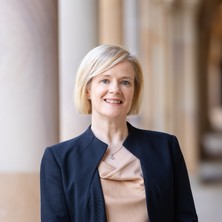
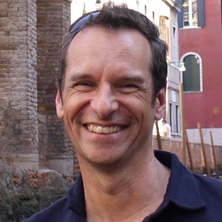
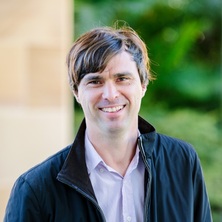
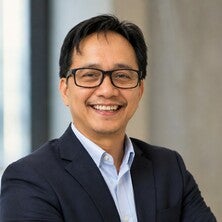
Shaun Bond is the Frank Finn Professor of Finance in the UQ Business School at the University of Queensland. Shaun has research interests in the areas of real estate finance and financial economics. Prior to joining the UQ Business School, Shaun was the West Shell Professor of Real Estate in the Department of Finance at the University of Cincinnati and the Director of the UC Real Estate Center. Prior to this he held an appointment in the Department of Land Economy at the University of Cambridge. In addition, Shaun has been a visiting professor at the Pennsylvania State University and the George Washington University. Shaun holds a PhD and an MPhil in Economics from the University of Cambridge, and an undergraduate degree in Economics from the University of Queensland (awarded with First Class Honours).
My research is in the area of Economics of Banking, with a particular interest for modelling of competition and contract design in asymmetric information environments. Since 2012 my interests have increasingly moved towards Scholarship of Teaching and Learning.
Qualifications
PhD (Facultés Universitaires Notre-Dame de la Paix, Namur, Belgium)
MSC (Université Catholique de Louvain, Louvain-la-Neuve, Belgium) ;
Profile Employment record
Since October 2006
Lecturer at the School of Economics, University of Queensland, Australia.
September, 2000 - August, 2006
Lecturer at the Department of Economics, Keele University, UK.
September, 1998 - August, 2000
Lecturer at the Department of Economics and Accounting, University of Liverpool, UK.
October, 1989 - December, 1997
Teaching and Research Assistant at Facultés Universitaires Notre-Dame de la Paix, Namur, Belgium.
Research Interests
My research in Banking theory revolves around five main areas:
Money supply endogeneity
Bank deposit optimal contracts
Auctions applied to central banking
Modelling of banking competition
Asymmetric information and credit rationing by banks
My interests in Scholarship of Teaching are:
Financial literacy of university students
Incentive mechanisms in students` commitment to learning
Publications
Bracoud, F. (2007) “Double Bertrand Competition among Intermediaries when Consumers can Default”, The Economics Bulletin, Vol. 4.
Bracoud, F. and Hillier, B. (2000) “Equity or Debt? Contracts in Markets with Asymmetric Information”, the Manchester School, Vol. 68, No. 1, pp 1-22.
Working Papers
Bracoud, F. (2002) “Sequential Models of Bertrand Competition for Deposits and Loans under Asymmetric Information”, Keele Economic Research Paper, KERP 2002/15
Bracoud, F. (2000) “On Monetary Implications of Credit Rationing under Asymmetric Information”, Keele Economic Research Paper, KERP 2000/10
Faculty of Engineering, Architecture and Information Technology
Associate Professor
School of Electrical Engineering and Computer Science
Faculty of Engineering, Architecture and Information Technology
Availability:
Available for supervision
Media expert
Dr Archie Chapman is an Associate Professor in Computer Science in the School of Electrical Engineering and Computer Science.
Archie develops and applies principled artificial intelligence, game theory, optimisation and machine learning methods to solve large-scale and dynamic allocation, scheduling and queuing problems. His recent research has focused on applications of these techniques to problems in future power systems, such as integrating large amounts of renewable power generation and using batteries and flexible loads to provide power network and system services, while making best use of legacy network and generation infrastructure.
Prior to joining UQ, Archie was Research Fellow in Smart Grids at the University of Sydney (2011-2019), and a postdoc fellow at the University of Southampton (2009-2010), where he completed his PhD.
Affiliate of Queensland Cerebral Palsy Rehabilitation and Research Centre
Queensland Cerebral Palsy Rehabilitation and Research Centre
Faculty of Health, Medicine and Behavioural Sciences
Professorial Research Fellow
School of Public Health
Faculty of Health, Medicine and Behavioural Sciences
Availability:
Not available for supervision
Professor Tracy Comans, UQ Amplify Fellow at the Schoolf of Public Health, University of Queensland, and CEO of the National Ageing Research Institute. With her extensive background in health policy, health economics and physiotherapy, Prof Comans brings a unique perspective to her role, bridging the gap between evidence and policy. Prof Comans has been instrumental in shaping aged care policy, using her research to inform and influence implementation of the Royal Commission recommendations. Her work has led to significant advancements in the reporting of the quality of aged care services.
Her research uses economic theories and tools to understand human behaviours in health, individually and collectively, and their impacts on the health system, the wider economy and society. Prof Comans worked for 20+ years in hospital and community settings specializing in geriatric and rehabilitation physiotherapy with embedded research and has worked for over 15 years as a university researcher. She works closely with industry, people with lived experience and health care providers to develop a program of research focused on improving the quality of aged care services that is relevant to the needs of these groups.
Affiliate of Centre for the Business and Economics of Health
Centre for the Business and Economics of Health
Faculty of Business, Economics and Law
Affiliate of Centre for Innovation in Pain and Health Research (CIPHeR)
Centre for Innovation in Pain and Health Research
Faculty of Health, Medicine and Behavioural Sciences
Professor - CBEH
School of Business
Faculty of Business, Economics and Law
Availability:
Available for supervision
Media expert
Luke Connelly is Professor of Health Economics at the Centre for the Business and Economics of Health. He also holds a Professorial appointment (part-time) at The University of Bologna, to which he was appointed in 2017 via the Italian “Direct Call” (link) process. In 2019 he was appointed as Honorary Professor at The University of Sydney. His main interests are in health economics and insurance economics and the effects of institutions (including legal constructs) on incentives and behaviour. He has also worked in other fields of applied microeconomics, including education economics and transport economics. His publications include papers in Review of Income and Wealth, Health Economics, Journal of Health Economics, Journal of Risk and Insurance, Geneva Papers on Risk and Insurance, Accident Analysis and Prevention, Journal of Law and Medicine, Journal of Clinical Epidemiology, European Journal of Health Economics, International Journal of Health Economics and Finance, Social Science and Medicine, Economic Papers, Economic Analysis and Policy, Journal of Transport Economics and Policy, Labour Economics, Economics and Human Biology as well as in a range of clinical journals, including Lancet.
Luke has served on a number of public committees including the Medical Services Advisory Committee (MSAC), which advises the Australian Minister for Health on the safety, efficacy, effectiveness, and cost-effectiveness of new and extant listings on Australia's Medicare Benefits Schedule. He has extensive service on other public committees and taskforces as well as extensive teaching and consulting engagements with industry. He has been a member of the Editorial Boards of European Journal of Health Economics and the International Journal on Environmental Research and Public Health. He is a member of the International Health Economics Association's Arrow Awards Committee, which awards an annual prize in honour of Nobel Laureate Kenneth Arrow for the best paper in the field. He is currently Guest Editor (with Christophe Courbage) on a Special Issue of the Geneva Papers on Risk and Insurance on Insurance and Emerging Health Risks.
His current research interests include health service innovations to improve the health of people with chronic kidney disease(CKD). Ongoing interests include the economics of disability and insurance, compensable injury compensation schemes, and the determinants of health. Luke enjoys and has considerable experience teaching economics and health economics at both the graduate and undergraduate levels. In 2014 he was awarded the School of Economics Distinguished Teaching Award for his teaching on UQ's Master of Health Economics Program. In July 2016 and July 2019 he also taught summer schools in Health Economics and the Economics of Insurance at The University of Lucerne, Switzerland.
Over the past 10 years he has been a chief investigator on grants totalling more than $70m.
Faculty of Health, Medicine and Behavioural Sciences
Research Fellow
School of Health and Rehabilitation Sciences
Faculty of Health, Medicine and Behavioural Sciences
Availability:
Available for supervision
Dr Jonathan Davies is a chronic pain researcher working to improve how pain is understood, assessed and treated. His research focuses on pain phenotyping, precision pain care, and the psychological, physiological and contextual factors that shape pain and treatment response.
At UQ’s Centre for Innovation in Pain and Health Research, he contributes to DISCERN, an NHMRC Synergy-funded multidisciplinary research program developing and validating new approaches to pain assessment. A major focus of his work is DECIPHER PAIN, a standardised, multimodal tool designed to characterise the relative contributions of nociceptive, neuropathic and nociplastic pain and support more personalised care.
His research integrates clinical assessment, quantitative sensory testing, experimental pain methods, psychophysiology, digital health and population data. He is particularly interested in how physiological signals, behaviour, language, psychosocial context and real-world health data can be combined to better understand individual differences in pain and treatment outcomes.
His broader expertise includes placebo and nocebo effects, mindfulness, mental health, quality of life, health outcome measurement and population health. His work aims to support more precise, scalable and patient-centred approaches to pain research and care.
Dr Truc (Peter) Do joined UQ Business School after having graduated from Nanyang Technological University in Singapore. He has also been a visiting scholar at London Business School. His primary research lies in financial accounting domain. His is particularly interested in examining how cultural norms and peer interaction affect corporate outcomes, especially corporate information flow. He is also interested in examining the importance of business sustainability and employee welfare. He has published in UTD-24, FT-50, ABDC A* and A journals, including Journal of Accounting and Economics, Contemporary Accounting Research, Research Policy and Accounting & Finance. He is an Associate Editor for Accounting Research Journal and also an editorial board member of Accounting and Finance academic journal. He has also been regularly invited to serve as referees for Contemporary Accounting Research, Accounting, Organizations and Society, Management Accounting Research, European Accounting Review, Journal of Business Finance and Accounting, British Accounting Review, Journal of Accounting and Public Policy, Accounting & Finance, Journal of Contemporary Accounting and Economics, Abacus, Journal of Business Ethics, Corporate Governance: An International Review, Accounting and Business Research, Australian Accounting Review (on behalf of CPA Australia), Pacific Accounting Review (where he was recognised with Outstanding Reviewer Award), etc. His research works have also been featured at many conferences around the world, including American Accounting Association (AAA) Conference, European Accounting Association (EAA) Congress, Accounting and Finance Association of Australia and New Zealand (AFAANZ) Conference, MIT Accounting Conference, Japanese Accounting Review Conference, Financial Research Network (FIRN) Conference, Vietnam International Conference in Finance and Chinese Accounting Professors' Association of North America (CAPANA) Conference. His research has also received media mention in the FinReg Blog (run by Duke University) and CPA Australia. He has been awarded various research grants by AFAANZ (Developing Researcher Grant) and CPA (Global Perspectives Research Programme). He is also the winner of the AFAANZ section of the InSPiR2eS Global Pitching Research Competition (IGPRC) (2021). He has been awarded Researcher Excellence Award (Early Career) and Excellence in Developing the Accounting Discipline by UQ Business School in 2022. He teaches Financial Accounting at the undegraduate and postgraduate levels. He is a Certified Practising Accountant (CPA) of Australia and a Chartered Accountant (CA) of Singapore.
Before joining the School of Economics in 2001, Peter Earl had spent a decade as Professor of Economics at Lincoln University in New Zealand. He decided to move to UQ after spending a semester in the School of Economics as a Visiting Professor in 1999 and having been impressed by the Library, the quality of the students and the School's strength in evolutionary economics.
He specialises in business economics, consumer research and economic method, with an interest in the impact of psychological factors and problems of information and knowledge on decision-making. He is also interested in Post Keynesian approaches to macroeconomics and monetary theory.
His approach blends elements from Austrian Economics, Behavioral Economics, Evolutionary Economics, Institutional Economics and Post Keynesian Economics. He has served as co-editor of the Journal of Economic Psychology and is a founding member of the editorial boards of Review of Political Economy and Marketing Theory. He is the author or editor of eighteen books and numerous articles and book chapters.
Eric Eisenstat received his Ph.D. in 2007 from the University of California, Irvine. His current research focuses on Bayesian time-series econometrics, particularly structural inference from multivariate models, but he also works on model uncertainty/averaging and shrinkage estimation in big data settings. Alongside publishing in top academic journals, Eric also routinely provides consulting services to policy institutions and private organisations. His recent consulting work has focused on developing and implementing marketing mix models in big data settings.
Affiliate of Centre for Efficiency and Productivity Analysis
Centre for Efficiency and Productivity Analysis
Faculty of Business, Economics and Law
Emeritus Professor
School of Economics
Faculty of Business, Economics and Law
Availability:
Available for supervision
Media expert
Fellow of the Academy of Social Science in Australia, Life member of Clare Hall College, Cambridge, Past President of the International J.A. Schumpeter Society. Current research interests include: the diffusion of innovations with special reference to the emergence of low carbon emission power generation technologies; modelling evolutionary economic growth with special reference to the role of energy; modelling the impact of climate change on the economy with a specific focus on the power generation sector; modelling the macro-economy as a complex adaptive system; applying self-organisation theory to statistical and economic modelling in the presence of structural change; the re-design of national power grids to accommodate renewable energy generation. He currently serves on the following editorial boards: Journal of Evolutionary Economics, Review of Political Economy, Journal of Bio-economics, Journal of Institutional Economics and, previously, the Scottish Journal of Political Economy and Economic Analysis and Policy. He is Director of the Energy Economics and Management Group at UQ and Focal Leader, Renewable Energy at the Global Change Institute. Previously, he was: Head of the School of Economics at UQ (1999-2008); Deputy Director of the ARC Centre for Complex Systems (2006-2008); Member of the Social, Behavioural and Economic Panel, ARC College of Experts (2005-2007); Member of the Expert Panel appointed by the Federal Minister for Industry and Innovation, Senator Kim Carr, to review the National Innovation System (2008).
Affiliate of Centre for Behavioural and Economic Science
Centre for Unified Behavioural and Economic Sciences
Faculty of Business, Economics and Law
Professor
School of Economics
Faculty of Business, Economics and Law
Availability:
Available for supervision
Media expert
Lana Friesen is a Professor in the School of Economics at the University of Queensland, Australia. She is primarily an experimental economist with interests in environmental economics and behavioural economics. Her research focuses on three broad themes. First, and most recently, the optimal design of environmental markets including those for pollution permits and carbon offsets. Second, how to leverage limited enforcement resources to improve compliance with environmental regulations. Third, improving decision making in complex environments such as mobile phone contracts and aged care.
Professor Friesen’s research has been published in leading economics journals including the Economic Journal, European Economic Review, Journal of Environmental Economics, and the Journal of Economic Behavior & Organization. Her research has received funding from the Australian Research Council, Energy Consumers Australia, and AgriFutures Australia, among other sources.
Professor Friesen is currently an Associate Editor at the Journal of Economic Behavior & Organization and a Coordinating Editor at Theory and Decision.
Affiliate Professor of Mater Research Institute-UQ
Mater Research Institute-UQ
Faculty of Health, Medicine and Behavioural Sciences
Affiliate of Queensland Digital Health Centre
Queensland Digital Health Centre
Faculty of Health, Medicine and Behavioural Sciences
Affiliate of University of Queensland Centre for Hearing Research (CHEAR)
Centre for Hearing Research
Faculty of Health, Medicine and Behavioural Sciences
Professor
School of Economics
Faculty of Business, Economics and Law
Availability:
Not available for supervision
Media expert
Professor Brenda Gannon is an international interdisciplinary leader providing evidence and solutions for health and social care systems, spanning across economics, medicine and social science, in collaboration with academia and industry. She brings extensive experience and expertise in program and policy development related to health and ageing, social inclusion, and citizen science, fostering and advancing excellence at the intersection of many disciplines.
Working at the interface of health service delivery, strategic planning and practice influence, and health economics more broadly, across many sectors, enables her research to inform optimisation of health care and workforce organisation. The models are translatable and transferrable across many sectors, including ageing, mental health, child and the working populations.
She is a Professor in the School of Economics and an Affiliate Professor at the Mater Research Institute, The University of Queensland. She is also an affiliate member of CEPAR (ARC Centre for Research Excellence in Population Ageing Research). Since 2022, she is Honorary Adjunct Professor at University of Galway, Ireland. She was Director of Research in the School of Economics from 2018-2023. . She has developed a range of projects on topics of dementia, physical activity and cognition, health and health care utilization, and consumer directed care and home care. She has led and worked extensively on interdisciplinary research with gerontologists,several clinicians and methodologists. Her work has been influential in the development of programs for falls preventions and informing policy on disability and social inclusion, and has positively impacted on the health of many older people across the world. Her work also spans across the lifecyle from birth, and she has worked with clinicians on trials for newborns with breathing difficulities. She is the Health Economics and Epidemiology lead for the Queensland Family Cohort (QFC) Study, the pilot led by Mater Research, and is on the QFC Governance Committee, focusing on maternal mental health, inequalities of opportunity, alcohol use and related health care use and costs.
Professor Gannon’s research carries a dual role, (1) as an applied health economist using big and complex data, utilising health economics theory and concepts to test the validity of causal hypotheses, (2) collaborator across all Faculties leading critical economic evaluations. Her research is funded by her position as chief investigator on projects from the Australian Research Council, National Health and Medical Research Council, MRFF, EU H2020, Health Research Board, Ireland and the National Institute for Health Research, UK. She is the lead economist on projects in dementia, emergency care and paediatric care. All studies incorporate methodological innovations and applied research. She has provided advice to government at senior levels, and had a Ministerial appointment, on the Medical Services Advisory Committee Evaluation Sub-Committee 2017-2021. She sits regularly as a panel member of various NHMRC and MRFF grant review committees and has also previously appointed to the EU Commission grant panels. She has been invited to give several talks at international fora, including a key note talk on ageing and longevity at the National Academy of Medicine, Global Roadmap to Healthy Longevity, in Washington DC. Professor Gannon was an elected Professorial member of the Academic Board at UQ 2018-2022. In 2023, Professor Gannon was elected a Fellow of the Queensland Academy of Arts and Sciences. She has been elected as a Council Member of Queensland Academy of Arts and Sciences since 2024. In 2023, she led a symposium on Economics of Dementia Care, with international colleagues, in collaboration with Dementia Australia.
Faculty of Health, Medicine and Behavioural Sciences
Availability:
Available for supervision
Media expert
Professor Christian Gericke is a Neurologist and Public Health Physician. He directs the Canberra Specialist Epilepsy Centre at Deakin Private Hospital in Canberra and consults at Cadogan Medical in Brisbane.
He is Clinical Professor of Medicine at the Australian National University, Honorary Professor of Public Health at the University of Queensland, Convener of the Specialist Medical Review Council (SMRC) for the Australian Government and Visiting Scholar at the Uehiro Oxford Institute, University of Oxford. He regularly acts as an Independent Medical Expert for the Supreme Courts and the Coroners Courts in all Australian jurisdictions and for the High Court of Justice in England (King's Bench).
Previously, he worked as an academic neurologist at Calvary Mater Newcastle, the Prince Charles Hospital in Brisbane, King’s College Hospital in London, and Sheffield Teaching Hospitals.
After graduating from medical school in Berlin, he trained in neurology at the Charité, followed by fellowships in adult and paediatric epilepsy in Strasbourg and Geneva. He holds two research doctorates and master's degrees from the University of Cambridge, the London School of Economics and the University of Melbourne.
He chairs the Neuroepidemiology Section of the American Academy of Neurology (AAN) and serves on the International League against Epilepsy (ILAE) Standards and Best Practice Council.
Dr Anthony Halog: Expert in Circular Economy, Life Cycle Thinking, and Sustainable Systems
Dr. Anthony B. Halog is a professor at the University of Queensland specialising in circular economy, sustainability engineering, industrial ecology, and life cycle assessment (LCA/LCSA). His current work focuses on designing low-carbon, net-zero, and resource-efficient systems to address climate change, waste reduction, and sustainable development.
Dr. Halog works across energy, materials, food, waste, and policy systems, applying systems thinking, life cycle sustainability assessment, digital twins, and artificial intelligence for sustainability. His research helps governments, industries, and communities make evidence-based decisions that reduce emissions, improve resource efficiency, and avoid unintended environmental impacts.
A core focus of his work is transforming linear value chains into circular value chains, supporting green hydrogen, bioenergy, circular bioeconomy, agricultural waste valorisation, waste-to-energy, and sustainable materials. These solutions contribute to decarbonisation, climate resilience, sustainable supply chains, and the green economy.
Key areas of expertise
Circular economy and industrial ecology
Life cycle assessment and sustainability metrics
Green hydrogen, bioenergy, and clean energy transitions
Sustainable waste management and circular bioeconomy
Systems modelling, AI-enabled tools, and sustainability policy
Dr. Halog collaborates with policymakers, industry partners, SMEs, and Indigenous communities in Australia and internationally to deliver practical climate solutions and support the transition to decarbonised circular economies.
Affiliate of Centre for the Business and Economics of Health
Centre for the Business and Economics of Health
Faculty of Business, Economics and Law
Research Fellow, Business and Economics of Health
School of Business
Faculty of Business, Economics and Law
Availability:
Available for supervision
My research expertise mainly focuses on applying advanced data science skills and modelling techniques to prioritize health interventions with best value for money. My research sits at the intersection of oral health and health economics, with a strong focus on developing tools that make dental care more equitable, measurable, and policy relevant. My work centers on creating preference-based instruments, such as the Dental Caries Utility Index (DCUI) and ECOHIS-4D, that capture the real-world impact of oral health conditions on quality of life, especially in children and adolescents. The oral health preference-based measure and the utility algorithm I developed using choice models is one of the first in oral health research in Australia. By translating clinical outcomes into economic terms, these instruments enable more accurate cost-effectiveness evaluations of dental interventions. I have been collaborating widely across multiple disciplines in Australia and internationally in health services research across a range of clinical areas including oral health, heart health hub virtual models, mental health, cardiovascular diseases, occupational violence prevention, cancer follow-up care and emergency services. I’m passionate about in cooperate consumer preferences for the healthcare decision-making process using choice modelling, where I can quantify consumers' preferences for different attributes of healthcare services.
Faculty of Health, Medicine and Behavioural Sciences
Availability:
Not available for supervision
Media expert
I am an academic and consultant working in global health with a focus on health technology assessment (HTA), health systems and services research, and the use of medicines in populations. I have a particular interest in the use of data and research for evidence-informed decision making and implementation science in the context of low and middle income countries, especially in sub-Saharan Africa. I have worked on international health projects in Indonesia and am currently working on several projects in HTA and medicines use in Ghana and sub-Saharan Africa. I work with an extensive network of clinicians and health professionals to investigate the use of medicines and adverse effects in general practice, cancer, psychiatry, neurology, and internal medicine. I have honorary or visiting appointments at the University of Queensland (UQ, Brisbane, Australia), Imperial College London (UK, International Decision Support Initiative) and Kwame Nkrumah University of Science and Technology (KNUST, Kumasi, Ghana). I have a BSc(Hons) and MPH from UQ and a PhD from Monash University. I have lived or worked in Australia (Brisbane, Melbourne), Canada (Toronto), Indonesia (Yogyakarta), UK (London), and Ghana (Accra, Kumasi). I worked as a consultant in HTA in Australia for many years evaluating submissions to subsidise medicines on the Pharmaceutical Benefits Scheme (PBS). I am an experienced teacher having coordinated courses, lectured, and tutored in undergraduate and postgraduate programs. I was a Foundation Coordinator in the UQ Master of Pharmaceutical Industry Practice (from 2019). I am an advisor on diverse PhD and student research projects.
Affiliate of Centre for Behavioural and Economic Science
Centre for Unified Behavioural and Economic Sciences
Faculty of Business, Economics and Law
Affiliate of Centre for Perception and Cognitive Neuroscience
Centre for Perception and Cognitive Neuroscience
Faculty of Health, Medicine and Behavioural Sciences
Senior Lecturer
School of Economics
Faculty of Business, Economics and Law
Availability:
Available for supervision
Media expert
Dr. Kenan Kalaycı is an experimental economist whose research focus is on behavioural economics and industrial organization. Kenan received his PhD in Economics from Tilburg University and is a Senior Lecturer in Economics at the University of Queensland. Kenan has been an Australian Research Council Discovery Early Career Research Fellow between 2016-208 and a visiting scholar at the University of Oxford in 2017-2018. Kenan's main research has been in the growing field of behavioural industrial organization, which is the study of markets incorporating insights from psychology and other related disciplines. Kenan has been one of the pioneers in the empirical study of this field, developing experimental methodology to study issues of spurious product differentiation and price discrimination in markets. His research has been published in the International Journal of Industrial Organisation, Journal of Economic Behaviour and Organisation, and Experimental Economics.