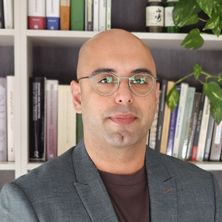
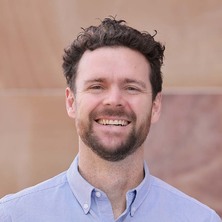
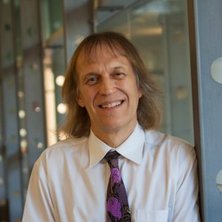
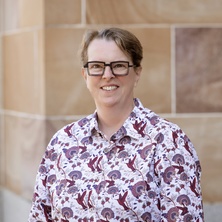
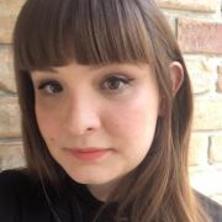
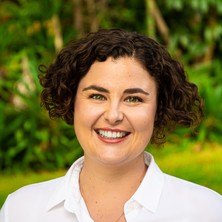
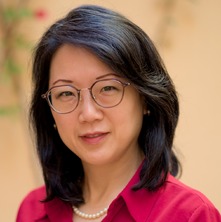
Dr Reza Arab is a Lecturer in Applied Linguistics at the School of Languages and Cultures. His expertise lies in pragmatics, cultural linguistics, and intercultural communication, with a focus on how humour, metaphor, and language practices shape belonging, identity, and interaction across cultural and institutional contexts.
His research spans historical pragmatics, contrastive semantics, and discourse analysis, particularly in national settings. He has led and contributed to projects on humour in prison discourse, media representations, and political communication. Dr Arab is also the major convenor for Language, Technology & Global Communication (aka English as an International Language) at UQ.
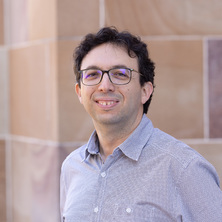
Lemi Baruh (Ph.D. University of Pennsylvania, Annenberg School for Communication, 2007) is a Senior Lecturer at the School of Communication and Arts at the University of Queensland. He is the co-founder of the Social Interaction and Media Lab at Koç University, Istanbul. His research spans various topics, including the effects of social media on interpersonal attraction, surveillance, online security, privacy in online environments, and the role of media in shaping public opinion. His recent work also investigates misinformation and conspiracy theories in the context of health communication, with a particular focus on the COVID-19 pandemic and the influence of news and social media on public perceptions and behaviors related to health.
Affiliate of Centre for Digital Cultures & Societies
Centre for Digital Cultures & Societies
Faculty of Humanities, Arts and Social Sciences
Lecturer
School of Communication and Arts
Faculty of Humanities, Arts and Social Sciences
Availability:
Not available for supervision
Media expert
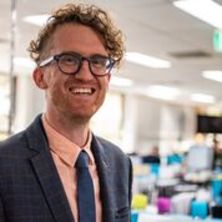
Dr. Alex Beare is a Lecturer in communication at the University of Queensland. His research specialises in subscription video on demand, audience cultures, and media representations of masculinity. Prior to coming to Brisbane, Alex taught at the University of Adelaide with a teaching focus in Digital Cultures, Media Theory, Screen Studies, and Research Methods. Since completing his PhD, Alex has published in journals such as Television & New Media, the International Journal of Communication, and Critical Studies in Television, and has contributed to ABC Radio and The Conversation. He is also the author of The New Audience for Old TV (Routledge, 2024). Alex is currently leading cross-institutional research collaborations relating to the emergence of ‘supportive streaming’ and digital news representations of homophobia in the AFL.
Affiliate of Centre of Architecture, Theory, Culture, and History
Centre of Architecture, Theory, Culture and History
Faculty of Engineering, Architecture and Information Technology
Director of Centre for Digital Cultures and Societies
Faculty of Humanities, Arts and Social Sciences
Professor
School of Communication and Arts
Faculty of Humanities, Arts and Social Sciences
Availability:
Available for supervision
Media expert
Nicholas Carah is Director of the Centre for Digital Cultures & Societies in the Faculty of Humanities, Arts and Social Sciences and Professor in the School of Communication and Arts. He is an Associate Investigator in the ARC Centre of Excellence for Automated Decision-Making and Society, and a Chief Investigator on ARC Discovery and Linkage projects. In 2023, they were Deputy Associate Dean (Research) in the Faculty of Humanities, Arts and Social Sciences. Nicholas' research examines the algorithmic and participatory advertising model of digital media platforms, with a sustained focus on digital alcohol marketing. Nicholas is the author of Media and Society: Power, Platforms & Participation (2021), Brand Machines, Sensory Media and Calculative Culture (2016), Media and Society: production, content and participation (2015), Pop Brands: branding, popular music and young people (2010). And, co-editor of Digital Intimate Publics and Social Media (2018) and Conflict in My Outlook (2022). Nicholas is a Director and Deputy Chair of the Foundation for Alcohol Research and Education.
Affiliate Research Fellow of School of Information Technology and Electrical Engineering
School of Electrical Engineering and Computer Science
Faculty of Engineering, Architecture and Information Technology
Senior Lecturer
Graduate Research School
Senior Lecturer
School of Communication and Arts
Faculty of Humanities, Arts and Social Sciences
Availability:
Available for supervision
Media expert
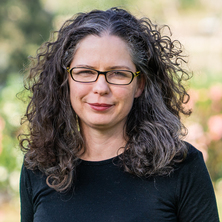
Skye Doherty is a senior lecturer in the School of Communication and Arts at UQ. She is an expert in using creative and design-led research methods to explore alternative futures and address wicked problems. Her work has responded to issues in the news media, law, disaster resilience, and energy and water security, among others, and has led to both conceptual and practical outcomes.
Her design artefacts include the NewsCube, an award-winning storytelling tool, Vim, a tangible energy story, a suite of concepts for community-led bushfire management, and Wicked Thinking, an independent magazine. She has developed frameworks for journalism innovation and used codesign methods to improve the experiences of injured workers, a project that led to legislative change.
Her current and recent projects include the GEF-funded Coral Reef Rescue project and the ARC Training Centre for Climate-Resilient Water. She is the current Treasurer of the International Association for Media and Communication Research (IAMCR) and is a member of UQ’s Human-Centred Computing research group in the School of Electrical Engineering and Computer Science. Previously, she led the Global Change Scholars Program in the UQ Graduate School – a year-long PhD experience focused on industry research collaboration and impact.
She came to academic research after an international career as a journalist, and her experience spans leading international media companies as well as startups.
Affiliate of Centre for Digital Cultures & Societies
Centre for Digital Cultures & Societies
Faculty of Humanities, Arts and Social Sciences
Affiliate of Research Centre in Creative Arts and Human Flourishing
Research Centre in Creative Arts and Human Flourishing
Faculty of Humanities, Arts and Social Sciences
Lecturer in Creative Writing
School of Communication and Arts
Faculty of Humanities, Arts and Social Sciences
Availability:
Not available for supervision
Media expert
Dr Tom Doig is a creative nonfiction author, investigative journalist and scholar. Tom was the recipient of the 2023 CLNZ-NZSA Writer's Award for his work on prepper subcultures in Aotearoa New Zealand. He has written two books about the unprecedented 2014 Hazelwood mine fire disaster: Hazelwood (Penguin Random House, 2020) and The Coal Face (Penguin Books Australia, 2015). Hazelwood was a finalist for the 2020 Walkley Book Award, Journalism and the 2021 Ned Kelly Awards, Best True Crime and Highly Commended in the 2020 Victorian Premier's Literary Awards, Non-Fiction. The Coal Face was joint winner of the 2015 Oral History Victoria Education Innovation Award. Dr Doig has also written a humorous travel memoir, Mörön to Mörön: Two men, two bikes, one Mongolian misadventure (Allen & Unwin, 2013). He is the contributing editor of the interdisciplinary collection Living with the Climate Crisis: Voices from Aotearoa (Bridget Williams Books, 2020).
Dr Doig teaches creative nonfiction and poetry.
As a scholar, Dr Doig is interested in interdisciplinary approaches to the accelerating climate crisis, with a focus on the cultural, social and psychological aspects of climate breakdown. He is currently researching a new book: We Are All Preppers Now (forthcoming with Scribe Publications), documenting survivalists, doomsday preppers, climate activists and other subcultures of imminent collapse around the world.
Before joining the School of Economics in 2001, Peter Earl had spent a decade as Professor of Economics at Lincoln University in New Zealand. He decided to move to UQ after spending a semester in the School of Economics as a Visiting Professor in 1999 and having been impressed by the Library, the quality of the students and the School's strength in evolutionary economics.
He specialises in business economics, consumer research and economic method, with an interest in the impact of psychological factors and problems of information and knowledge on decision-making. He is also interested in Post Keynesian approaches to macroeconomics and monetary theory.
His approach blends elements from Austrian Economics, Behavioral Economics, Evolutionary Economics, Institutional Economics and Post Keynesian Economics. He has served as co-editor of the Journal of Economic Psychology and is a founding member of the editorial boards of Review of Political Economy and Marketing Theory. He is the author or editor of eighteen books and numerous articles and book chapters.
Affiliate of Centre for Digital Cultures & Societies
Centre for Digital Cultures & Societies
Faculty of Humanities, Arts and Social Sciences
Lecturer
School of Communication and Arts
Faculty of Humanities, Arts and Social Sciences
Availability:
Available for supervision
Maureen Engel is a Lecturer in Digital Culture in the School of Communication and Arts. She was formerly Associate Professor of Digital Humanities at the University of Alberta, Canada. At Alberta, she served as Director of Digital Humanities (2011-13; 2015-2019), and Director of the Canadian Institute for Research Computing in Arts (2011-2019). Formally trained as a textual scholar, her background is in cultural studies, queer theory, and feminist theory. She brings these methods/orientations to her research on digital culture, with a particular interest in locative media, XR, and gaming. She is the author of the game Go Queer, a ludic locative media experience of queer history.
Bonnie Evans is a Lecturer in Media Studies at the University of Queensland. Her research has addressed the intersections between feminist politics and screen media, particularly film and television, and she has published on true crime documentary. Her most recent journal article examines rape-revenge film in the context of the Me Too movement, specifically Corale Fargeat's 2017 film Revenge, and her forthcoming monograph The New Feminist Horror will be published by Edinburgh University Press in 2027. Her book will explore aesthetic and thematic links between contemporary feminisms, including the Me Too Movement and recent horror cinema, and the PhD thesis that forms the basis of the book received a UQ Dean's Award for Oustanding HDR Theses in 2022. Bonnie teaches across film and television studies, media studies and digital media and in 2025, she won the HASS Early Career Teaching Excellence Award for her innovations in teaching.
She is interested in supervising HDR research on the following broad topics:
Gender in film, television and media studies
Feminist media studies
Genre film, television and media, particularly horror
Embodied approaches to media studies (phenomenology, affect, feeling and emotion)
Documentary studies, true crime and reality television
Gender and sexual violence in film and television
Feminist movements in media (#MeToo, the fourth wave, second wave etc).
I'm a linguistic anthropologist who studies how communicative events in Indonesia figure in the building and maintenance of social relationships and common knowledge among Indonesians. During my PhD and post-PhD early years my research often involved long periods of fieldwork in Indonesia. As research funding and sabbatical have become scarce, I have increasingly turned to publically available data, such as Indonesian films, newspapers, social media and so on. I have published extensively on my research, including Language, Migration, and Identity: Neighbourhood Talk in Indonesia (Cambridge University Press, 2010); Language and Superdiversity: Indonesians Knowledging at Home and Abroad (Oxford University Press, 2015), Global Leadership Talk: Constructing Good Governance in Indonesia (Oxford University Press, 2020); Reimagining Rapport (Oxford University Press, 2021); Rapport and the discursive co-construction of social relations in fieldwork settings (Mouton De Gruyter, 2019); and Contact Talk: The Discursive Organization of Contact and Boundaries (with Deborah Cole and Howard Manns, Routledge, 2020).
The continuing interest underpinning my research is that of the self-presentation of the non-native speaker, in different genres. This has led me to work on: culturally determined practices; cross-cultural comparisons; and on intercultural behaviour, how this is conceptualized and how, in practice, encounters between different expectations of appropriate behaviour play out.
One focus of my attention has been the proliferation of new intercultural encounters which are made possible by online technologies. In particular, Juliana de Nooy and I undertook a project examining discussion fora on media websites, culminating in our 2009 book. The pedagogical implications of this work, and my own teaching practices have allowed me to develop expertise in language learning and technology which I have extended through other collaborations (e.g. Cowley & Hanna, 2013 on Wikipedia; a forthcoming chapter based on a cross institutional project on AI in languages teaching) research supervisions and publications which derive from it (Gao & Hanna, 2016, on instructional software; work with Khosravi, Gyamfit et al on technology mediated peer-review; and a paper with Aljohani on online oral discussion).
I have also undertaken research on Study Abroad experiences, and particularly looking at the ‘selves’ which testimonials from returnees hold up as exemplary (see Hanna 2016 on food; also Hanna & de Nooy 2003 b; 2006). What, the student reader of these testimonials might ask, will I feel like? How will I change? What counts as successful life as a Study Abroad student? How can I be successful too? In order to tackle these questions, I draw on theories of learner motivation and imaginary or ideal selves. This work influences my current teaching in COMU3060 and COMU3065, Learning from the International Experience, taken by International Studies studies during and after their semester abroad.
This interest in self-presentation underpins a current project on employability and language students (SLC funded project, undertaken with Alicia Toohey; work with Peter Cowley on employability and French).
Affiliate of Centre for the Business and Economics of Health
Centre for the Business and Economics of Health
Faculty of Business, Economics and Law
Senior Research Fellow
School of Business
Faculty of Business, Economics and Law
Affiliate of Centre for Online Health
Centre for Online Health
Faculty of Health, Medicine and Behavioural Sciences
Availability:
Available for supervision
Media expert
Dr Helen Haydon is a Senior Research Fellow and Registered Psychologist at the University of Queensland. She has national standing, and an emerging international reputation, as a digital health researcher with a focus on aged and palliative care, psycho-oncology and carer wellbeing. She has led 3 applied nationwide digital health research programs: 1/ Palliative Care ECHO that connects services and upskills health professionals across Australia in palliative care; 2/ Elder ECHO, a telementoring program to support the National Aboriginal Community Controlled Health Organisation’s (NACCHO) Elder Care Support workforce in the delivery of Culturally safe aged care and; 3/ Caring for the Carer, an online intervention for carers of people with brain tumour. http://caringforthecarer.org.au/
Other research includes: evaluation of telepalliative care services (e.g. patient/ carer outcomes and perceptions and staff perceptions); voluntary assisted dying; technology supported grief and bereavement support and; digital mental health.
She is a Registered Psychologist with clinical experience working with a range of issues and diverse populations and has over ten years’ experience teaching and facilitating workshops on psychology and health communication.
Affiliate of Centre for Digital Cultures & Societies
Centre for Digital Cultures & Societies
Faculty of Humanities, Arts and Social Sciences
Affiliate of Research Centre in Creative Arts and Human Flourishing
Research Centre in Creative Arts and Human Flourishing
Faculty of Humanities, Arts and Social Sciences
Senior Lecturer
School of Communication and Arts
Faculty of Humanities, Arts and Social Sciences
Availability:
Available for supervision
Media expert
Dr Leah Henrickson is a Senior Lecturer in Digital Media and Cultures at the University of Queensland. She is the author of Reading Computer-Generated Texts (Cambridge University Press, 2021) and other peer-reviewed articles about how we understand text generation systems and output, artificial intelligence, and digital media environments. Dr Henrickson also studies digital storytelling for critical self-reflection, pedagogy, community building, and commercial benefit. She is the author of Digital Storytelling: An Introduction (Polity, 2025).
Dr Henrickson serves as the School of Communication and Arts' Deputy Director, Teaching and Learning. She is also an elected non-professorial member of the University of Queensland's Academic Board, and a nominated member of the Academic Board's Digital Learning Sub-Committee. She is an elected member of the Board of Directors for the Society for the History of Authorship, Reading and Publishing (SHARP) and the Executive Committee of the Australasian Association for Digital Humanities (aaDH), and serves on the Editorial Boards of New Review of Hypermedia and Multimedia and Anthem Press' 'Anthem Studies in Book History, Publishing and Print Culture' series.
Dr Henrickson is especially keen to collaborate on projects involving digital methods and media, hermeneutics, histories of communications media, and unconventional text production and dissemination.
Affiliate of Centre for Research in Social Psychology (CRiSP)
Centre for Research in Social Psychology
Faculty of Health, Medicine and Behavioural Sciences
Availability:
Available for supervision
Media expert
I am an ARC Laureate, best known for developing insights around three themes: (1) rejection of science, (2) misinformation and conspiracy theories, and (3) polarisation. In each domain I have developed unique models designed to understand the logic behind supposedly “irrational” behaviour, and used them to facilitate attitude and behaviour change, particularly with respect to climate inaction and vaccine hesitancy. I currently co-lead the Net Zero Observatory at the University of Queensland, a multi-disciplinary group of academics and practitioners who design strategies to accelerate industry action and community support for rapid decarbonisation. More information about the Net Zero Observatory can be found here: Net Zero Observatory - Business School - University of Queensland. Regular updates and outputs can be found here: https://www.linkedin.com/company/net-zero-observatory/
Affiliate of Research Centre in Creative Arts and Human Flourishing
Research Centre in Creative Arts and Human Flourishing
Faculty of Humanities, Arts and Social Sciences
Associate Professor
School of Music
Faculty of Humanities, Arts and Social Sciences
Availability:
Not available for supervision
Media expert
Associate Professor Eve Klein’s compositions have been called vivid, revolutionary, inclusive, moving and must-see. Winner of the 2023 Art Music Award for Experimental Practice, Klein brings orchestral music into dialogue with immersive and interactive technologies for screen, art music and mass festival audiences. Klein's work has been experienced by hundreds of thousands of people globally at Salisbury Cathedral, Burning Man, New York University, VIVID Sydney, MONA, GOMA, Brisbane Festival, World Science Festival, the Arts Centre Melbourne and the State Library of Queensland. As Lead Composer for Textile Audio, Eve crafts City Symphony, an interactive AR music experience overlaying Brisbane CBD (available via iOS and Android app stores).
Klein creates artworks in collaboration with community groups, festivals, researchers, and NGOs to achieve community transformation goals. Recent projects have explored gendered and racial violence, climate change, disaster recovery and refugee rights. Klein's work, Vocal Womb, is an example of this practice, allowing the audience to explore the relationship between voice, identity and power by stepping into and directly manipulating the voice of another. The premier was called the "#1 coolest thing at MOFO 2018" (Timeout Melbourne) and "One of the must-see music/artworks of the 2018 festival... a deeply considered engagement with the history and traditions of opera" (The Conversation).
Klein is Associate Professor of Music Technology, leading an interactive music and spatial audio research cluster at the University of Queensland, guiding postgraduate composers on the creation of immersive, interacitve, virtual reality and augmented reality concert works and operas.
"This is contemporary music at its most relevant – it is simultaneously inward and outward focused in addressing the challenge of its existence and its capacity to produce something great.” - Melonie Bayl-Smith, Cyclic Defrost, Issue 31
“Excellence in Experimental Practice was awarded to Eve Klein for City Symphony, a Brisbane sound walk revolutionising audiences' engagement with urban environments, underpinned by an ethos of collaborative inclusivity and accessibility.” -Australian Music Centre
“One of the must-see music/art works of the 2018 festival was Eve Klein’s Vocal Womb … a deeply considered engagement with the history and traditions of opera.” - Svenja J. Kratz -The Conversation
Shuang is an internationally recognised intercultural communication expert, specialising in the areas of ageing and immigration, acculturation, identity negotiation, and intercultural relations. Her research examines how older people from culturally and linguistically diverse backgrounds build a sense of home as they live and age in a foreign land; how family and community care can be integrated to provide culturally appropriate, accessible and sustainale care for older people; how older people interact with their physical, social, cultural, and digital environments to develop attachment to place; and the consequences of these interactions for well-being. Shuang's work has been published in high-ranking international journals, and two sole authored books: Identity, hybirdity and cultural home (2015; Rowman & Littlefield) and Chinese migrants ageing in a foreign land (2019; Routledge). Her lead-authored textbook, Introducing intercultural communication: Global cultures and contexts, is in its 4th edition, and previous three editions have been adopted in 26 countries across 4 continents, with holdings in libraries of prestigeous institutions including Stanford University, Yale University, University of Oxford, University of Cape Town, and University of Zurich. Shuang is a fellow of the International Academy of Intercultural Research.
Shuang welcomes inquires from prospective Higher Degreee by Research students who are interested in working with her on their theses in any of the related research areas.
Affiliate of Research Centre in Creative Arts and Human Flourishing
Research Centre in Creative Arts and Human Flourishing
Faculty of Humanities, Arts and Social Sciences
Teaching Associate
School of Communication and Arts
Faculty of Humanities, Arts and Social Sciences
Availability:
Not available for supervision
Kylie (Anderson) Navuku's career features 2+ decades of commitment to teaching, research and communication compatible with Education for Sustainable Development (ESD). At The University of Queensland Kylie is currently a teaching-practice focused academic, contributing primarily to courses in Communication (undergraduate and postgraduate) and Journalism (undergraduate). Her teaching schedule in 2026 includes: Public Interest Communication; Communication Theory; Communication Management and Leadership; and Intercultural Communication. She will also contribute to courses in Communication for Social Change and Journalism. Kylie's passion for equity in Higher Education is evident through her engagement activities including her role as a Staff Ambassador for The Queensland Commitment.
Kylie's teaching is both practice and research informed. As a communication practitioner, Kylie has worked with non-government, government, and inter-governmental stakeholders contributing to campaigns/ initiatives with the purpose of raising awareness and furthering public education on various themes (including conservation, climate change, and civic education). Recent areas of exploration are the challenges for island-based artists engaged in environmental communication and the ways in which individuals can use visual arts to promote environmental messages outside of organisational/ institutional partnerships. Since 2024 Kylie has been engaged in a collaborative project investigating ways to communicate bioeconomy. Kylie's research interest is at the intersection of communication (including media/journalism) and politics. Most recently her research has focused on climate change and international ocean journalism.
In addition to a PhD from UQ, Kylie has a MA (IntRel)(Res) [Master of Arts (International Relations) by Research] and a BIntSt (Hons) [Bachelor of International Studies (Honours)] from Flinders University.
Other university employment includes teaching Politics and International Affairs/ International Relations courses at the University of the South Pacific (USP) and Flinders University of South Australia. At USP, Kylie was based at Laucala Campus in Fiji but her role also took her to the campuses and centres in Majuro (Marshall Islands), Honiara (Solomon Islands), Nuku'alofa (Tonga), Alafua (Apia, Samoa), and Rarotonga (Cook Islands). At Flinders, Kylie was based at the Bedford Park Campus, while at UQ she is based at St Lucia campus in Queensland.
Dr Giselle Newton (she/her) is a digital health sociologist at the Centre for Digital Cultures and Societies and a Research Fellow on the Australian Ad Observatory in the Centre of Excellence for Automated Decision-Making and Society. Giselle's research focuses on how commercial digital platforms shape individuals' experiences of family and intimate life. Giselle has led projects considering how reproductive and genetic technologies shape personal life and family relationships, for example on donor-conceived people's use of digital technologies, direct-to-consumer DNA testing and digital advertising of fertility treatments and services. Giselle has developed and applied ethical participatory, creative and digital methods in social research. She is experienced working in interdisciplinary teams developing and employing digital tools and observatories to better understand individuals' (often unobservable and ephemeral) digital social worlds. Giselle has published in Sociology, Human Reproduction, New Media & Society, Social Media + Society, Sociology of Health & Illness. Giselle was awarded the Early Career International Visiting Fellowship, University of Sheffield for 2024-25. In 2025, she was a keynote speaker at the Fertility Society of Australia and New Zealand Annual Conference in Adelaide. Giselle has been an invited speaker in Japan (Donor Link Japan) and Denmark (LGBT+ Danmark).
Current projects:
-Ethical, social and regulatory implications of informal sperm donation, ARC Discovery Project
-Targeted digital advertising in fertility, reproduction and parenting, the Australian Ad Observatory
-Technologies of the Body: Women, Visibility and Museum Collections
Past projects:
-Engaging consumers to work towards social license for implementation of AI in healthcare
-Understanding stakeholders’ perspectives on public inquiries in sexual and reproductive health
-DNA datascapes: how individuals seek information about family via direct-to-consumer DNA testing
-How alcohol and gambling companies target people most at risk with marketing for addictive products on social media, using the Australian Mobile Ad Toolkit (contract research project commissioned by the Foundation for Alcohol Research and Education Limited, with Prof Nic Carah and Lauren Hayden)
-On target: Understanding advertising in the fertility sector with data from the Australian Ad Observatory 1.0, a winter research collaboration (with Romy Wilson Gray and Maria Proctor).
-Everyday belongings: how Australian donor-conceived adults’ use digital technologies to bond, sleuth, educate and strategise. Giselle's PhD study won Dean’s Award for Outstanding PhD Theses in 2022.
-Understanding care endings: Sociological and educational approaches to support pathways out of caring Research supervision and development
Current students:
-Lauren Hayden(PhD candidate, Communications and Arts, UQ) - Digital advertising and cultures of alcohol consumption on social media platforms (with Prof Nicholas Carah, Prof Dan Angus) (2022-2026)
-Quita Olsen (PhD candidate, Queensland Digital Health Centre, UQ) - Developing an Inclusive Framework and Communication Strategy towards the Public’s Willingness to Share Health Data for Secondary Purposes (with Prof Jason Pole, Dr Leanna Woods, Dr Amalie Dyda) (2025-2028)
-Juan Ospina Deaza (PhD candidate, Communications and Arts, UQ) How digital platforms shape experiences of male (in)fertility/parenthood (with Dr Giang Nyugen-Thu) (2026-2029)
-Sai Tang (PhD candidate, Communications and Arts, UQ) How digital technologies shape intergenerational care: An investigation of the Chinese “Lao Er Dai” and Chinese families (with Dr Giang Nyugen-Thu) (2026-2029)
-Gabrielle Cournoyer (Master of Genetic Counselling, UTS) Understanding patients’ perspectives of reproductive genetic carrier screening (RGCS) in donor conception in Australia (2026-2027)
-Rishika Chattopadhyay (Master of Genomic and Health, The University of Melbourne) How Australian IVF clinics promote genetic testing services (2026-2027)
Past students:
-Adriana Saab (Master of Genetic Counselling, UTS) - Understanding targeted advertising of reproductive genetic technologies (with Julia Mansour and Dr Lisa Dive)
-Phoebe Price-Barker (Honours, Criminology, UQ) - Assessing cyber vulnerabilities in direct-to-consumer genetic testing platforms (with Dr Caitlin Curtis) (2025)
-Simone Sanders (Master of Genetic Counselling student, UTS) - Representations of breast cancer predisposition testing on TikTok: a qualitative analysis (with Julia Mansour and Dr Lisa Dive)
-Lina Choi (Master of Genetic Counselling student, UTS) - Unpacking Narratives about Direct-to-Consumer Genetic Testing in TikTok Videos: A Thematic Analysis (with Julia Mansour and Dr Lisa Dive)
-Cushla McKinney (Master of Genetic Counselling student, UTS) - The impact of direct-to-consumer DNA testing on genetic counselling practice (with Dr Lisa Dive, A/Prof Aideen McInerny-Leo, Dr Vaishnavi Nathan).
-Diya Dilip Porwal (Master of Genetic Counselling student, UTS) - Experiences of carrier screening and genetic testing in gamete donors (with Julia Mansour and Dr Lisa Dive).
Areas of supervision:
Giselle welcomes research proposals focused on social research in digital identities and cultures; family relationships and practices; DNA and genetic testing/screening; reproductive health issues including endometriosis and menopause; assisted reproduction. Giselle is a member of the School of Communication and Arts HDR Committee. Teaching Giselle has coordinated and lectured across undergraduate and postgraduate programs in courses in humanities, social sciences and health. She has delivered guest lectures to students of Masters of Public Health on 'Digital Methods' and to Master of Diagnostic Genomics on 'Direct-to-consumer genetic testing’. She was course coordinator for COMU2030 Communication Research Methods in 2023, lecturer in HHSS6000 HASS Honours Research Design in 2024 and HHSS6040 Honours Research Design in Arts and Culture in 2025 and will continue in 2026.
Affiliate of Research Centre in Creative Arts and Human Flourishing
Research Centre in Creative Arts and Human Flourishing
Faculty of Humanities, Arts and Social Sciences
Head of School, Communication and Arts
Faculty of Humanities, Arts and Social Sciences
Availability:
Not available for supervision
Media expert
Jenna Ng is a multi-award-winning researcher studying digital media culture, with particular research interests in digital visual culture; creative technologies; AI and algorithmic culture and interactive storytelling. Currently Head of the School of Communication and Arts, she also leads strategic direction, leadership and management of a multi-disciplinary department of over 80 academic staff across art history, drama, journalism, communications, film and television, digital media culture, literature and creative and professional writing.
Ng's publications include the books Understanding Machinima: Essays on Filmmaking in Virtual Worlds (Bloomsbury, 2013), a "Highly Recommended" CHOICE title, and The Post-Screen Through Virtual Reality, Holograms and Light Projections: Where Screen Boundaries Lie (Amsterdam University Press, 2021), which won an Honourable Mention by the British Association of Film, Television and Screen Studies.
Working across a range of media, Ng also produces innovative creative research outputs with practice-based methodologies. She has produced a second screen installation for theatre performance; multimedia scholarship; video essays; and online open-access collaborative initiatives. Her latest project, a creative research website titled "The New Virtuality" (thenewvirtuality.com), won the John Culkin Award for Outstanding Praxis and the Media, Communication and Cultural Studies Association (MECCSA) Practice-Based Research of the Year award, with its video essay winning the Learning on Screen Special Jury Prize (while nominated in the category of "Creative Reuse") and had its debut screening at the InScience Film Festival 2025 in LUX Nijmegen.