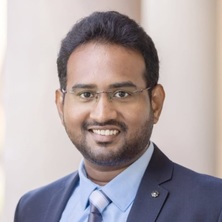
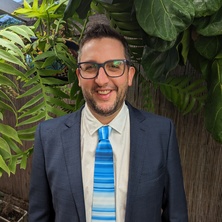
Pratap is an IP Strategist and Patent researcher. He has expertise in dealing with Intellectual Property issues in relation to emerging technologies such as Artificial Intelligence (AI), 3D bioprinting and synthetic biology. He is currently a Postdoctoral fellow at TC Bernie School of Law, University of Queensland, Australia. Pratap pursued his PhD from the Centre for Law and Genetics, University of Tasmania, Australia where his research was focused on "Patenting issues related to Bioprinted tissues and Bioinks." In 2018, he was invited by Govt. of Japan to assist the Japanese Patent Office (JPO) in harmonizing Japanese Patent Law in relation to AI. In 2017, he completed his Master of Law (LLM) in Intellectual Property from the World Intellectual Property Organization (WIPO), Geneva and the Queensland University of Technology, Australia. He is the recipient of the prestigious International Fellowship offered by WIPO. He holds a Master's degree in Genomics from the Central University of Kerala, India and a Bachelor’s degree in Biotechnology, Microbiology, and Chemistry from Acharya Nagarjuna University, India. Pratap also holds a Postgraduate Diploma in Patent informatics from the Academy of Scientific and Innovative Research (AcSIR) at the CSIR Unit of Research and Development of Information Products (URDIP), India and worked as a Patent researcher in the same.
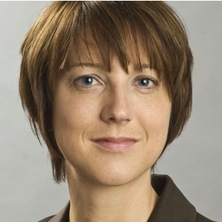
Birgitta Ebert’s research focuses on developing biotechnology concepts to address critical challenges such as pollution, climate change and overexploitation of natural resources.
She specializes in improving microbial catalysts for eco-friendly chemical and material production by leveraging metabolic engineering, synthetic biology, systems analysis, and modelling. Her goal is to create microbial cell factories that convert renewable resources and waste into valuable products, reducing reliance on petrochemicals. She collaborates closely with chemists and chemical engineers to enhance the integration of chemical and biological processes for improved efficiency and sustainability.
Birgitta has a background in Chemical Engineering and a PhD in Systems Biotechnology from TU Dortmund University (Germany). She led a research group in Systems Metabolic Engineering at the Institute of Applied Microbiology at RWTH Aachen University (Germany) from 2012 to 2019. In 2016, she expanded her expertise in Synthetic Biology by joining the Keasling lab at the University of California in Berkeley and the Joint BioEnergy Institute in Emeryville (USA).
Since April 2019, she has been at the Australian Institute for Bioengineering and Nanotechnology at the University of Queensland, applying her expertise to engineer microbial cell factories for fermentation-based manufacturing.
The molecular evolution of cytochrome P450 Enzymes: biological catalysts of unprecedented versatility.
Cytochrome P450 enzymes (CYPs, P450s) especially those responsible for drug metabolism in humans, are the unifying theme of the research in our lab. These fascinating enzymes are catalysts of exceptional versatility, and functional diversity. In humans they are principally responsible for the clearance of a practically unlimited variety of chemicals from the body, but are also critical in many important physiological processes. In other organisms (plants, animals, bacteria, fungi, almost everything!) they carry out an unprecedented range of functions, such as defense, chemical communication, neural development and even pigmentation. P450s are involved in the biosynthesis of an unequalled range of potent, biologically active natural products in microbes, plants and animals, including many antibiotics, plant and animal hormones, signalling molecules, toxins, flavours and fragrances. We are studying how P450s have evolved to deal with novel substrates by reconstructing ancestral precursors and evolutionary pathways, to answer such questions as how did the koala evolve to live on eucalyptus leaves, a toxic diet for most mammals.
The capabilities of P450s are only just coming to be fully recognized and structural studies on P450s should yield critical insights into how enzyme structure determines function. For example, recently we discovered that P450s are present within cells in the Fe(II) form, a finding that has led to a radical revision of the dogma concerning the P450 catalytic cycle, and has implications for the control of uncoupling of P450 activity in cells. Importantly, the biotechnological potential of P450s remains yet to be exploited. All of the specific research themes detailed below take advantage of our recognized expertise in the expression of recombinant human cytochrome P450 enzymes in bacteria. Our group is interested in finding out how P450s work and how they can be made to work better.
Artificial evolution of P450s for drug development and bioremediation: a way of exploring the sequence space and catalytic potential of P450s. The demonstrated catalytic diversity of P450 enzymes makes them the ideal starting material for engineering sophisticated chemical reagents to catalyse difficult chemical transformations. We are using artificial (or directed) evolution to engineer enzymes that are more efficient, robust and specialized than naturally occurring enzymes with the aim of selecting for properties that are commercially useful in the areas of drug discovery and development and bioremediation of pollutants in the environment. The approach we are using also allows us to explore the essential sequence and structural features that underpin all ~12000 known P450s so as to determine how they work.
Synthetic biology of enzymes for clean, green, solar-powered chemistry in drug development, bioremediation and biosensors. We have identified ancestral enzymes that are extremely thermostable compared to their modern counterparts, making them potentially very useful in industry, since they can withstand long incubations at elevated temperatures. They can be used as ‘off the shelf’ reagents to catalyse useful chemistry, such as in in drug discovery and development, fine chemicals synthesis, and cleaning up the environment. Working with drug companies, we are exploring how they can be best deployed in chemical processes and what structural features make them efficient, robust and specialized. We are also immobilizing P450s in virus-like-particles as ‘designer’ reagents that can be recovered from reactions and reused. To make such processes cheaper and more sustainable, we are using photosynthesis to power P450 reactions for clean, green biocatalysis in microalgae.
Biosketch:
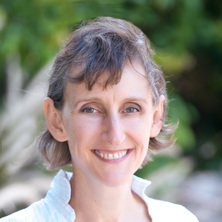
After graduating from UQ with first class Honours in Biochemistry, Elizabeth took up a Royal Commission for the Exhibition of 1851 Overseas Scholarship to pursue doctoral work at Oxford University then undertook postdoctoral work at the Center in Molecular Toxicology and Department of Biochemistry at Vanderbilt University School of Medicine with Prof. F.P. Guengerich. She returned to UQ in 1993 to take up a position in Pharmacology and joined the School of Chemistry and Molecular Biosciences in 2009 as a Professor of Biochemistry.
Australian Institute for Bioengineering and Nanotechnology
Availability:
Available for supervision
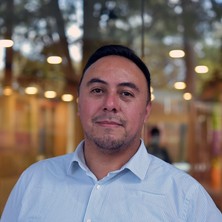
Dr Axayacatl Gonzalez completed his bachelors in 2010 in Chemical Engineering /Biotechnology at the Interdisciplinary Unit for Biotechnology (UPIBI, IPN, Mexico). He obtained his Master’s degree in 2012, where he specialised in metabolic modelling and bioprocessing. In 2013, he moved to Australia where he completed his PhD studies at the Australian Institute for Bioengineering and Nanotechnology (AIBN) at The University of Queensland (UQ).
Dr Gonzalez has been involved in the ARC-Training Centre for Biopharmaceutical Innovation (ARCT-CBI, 2018), the Queensland Strain Factory (QSF, 2019), ARC Centre of Excellence in Synthetic Biology (COESB, 2021) and is currently the Facility Manager and Senior Bioprocess Engineer for the Integrated Design Environment for Advanced biomanufacturing (IDEA bio) at AIBN-UQ.
Complementary to his role at IDEA Bio, Dr Gonzalez research focuses on a) Development of bioprocess strategies to improve productivities. b) Identification of metabolic changes in bacterial strains associated with selective pressure. c) Design, construction and evaluation of synthetic genetic circuits in microbial hosts. d) Development of strategies to screen, isolate, characterise and propagate soil microorganism for agricultural practices.
Australian Institute for Bioengineering and Nanotechnology
Availability:
Available for supervision
Media expert
Biography
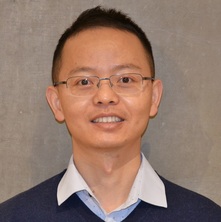
Dr Huadong Peng is a Group Leader and Senior Research Fellow at the UQ's Biosustainability Hub, Australian Institute for Bioengineering and Nanotechnology (AIBN), UQ. He is a Future Academic Leader in the Australia’s Food and Beverage Accelerator (FaBA), and part of ARC Centre of Excellence in Synthetic Biology (CoESB). He earned his PhD from Monash University in Nov 2018, followed by postdoctoral training at Imperial College London and the Technical University of Denmark until Dec 2023. Prior to his PhD, he received his Master Degree from the University of Chinese Academy of Sciences in 2013 and a Bachelor Degree from China Three Gorges University in 2010. Additionally, he worked as a research associate at Novozymes (now Novonesis) from Nov 2013 to Jan 2015.
Since Jan 2024, Dr Peng has led the Yeast Engineering and Synthetic Biology (YESBio) research group (10-15 members), focusing on sustainable biomanufacturing. His research interests include 1) developing innovative synthetic biology tools, such as gene assembly methods, CRISPR-based genome editing tools, and biosensors; 2) modular metabolic engineering for advanced microbial cell factories, 3) synthetic microbial communities and 4) emerging Bio+ enabling technologies for applications in food ingredients, biochemicals, biofuels, and biomedicines.
Dr Peng secured $4.8M funding as Chief Investigator ($2.1M to his team), including the prestigious Marie Skłodowska-Curie Fellowship. He has published 40+ peer-reviewed papers in prestigious journals, including Nature Microbiology, Nature Chemical Biology, Nature Communications. He actively contributes to the scientific community through editorial roles, including Associate Editor for Frontiers in Bioengineering and Biotechnology and Youth Editor for The Innovation (IF 26), BioDesign Research and mLife. He is also an invited peer reviewer for 30+ international journals and grants such as Nature Synthesis, ACS Synthetic Biology, etc.
Dr Peng is looking for highly motivated Honours, Master and PhD students, and highly competitive full scholarship may be provided. The University of Queensland ranks in the top 50 as measured by the Performance Ranking of Scientific Papers for World Universities. The University also ranks 45 in the QS World University Rankings, 52 in the US News Best Global Universities Rankings, 60 in the Times Higher Education World University Rankings and 55 in the Academic Ranking of World Universities.
Industry
Dr Peng is keen to translate the technologies developed by his team into real-world commercial applications, including advanced microbial cell factories, synthetic microbial communities, and optimised bioprocesses. These innovations enable the delivery of sustainable bio-solutions for industrial sectors spanning agri-food, industrial biotechnology and human health. He has established close collaborations with industry partners such as Woodside Energy, Noumi Operations, and Cauldron Fermentation, and he is actively engaging with additional partners, including Levur and NeweraBio.
Dr Peng has experience consulting with multiple companies and is open to taking on casual consulting roles as opportunities arise.
Selected Funding & Awards
Dr Peng has secured $4.8M funding as Chief Investigator ($2.1M to his team), including
2025 Australia’s Food and Beverage Accelerator (FaBA)-Cauldron ferm, $2M, CIB
2025 Australia’s Food and Beverage Accelerator (FaBA)-Noumi Operations, $2M, co-CIA
2025 NCRIS Synthetic Biology Voucher Scheme, $40K, CIA
2024 UQ Biosustainability hub seed funding, $50K, CIA
2024 Australia’s Food and Beverage Accelerator seed funding, $160K, CIA
2023 Chinese Government Award for Outstanding Self-financed Students Abroad, $15K
2022 Marie Skłodowska-Curie Fellowship ($266K, 8% success rate)
Jiang W, Hernández V-D, Peng H, Liu L, Haritos VS, Ledesma-Amaro R* Metabolic engineering strategies to enable microbial utilization of C1 feedstocks. Nature Chemical Biology 2021, 17(8), 845-855. `
P Gao, Sun H., Ledesma-Amaro R., Marcellin E. and Peng H.* Advancements and Challenges in the Bioproduction of Raspberry Ketone by Precision Fermentation. Future Foods2025: 100606.
Peng, H.*; Chen, R.; Shaw, W. M.; Hapeta, P.; Jiang, W.; Bell, D. J.; Ellis, T.; Ledesma-Amaro, R*. Modular Metabolic Engineering and Synthetic Coculture Strategies for the Production of Aromatic Compounds in Yeast. ACS Synthetic Biology 2023, 12 (6), 1739-1749.
Peng, H.; He, L.; Haritos, V. S*. Flow-cytometry-based physiological characterisation and transcriptome analyses reveal a mechanism for reduced cell viability in yeast engineered for increased lipid content. Biotechnology for Biofuels 2019, 12 (1), 98.
Peng, H.; Chen, H.; Qu, Y.; Li, H.; Xu, J*. Bioconversion of different sizes of microcrystalline cellulose pretreated by microwave irradiation with/without NaOH. Applied Energy 2014, 117 (0), 142-148
Australian Institute for Bioengineering and Nanotechnology
Availability:
Available for supervision
Dr Giovanni Pietrogrande is based at the Australian Institute for Bioengineering and Nanotechnology (AIBN), where he is the Synthetic Neuroimmunology Theme Leader.
He leads the development of advanced human brain and spinal cord organoid models to study neuroinflammation, demyelination and neurodegeneration, with a particular focus on how microglia, oligodendrocytes and other neural cells interact to drive diseases such as multiple sclerosis and motor neuron disease, and on using this knowledge to identify and test new therapeutic strategies. His research program is supported by competitive funding from HNMRC, MS Australia, MND Research Australia and FightMND, underscoring the translational impact and clinical relevance of his work.
Together with his team, he works on a broad range of problems, from engineering next-generation immune-based cell therapies and endowing central nervous system organoids with a functional immune system, to modelling their interactions with immune cells to fully reproduce neurodegenerative and neuroinflammatory pathologies. The group also leverages synthetic biology to design new strategies to rebalance neuroinflammation, promote remyelination and repair neural circuits.