Affiliate of Research Centre in Creative Arts and Human Flourishing
Research Centre in Creative Arts and Human Flourishing
Faculty of Humanities, Arts and Social Sciences
Senior Lecturer
School of Communication and Arts
Faculty of Humanities, Arts and Social Sciences
Availability:
Available for supervision
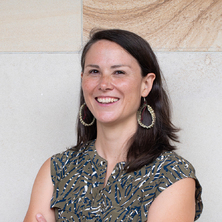
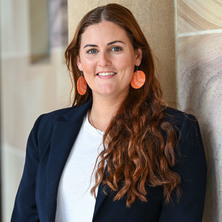
Dominique Chen is a proud Gamilaraay woman and interdisciplinary researcher working at the intersections of relational creative practice, Indigenous studies, urban studies, and land-based practices including agriculture, cultural food growing, and Indigenous food sovereignty.
She is a Senior Lecturer in Art History at UQ's School of Communication and Arts, specialising in Indigenous Art, anti-colonial and reparative praxis, and Indigenous Research Methodologies. Her PhD research examines urban Aboriginal food growing, exploring the potential of culturally-centred, relational creative practices in relvitalising cultural food knowledges, systems, practices, and connections to Country.
Dominique coordinates BlackWords, AustLit's dedicated research resource for Aboriginal and Torres Strait Islander writers and storytellers. She is passionate about people and Country care, and is committed to supporting self-determined, community-engaged and culturally-grounded research within the academy.
Faculty of Health, Medicine and Behavioural Sciences
Availability:
Available for supervision
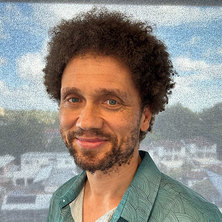
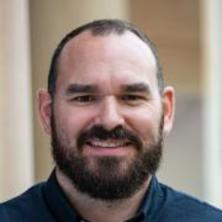
Anton is a mixed methods researcher with primary expertise in qualitative research methods. He is currently a Senior Research Fellow in the UQ Poche Centre for Indigenous Health at the University of Queensland.
Anton's primary interest is in working in partnership with Aboriginal community-controlled health services to co-design, implement and evaluate intervention strategies, and develop more practical and effective models of embedding evaluation into their delivery of services and programs. His work in this area focuses on participatory qualitative research with staff and patients of Aboriginal community-controlled health services to improve the acceptability of interventions and optimise their potential effectiveness.
Anton has previously worked in a research role with the Institute for Urban Indigenous Health and as a senior lecturer in the School of Public Health at the University of Queensland. Following completion of his PhD in 2008, he was awarded a National Health & Medical Research Council postdoctoral research fellowship which he undertook at the National Drug and Alcohol Research Centre, University of NSW.
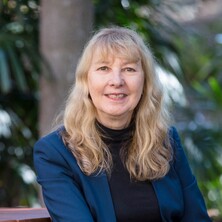
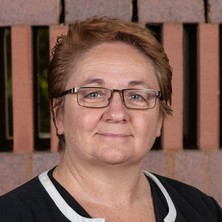
Professor Emerita Jennifer Corrin researches on law reform and development in plural legal regimes and legal issues affecting small states. She is a former Australian Research Council Future Fellow and in 2019 was a short-term Visiting Fellow at Jesus College, Oxford. Professor Emerita Corrin has participated in a number of research grant projects including an ARC Discovery Grant, which investigated means of better managing the flow of public finances and people across Australia's international borders; and work on environmental issues in Solomon Islands, funded by the MacArthur Foundation. Most recently she has been co-investigator in a project concerning inclusion of women’s voices in marine resource management in the Pacific, funded by the Arts and Humanities Research Council (UK). Jennifer has been consulted as an expert in a number of legal cases.
Professor Emerita Jennifer Corrin has published in the areas of legal pluralism, comparative law, South Pacific law, customary law, human rights, court systems, evidence, civil procedure, family law, land law, constitutional law and contract. She is the author of Contract Law in the South Pacific and co-author of Introduction to South Pacific Law (heading for its 5th edition), Courts and Civil Procedure in the South Pacific and Proving Customary Law in the Common Law Courts of the South Pacific. In 2019, she co-edited and wrote several chapters in a book on adoption in plural legal regimes. Her latest publication is the co-edited book, Legal Systems of the Pacific: Introducing Sixteen Gems.
Before joining The University of Queensland, Professor Emerita Corrin spent six years at the University of the South Pacific, having joined the Faculty after nine years in her own legal firm in Solomon Islands. She retains strong links with the profession and is a life member of Solomon Islands Bar Association. Professor Emerita Corrin’s memberships include the Australian Academy of Law, the Board of the Commission on Legal Pluralism, the Executive Committee of the Australian Law Academics Association, and titular membership of the International Academy of Comparative Law. She is a member of the Editorial Board of the Journal of Legal Pluralism, a member of the International Editorial Board of the Journal of South Pacific Law, and a member of the Editorial Board of the Comparative Law Journal and of the Asia Pacific Journal of Environmental Law.
Faculty of Health, Medicine and Behavioural Sciences
Availability:
Available for supervision
Media expert
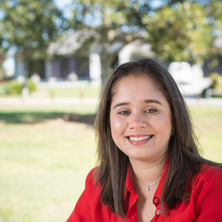
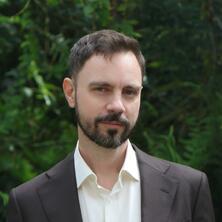
Dr Emma Crawford is an occupational therapist and researcher whose work centres on promoting wellbeing for infants, children, families and communities. Emma's primary focus is on cross-cultural projects that link with community organisations to create social change and reduce the impacts of disadvantage by supporting health enhancing environments and activities in early life. At the centre of Emma's work is the United Nations Sustainable Development Goal 3 - ensuring healthy lives and promoting wellbeing across all ages. Currently, Emma is leading several projects:
1) The BABI Project (research): refugee and asylum seeker families' expereinces during the perinatal period (systematic review, qualitative focus group and interview research)
2) The Uni-Friends program (student delivered service and student placement) - a social-emotional helth promotion program that draws on cultural responsiveness (The Making Connecitons Framework) and community development principles in an Aboriginal and Torres Strait Islander Community Controlled School
3) LUCIE-NDC (research) - mothers' experiences of accessing Neuroprotective-Developmental Care in the first 12 months of their infants' lives
Emma has a strong interest in understanding human experiences, community-driven initiatives, and strengths-based, innovative, evidence based, complex approaches to wellbeing that consider individuals and systems She also carries out research regarding allied health student placements in culturally diverse settings including low-middle income countries and Indigenous contexts. She works as a Lecturer at the University of Queensland, Australia after having worked in a range of occupational therapy roles including with children with autism, with asylum seekers, with Indigenous Australians with chronic disease, and completing her PhD in Political Science and International Studies in 2015.
Faculty of Health, Medicine and Behavioural Sciences
Availability:
Available for supervision
Dr Alize Ferrari leads the Epidemiology and Burden of Disease Research Stream at the Queensland Centre for Mental Health Research. This stream undertakes a program of work featuring the collection of new epidemiological data for mental disorders, analysis of existing data to quantify the distribution of mental disorders, quantification of the fatal and non-fatal consequences of mental disorders, and the development of methodological frameworks to improve the precision at which we collect and analyse epidemiological data. Dr Ferrari is an Affiliate Professor of Global Health at the Institute for Health Metrics and Evaluation (IHME), University of Washington, and an Honorary Research Fellow at the School of Public Health, University of Queensland. She is the Team Lead for the Mental Disorders Research Team within the Global Burden of Disease (GBD) Study. The GBD initiative is led by IHME and quantifies health loss from over 350 causes. She is the Primary Investigator on the Queensland Urban Indigenous Mental Health Survey. This is a population-based mental health survey of adult Aboriginal and Torres Strait Islanders in Southeast Queensland. It will determine the prevalence of mental and substance use disorders, mental health services being accessed, and implications for service reform.
Faculty of Health, Medicine and Behavioural Sciences
Affiliate of UQ Poche Centre for Indigenous Health
UQ Poche Centre for Indigenous Health
Faculty of Health, Medicine and Behavioural Sciences
Availability:
Available for supervision
Dr Carl Francia (Saibai Koedal awgadhalayg) is a Torres Strait Islander physiotherapist and cardiovascular epidemiologist whose research focuses on improving cardiovascular health equity for Aboriginal and Torres Strait Islander peoples through Indigenous-led, community-partnered research.
Based at The University of Queensland's Poche Centre for Indigenous Health, Carl leads research examining acute rheumatic fever (ARF), rheumatic heart disease (RHD), cardiovascular health, health services, and implementation of evidence into policy and practice. His work combines epidemiology, health systems research, and community partnership approaches to support prevention, early detection, long-term management, and elimination of RHD.
Carl currently coordinates the NHMRC Synergy-funded iPreventRHD program, a national Indigenous-led research initiative focused on life-course approaches to preventing and managing RHD. He is also a Chief Investigator on an MRFF-funded project exploring cardiovascular health among First Nations women and girls and is involved in community-led climate and cardiovascular health initiatives in the Torres Strait.
Research interests include:
• Cardiovascular epidemiology and population health • Acute rheumatic fever and rheumatic heart disease • Indigenous health and health equity • Implementation science and health services research • Climate change and cardiovascular health • Indigenous Data Sovereignty and community-led research
Carl welcomes enquiries from Honours, Masters, and HDR students interested in Indigenous health, cardiovascular disease prevention, epidemiology, implementation science, health systems research, and community-partnered research.
Faculty of Health, Medicine and Behavioural Sciences
Affiliate of ARC COE for Indigenous Futures
ARC COE for Indigenous Futures
Faculty of Business, Economics and Law
Availability:
Available for supervision
Professor Gail Garvey is a proud Kamilaroi woman, a NHMRC Research Leadership Fellow, and Professor of Indigenous Health Research in the Faculty of Medicine at the University of Queensland.
Professor Garvey has established an extensive and targeted research program focused on cancer and the wellbeing of Australia’s First Nations people.
Gail was among the first researchers to recognise the substantial impact of cancer on Aboriginal and Torres Strait Islander people, and her work has contributed greatly to key policy and practice changes to improve their cancer outcomes. Professor Garvey currently leads a Centre of Research Excellence – Targeted Approaches to Improve Cancer Services (TACTICS) for Aboriginal and Torres Strait Islander Australians (NHMRC #1153027 2019-2023). The TACTICS CRE focuses on emerging priorities in cancer-related health services research and actively promotes the translation of research knowledge into Australian public health policy and practice. The CRE also focuses on building research capacity through training the next generation of researchers in cancer control.
Gail leads work in psychosocial aspects of cancer care for First Nations Australians. Her research into the psychosocial aspects of cancer care for First Nations cancer patients, is a critical component to improving their cancer outcomes. Professor Garvey and her team developed and validated a new tool to measure the unmet support needs of Indigenous cancer patients, which is now a recommendation in the Optimal Care Pathway guidelines.
Professor Garvey's research program also focuses on understanding and measuring the dimensions of wellbeing important to and valued by Aboriginal and Torres Strait Islander people across the life course, which is important for developing/evaluating health interventions.
Originally trained as a teacher, Gail began her research career at the University of Newcastle in the 1990s where she was one of the first researchers to examine issues around the recruitment and retention of Aboriginal and Torres Strait Islander medical students. Since then she has been involved in a wide array of research collaborations both within Australia and overseas spanning three decades.
Along with her research expertise, Gail's strengths lie in her leadership and her collaborative approach to bringing key stakeholders - Indigenous consumers, researchers, and clinicians - together to achieve common goals. Career highlights include conducting the first Roundtable to identify research priorities in cancer for Indigenous Australians (2010); establishing the National Indigenous Cancer Network (2013) in collaboration with Cancer Council Australia, the Lowitja Institute, the Indigenous Health InfoNet and Menzies School of Health Research; instigating and convening the inaugural World Indigenous Cancer Conference in 2016 (Brisbane); and co-hosting the 2nd conference in 2019 (Canada).
Since 2011 Gail has received over $50 million in grant and government funding, including a NHMRC Investigator Leadership Grant (NHMRC #1176651 2020-2024). Over the same period Gail has published more than 180 papers in peer-reviewed.
Affiliate Associate Professor of School of Historical and Philosophical Inquiry
School of Historical and Philosophical Inquiry
Faculty of Humanities, Arts and Social Sciences
Professor and Associate Dean, Indigenous Engagement
Faculty of Humanities, Arts and Social Sciences
Availability:
Available for supervision
Stephanie Gilbert is in its truest word an inter-discplinary scholar. Her undergraduate work lies in community welfare and social work. Moving then to Women's studies and history Professor Gilbert encapsulates the lives of removed chlldren in Australia and elsewhere. Her work in Indigenising work in universities is ground-breaking and works to embodies Indigenous data principles, ethical perspecitives and centring Indigenous knowledges and new knowledge creation.
Affiliate of Australian Women's and Girls' Health Research Centre
Australian Women and Girls' Health Research Centre
Faculty of Health, Medicine and Behavioural Sciences
Senior Research Fellow
UQ Poche Centre for Indigenous Health
Faculty of Health, Medicine and Behavioural Sciences
Availability:
Not available for supervision
Stephen Harfield is a Narungga and Ngarrindjeri man from South Australia. He is a public health researcher and epidemiologist. His research focuses on centring the health and wellbeing needs of Aboriginal and Torres Strait Islander young people and their communities through Indigenous-led research.
Stephen’s research employs mixed methods that combine both quantitative and qualitative approaches, grounded in Indigenous methodologies. His research privileges the knowledges of Aboriginal and Torres Strait Islander people and adopts a strength-based approach to ensure that the research positively impacts and benefits Aboriginal and Torres Strait Islander people and communities.
Stephen has more than 10 years of experience conducting research in partnership with Aboriginal and Torres Strait Islander communities and health services. His work focuses on the health and wellbeing of adolescents and young people, sexual health, men’s health, health services research, and enhancing research quality.
In March 2025, Stephen submitted his PhD thesis, titled "Strengthening Primary Health Care for Aboriginal and Torres Strait Islander Young People Living in Urban Southeast Queensland”. In recognition of his PhD work, he was awarded the Lowitja Institute’s Aboriginal and Torres Strait Islander Student Award at the 4th International Indigenous Health and Wellbeing Conference 2025.
Stephen holds a Master of Philosophy in Applied Epidemiology from The Australian National University (2019), a Master of Public Health from Flinders University (2013), a Graduate Certificate in Health Services Research and Development from The University of Wollongong (2012), and a Bachelor of Health Sciences (Public Health) from The University of Adelaide (2008).
Queensland Alliance for Agriculture and Food Innovation
Availability:
Available for supervision
Media expert
I work at the interface of sensory science and analytical chemistry to understand how food production, processing and environmental conditions influence food quality, provenance, authenticity and consumer perception. My research supports agrifood industries, including meat, seafood and broader food production sectors, by linking measurable chemical changes with sensory attributes such as flavour, aroma, texture and appearance.
I am interested in partnering with producers, processors, industry bodies and technology providers to evaluate how different growing, treatment, feeding, farming, harvesting or processing methods affect product quality and consumer perceptibility. This includes industry trials focused on climate-smart crops, sustainable production systems, improved animal and seafood production methods, provenance claims and product differentiation. My goal is to help translate scientific measurement into practical insights that support innovation, product integrity and consumer confidence.
Affiliate of Centre for the Business and Economics of Health
Centre for the Business and Economics of Health
Faculty of Business, Economics and Law
Senior Research Fellow
School of Business
Faculty of Business, Economics and Law
Affiliate of Centre for Online Health
Centre for Online Health
Faculty of Health, Medicine and Behavioural Sciences
Availability:
Available for supervision
Media expert
Dr Helen Haydon is a Senior Research Fellow and Registered Psychologist at the University of Queensland. She has national standing, and an emerging international reputation, as a digital health researcher with a focus on aged and palliative care, psycho-oncology and carer wellbeing. She has led 3 applied nationwide digital health research programs: 1/ Palliative Care ECHO that connects services and upskills health professionals across Australia in palliative care; 2/ Elder ECHO, a telementoring program to support the National Aboriginal Community Controlled Health Organisation’s (NACCHO) Elder Care Support workforce in the delivery of Culturally safe aged care and; 3/ Caring for the Carer, an online intervention for carers of people with brain tumour. http://caringforthecarer.org.au/
Other research includes: evaluation of telepalliative care services (e.g. patient/ carer outcomes and perceptions and staff perceptions); voluntary assisted dying; technology supported grief and bereavement support and; digital mental health.
She is a Registered Psychologist with clinical experience working with a range of issues and diverse populations and has over ten years’ experience teaching and facilitating workshops on psychology and health communication.
Affiliate Research Fellow of School of Nursing, Midwifery and Social Work
School of Nursing, Midwifery and Social Work
Faculty of Health, Medicine and Behavioural Sciences
Research Fellow
School of Law
Faculty of Business, Economics and Law
Affiliate of ARC COE for Indigenous Futures
ARC COE for Indigenous Futures
Faculty of Business, Economics and Law
Availability:
Available for supervision
Media expert
Lorelle Holland is a proud Mandandanji woman who grew up on Turrbal Country with her four sisters and parents. She is a dedicated and passionate Registered Nurse with over three decades of experience across clinical, management, education, and research roles in the health care sector. A highlight of her nursing career was working as a Remote Area Nurse in the Northern Territory, providing care alongside Aboriginal communities.
Lorelle currently holds the position of Research Fellow at the ARC Centre of Excellence for Indigenous Futures, and is an Affiliate at the School of Nursing, Midwifery and Social Work at The University of Queensland. She hopes to inspire the next generation of health equity researchers to enable thriving Indigenous futures.
Lorelle’s standpoint as an Aboriginal woman, combined with her extensive nursing experience and public health education, offers a broad and nuanced perspective on the complex interplay between environment, health systems, interdisciplinary collaboration, and the social determinants of health. She advocates for the decolonisation of health interventions, grounded in the United Nations Declaration on the Rights of Indigenous Peoples (UNDRIP), which affirms the rights of Indigenous peoples to lead transformative change through their own knowledges, strengths, and sovereignty.
Lorelle completed her PhD studies with the Child Health Research Centre within UQ’s Faculty of Health, Medicine and Behavioural Sciences. Her research explores critical race theory, child development and the complex health needs of Aboriginal and Torres Strait Islander youth disproportionately affected by detention and family separation during critical developmental periods. Her work is guided by transformative epistemologies and decolonising methodologies, centring youth and their communities in the co-design of culturally responsive, holistic assessment and diversionary pathways to counter youth detention practices.
Chris is a social scientist specialising in international development. Her research primarily revolves around resilience and adaptation, with a current focus on agriculture policy and implementation. With a wealth of experience from her previous roles in international development and academia, Chris also brings strong expertise in monitoring and evaluation.
She has designed and led both research for development (R4D) and development projects across Cambodia, Vietnam, Solomon Islands, Kiribati, Tuvalu, Vanuatu, and Fiji. Her applied research aims to understand the processes and mechanisms of change that bridge policy and action, enhancing food security and sustainability. Currently, Chris is working on projects that emphasise agriculture policy and knowledge brokering for Environmental and Human Health (One Health) in Cambodia, building on her previous work in climate resilience, adaptation, and agrarian change in the region.
Director Higher Degree Research of School of Nursing, Midwifery and Social Work
School of Nursing, Midwifery and Social Work
Faculty of Health, Medicine and Behavioural Sciences
Senior Lecturer
School of Nursing, Midwifery and Social Work
Faculty of Health, Medicine and Behavioural Sciences
Availability:
Available for supervision
Dr Jacqueline Jauncey-Cooke is the Director of Higher Degree Research in the School of Nursing, Midwifery and Social Work. With a background in paediatric intensive care nursing Jacqui has established a multidisciplinary research program inclusive of clinical trials aimed at optimising chjild and family outcomes. She also has a series of research exploring workforce strategies within the paediatric setting which are producing measurable improvements. Jacqui holds an Associate Editor position in a paedatric focused Q1 journal, contributes to ANMAC accreditation panels and is an active member of the Australian College of Critical Care Nurses. Jacqui contributes to teaching within the School with a focus on evidence based practice, mental health and working with Aboriginal and Torres Strait Islander People. Jacqui is an agent for the UQ RAP Network and a proud member of the Ally network.
I am a Lecturer in Linguistics in the School of Languages and Cultures, University of Queensland. My main research areas are phonetics, phonology, and prosody, primarily in languages of Australia and the Pacific. I am interested in the interfaces of prosody to other aspects of language, prosodic variation, phonetic typology, and language documentation and description.
I received my PhD in Linguistics from the University of Melbourne associated with the ARC Centre of Excellence for the Dynamics of Language, and Bachelor of Arts (Honours) in Linguistics from the Australian National University. Before I joined UQ in 2024, I held a postdoctoral Humboldt Fellowship, based at the Institute for Phonetics and Speech Processing, Ludwig Maximilian University of Munich, Germany, and I was previously a postdoctoral researcher on an ERC Advanced Grant based at Radboud University, Nijmegen, the Netherlands.
I enjoy making linguistics accessible and interesting for audiences outside of universities. I am a co-developer of the Linguistics Roadshow - an interactive showcase about the science of language for high school students.
Affiliate of ARC COE for Children and Families Over the Lifecourse
ARC COE for Children and Families Over the Lifecourse
Faculty of Humanities, Arts and Social Sciences
Research Fellow
UQ Poche Centre for Indigenous Health
Faculty of Health, Medicine and Behavioural Sciences
Availability:
Available for supervision
Media expert
Dr. Edmund W. Kanmiki is a public health researcher with expertise spanning population health, epidemiology and health economics. He is passionate about achieving health equity, particularly for vulnerable populations. Dr. Kanmiki’s research focuses on social determinants of health, reproductive, maternal, and child health (RMCH), community-based healthcare interventions, healthcare financing, Indigenous health, non-communicable diseases and related areas. He holds a bachelor’s degree in mathematics with economics, a master’s degree and PhD in public health. Edmund’s doctoral thesis at the University of Queensland aimed at improving equity in maternal and child health in rural communities using community-based primary healthcare strategies.
At UQ Poche Centre, Edmund is a member of the Implementing Life Course Interventions research team led by NHMRC Leadership Fellow, Mamun Abdullah. He is a co-investigator of the ARC Centre of Excellence for children and families over the Life Course project titled “Preventing and managing diabetes among Indigenous women and youth”. He is also a research coordinator for the “Exposure to Trihalomethanes in Pregnancy and Birth Outcomes in Queensland Study”.
Prior to joining the University of Queensland, Dr. Kanmiki held research roles at the University of Ghana and the Navrongo Health Research Centre and provided consultancy services to some national and multinational institutions. He is a recipient of the Mastercard Scholarship, Elsevier Atlas award and early carrier research grant award from the Royal Society of Tropical Medicine and Hygiene (RSTMH). His research and peer-reviewed publications have informed health policy and programs. Dr. Kanmiki has presented his research at several esteemed conferences. His research has also garnered media attention in prominent outlets including The Conversation in Australia, Health and Medicine in Canada, and Health and Wellness in the United Kingdom.