Affiliate of ARC Research Hub to Advance Timber for Australia's Future Built Environment (ARC Advanc
ARC Research Hub to Advance Timber for Australia's Future Built Environment
Faculty of Engineering, Architecture and Information Technology
Associate Professor
School of Architecture, Design and Planning
Faculty of Engineering, Architecture and Information Technology
Availability:
Available for supervision
Media expert
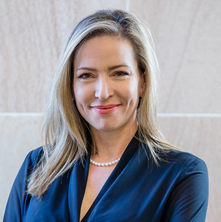
A/Prof Paola Leardini leads the Technology and Sustainability stream at the University of Queensland’s School of Architecture, Design and Planning. She is also a key researcher within the Centre for Future Building Structure and a former member of the Cooperative Research Centre for Water Sensitive Cities. With a diverse educational background in Architecture that spans Milan, Berlin, Leicester, and Copenhagen, she holds a PhD in building energy efficiency and environmental quality from Politecnico di Milano (Italy); her doctorate work was undertaken under the guidance of Prof. P. Ole Fanger, a global authority in the field of thermal comfort.
Before joining UQ in 2015, A/Prof Leardini worked extensively as an ESD (Environmentally Sustainable Design) designer, consultant, and educator in Italy, Switzerland, Germany, and New Zealand. Her professional and academic work strives to bridge the gap between design and performance, advocating for smart, healthy, and resilient built environments. Her research focuses on developing innovative solutions for achieving net-zero targets through building decarbonisation, enhancing urban resilience, and fostering a circular economy in the construction sector.
A/Prof Leardini’s research explores the intersection of building diagnostics, retrofitting, urban regeneration, and resource optimisation. Her applied research tackles environmental challenges with a focus on global and local impacts. Early in her career, she contributed to major urban regeneration projects, including the retrofitting of the "Quartiere Mazzini" historical district in Milan (2003), New Zealand's state housing eco-retrofitting (2010-2015), and more recently, a monitoring campaign of state housing in Brisbane, focusing on the relationship between energy consumption, thermal comfort, and public health.
Her extensive collaborations span international networks of academics, public agencies, and industry partners. Notably, she has served on the Queensland Government's Design Excellence Panel for social and affordable housing, established by the Department of Communities, Housing, and Digital Economy in partnership with the Office of the Queensland Government Architect.
As a certified Passivhaus designer, A/Prof Leardini co-founded the Passive House Institute New Zealand (PHINZ) in 2012 and later joined the Australian Passive House Association (APHA) in 2018. Her research has since expanded to explore how the Passive House standard can be adapted for hot and humid climates, especially in Queensland.
In 2015, A/Prof Leardini coordinated UQ Architecture’s contribution to the Cooperative Research Centre for Water Sensitive Cities, a government-funded initiative involving over 80 research, industry, and government partners. The project sought to deliver urban water management solutions to make Australian cities more resilient to climate change. Since 2016, she has been an active member of UQ's Centre for Future Timber Structures, working on innovative timber construction methods. She leads research in circular timber design and heads an ARC Linkage project on adaptable housing. As a Chief Investigator in the ARC Advance Timber Hub, she coordinates the Design for Extended Building Life Node, fostering the use of sustainable materials in construction.
A/Prof Leardini’s research has garnered international recognition, including publications through initiatives such as COST Action CA 20139, funded by the European Union. Her work has been featured at over 20 conferences since 2015 and regularly appears in leading Q1 journals. In addition to serving as a board member and peer reviewer for several scientific journals, she has been invited to participate in prestigious sustainable architecture competitions, including the MIT Climate CoLab hosted by the Centre for Collective Intelligence.
Memberships
Design Excellence Panel: Queensland social and affordable housing (since 2020)
Centre for Future Timber Structures (since 2016)
Scientific Committee of New Zealand Academy of Applied Research (since 2016)
Australian Passive House Association (since 2018)
Cooperative Research Centre for Water Sensitive Cities (2015-2021)
Faculty of Engineering, Architecture and Information Technology
Affiliate of Julius Kruttschnitt Mineral Research Centre
Julius Kruttschnitt Mineral Research Centre
Faculty of Engineering, Architecture and Information Technology
Availability:
Available for supervision
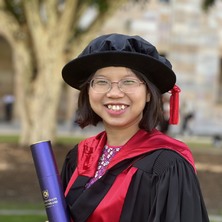
Tania is interested in researching, developing and applying advanced control solutions, computational analysis, and process simulation to optimise processes in the mining industry. She joined the JKMRC as a member of the Advanced Process Prediction and Control (APPCo) group in 2023 and has since worked mainly on projects to develop soft sensors for mineral processing operations. Highlights include JK MillFIT to estimate mill content and charge trajectory, CycloPS to estimate cyclone performance and DMC soft sensor to estimate dense medium cyclone performance in coal operations.
Tania completed her undergraduate study in Chemical Engineering and a Master's degree in Chemical Engineering with a major in Process Control in 2015. For her master's thesis, she worked on the study and evaluation of mill power draw models; these studies contributed to the development of a vibration sensor and software to measure filling in tumbling mills.
Tania has over nine years of experience in the Chilean mining industry, where she has held several key roles as a Project Engineer, Process Engineer, Data Processing Specialist and Advanced Process Control Engineer. Throughout her career, she has maintained strong ties with academia, collaborating on publications and promoting collaborative research between the mining industry and Chilean universities.
Faculty of Health, Medicine and Behavioural Sciences
Availability:
Available for supervision
Media expert
Dr Julie Lee is a staff specialist anaesthetist at The Royal Brisbane and Women’s Hospital (RBWH) and senior lecturer at The University of Queensland. Her special research interests include perioperative blood management, regional anaesthesia and airway management. She was awarded her PhD on Rotational Thromboelastometry (ROTEM®) in obstetrics in 2021. She has facilitated workshops and published and presented widely on this topic, including at the Gilbert Brown and Gilbert Troup prize sessions at the international ANZCA conferences and was the winner of the Best Open Poster Prize at the 2018 ANZCA ASM. She is a working party member of the Queensland Clinical Guidelines for Primary Postpartum Haemorrhage, RBWH Transfusion for Major Haemorrhage Protocol and Guidelines, the Queensland Health Intrapartum Pain Management Guidelines and the ASA COVID-19 Working Group. She is a reviewer for peer-reviewed journals, the Blood Safe eLearning Australia Courses and Ausmed Education Courses. In 2020, she was awarded the Best Paper award in The International Journal of Obstetric Anaesthesia and the Jeanette Thirlwell Anaesthesia and Intensive Care Best Paper Award. Her paper on the influence of obesity on coagulation in pregnancy as assessed by ROTEM® became Wiley’s top cited article for 2020-2021. In the recent past, she has been awarded the ANZCA Robin Smallwood Bequest for the highest ranking research project, National Blood Authority Early Career Researcher Award, CSL Behring Research Award, HOW Collaborative HSANZ Clinical Fellowship Award, ASA Kevin McCaul Prize, ASA PhD Support Grant and other research grants for her work on perioperative patient blood management.
Dr Lee joined The University of Queensland in 2012 after four year service as Assistant Professor at the Hong Kong Polytechnic University. Dr Lee has his research interest in information technology, especially information search, dissemination, and process in the hospitality and tourism context. He has participated in various projects including Prototype hotel guest room project at Hotel ICON, Hong Kong. With Bachelor's degree in Tourism, he took a F&B coordinator position at a five-star hotel about three years. Dr Lee received a Master degree from Michigan State and PhD from the Pennsylvania State University
Faculty of Health, Medicine and Behavioural Sciences
Availability:
Available for supervision
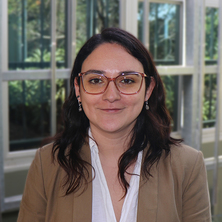
Dr Jonathan Lee is a postdoctoral research fellow in the Molecular and Systems Medicine Group at the School of Biomedical Sciences and Queensland Brain Institute. His current work combines molecular biology, biochemistry and quantitative imaging techniques to unravel the nanoscale changes in the spatiotemporal organisation of key synaptic proteins implicated in neurodegenerative diseases.
Dr Lee received his BSc (Hons) in Neuroscience from UQ in 2020 and began his research career as a neuroscience PhD student under the supervision of Dr Pranesh Padmanabhan and Prof. Jürgen Götz at the Clem Jones Centre for Ageing Dementia Research within the Queensland Brain Institute in 2021. In 2022, he was awarded the prestigious Prof. Bob Williamson PhD top-up scholarship funded by the Yulgilbar Foundation. During his PhD, he developed extensive expertise in super-resolution single-molecule microscopy and various other advanced microscopy techniques and analyses. He also developed a custom-built imaging platform to apply ultrasound to live cells within a high-resolution microscope. Using this platform, he identified a spatiotemporally interconnected sequence of biological responses underlying the different fates of sonoporated cells. He recieved his PhD in 2025 and his work has resulted in publications in top-ranking journals such as Journal of Controlled Release and Theranostics.
Faculty of Health, Medicine and Behavioural Sciences
Availability:
Not available for supervision
Media expert
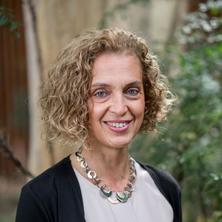
Professor Lee is a public health psychologist with research interests in gender and health. She has been a CI on the Australian Longitudinal Study on Women's Health since its initiation in 1995, and has been Project Manager (2000-2003) and National Coordinator (2003-2005).
Professor Lee is a former Head of the School of Psychology (2006-2010) and former Associate Dean (Research) for the Faculty of Health and Behavioural Sciences (2014-2019). As an Emeritus Professor she is actively involved in research grant application development and support.