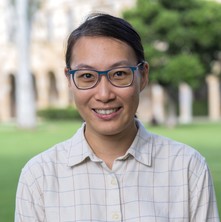
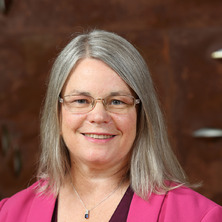
Dr Annie Lau is a coastal geomorphologist with a primary research interest in analysing past occurrences of coastal hazards, in particular extreme waves generated by storms and tsunamis, through sedimentary, geomorphological and historical records for assessing the future threat in coastal areas. For example, she has specialised in using the characteristics of large coastal boulders (e.g. size and distribution of rocks) to estimate the strength of extreme waves and to reconstruct the history of extreme events in the past millennia at a few tropical islands in the Asia-Pacific area. More recently, Annie investigates coastline evolution of the sandy Central to Southern Queensland coasts in the late Quaternary - Holocene by analysing sediments and using OSL quartz dating.
Annie teaches a range of courses in Geography, Marine Science, and Geoscience disciplines. She is interested in all types of natural hazards and disaster management, some research areas that she's expanding into since acquiring in-depth knowledge through leading the "Environmental Hazards" course. Students who are interested in researching hazard topics are encouraged to discuss their research ideas with Annie.
She is a project leader of the following research networks:
IGCP Project 725 - Forecasting Coastal Change: "From Cores to Code: Bringing together scientists from coastal geology and numerical modelling to improve the predictive capacity of numerical models to fore- and hind-cast coastal change"
ISROC - Inundation Signatures on Rocky Coastlines: This network serves as a focal point for researchers, educators, and students to understand Coastal Boulder Deposits (CBD) and the storms and tsunamis that generate them.
Australian Institute for Bioengineering and Nanotechnology
Availability:
Available for supervision
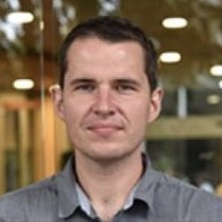
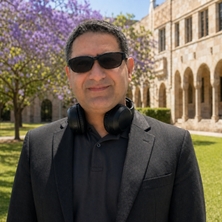
Dr Jan Lauko is a graduate of the Comenius University in Bratislava with a Masters Degree in Organic chemistry. In 2007 he started a PhD in the group of Prof Alan Rowan in Nijmegen, the Netherlands where he was focusing on the design of extended-conjugation supramolecular graphene constructs using click chemistry and macrocyclic sensor probes for mechanistic studies of epoxidation reactions. In 2012 he joined a Dutch start-up company NovioSense BV as CTO where he developed the coating and sensor elements as well as the integration of electronics and medical device design for the NovioSense sensor platform. At the end of 2016 he joined the newly formed group of Prof. Rowan at the Australian Institute for Bioengineering and Nanotechnology as a research fellow and group manager, where he was focused on the study of synthetic biomimetic extracellular matrices, for use in cell growth and wound healing. In 2022, he commenced his role in the Advanced Biofutures Spinifex Materials Centre, part of AIBN, where he leads the Spinifex Biomaterials theme, and works closely with the Indigenous startup Trioda Wilingi, supporting their research.
Faculty of Health, Medicine and Behavioural Sciences
Availability:
Available for supervision
Media expert
CARL (CHIP) LAVIE, JR., M.D., FACC, FACP, FCCP
Ochsner Clinical School – The University of Queensland School of Medicine, clavie@ochsner.org
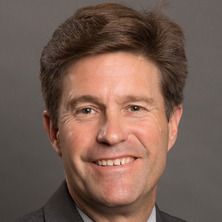
Dr. Lavie graduated from Louisiana State University Medical School in 1983 and completed internal medicine residency at Ochsner and fellowship in cardiovascular diseases at Mayo , where he joined the faculty in 1989. Dr. Lavie is Professor of Medicine and Medical Director, Cardiac Rehabilitation and Preventive Cardiology; Director, Exercise Testing Laboratory; and Staff Cardiologist, Echocardiographic Laboratory at the John Ochsner Heart and Vascular Institute in New Orleans, Ochsner Clinical School-The University of Queensland School of Medicine and he previously served for 10 years as Associate Director of the Internal Medicine Training program. He served as a Consultant in the Department of Preventive Medicine at the Pennington Biomedical Research Center in Baton Rouge, Louisiana from January 2012-October 2014. Dr. Lavie’s research interests include cardiac rehabilitation and prevention, lipids, hypertension, obesity, and exercise, as well as noninvasive testing, encompassing echocardiography, exercise testing, and nuclear cardiology. He is the author of over 800 medical publications including two cardiology textbooks, and 40 book chapters. Dr. Lavie serves as a frequent lecturer, reviewer for several medical journals, and is Associate Editor and Cardiovascular Section Editor of the Mayo Clinic Proceedings and is Editor in Chief of Progress in Cardiovascular Diseases and serves on the Editorial Boards of the Journal of the American College of Cardiology, American Journal of Cardiology, Journal of Cardiopulmonary Rehabilitation Prevention, and over 20 other Journals.For 2011 till now, he has served as Chairman of the Document Oversights Committee for AACVPR. For the years 2003 and 2004 he served as Chairman of Vascular, Hypertension and Prevention for the American College of Cardiology and he has been an elite reviewer for JACC for 7 of the last 8 years, also receiving the Simon Dack Award as a life-time, hall of fame, reviewer.In 2013, he gave Key-Note lectures for both the American College of Sports Medicine and the Cardiac Rehabilitation one for the AACVPR, where he received the 2013 Research Award. From a personal stand-point, he is an avid sports fan and competitive runner, with personal records in the 5K, 10K, Half-Marathon and Marathon of 18:30,38:30,1:24:30, and 3:10, respectively. He is the author of “The Obesity Paradox” ,released April,2014.John Ochsner Heart and Vascular Institute
1514 Jefferson Highway, New Orleans, LA 70121
Telephone: (504) 842-1281 or 842-5874, FAX: (504) 842-5875
E-mail: clavie@ochsner.org
Admin. Asst. (Jean Ann Landry): jlandry@ochsner.org
Faculty of Health, Medicine and Behavioural Sciences
Availability:
Available for supervision
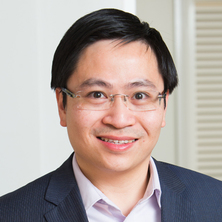
Dr Ken Law is an obstetrician and gynaecologist based at Greenslopes Private Hospital, with special interests in fertility, endometriosis, fibroids and pelvic pain. He is actively involved in clinical research, and is passionate in teaching medical students and trainees.
Faculty of Health, Medicine and Behavioural Sciences
Availability:
Not available for supervision
Sheleigh Lawler is a health psychology expert, with research interests in understanding and intervening on health behaviours, particularly the psychosocial sequelae in relation to disease and intervention outcomes. Her breadth of knowledge across public health, health promotion and health psychology allows for a unique perspective, particularly on understanding the importance of communication. Her work involves multi-disciplinary teams of researchers, industry partners, and government organisations.
My research focuses on using host defence molecules as the basis for designing peptide-based drugs with improved safety and reduced likelihood of drug resistance to combat infectious disease caused by pathogenic bacteria and malaria parasites. Zooming in to investigate molecular interactions at the cell surface and inside infected cells allows me to describe and refine how drug candidates overcome disease organisms to produce the next generation of antimicrobial drugs.
Geoff is a leading Australian sociologist with interests in rural and regional sociology, globalisation/localisation and agrifood research.
He attended James Ruse Agricultural High School in Sydney and was School Captain in 1968. He then completed a degree in agricultural economics at Sydney University in 1972. This was followed by a diploma in social science (UNE), Master of Science in Sociology (Wisconisn-Madison) and a PhD (Griffith). In 1992 he became Associate Professor of Sociology and Foundation Director, Centre for Rural Social Research, at Charles Sturt University before moving later that year to Central Queensland University as Foundation Professor of Sociology (1992-2002) and Executive Director, Institute for Sustainable Regional Development (1998-2002). He joined The University of Queensland as Professor of Sociology and Head of the School of Social Science in 2002. He is a Life Member of the Fitzroy Basin Association, a Fellow of the Academy of Social Sciences in Australia, Life Member of the Australian Sociological Association, and was President of the International Rural Sociology Association (2012-2016). He became Emeritus Professor of Sociology at the University of Queensland in 2014.
His full profile can be seen at: https://en.wikipedia.org/wiki/Geoffrey_Lawrence_(sociologist)
Deputy Associate Dean Academic (Curriculum Design and Teaching Innovation)
Faculty of Science
Affiliate Professor of School of Education
School of Education
Faculty of Humanities, Arts and Social Sciences
Professor
School of Chemistry and Molecular Biosciences
Faculty of Science
Availability:
Available for supervision
Media expert
Gwen is a Teaching-Focused academic in the School of Chemistry and Molecular Biosciences at UQ, she was appointed to this role in 2008 following several postdoctoral and senior research focused appointments in the UK and Australia. After successfully transferring from traditional chemistry laboratory research into discipline-based education and higher education research, her work has addressed student diversity in prior learning and engagement of students through: collaborative discourse and inquiry tasks; the implementation of undergraduate research experiences; and mechanisms for provision of formative feedback to support self-regulated learning. She currently leads an active research program into supporting and assessing student self-regulated learning in online environments in parallel with exploring how combinations of multimodal representations impact on learning. Gwen is a Fellow of the Royal Australian Chemical Institute, Senior Fellow of the Higher Education Academy and the current Chair of the Editorial Board of Chemistry Education & Research Practice (RSC Publishing). Her teaching has been recognised by multiple national, professional and institutional teaching awards including the RACI Fensham Medal in 2021.
Alan Lawson's research interests include post-colonial theory and critical practice, especially in relation to 'settler' cultures, literary and cultural institutions, Australia-Canada comparative studies, Australian fiction and Canadian fiction.
He currently researches in two distinct areas.
Higher education policy - especially as it relates to research quality and research integrity
The analysis of rhetorical and narrative tropes in "settler" post-colonial cultures, such as Australia, Canada, New Zealand, and South Africa.
He has authored:
Patrick White.Articles on Australian literature including Patrick White, Barbara Baynton, George Johnston, Hal Porter, and Henry Lawson.Australian literary criticism and literary history.Post-colonial theory, Canadian literature and literary institutions.Theory and practice of comparative studies in post-colonial context.He has edited and co-edited many publications, including:Patrick White: Selected Writings.The Macmillan Anthology of Australian Literature (with Ken Goodwin).Barbara Baynton (with Sally Krimmer).Australian Literature: A Reference Guide (with Fred Lock).De-Scribing Empire: Post-colonialism and Textuality (with Chris Tiffin).Post-colonial Literatures: General, Comparative and Theoretical Criticism (with Leigh Dale, Helen Tiffin, and Shane Rowlands).Annotated Bibliographies of Criticism of Post-colonial Literatures in English series.
I am interested in leveraging technology and people power to tackle applied scientific problems. I have a broad research background and interests, ranging from biotechnology to hydrodynamics. My previous work has focused on the effects of changing environmental conditions on marine ecosystems/species and human’s relationships with them, including fisheries and elasmobranch megafauna. I have worked heavily on the energetics of elasmobranchs, including how changes in temperature will affect individuals and populations, using tools including bioenergetic models, biologging with miniaturised sensors, and biomechanic/hydrodynamic models.
My current research in the Centre for Biodiversity and Conservation Science examines novel techniques to monitor coral reefs. I am developing tools that will optimise the use of citizen science and Artificial Intelligence to enable broadscale monitoring of coral reefs. This includes methods of in-water sampling, as well as analysis tools to provide rapid, accurate and scalable monitoring of coral reefs powered by local communities. I am using the Great Barrier Reef as a case study to develop tools that can be applied globally.
Faculty of Engineering, Architecture and Information Technology
Availability:
Available for supervision
Media expert
Professor Bronwyn Laycock has a diverse background in translational research, working not only in academia but also in industry and as a consulting chemist as well as at CSIRO. Her research activities have ranged from bio/degradable polymers, composites, organic and organometallic synthesis, waste conversion technologies, and pulp and paper chemistry, to general polymer chemistry. She is currently working across a range of projects with a focus on materials for circular economy applications and management of the transition to the new plastics economy. The application areas in her research program include biopolymers (particularly polyhydroxyalkanoates), polymer lifetime estimation and end-of-life management/conversion technologies, biocomposites, controlled release matrixes for pesticide and fertiliser applications, polyurethane chemistry, and biodegradable packaging.
She has a strong history of successful commercialisation and impact, being a co-inventor on CSIRO's extended wear contact lens program (recognised as its fourth most significant invention) - for which she was awarded a joint CSIRO Medal for Research Achievement 2009. As a Project Leader and Deputy Program Leader within the CRC for Polymers, she also managed a project that delivered an oxodegradable thin film polyethylene that was commercially licenced by Integrated Packaging. This work earned the team a Joint Chairman’s Award for research/commercialization (CRC for Polymers) and an Excellence in Innovation Award (CRC Association).
Faculty of Engineering, Architecture and Information Technology
Lecturer
School of Electrical Engineering and Computer Science
Faculty of Engineering, Architecture and Information Technology
Availability:
Available for supervision
Prospective Students
I welcome applications from motivated MPhil and PhD candidates interested in working at the intersection of AI/ML, cybersecurity, and networking. Research in my group is hands-on and experimentally rigorous, with a strong emphasis on producing work that is deployable, reproducible, and publishable. Current projects span four broad directions: applied ML for security and networked systems; large language and foundation models for security analytics and automation; adversarially robust and continual learning for resilient detection in dynamic environments; and AI-driven analytics for energy systems and consumer behaviour. Students are expected to contribute to open research artefacts as well as refereed publications. Strong candidates will have solid programming skills (e.g., Python or C++), a background in either ML or networking, and an appetite for tackling applied research problems with methodological care. I particularly encourage enquiries from graduates in Computer Science, Software Engineering, or Network Engineering.
About me
I am a Lecturer and researcher at The University of Queensland working on practical AI/ML for cybersecurity, networked systems, and energy analytics. My research focuses on robust and scalable methods for detecting, understanding, and responding to complex behaviour in dynamic environments, spanning modern networks, computing systems, and energy infrastructure. Current themes include large language and foundation models for security analytics and automation, adversarially robust and continual learning, explainable ML, and data-driven methods that support trustworthy operational and decision-making outcomes in real-world settings.