Australian Institute for Bioengineering and Nanotechnology
Availability:
Available for supervision
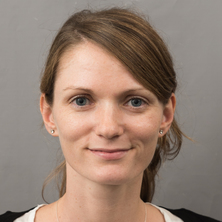
In her current postdoctoral position at AIBN she liaises directly with patients and clinicians to investigate rare neuronal diseases. By using patient derived iPSCs to generate neuron and brain organoid models, she focuses on the molecular mechanisms driving neuronal disease and conducts drug screening of known therapeutics to inform and assist clinicians in their treatment options. She is currently exploring AAV9 gene therapy options for patients of Hereditary Spastic Paraplegia 56 (SPG56) and is working on mitochondrial dysfunction and oxidative stress perturbances in stem cell and neuronal cultures derived from both SPG56 and Ataxia Telangiectasia patients. She also has a strong focus on malformations of cortical development and drug resistant epilepsies, using multi-electrode array platforms to monitor seizure-like events in brain organoid models, screen potential drug combinations, and reduce the time required to find the appropriate treatment for a patient. Collectively, this work contributes to the development of personalised medicine approaches and facilitates improvements in clinical practice for patients of neurological diseases.
Dr Leeson is an early career researcher (PhD awarded in 2018) and is focused on the fields of stem cell and neurobiology. She has extensive experience in stem cell culture and iPSC generation, having reprogrammed over 40 iPSC lines for neurological diseases, and is well experienced in neuronal differentiation techniques. During her PhD, she investigated how purinergic signalling may influence adult neural stem cell niches, impacting proliferation, maturation and phagocytic properties of resident progenitor populations. Since commencing her postdoctoral position, she has been involved in numerous projects exploring the molecular mechanisms of neurological disease and aging. Since 2018, Dr Leeson has authored 16 publications and achieved $1.3 million in total funding. Currently, she has been awarded a Brain Foundation grant as a sole CI to study cortical dysplasia in brain organoid models, is a recipient of philanthropic funding from Genetic Cures for Kids, and is CI on an MRFF using brain organoids to develop a patient specific drug treatment platform for drug resistant epilepsy.
Australian Institute for Bioengineering and Nanotechnology
Availability:
Available for supervision
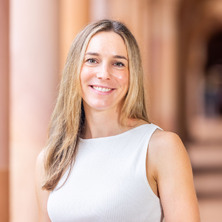
Dr Laura Leighton is an RNA biologist with extensive experience in functional characterisation of RNA. Laura is leading the development of next-generation mRNA therapeutics for the treatment of liver cancer. Because mRNA encapsulated within lipid nanoparticles is effectively delivered inside cells, this technology is uniquely suited to targeting the two-thirds of proteins which are only found inside cells, including several notorious drivers of cancer. Laura's research will create drug candidates which are able to inhibit intracellular pro-cancer proteins for the first time. In addition to drug development, Laura is working on mRNA drug delivery in mouse models of liver disease and cancer.
Laura completed her PhD at the Queensland Brain Institute, working on uncovering the role of small noncoding RNAs in fear-related learning and memory in mice, supported by the Westpac Future Leaders Scholarship (2017). She joined the laboratory of Dr Seth Cheetham at AIBN as a postdoctoral researcher in March 2023.
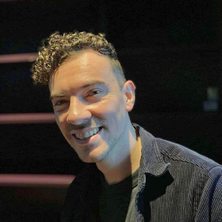
Graduated in Agronomic Engineering from the Federal University of Lavras (UFLA) - Brazil in 2016, he began his journey in soil science in 2010 during his first scientific initiation, under the guidance of Professor Dr. Luiz Roberto Guimarães Guilherme. His projects focused on the characterization of rock dust and the reuse of by-products from the fertilizer industry as soil conditioners. In 2017, he started his Master's in Soil and Plant Nutrition at the Federal University of Viçosa (UFV) - Brazil, under the guidance of Professor Dr. Edson Marcio Matteillo, where he conducted research on the use and efficiency of phosphate fertilizers with additives such as biochar activated with zinc. After that, he began his Ph.D. at the University of São Paulo (USP) in Soil and Plant Nutrition. His thesis explored how different soil uses, with an emphasis on integrated agricultural systems, affect soil structure and consequently the forms and fractions of phosphorus and soil carbon stock. In 2024, he completed his Ph.D. and started a postdoctoral position as a researcher at The University of Queensland (UQ), under the supervision of Professor Dr. Tim McLaren, where he currently works. The project titled "Quantifying Fertiliser Phosphorus Use Efficiency in Vertosols Across the Northern Region" focuses on using fertilizers labeled with P32 radioisotopes to quantify and evaluate the fate of phosphorus in the soil-plant relationship at different depths in summer and winter crops. He has extensive experience in wet chemistry, especially in phosphorus, as well as experience in XRF, NMR, and synchrotron analysis.
Faculty of Health, Medicine and Behavioural Sciences
Availability:
Available for supervision
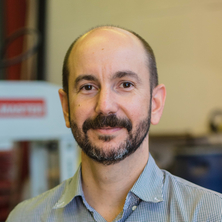
Dr Odette Leiter is a postdoctoral research fellow in the research group of Dr Tara Walker, investigating systemic brain rejuvenation. She was awarded a PhD in Neuroscience in 2018 by the Technische Universität Dresden in Germany. Her research focus lies on the regulation of adult hippocampal neurogenesis by physical exercise, a process critically involved in learning and memory.
To support her research at the Queensland Brain Institute, Dr Odette Leiter has received two postdoctoral fellowships, a postdoctoral fellowship from the German Academic Exchange Service, followed by a Walter Benjamin Fellowship awarded by the German Research Foundation, allowing her to investigate the role of platelets in mediating neurogenesis-related learning and memory, and the capacity of platelet-released factors to restore cognitive function in ageing. More recently, Dr Leiter has been awarded a Discovery Early Career Researcher Award (DECRA) to investigate the precise mechanisms through which platelets interact with adult hippocampal neural stem cells following exercise.
Dr Joseph Lelliott is a Senior Lecturer at the TC Beirne School of Law, teaching courses in criminal law, advanced crime and criminology, and international human rights law. He is a co-author of the textbook Criminal Law in Queensland and an Associate Fellow of the Higher Education Academy. He holds undergraduate degrees in Law and Arts and a PhD in Law.
Joseph’s research interests broadly lie in criminalisation and the scope and impact of criminal or otherwise punitive measures. He has particular expertise on the interrelated phenomena of migrant smuggling and human trafficking and is a co-editor of a commentary on the UN Convention against Transnational Organized Crime and its Protocols on smuggling, trafficking, and firearms (OUP, 2023). Joseph also frequently serves as a consultant to the United Nations Office of Drugs and Crime (UNODC) on issues related to smuggling and trafficking. He has authored or contributed to various UNODC publications, including the Legislative Guide to the Trafficking Protocol and other reports, issue papers, and case analyses. Joseph has a particular interest in the smuggling and trafficking of children (the topic of his PhD thesis) and has published numerous articles and chapters on migrant children.
Joseph is also currently working on a project concerning the criminalisation of threats. This includes an ongoing study on threats of fire in the context of domestic and family violence.
Joseph provides assistance to the Queensland Supreme and District Courts’ Criminal Directions Bench Book committee.
Affiliate of Centre for the Business and Economics of Health
Centre for the Business and Economics of Health
Faculty of Business, Economics and Law
Affiliate of University of Queensland Centre for Hearing Research (CHEAR)
Centre for Hearing Research
Faculty of Health, Medicine and Behavioural Sciences
Senior Research Fellow
School of Business
Faculty of Business, Economics and Law
Availability:
Available for supervision
Media expert
Dr Sabrina Lenzen is a Senior Research Fellow at the Centre for the Business and Economics of Health (CBEH) at The University of Queensland. Her research sits at the intersection of health economics, applied microeconometrics, and health policy, with a particular focus on aged care, cognitive function, mental health, and health service planning.
Sabrina's work examines how individuals, families, and health systems navigate the challenges of an ageing population — from the economic costs of dementia care to the physical and mental health trajectories of different generations. Her research has been published in leading journals including JAMA Network Open, Social Science & Medicine, and Journal of Population Economics, and has attracted significant media coverage in outlets such as The Guardian.
She has led and contributed to over $8 million in competitive research funding from the MRFF, NHMRC, and ARC, and serves as Chief Investigator on projects spanning chronic pain, dementia diagnosis, alcohol use in young people, and sensory support for older Australians.
Sabrina teaches Health Economics courses at both undergraduate and postgraduate level and supervises several PhD and Masters students. She is co-founder and convenor of the Australian Health Economics Society's Special Interest Group on Ageing, Aged Care and Dementia, and has held visiting research fellowships at RWI Leibniz-Institute for Economic Research and the University of Duisburg-Essen in Germany.
She holds a PhD in Economics from UQ (Faculty PhD Excellence Award), an MSc in Health Economics from Erasmus University Rotterdam (Cum Laude), and a BSc in Health Economics from the University of Cologne (Dean's Award).
Faculty of Engineering, Architecture and Information Technology
Director of Teaching and Learning of School of Mechanical and Mining Engineering
School of Mechanical and Mining Engineering
Faculty of Engineering, Architecture and Information Technology
Associate Professor
School of Mechanical and Mining Engineering
Faculty of Engineering, Architecture and Information Technology
Availability:
Available for supervision
Media expert
Biography:
Christopher Leonardi is an Associate Professor within the School of Mechanical and Mining Engineering and an Advance Queensland Industry Research Fellow (Mid-Career). Dr Leonardi completed his PhD in computational mechanics at The University of Wales, Swansea, and his BE(Hons) in mechanical engineering at James Cook University, where he graduated with First Class Honours and a University Medal. Christopher’s PhD thesis resulted in the development of a computational approach to modelling complex fluid-particle suspensions and demonstrated its application in the context of underground mining. Prior to joining UQ, Christopher spent three years as a postdoctoral research fellow in the Department of Civil and Environmental Engineering at the Massachusetts Institute of Technology, where he worked on computational modelling of fluid-solid interaction problems in the context of oil and gas production.
Dr Leonardi has published more than 40 scientific papers in international journals, 30 conference papers (most in collaboration with industry partners), and one book chapter. He has graduated four PhD students as principal advisor and a further three as associate advisor. In addition to his academic pursuits, Christopher spent five years working as an engineering consultant with Rockfield Technologies Australia, where he applied advanced computational analysis tools to problems in bulk materials handling, structural design, and geomechanics.
Research:
Associate Professor Leonardi’s research is focused on the development and application of computational models of complex fluid-solid interactions, including suspension transport, porous media flow, multiphase flows, and poromechanics. The outputs of his work are applied to provide insight into the complex characteristics of subsurface fluid and solid mechanics in gas production from unconventional reservoirs (e.g. coal seams) and mineral extraction from challenging orebodies. Current and recent projects include studies on hydraulic fracturing and proppant transport in coal seam gas (CSG) reservoirs, surface movement within and adjacent to CSG tenements, counter-current two-phase flow in CSG wells, in situ recovery of minerals from low-permeability rocks, and bubble-particle interaction in hydrogen formation via methane pyrolysis.
Christopher and his group of postdoctoral researchers and postgraduate students possess expertise in a range of computational techniques, including the lattice Boltzmann, discrete element, finite element, and finite difference methods. His team collaborates closely with national computing facilities, such as Pawsey Supercomputing Centre, to development, implement, and apply these techniques to large-scale engineering problems.
Teaching and Learning:
Associate Professor Leonardi is Director of Teaching and Learning in the School of Mechanical and Mining Engineering where he coordinates and lectures the course, MECH3780 Computational Mechanics, and lectures the first-year course, ENGG1001 Programming for Engineers. Christopher was awarded a Graduate Certificate in Higher Education from UQ in 2015 and received Citations for Outstanding Contributions to Student Learning from the Australian Awards for University Teaching (AAUT) in 2019 and UQ in 2018.
Faculty of Health, Medicine and Behavioural Sciences
Availability:
Available for supervision
Shaping the next generation of healthcare professionals
Dr Nora Leopardi is passionate about preparing current medical students to face the healthcare challenges of the next 50 years. She believes in fostering self-directed and self-regulated learning in students from the earliest stages of their training, in order for them to engage in continuous professional development and lifelong learning. At the core of her work, Dr Leopardi aims to prepare her students to thrive in the rapidly changing healthcare and technological landscape they will encounter, to provide high-quality and sensitive care for their patients, and to be positive agents of change in their communities, in society, and for the whole world. A creative thinker and award-winning educator, Dr Leopardi is deeply committed to creating student-centred learning environments that enrich the educational experience and shape the students' attitudes and behaviours towards excellence, integrity and inclusivity in their academic and professional careers.
Faculty of Health, Medicine and Behavioural Sciences
Availability:
Available for supervision
Dr Li-Ann Leow is a post-doctoral research fellow at the Centre for Sensorimotor Performance, at the University of Queensland, working with Associate Professor Tim Carroll, Associate Professor Stephan Riek, Aymar de Rugy and Dr Welber Marinovic. D Prior to working at UQ she completed a 2 year postdoctoral research fellowship at the Brain and Mind Institute, Western University (University of Western Ontario), working with Dr Jessica Grahn. Before that she pursued a doctoral research under the supervision of Geoff Hammond and Andrea Loftus at the University of Western Australia, examining how Parkinson's disease patients show in a selective deficit in retaining motor learning acquired from updating an internal model, despite intact ability to update an internal model during motor learning.
Affiliate of Centre for Community Health and Wellbeing
Centre for Community Health and Wellbeing
Faculty of Health, Medicine and Behavioural Sciences
Lecturer
School of Human Movement and Nutrition Sciences
Faculty of Health, Medicine and Behavioural Sciences
Availability:
Available for supervision
Media expert
I am a proud Accredited Practising Dietitian and emerging dietetics leader in curriculum design and interdisciplinary education, with a Doctor of Philosophy in medical nutrition education from the University of Wollongong. My unique research and leadership portfolio spans workforce capacity building, AI, health services, and public health.
I am highly regarded internationally for conducting research related to workforce capacity and nutrition, as evidenced by my appointment as Assistant Director (Exec) at the NNEdPro Global Institute for Food, Nutrition and Health. My publication record speaks to my reputation as a dynamic and collaborative researcher – I’ve published reviews, original research, editorials, conference proceedings and textbook chapters, and more than half of my papers have international coauthors. I was recently invited to speak at the World Health Organization on the need to improve nutrition education for healthcare professionals, and in 2024 I spoke at TEDxUQ.