Faculty of Health, Medicine and Behavioural Sciences
Availability:
Available for supervision
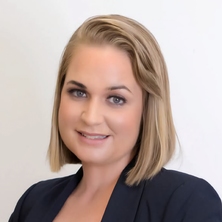
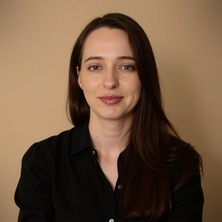
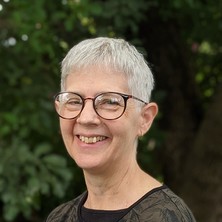
Tara Williams is a highly experienced multi-site international critical care study research coordinator who has worked in research at the Queensland Children’s Hospital (QCH) for the past 15 years and partnered with the University of Queensland (UQ) on various projects. She is currently an investigator and coordinates the largest paediatric intubation and highly successful NHMRC & THRASHER funded KIDS THRIVE trial with over 961 participants; and several anaesthetic randomised control trials (RCT) including the large multicentred HAMSTER trial. She is the ANZ coordinator for the international P-ICECAP trial and is also undertaking several other critical care research projects currently. Tara's extensive research experience in the critical care environment and her 20 years of paediatric intensive care nursing ensures the smooth transition of complex research trial protocols into the clinical environment. Tara demonstrates a long-standing significant commitment to research that improves children’s outcomes and is the current Vice-Chair for the ANZICS PSG Paediatric Intensive Care Research Coordinator Interest Group (PIRCIG) and the paediatric representative on the Anaesthetic Research Co-ordinators Network (ARCN). Her vast experience at large RCT coordination make her currently one of the most experienced PICU research coordinators in Australia.
Faculty of Health, Medicine and Behavioural Sciences
Availability:
Available for supervision
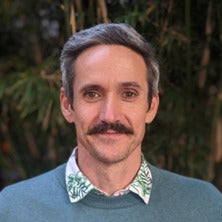
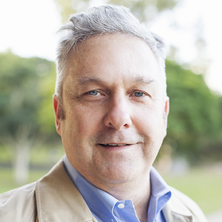
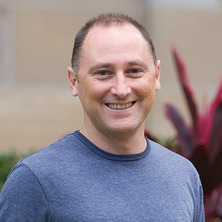
Dr Paul Williams is a Research Fellow in the Antimicrobial Optimisation Group within the Frazer Institute at The University of Queensland. With more than a decade of experience as an intensive care pharmacist, his research focuses on optimising medicine dosing in critically ill patients through pharmacokinetic/pharmacodynamic (PK/PD) principles, precision dosing, therapeutic drug monitoring, and personalised medicine approaches.
Critically ill patients often experience substantial changes in how medicines are processed by the body, meaning standard dosing approaches may not achieve optimal drug exposures. Paul's research aims to better understand these changes and develop strategies that support safe, effective, and individualised therapy for patients with severe illness.
His research spans antimicrobial optimisation, critical care pharmacotherapy, and clinical dosing studies. Current areas of interest include:
Antimicrobial and clinical pharmacokinetics/pharmacodynamics (PK/PD)
Precision dosing and model-informed precision dosing
Therapeutic drug monitoring (TDM)
Critical care and intensive care medicine
Clinical trials and multicentre observational studies
Personalised medicine and dose individualisation
Paul leads the international DALI-2 study and contributes to several national and international collaborative research programs investigating medicine dosing and outcomes in critically ill patients. His goal is to generate evidence that supports safer and more effective use of medicines in clinical practice and improves outcomes for patients with severe infections and critical illness.
Paul welcomes collaboration with clinicians, researchers, and students interested in critical care pharmacotherapy, precision dosing, and antimicrobial optimisation.
My research focuses on soil health in cropping and pasture systems, with particular expertise in soil carbon and soil organic matter dynamics, microbial ecology, and plant–soil interactions. I investigate how agronomic interventions influence soil functional processes and productivity, with the goal of reversing soil fertility decline and building healthier, more resilient soils. This work includes assessing the impacts of tillage, cover cropping, crop rotational diversity, nutrient management, and organic amendments on soil processes, crop development, and long-term system performance.
Teaching and education
I am committed to student‑centred, evidence‑based teaching that prepares graduates for contemporary agricultural practice. My teaching spans introductory to advanced agronomy, with a focus on aligning theory with hands‑on learning through lectures, tutorials, practicals, and field‑based activities. I coordinate and teach into courses including fundamentals of agriculture and cropping systems, and serve as Course Coordinator for an industry placement course, where students undertake structured work‑integrated learning experiences with agricultural and agri‑industry partners.
Across my teaching, I emphasise applied problem‑solving, quantitative skills, systems thinking, and graduate employability. I am particularly interested in curriculum design, constructive alignment, assessment for learning, and integrating research and industry context into agronomy education.
Faculty of Health, Medicine and Behavioural Sciences
Availability:
Available for supervision
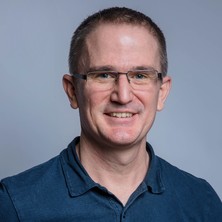
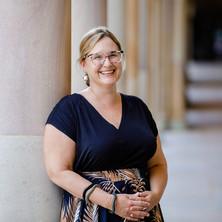
Dr Maddie Williams is a full-time Lecturer in Research at the University of Queensland's Rural Clinical School. She joined the University of Queensland in January 2025 and is based at the Bundaberg Clinical Unit.
Maddie was born and raised in regional Queensland and holds a Bachelor of Biomedical Science from the University of the Sunshine Coast, a Bachelor of Pharmaceutical Science, and a Master of Science by Research in Clinical and Molecular Microbiology from Griffith University.
Upon completing her master's research, Maddie returned to her hometown, where she worked in the health sector before completing her PhD at the University of Queensland's Rural Clinical School through a Research Training Program Scholarship. Her PhD research focused on improving access to primary care in regional, rural, and remote Australian communities.
Maddie is also a strong advocate for quality health care. She is Chair of the Wide Bay Hospital and Health Service (WBHHS) Research Consumer Advisory Group and serves as a consumer representative on the WBHHS Research Council. She works to ensure consumers have a voice in the planning, implementation, and evaluation of health policy, programs, and services, helping to achieve better health outcomes.
Faculty of Engineering, Architecture and Information Technology
Availability:
Available for supervision
Media expert
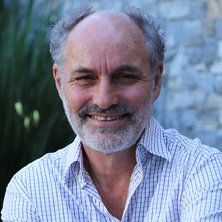
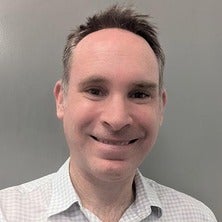
Emeritus Professor David John Williams was the Initiator and Director of the Geotechnical Engineering Centre within the School of Civil Engineering at The University of Queensland, an industry-funded centre that has attracted AUD10 million in funding over the period from 2007 to 2022. He also manages the industry-sponsored Large Open Pit Project, involving 10 global mining company sponsors, with current funding of USD1 million per year. He has over 50 years of teaching, research and consulting experience, and is internationally recognised for his expertise and experience in mine waste management and mine closure, pertaining to tailings dams in particular. He was a member of the Expert Panel investigating technical causes of Brumadinho tailings dam failure and is on numerous Tailings Independent Technical Review Boards globally, including for Escondida Copper Mine in Chile. He authored the 2009 and 2016 Tailings Management Handbook, as part of the Commonwealth Leading Practice Sustainable Development Program for the Mining Industry. He is on the Working Party for the Australian National Committee for Large Dams Guidelines on Tailings Dams – Planning, Design, Construction, Operation and Closure, published in 2012, with an Addendum in 2019 and currently being updated. He initiated in 2020 and largely delivers the AusIMM Tailings Management Professional Certificate Course that has been taken by almost 1,500 Tailings Practitioners worldwide.
David received his BE (Hons I) in Civil Engineering from Monash University in 1975 and his PhD in Soil Mechanics from the University of Cambridge in 1979. His research and consulting interests include:
Physical characterisation of mine tailings deposition, including beaching, hydraulic sorting, sedimentation, consolidation, desiccation and loading
Store and release cover systems for potentially acid forming mine wastes
Co-disposal of mine tailings and coarse-grained mine wastes
Dewatering and densification of mine tailings
Dewatering of mineral products
Moisture movement within mine wastes
Settlement of coarse-grained mine wastes
Strength of coarse-grained mine wastes
Engineered rehabilitation of mine sites
Risk assessment and cost-effectiveness analysis of mine site rehabilitation and closure
Long-term seepage and runoff from mine tailings storages
Characterisation of potentially acid forming waste rock dumps
Application of high-resolution digital stereo-photography to monitoring erosion from mine waste slopes
Craig M. Williams was born in Adelaide, Australia. He received his B.Sc. (Hons) degree in chemistry in 1994 from Flinders University. In 1997, he was awarded his Ph.D. in organic chemistry from the same institution under the supervision of Professor Rolf H. Prager. He undertook post-doctoral studies as an Alexander von Humboldt Fellow working with Professor Armin de Meijere at the Georg-August-Universität, Göttingen, Germany, from 1997 to 1999. In early 1999, he accepted a second post-doctoral fellowship at the Australian National University with Professor Lewis N. Mander.
Professor Williams has held an academic position at the University of Queensland since 2000, and during this time has won a number of awards including a Thieme Chemistry Journals Award in 2007, an Australian Research Council Future Fellowship award in 2011, and the Award for Outstanding Contribution to Research (SCMB, UQ, 2019). The Williams research group explores numerous interests within the discipline of organic chemistry (e.g. medicinal chemistry, fundamental molecules, natural productisolation, microelectronics, drug and agrichemical development, impact sensitive molecules) enabled by organic synthesis refined through the construction of biologically active complex natural products (diterpenes, polyketides, alkaloids), and designs synthetic methodology to assist in this endeavour (synthetic transformations and reagents). Professor Williams especially enjoys teaching whole molecule retrosynthesis to undergraduate and post-graduate students.
Faculty of Health, Medicine and Behavioural Sciences
Availability:
Available for supervision
Emily is currently a research fellow in the Vukovic laboratory for Neuroimmunology and Cognition where she investigates the functional consequences of neuro-immune interactions and their impacts on cognition. Specifically, she investigates microglia, the CNS resident innate immune cells, and their role in mediating learning and memory deficits after brain injury and during disease. Dr Willis completed her PhD in neuroimmunology at The University of Queensland in October 2020. During this time, she identified that microglia do not actively drive secondary inflammatory pathology after brain injury, but rejuvenating microglia can induce microglia to become neuro-protective, driving brain repair and restoring cognition after brain injury. She identified that these rejuvenated microglia act via the interleukin-6 signalling pathway and identify this pathway as a potential target for therapeutic intervention. Her work demonstrates that microglia and their suggested roles in propagating brain injury have been previously misunderstood, and approaches to harness and modulate microglia are possible and this can support brain repair and restore brain function after injury. Her work was published in the leading life sciences journal Cell in 2020 (IF: 41.58, citations to date: >550). Her research has received several awards, including the Mark Rowe award and the Paxinos-Watson award, both from the Australian Neuroscience Society (ANS) in 2021, as well as the Postdoctoral Investigator Award from the National Association of Research Fellows (NARF) of the NHMRC in 2020.
Affiliate of Centre of Architecture, Theory, Culture, and History
Centre of Architecture, Theory, Culture and History
Faculty of Engineering, Architecture and Information Technology
Senior Lecturer in Architecture
School of Architecture, Design and Planning
Faculty of Engineering, Architecture and Information Technology
Availability:
Available for supervision
Dr Andrew Wilson is a registered architect, architectural educator, and researcher with a Master of Architecture (Research by Design) from RMIT University (2001) and practice experience Victoria, Queensland and Germany. Andrew has teaching experience in the areas of ‘Technology and Science’ and ‘History and Theory’, as well as running architectural and urban design studios. He is committed to architectural culture, critical approaches to design learning and an open international cultural exchange with a focus on the Asia Pacific.
Andrew Wilson's research is focused on Research by Design; architecture as a open question, urban and social space, architecture’s relationship with the city, and scales of regional operation. His work has been published in leading journals including Casabella and Architecture Australia.
Wilson has contributed as a Chief Investigator to a competitive external research grant, lead by Professor John Macarthur from the Australian Research Council, a Linkage Grant for ‘Architectural Practice in Post-war Queensland (1945-1975): Building and Interpreting an Oral History Archive’. He has presented invited lectures and peer-reviewed conference papers in Japan, New Zealand and Australia. He was a JSPS Invitation Visiting Fellow at the University of Tsukuba (2011), and Visiting Foreign Research Fellow in 2012 and 2013. He has been invited as Visiting Scholar to KU Leuven, Belgium in the second half of 2014. He has curated architectural exhibitions and his own architectural work and collaborations have been exhibited at the Venice Biennale (2008) and in Australia. He regularly contributes as a critic to Architectural Review (London), Japan Architect, Architecture Australia and Architectural Review Australia.
Affiliate of University of Queensland Centre for Hearing Research (CHEAR)
Centre for Hearing Research
Faculty of Health, Medicine and Behavioural Sciences
Associate Professor
School of Health and Rehabilitation Sciences
Faculty of Health, Medicine and Behavioural Sciences
Availability:
Available for supervision
Media expert
Wayne Wilson is an Associate Professor in the Discipline of Audiology at the School of Health and Rehabilitation Sciences, The University of Queensland (UQ). He holds a PhD and Post-graduate Diploma in audiology and a BSc(Hons) in auditory physiology. His research interests include listening and listening difficulties in children, the objective assessment of auditory function, and clinical competence in audiology. Wayne has published >110 papers in refereed scientific journals, 12 book chapters and 3 patents; has presented >325 papers at scientific conferences including 17 key-note/opening addresses; and has secured >35 competitive research grants totaling >AUD$4.2 million.
Faculty of Health, Medicine and Behavioural Sciences
Availability:
Available for supervision
Media expert
I'm a cognitive neuroscientist working to understand the neurobiology of language and use that knowledge to improve outcomes for people with aphasia.
I lead the Language Neuroscience Laboratory, where our research spans three themes:
the neuroanatomy of the language network—how language is represented in the brain and localised in individuals
functional reorganisation in neurological patients, especially recovery from aphasia after stroke
developing aphasia assessments that are practical in fast-paced healthcare settings, ecologically valid, psychometrically sound, multilingual, and free.
Faculty of Health, Medicine and Behavioural Sciences
Availability:
Available for supervision
Dr Louise Wilson is a Postdoctoral Research Fellow with a focus on mentrual disorders and on women's use of health services over the lifecourse. Dr Wilson completed a PhD at the University of Queensland in women’s health in 2019. While doing her PhD, she worked part-time at the QIMR Berghofer Medical Research Institute doing research on cancer prevention. Prior to this, she had an extensive career in program planning and implementation in the Australian government across the health, aged care, housing and education sectors.
Director of Partnerships, Hidden Vale Research Station (HVRS)
Faculty of Science
Professor
School of the Environment
Faculty of Science
Availability:
Available for supervision
My research group studies animal performance in the laboratory and in the field. We focus on discovering the underlying mechanistic basis of physical performance and it's implications for an individual's survival and reproductive success. We’re particularly interested in how organisms respond to environmental variation, such as seasonal or long-term temperature change, and the costs of these responses to other traits. We examine interactions between behavioural, physiological and morphological traits to better understand how animal performance is optimised. Furthermore, we want to understand how an organism’s performance relates to population-level processes, enabling better conservation practices in urban and wild habitats. Our research is question-driven, and we use a variety of model systems in our studies, including freshwater fish, crayfish, reptiles, marsupials, and humans.
Current projects
Importance of performance, life history and behaviour to male mating success in the semelparous marsupial the northern quoll
Relative importance of athleticism, skill and balance to success in complex human activities - focus on soccer players
When and why do animals lie? Testing hypotheses of deceit and discovering its role in determining animal performance
Affiliate of Centre for Digital Cultures & Societies
Centre for Digital Cultures & Societies
Faculty of Humanities, Arts and Social Sciences
Affiliate of Research Centre in Creative Arts and Human Flourishing
Research Centre in Creative Arts and Human Flourishing
Faculty of Humanities, Arts and Social Sciences
Affiliate of Centre of Architecture, Theory, Culture, and History
Centre of Architecture, Theory, Culture and History
Faculty of Engineering, Architecture and Information Technology
Senior Lecturer
School of Communication and Arts
Faculty of Humanities, Arts and Social Sciences
Availability:
Available for supervision
Media expert
Dr Caroline Wilson-Barnao is a Senior Lecturer and Convenor of the Strategic Communication undergraduate degree in the School of Communication and Arts. A museum studies scholar with extensive experience spanning research, teaching, and professional practice, she is a former Director of the Master of Museum Studies in the Faculty of Humanities, Arts and Social Sciences. Over the past decade, her research has examined the transformation of museums and collecting practices in response to digital technologies, with particular attention to the implications of platformisation, artificial intelligence, digital participation, and born-digital collecting.
Caroline is a Chief Investigator on the Australian Research Council (ARC) LIEF project The Australian Emulation Network Phase 2: Extending the Reach and a Chief Investigator collaborating on projects that explore the collection and preservation of social media objects. She is also working with Queensland Museum on research focused on women's stories and objects, exploring how material culture and collections can support more inclusive approaches to history, memory, and representation.
A central concern of Caroline's work is understanding who is represented in museum collections and who remains absent. Her research explores how museums can address these absences through innovative collecting, interpretation, and community-engaged practices. She works with objects and collections to help communities understand the role of material culture in a digital era, creating opportunities for connection, presence, and belonging. She also collaborates closely with museum professionals to address issues of significance to the cultural sector, including the value of culture within Australian public policy.
Before entering academia, Caroline worked for approximately twenty years as a communications professional in the arts and not-for-profit sectors. This experience continues to inform her teaching and research, particularly her interest in the ways museums and cultural organisations use digital and participatory media to engage audiences and support social change.
Caroline regularly contributes to museum and cultural sector conversations through invited presentations and keynote addresses. She has delivered keynote presentations on museum storytelling, digital transformation, and inclusive museum practice, sharing research insights with museum, gallery, library, archive, and heritage professionals nationally and internationally.
She serves on the Board of the Communications and Public Relations Association of Australia (CPRA) and contributes to a range of national and international scholarly and professional communities, including the International Council of Museums (ICOM), the Association of Critical Heritage Studies, and the Queensland Academy of Arts and Sciences. She is also an accredited Fellow of Advance HE. Recognised for excellence in teaching, Caroline has received both University and Faculty teaching awards and is deeply committed to industry-engaged learning and practice-informed education.
Caroline is the author of Museums as Platforms (2022) and co-author of Collecting Social Media: From Object to Content (2025). Her scholarship has examined the digitisation of cultural practices, including the influence of algorithmic systems, audience analytics, personalisation, and platform technologies on museums and cultural organisations.
Research Interests
Galleries, Libraries, Archives and Museums (GLAM)
Museum Studies
Digital Humanities
Rapid-response and born-digital collecting
Museums and artificial intelligence
Museums and soft power
Museums and social change
Heritage, memory, and representation
Historic urban and cultural landscapes
Heritage and cultural tourism
Urban space and media cities
Gender and sexuality studies
Social media and digital cultures
Object-based learning
Arts and cultural policy
Cultural value
PhD Supervision
Caroline welcomes enquiries from prospective PhD candidates and can offer supervision in: