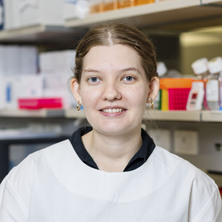
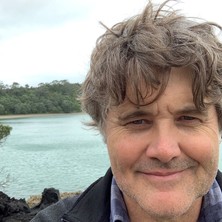
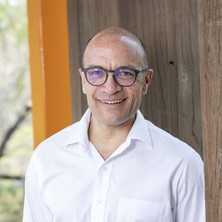
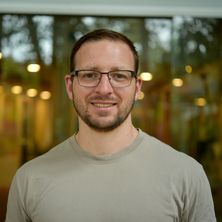
Dr Han Weng is an emerging global leader in soil carbon research. His track record of interdisciplinary, innovative and high-quality research is outstanding for his early career stage. Dr Weng has 20 peer-reviewed papers (eight published since joining UQ in 2020) featuring in the highest impact journals of his research field, particularly those focused on environmental sciences and soil science. His first-author publications feature in Nature Climate Change (IF 25.3), Reviews in Environmental Science and Technology (IF 12.6), Science of the Total Environment (IF 8.0), and Soil Biology and Biochemistry (IF 7.6). To date, he has been cited over 530 times, and has an h-index of 10, and has a Field-Weighted Citation Impact factor of 2.82 (SciVal). This indicates that his papers are being cited 2.82 times more than the world average for publications of the same age and discipline. His achievement also includes one Highly Cited Paper as the first author in Nature Climate Change, which ranks in the top 1% in the field of environmental sciences, and the most downloaded article in 2021 (10,419 times) in Global Change Biology Bioenergy (IF 4.8).
Dr Weng has challenged the existing body of research on soil carbon. His research fills an important gap for maintaining agricultural productivity and mitigating climate change in the absence of a clear national strategy for agricultural greenhouse gas emissions. Dr Weng’s outstanding contribution to the food and agriculture sector has been recognised through cross-disciplinary awards and competitive prizes, including 2014 Soil Science Australia Best oral presentation under 35 years of age and 2016 New Initiative Grant Research Fellow, Charles Sturt University.
Affiliate of Centre for Environmental Responsibility in Mining
Centre for Environmental Responsibility in Mining
Faculty of Engineering, Architecture and Information Technology
Affiliate of Centre for Social Responsibility in Mining
Centre for Social Responsibility in Mining
Faculty of Engineering, Architecture and Information Technology
Affiliate of Centre for Marine Science
Centre for Marine Science
Faculty of Science
Affiliate of Centre for Biodiversity and Conservation Science
Centre for Biodiversity and Conservation Science
Faculty of Science
Senior Research Fellow
School of the Environment
Faculty of Science
Availability:
Not available for supervision
I hold a joint position with the Wildlife Conservation Society (WCS) as the Lead of the Water Pollution Program ( wcs.org/water-pollution) and with UQ as a Senior Research Fellow within the School of the Environment and the Centre for Biodiversity and Conservation Science (https://cbcs.centre.uq.edu.au/). My role at WCS involves co-developing strategic approaches to pollution assessment, monitoring, and management that integrate scientific insights to guide country programs effectively. My research at UQ identifies and critically assesses management gaps and conservation solutions to address water pollution and deliver co-benefits for nature and people. Paramount to all of my research is an interdisciplinary approach that emphasises the ecological and social connectivity of systems and the need for cross-sector collaboration.
Educated at the University of Copenhagen, Denmark, and the Australian National University, Canberra. Career at the Université de Lausanne, Switzerland, and the Universität Marburg, Germany. Professor and Chair of Organic Chemistry and Head of the Organic Chemistry Section, The University of Queensland from 1985. Emeritus professor from 2008. Chair of the National Committee for Chemistry of the Australian Academy of Science 2009-2014. Editor-in-Chief, Australian Journal of Chemistry 2008-15. Editor, Journal of Analytical and Applied Pyrolysis (Elsevier, IF 3.65) 2016-. Visiting Professor Université de Pau, France, 2011-19; Visiting Professor University of Kuwait 2014-18; Visiting Professor / Special Appointed Professor Hiroshima University 2014-18. Fellow of the Australian Academy of Science. Centenary Medal of the Australian Commonwealth 2003 for research in organic and physical chemistry. David Craig Medal of the Academy of Science 2014 for research in chemistry. JSPS Fellowship (Japan) 2014. Honorary doctorate, University of Pau, France, 2014. A.J. Birch Medal of the Royal Australian Chemical Institute (RACI) for ecellence in research in organic chemistry, 2014. Leighton Medal of the RACI 2018.
Research on Unusual Molecules and Reactive Intermediates: Synthesis and Reaction Mechanism. Heterocyclic chemistry. Pyrolysis reactions. Photochemistry
Research in the Wentrup group is concerned with the discovery of novel types of molecules with new and unusual bonding patterns. Such molecules are mostly highly reactive, and special methods are required both for their generation and for their detection. The group has developed these methods over many years and acquired world-class equipment for these purposes, including flash vacuum thermolysis apparatus, cryostats for matrix isolation of reaction products at cryogenic temperatures (down to 7 K), matrix and solution photochemistry equipment, infrared, UV and mass spectrometers, as well as modern computational facilities.
This research has resulted in the synthesis and characterization of many novel compounds, including extended cumulenes of the types RN=C=C=C=X, which themselves are used in the synthesis of many novel types of molecules, some of them of potential pharmaceutical interest (quinolone antibiotics; diazepines).
The research group has a world reputation in the field of carbene and nitrene chemistry, involving reactive intermediates with sextet carbon or nitrogen. These species are also very useful in synthesis, for example in the preparation of diazepines and diazepinones, a family of pharmaceutically interesting compounds. Numerous mechanistic studies and synthetic applications of ketenes have been carried out in our group.
Active collaborations are ongoing with scientists in Australia (UQ and CSIRO), China (Suzhou), France (Pau), Germany (Oldenburg), Japan (Hiroshima), Spain (Donostia - San Sebastian), and Portugal (Coimbra).
Faculty of Health, Medicine and Behavioural Sciences
Availability:
Available for supervision
Media expert
Dr Vanessa Wergin is a former elite athlete who represented Germany on the national team in artistic skating and brings that firsthand experience to her work as a sport psychologist. She holds a PhD in Sport Psychology, alongside training in clinical and organisational psychology, and is a registered Sport Psychologist with the German Association of Sport Psychology. She has worked as an applied sport psychologist with elite athletes and national as well as international elite sporting organisations for more than 10 years and teaches within Germany's national Sport Psychology Certification Program.
Dr Wergin is currently a Research Fellow at the University of Queensland, Australia, where her research explores collective team collapse — the sudden and shared performance breakdown of entire sports teams—, as well as the delivery of social identity interventions across sport and diverse health settings.
Affiliate of Australian Women's and Girls' Health Research Centre
Australian Women and Girls' Health Research Centre
Faculty of Health, Medicine and Behavioural Sciences
Research Program Manager
School of Public Health
Faculty of Health, Medicine and Behavioural Sciences
Availability:
Available for supervision
Maiden name: Ellen Maree Leslie
Dr Ellen Wessel is a Research Fellow in the School of Public Health, with backgrounds in both public health and criminology. Her research interests include women's health, alcohol and other drug use, and policing.
Professor Nick West is a molecular microbiologist working to develop new treatments for tuberculosis (TB), one of the world's leading infectious disease killers. He leads TB Research and serves as Director, Teaching and Learning within the School of Chemistry and Molecular Biosciences at the University of Queensland.
Nick's research uses modern molecular biology techniques to understand how the bacterium Mycobacterium tuberculosis causes disease, translating these discoveries into new antibiotics. His work spans four main areas:
identifying genes essential for TB infection
understanding TB latency
developing targeted TB drugs
improving TB vaccination
He also contributes to TB vaccine and diagnostic development.
Nick brings this research directly into his teaching, redesigning practical courses to give students hands-on, employment-relevant laboratory experience. This work has been recognised through multiple Faculty of Science teaching excellence commendations.
Before joining UQ in 2012, Nick held postdoctoral positions at the University of Oxford, Imperial College London and the Institut Pasteur Paris, returning to Australia in 2004 to join Sydney's Centenary Institute.
Affiliate of Centre for Extracellular Vesicle Nanomedicine
Centre for Extracellular Vesicle Nanomedicine
Faculty of Health, Medicine and Behavioural Sciences
Research Fellow
Frazer Institute
Faculty of Health, Medicine and Behavioural Sciences
Availability:
Available for supervision
Dr Zoe West is a Research Fellow at The University of Queensland's Frazer Institute, within the Queensland Centre for Gynaecological Cancer Research group. Her research focuses on vulvar cancer, with the goal of improving treatment outcomes and expanding therapeutic options through more personalised approaches to care. Her work integrates multi-omics and translational research to better understand the biological drivers of vulvar cancer and support the development of improved patient-centred treatments.
Affiliate of ARC COE for Children and Families Over the Lifecourse
ARC COE for Children and Families Over the Lifecourse
Faculty of Humanities, Arts and Social Sciences
Emeritus Professor
Faculty of Humanities, Arts and Social Sciences
Availability:
Not available for supervision
Mark Western's various roles at The University of Queensland included Senior Lecturer to Professor in Sociology, co-Director of The University of Queensland Social Research Centre (2003-2008), Founding Director of the Institute for Social Science Research (ISSR, 2009 - 2022), Research Director for The Queensland Commitment (2023 - 2025) and Director of HASS Research Infrastructure (2025). As Founding Director of ISSR, Mark led Australia's largest multidisciplinary social science research institute with a track record of advanced academic social science research and high impact research and policy engagement with government, industry and the not-for-profit sector. As Research Director for The Queensland Commitment, Mark contributed to the design and implementation of The Queensland Commitment at UQ, and its supporting research and evaluation program.
Mark has a personal research program that spans academic publishing across sociology and cognate social science disciplines. He has also led and contributed to major research and evaluation programs and projects for external government and non-government partners. He is a former Chief Investigator on the ARC Centre of Excellence for Policing and Security and the ARC Centre of Excellence for Children and Families Over the Life Course.
Mark is a current member of the National Research Infrastructure (NRI) Advisory Group, advising the Australian government on NRI policy and strategy, a Fellow of the Academy of Social Sciences, Chair of the Academy's Policy Committee, and a member of its Board of Directors. He is a former member of the ARC College of Experts, ERA Chair, and Engagement and Impact Deputy Chair.
He has edited and authored 7 books, and over 120 book chapters, journal articles and commissioned reports and held research grants and contracts worth approximately $120 million.
Australian Institute for Bioengineering and Nanotechnology
Availability:
Not available for supervision
Dr Nicholas J. Westra van Holthe is a biomaterials chemist working at the interface of chemistry and the biological function of nanomaterials to investigate the role of membrane mechanics in cellular behaviour and uptake. With expertise in functional chemistry and nanotechnology for biological applications, Nick is currently a Postdoctoral Research Fellow at the Australian Institute for Bioengineering and Nanotechnology. Nick obtained a Ph.D. in Organic Chemistry, Nanomedicine, and Molecular Imaging from The University of Queensland under the supervision of Professor Kristofer Thurecht.
Whilst Nick's primary expertise is in synthetic chemistry and the development and application of polymer-based nanoparticles, Nick's expertise also extends to molecular imaging as Nick held a vital role in establishing the photoacoustic molecular imaging capability within the Centre for Advanced Imaging at The University of Queensland and has published several studies presenting photoacoustic molecular imaging data. Nick's Ph.D. thesis presented the synthesis of a highly effective photoacoustic contrast agent and the development of a polymeric contrast agent, providing the means to visualise and assess nanoparticle distribution within solid tumours in real-time during in vivo imaging experiments. Nick also presented a detailed investigation into the photophysics of photoacoustic contrast enhancement efficacy and proposed a novel mechanism for photoacoustic signal production.
Nick has research experience working with industry partners and has held several professional scientific research positions. Nick has worked with industry partners to develop a nanoparticle-based hydrogen sulfide sensor for quantitative analysis. Nick has also provided synthetic materials chemistry expertise to the preclinical testing of a polymer-protein conjugate as a haemostatic hydrogel for combat casualties with catastrophic haemorrhage.
Recently, Nick has worked with Professor Alan Rowan on the development of synthetic polymer-peptide conjugates that form biomimetic hydrogels to mimic the mechanic and functional properties of the extracellular membrane, providing the means to study cells in a controlled biomimetic 3-dimentional cell culture system.
Faculty of Engineering, Architecture and Information Technology
Professor
School of Mechanical and Mining Engineering
Faculty of Engineering, Architecture and Information Technology
Availability:
Available for supervision
Prof. Wheatley is the Co-Director of the Centre for Hypersonics within the School of Mechanical and Mining Engineering. He was named Australia's Research Field Leader in Aerospace and Aviation Engineering (The Australian, Sept 28, 2018) and was a recipient of a 2017 Australian Award for University Teaching – Award for Teaching Excellence .
Prof. Wheatley's research interests are in the fields of supersonic plasma flows, hypersonics and computational fluid dynamics.
Prof. Wheatley's research in supersonic plasma flows focuses on the suppression of instabilities that are detrimental to inertial confinement fusion, a process that promises carbon free energy production. In hypersonics, he focuses on extending the capability scramjets to the point where they can power launch-vehicle stages. This technology could meet the need for safer, more economical space access, which has the potential to revolutionise the space industry. Computational fluid dynamics is his primary method of investigation in these areas.
Prof. Wheatley obtained his PhD in Aeronautics from the California Institute of Technology in 2005. He also earned an MEngSc (Mechanical) and a BE (Mechanical and Space) from the University of Queensland (UQ). After completing his PhD in the US, Dr Wheatley spent two years as post-doctoral fellow at ETH Zurich. He was then a Lecturer in Aerospace Engineering at the University of Adelaide before taking up his position at UQ in 2009.
Prof. Wheatley has expertise in the areas of:
Simulation of hypersonic flows (DNS, LES and RANS)
Using high fidelity numerical simulations, validated by experiments, to provide new details and understanding of scramjet flow physics
Mixing and combustion enhancement in scramjets through fuel/flow structure interactions and novel injector design
Analysis and simulation of plasma instabilities
Numerical methods for magnetohydrodynamics (MHD) and multi-fluid, ion-electron plasmas
Rarefied gas dynamics
Bluff body wake dynamics
Aeroacoustics, particularly passive noise control for bluff bodies
Faculty of Health, Medicine and Behavioural Sciences
Affiliate of ARC COE for Children and Families Over the Lifecourse
ARC COE for Children and Families Over the Lifecourse
Faculty of Humanities, Arts and Social Sciences
Affiliate of Health and Wellbeing Centre for Research Innovation
Health and Wellbeing Centre for Research Innovation
Faculty of Health, Medicine and Behavioural Sciences
Affiliate of Centre for Sport and Society
Centre for Sport and Society
Faculty of Health, Medicine and Behavioural Sciences
Senior Lecturer
School of Human Movement and Nutrition Sciences
Faculty of Health, Medicine and Behavioural Sciences
Availability:
Available for supervision
Media expert
Dr Wheeler is a proud Ngarabal person and Accredited Exercise Scientist (ESSA). Dr Wheeler specilises in implementation science in partnership with Aboriginal and Torres Strait Islander peoples and communities.
Dr Wheeler was the first Aboriginal person to graduate with a PhD from the University of the Sunshine Coast.
Dr Wheeler’s research examines how Aboriginal and Torres Strait Islander communities can co-design programs that build community capacity and engage children and young peoples in a broad range of development areas. Dr Wheeler’s research strengths consist co-designing physical movement-based programs, ensuring a trauma informed and culturally-responsive approach towards community engagement and empowerment.
Dr Wheeler has led high performing teams working on education programs that support Aboriginal and Torres Strait Islander families through a strength-based and holistic framework. Extending this work, Dr Wheeler's research focuses on developing the Aboriginal and Torres Strait Islander workforce to better address the complex health needs of community. Dr Wheeler has provided FIrst Nations leadership to a range of projects that have catered for the diversity of Aboriginal and Torres Strait Islander communities, and through this experience has partnered to deliver diverse governance solutions and educational engagement frameworks.
Dr Wheeler also specialises in biomechanics, sport analytics and performance analysis as well as strength and conditioning research. Dr Wheeler works currently with a range of sporting organisations to implement best-practice sport servicing, testing and athlete management to achieve excellence. Dr Wheeler is the lead researcher in partnership with Indigenous Basketball Australia. Dr Wheeler has worked with a variety of professional sporting organisations and teams such as the Wallabies, Brumbies Rugby and World Rugby as well as the Australian Institute of Sport, Canberra Raiders, Canberra Comets, Canberra Meteors and GWS Giants. Dr Wheeler co-design training programs to promote optimal performance in a range of sports. Dr Wheeler is a passionate about how sport and exercise can be used to enrich community as well as health and wellbeing for Aboriginal and Torres Strait Islander peoples.
Dr Wheeler is the Chair of the ESSA Aboriginal and Torres Strait Islander Strategy Working Group for Exercise and Sport Science Australia.
Dr Wheeler is the Director of Aboriginal and Torres Strait Islander Strategy for the School of Human Movement and Nutrition Sciences.
Dr Wheeler is the Program Convenor for Bachelor of Exercise and Sport Sciences, the University of Queensland.
Dr Wheeler was named in the top 52 Aboriginal and Torres Strait Islander people changing the world from COSMOS.
Awards
2022 Aboriginal and Torres Strait Islander Scientist Award from the Australian Academy of Science
2022 LSQ Merck Life Science Rural and Regional Service Award from Life Sciences Queensland
2020 Accredited Exercise Scientist of the Year Award from Exercise and Sport Science Australia
2021 Science Peoples Choice Award from National Science Week
2021 Outreach Award from National Science Week
2020 Science Leadership Excellence Award from National Science Week
2017 NAIDOC Award from Fraser Coast NAIDOC Committee
Faculty of Health, Medicine and Behavioural Sciences
Lecturer
School of Public Health
Faculty of Health, Medicine and Behavioural Sciences
Availability:
Available for supervision
Dr Mikaela Wheeler is a lecturer in the School of Public Health and has clinical and research expertise as a dietitian-nutritionist in residential aged care and community settings. Using mixed methods and co-design methodology, her research focuses on improving the lives of older people through system design to tackle imminent problems, including poor nutrition, social isolation, loneliness, and specialist care for people living with dementia. In her teaching, Mikaela delivers undergraduate courses in chronic disease and nutrition across the lifespan and is part of the Advocacy and Public Health teaching team in the Medical Program.
Affiliate of Centre for Living Experience Research
Centre for Living Experience Research
Faculty of Health, Medicine and Behavioural Sciences
Affiliate of Centre for Motor Neuron Disease Research
Centre for Motor Neuron Disease Research
Faculty of Health, Medicine and Behavioural Sciences
Senior Lecturer
School of Health and Rehabilitation Sciences
Faculty of Health, Medicine and Behavioural Sciences
Availability:
Available for supervision
Media expert
Brooke-Mai is a Senior Lecturer in Speech Pathology and a Certified Practicing Speech Pathologist. Her research interests include the rehabilitation of motor speech disorders, brain mechanisms underpinning speech recovery, and the application of telerehabilitation to improve access to speech pathology services.
Queensland Alliance for Agriculture and Food Innovation
Availability:
Available for supervision
I work on developing tissue culture and cryopreservation protocols for endangered Australian plant species. Currently I am working on Queensland Myrtaceae species affected by myrtle rust, an invasive fungal pathogen which is a significant threat to Australian species and ecosystems. I have a background in investigating plant mitochondrial function and an interest in the molecular biology and physiology underlying plant responses to tissue culture and cryopreservation.