Faculty of Engineering, Architecture and Information Technology
Availability:
Available for supervision
Media expert
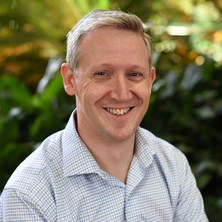
Tony is an expert mining structural geologist who applies his skills to problems of deep earth mass mining, giant open pits, near-mine exploration, and the local and regional lithostructural controls on complex metalliferous mineral deposits. As a Senior Research Fellow in mining and engineering geology at the University of Queensland, Tony’s pioneering research focussed on the geological modelling and data inputs required for planning deep cave mining operations, an area that had received little previous consideration from geologists. He led the Geology and Mass Mining Project (GMM), which examined the geoscientific inputs required for exploring, defining, establishing, and mining block and sub-level caving operations that were being developed on giant porphyry copper-gold systems and IOCG deposits. While much research was being done in Australia to explore the deep earth environment, very little was being done to model the geology of large and deep mineralized systems, and then to use the new data and models to plan and extract any large discoveries made. Tony’s pioneering work was some of the first and most comprehensive to be done in this field.
Fellow and chartered professional (geology) of the Australasian Institute of Mining and Metallurgy
Fellow of the Society of Economic Geologists
Fellow of the Geological Society
Fellow of the Australian Institute of Geoscientists
Member, Geological Society of Australia
Member, Australasian Society for Historical Archaeology
Tony is presently a Principal Structural Geologist with a Brisbane-based geophysical and geological consulting group.
Faculty of Health, Medicine and Behavioural Sciences
ATH - Senior Lecturer
General Practice Clinical Unit
Faculty of Health, Medicine and Behavioural Sciences
Higher Degree by Research Scholar
General Practice Clinical Unit
Faculty of Health, Medicine and Behavioural Sciences
Availability:
Available for supervision
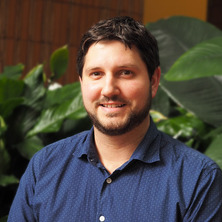
Andrew is a specialist General Practitioner (FRACGP) who relocated to Brisbane in 2023 after spending most of his early career in the Northern Territory. He has worked as a GP in rural Western Australia and the Northern Territory, including as the Chief Medical Officer of Danila Dilba Health Service in Darwin.
Alongside clinical work in Aboriginal and Torres Strait Islander health, Andrew is developing his teaching and research skills as a GP Academic with UQ. Andrew has a Bachelor of Medical Science by research and a medical degree from the University of Western Australia and a Master of Business Administration (MBA) from the University of Cambridge.
Andrew's background in primary care management and administration inform his research interests which are focused on using clinical and administrative data to understand variations in access to primary health care.
Assoc. Prof. Dr. habil Franzisca Weder, Senior Lecturer at the University of Queensland, Brisbane (Australia), is researching, writing and teaching in the areas of Organizational Communication and Public Relations with a specific focus on Sustainability Communication and Corporate Social Responsibility.
She worked as Guest Professor at University of Alabama (USA), University of Eichstätt-Ingolstadt (GER), University of Waikato (NZ), RMIT (Melbourne, AUS) and University of Ilmenau (GER).
Franzisca Weder is Chair of the International Environmental Communication Association (IECA) -> check this out (and become a member :-): https://www.theieca.org
Curious about her work? check…
her eco-culture jamming
her sustainability related conversations with artists and campaigners
one of her papers on Sustainability and Storytelling
one of her books
on Sustainability Communication: THE SUSTAINABILITY COMMUNICATION READER
on integrated CSR Communication: INTEGRATED CSR COMMUNICATION
or (in case you speak German..) on Organizational Communication and PR
or other recent papers:
on how (much) Covid made us more sustainable
on sustainability as cognitive friction https://www.frontiersin.org/articles/10.3389/fcomm.2020.00008/full
or on antagonistic framing and CSR Communication https://www.emerald.com/insight/content/doi/10.1108/CCIJ-01-2018-0014/full/html
or (in case you speak German), her ideas on cultures of sustainability
Faculty of Health, Medicine and Behavioural Sciences
Availability:
Available for supervision
Media expert
Dr. Arosha Weerakoon is a Senior Lecturer and Course Coordinator at The University of Queensland’s School of Dentistry, with expertise in dental materials, dentine structure, and adhesive technologies. She combines clinical practice with research, focusing on dentine bonding, adhesive interfaces, and the impact of physiological aging on oral structures. Dr. Weerakoon has also made significant contributions in public health, with a Master’s in Public Health, and actively engages in dental education and advocacy, particularly through media outreach. She also holds a special interest in the ethical use of AI in teaching, research and patient care. Arosha has maintain private dental practice for the last 21 years, and is the principal and owner of Tewantin Family Dental.
Key highlights:
Research: Dentine structure, adhesive materials, physiological aging, health services in dentistry, ethical use of AI in healthcare.
Clinical & Public Health Expertise: Dental education, dental material performance, oral health advocacy.
Public Engagement: Frequent media contributor on dental topics, with published articles reaching wide audiences.
Professional Roles: Key opinion leader for Kuraray Noritake Dental, Colgate Oral Health Advocate, Deputy Chair of the Clinical Advisory Council (Country to Coast QLD).
Her innovative work bridges clinical practice and research, contributing to a comprehensive understanding of dental materials, dental practice, AI and public health in dentistry. Arosha is frequently requested to provide oral health-related content to the media. Her most recent contributions include information related to Vaping and oral health, teeth grinding and AI in dental care.
Associate Professor Jay Weerawardena is a leading researcher in Strategic Marketing and social Impact Research. His core theoretical foundation is the role of dynamic capabilities in innovation-based competitive strategy. Jay has expanded his research into related areas of international marketing strategy and social sector research. In social sector research, he has extensively published in social entrepreneurship, social innovation, and social value creation. In addition to his impactful papers in reputed journals, Jay has won ARC Discovery grants, edited special issues, represented his core research expertise in editorial boards of reputed journals, delivered keynote and plenary presentations, led special topic sessions, and taken leadership roles in reputed international conferences.
Jay has co-edited several special issues of internally reputed journals which include the Journal of Business Research (ABDC A) (2021) on ‘business model innovation in social purpose organizations’, Industrial Marketing Management Journal (A*) on ‘capabilities, innovation and competitive advantage’ (2011), Journal of World Business (A*) (2007) on ‘accelerated internationalization of born global firms’ and the International Journal of Non-profit and Voluntary Sector Marketing on ‘non-profit competitive strategy’ (2008).
Jay has actively collaborated with internationally reputed scholars that had led to higher-ranked publications and competitive grant success. His current work involves examining the role of big data and marketing analytics role firm competitive strategy and how social purpose organizations balance social mission and commercial value in their effort to build financially viable social purpose organizations. While the former is fuelled by the exponential growth of the digital economy the latter has attracted the increased scholar attention due to its pivotal importance for the sustenance of social purpose organizations.
Jay serves in several editorial boards of reputed international journals including the Journal of Social Entrepreneurship of which he is an Associate Editor. He is a fellow of the Australian Marketing Institute (AMI) and a Certified Marketing Practitioner of the AMI.
Current service roles
Elected member of the UQ Academic Board and its Assessment Sub-Committee (ASC)
Co-lead, UQBS Research Hub on Social Impact and Social Enterprises
Current research interests
(1) Social entrepreneurship and social innovation-led dual value creation
(2) Non-profit brand vulnerability and building resilient non-profit brands
(3) Business model innovation in social purpose organizations
(3) Big data and marketing analytics capabilities in digital innovation and firm competitive strategy
As a lecturer and First-Year Teaching Director in Physics at the University of Queensland, Dr Margaret Wegener teaches both aspiring physicists and physics service courses; she is interested in the educational problems of contextualising physics, and the transition between school and university.
Her PhD was awarded for laser diagnostics of a Superorbital Expansion Tube, by multiple holographic recordings. As well as holography showing the rupture process of a light diaphragm in an expansion tube, this included holographic interferometry of high-speed gas flows around models, and analysis of the resulting images to yield quantitative information about the gas flow structures.
She pursued an interest in physics education by completing further study in Tertiary Teaching. A major concern of her work is to effectively engage students in order to make physics fundamentals meaningful. This includes developing experiments for undergraduate learning.
She is also deeply interested in the interrelationships between science and the arts.
I am a basic science researcher trained in molecular and cell biology, with expertise in transdisciplinary research. My primary focus is investigating the circadian aspects of (patho-) physiology, specifically in relation to the liver. I am particularly interested in understanding how circadian, endocrine, and metabolic pathways work together to maintain homeostasis, as well as how disruptions in these pathways can contribute to pathological conditions.
Following the completion of my PhD at Heidelberg University in Germany in 2013, I pursued post-doctoral studies as a Marie-Curie Fellow at Birmingham University (UK) and École Polytechnique Fédérale de Lausanne (Switzerland). During this time, I utilized omics-approaches to elucidate the metabolic changes caused by impaired mitochondrial glucocorticoid biosynthesis and adrenal insufficiency. Additionally, I investigated the relationship between mitochondrial function and stress-induced depression. In order to understand the molecular mechanisms underlying rhythmic expression of metabolic genes, I also developed tools that facilitate the study of how circadian clock components and glucocorticoids cooperatively drive these processes.
In 2019, I have joined the Institute of Molecular Bioscience, University of Queensland, to investigate the role of the circadian clock and chronodisruption in metabolism and liver disease.
Dr. Yongping Wei is Associate Professor and ARC Future Fellow, School of Earth and Environmental Science, the University of Queensland. Before joining the University of Queensland in 2016, she was research fellow, senior research fellow and principal research fellow at the Department of Infrastructure Engineering, the University of Melbourne during 2008-2015. She had 11 years’ working experiences as an Irrigation Engineer then Water Manager in China in her early career. Dr Wei was awarded her PhD of Natural Resources Management at the University of Melbourne in 2007, and she also obtained Bachelor of Engineering and Master of Natural Resources Economics.
My list of publications exhibits a multifaceted exploration of the law. Spanning across different topics, as stated above, my research sits at the intersection of society, public policy, and the law. Exploring the traditional boundaries of doctrinal law and its theoretical foundations in relation to emerging and new societal challenges, my research unites several strands of legal inquiry linked to social justice and equality.
Faculty of Engineering, Architecture and Information Technology
Affiliate of Global Centre for Mineral Security
Global Centre for Mineral Security
Faculty of Engineering, Architecture and Information Technology
Availability:
Available for supervision
Fitsum is an award-winning economist and social scientist focused on sustainable human development effects of economic activities including those related to extractive resources, infrastructure, and industrial development. He is internationally recognised for his work on the potential for resource-rich countries to utilise the inter-sectoral linkages with the extractive sector for economic transformation, and the role of policy makers and industry actors in achieving it. He is particularly passionate about harmonizing the interplay between state intervention and market dynamics, and optimizing the opportunities related to the interface of minerals with food, infrastructure and energy security.
Having started his career in economics and finance in government and banking sector, Fitsum applied his development economics and political science training in his role as researcher with the Centre for Social Responsibility in Mining at SMI. In this role, he conducted applied research on fiscal and non-fiscal contribution of large-scale mining, impact of extractives on political settlements and conflict, mining and sub-regional development, engaging the private sector for inclusive extractive industries, artisanal and small-scale mining (ASM) and formalisation efforts, extractive industries transparency and governance, social license in technology design, resettlement and livelihoods, and social aspects of mine closure. He has also delivered capacity building programs to practitioners, policy makers and key stakeholder groups from several countries in Africa, Asia-Pacific and Latin America. Topics included connecting mining to human development outcomes, managing the social and environmental impacts of mining, community research methods, climate-smart mining, and resource governance.
Fitsum then took the role of Senior Researcher with the International Institute for Environment and Development (IIED) in London. In this role, he led ASM action dialogue programmes, overseeing research to support the national dialogues in Tanzania, Ghana and Madagascar. He also led and conducted a series of research activities to inform decisions by more than 60 member countries of the Intergovernmental Forum on Mining, Minerals and Sustainable Development (IGF).
More recently, Fitsum worked as an independent senior research consultant; and Senior Social Specialist for GHD in Australia. In addition to applied and academic research and capacity building experience, he has delivered presentations and guest speaking in numerous global conferences and workshops.
Faculty of Health, Medicine and Behavioural Sciences
Principal Research Fellow
Frazer Institute
Faculty of Health, Medicine and Behavioural Sciences
Availability:
Available for supervision
Associate Professor James Wells is an innovative cancer immunologist who leads the Novel Cancer Therapeutics Group at the Frazer Institute and serves as Director of Immunology at the Dermatology Research Centre, University of Queensland. His research programme is focused on deciphering the fundamental mechanisms that govern immune responses within tumours and translating those discoveries into transformative new cancer therapies. He has a particular track record in skin cancer and an expanding portfolio of novel therapeutic approaches across oncology more generally.
A/Prof Wells has secured over $7.6 million in competitive funding as lead investigator from the NHMRC, ARC, US Department of Defense, Cancer Council Queensland, NFMRI, and international sources. His body of work spans 111 peer-reviewed publications cited over 3,115 times, with 5.8% ranking in the top 5% most cited globally (SciVal). His influence extends across 26 disciplines beyond medicine, including biochemistry, genetics, molecular biology, and neuroscience, and his research has been featured 42 times in leading media outlets including New Scientist, Forbes, MedicalXpress, and EurekAlert!. He holds two patents and has completed advanced commercialisation training through QUT's Bridge Program.
Biography
A/Prof Wells completed his PhD in cancer immunotherapy at King's College London, followed by postdoctoral training at Harvard Medical School, where he founded a new orthopaedic oncology research programme, secured independent grant funding, and was recognised with a Research Excellence Award and promotion to Faculty as Instructor of Orthopaedic Surgery within just two years. In 2011, he was recruited to the University of Queensland by Professor Ian Frazer AC, co-inventor of the human papillomavirus vaccine, to establish and lead an independent cancer immunology laboratory, supported by a prestigious five-year Perpetual Trustees Fellowship.
Key Discoveries
A hallmark achievement of A/Prof Wells’ laboratory is the discovery and patenting of Q-2361 — a world-first topical antagonist of the immunosuppressive drugs tacrolimus, sirolimus, and everolimus. Q-2361 is a first-in-class drug candidate designed to combat the huge issue of skin cancer development in immune suppressed solid organ transplant recipients through the reactivation of anti-tumour CD8 T cells locally in the skin without disturbing systemic immunosuppression or risking graft survival. Preclinical proof-of-concept studies demonstrated 100% tumour regression, and Q-2361 is now advancing through formulation towards IND-enabling studies and first-in-human clinical trials. This research programme was supported by an NHMRC Development Grant and an NFMRI grant. Building on this translational foundation, A/Prof Wells now leads multiple drug discovery programmes targeting cancer beyond the skin.
Research Training
A/Prof Wells has trained more than 55 students and trainees, including PhD graduates who have gone on to postdoctoral positions at the NIH, UCSF, The Scripps Research Institute, and the University of Cambridge. He serves as Vice President of the Molecular and Experimental Pathology Society of Australasia and regularly reviews grants for the NHMRC, ARC, MRC (UK), Wellcome Trust/DBT India Alliance, and Health Research Council of New Zealand.
Research Areas
Cancer immunology and immune-based cancer therapy
First-in-class drug discovery and translational oncology
T cell regulation in tumours and the immune microenvironment
Targeted therapy for immunosuppressed patients with skin cancer
Novel metabolic and immune targets for pan-cancer therapeutics
James would like to thank the granting bodies and philanthropic partnerships that make his goal of delivering new and effective cancer drugs possible.
Faculty of Health, Medicine and Behavioural Sciences
Availability:
Available for supervision
Media expert
Dr Timothy Wells joined the Frazer Institute in 2016 as a Senior Research Fellow. His research aims to find novel methods of treating multi-drug resistant bacteria, by examing the interactions between the host immune system and Gram negative bacteria. His research largely focuses on Pseudomonas aeruginosa acute and chronic infections, espeically in people living with cystic fibrosis. Dr Wells is passionate about making his research as clinically relevant as possible, with his work previously having led to novel treatment of critically ill patients. His research uses a mixture of molecular microbiology, immunology and genomic approaches.
I am a food scientist and chemical engineer specialising in advanced encapsulation technologies and particle engineering for the delivery of bioactive compounds. My research focuses on developing scalable solutions to improve the stability, bioavailability, and controlled release of micronutrients in food, feed, and agricultural systems.
My work sits at the interface of food science, materials engineering, and nanotechnology, with particular expertise in alginate-based materials, metal–organic frameworks (MOFs), cellulose nanocrystal (CNC)-stabilised emulsions, and spray-drying technologies.
My research aims to bridge fundamental science with industrial application, with a strong focus on scalability, cost-effectiveness, and real-world impact. I am particularly interested in collaborating with academic and industry partners to develop next-generation delivery systems that enhance nutrition, product performance, and global food security.