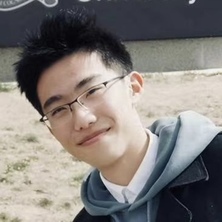
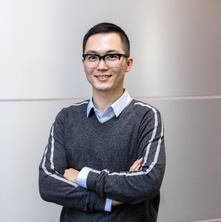
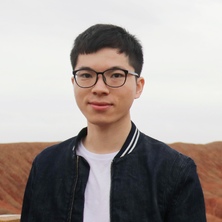
Yibo Wang is a Postdoctoral Research Fellow at the URBANiQ node within the Institute for Social Science Research (ISSR) at UQ. His current research focuses on urban mobility in relation to public health, with particular emphasis on carbon emissions, socio-demographic patterns, travel modes, heat exposure, and accessibility to health services and infrastructure.
Yibo has a strong interdisciplinary background spanning geographic information systems and mechatronic engineering. He obtained a BEng from BUAA, where he was involved in the design and development of LiDAR systems. He subsequently completed a MEng at ANU, further developing technical expertise in machine learning and computer vision. More recently, he was awarded a PhD from UQ with research focusing on the statistical characteristics of carbon emissions generated by urban travel activities and how these emissions are jointly shaped by household characteristics and the built environment.
Yibo’s combined experience in science and engineering has equipped him with expertise in the design, fabrication, and validation of advanced remote sensing systems, as well as in the analysis of large-scale datasets to inform applied research and policy. At ISSR, he continues to integrate and extend these skills, contributing to improved everyday mobility and public health outcomes in urban contexts.
School of Electrical Engineering and Computer Science
Faculty of Engineering, Architecture and Information Technology
Availability:
Available for supervision
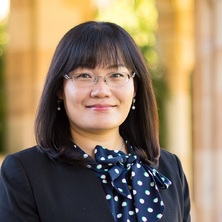
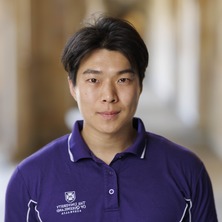
Shuai Wang is a Research Fellow at ielab, The University of Queensland, working on AI-powered search. He builds systems that find information and answer questions, using large language models and retrieval-augmented generation (RAG), and he focuses on making those systems faster and cheaper to run. His broader research contributions span federated search optimization and improving model efficiency in IR and retrieval-augmented generation (RAG) applications. His work has been published at premier venues including SIGIR, ECIR, WSDM, and EMNLP. He has served on program committees for SIGIR, ECIR, ICTIR, and TOIS. A lot of his work comes back to one practical question: how do we get good search and reliable answers without depending on expensive, closed commercial AI?
Shuai has published 25+ papers at venues such as SIGIR, WSDM, ECIR, and EMNLP. He coordinates and teaches INFS7410 (Information Retrieval and Web Search) at UQ.
Shuai completed his PhD on automating medical systematic reviews using neural retrieval systems and generative models (thesis: AI-driven Automated Systematic Reviews). His doctoral work encompassed automatic MeSH term suggestion, screening prioritization, seed-driven retrieval methods, and automatic Boolean query formulation.
Education
PhD, The University of Queensland (2021–2025)
Master's degree, The University of Queensland (2020–2021)
Bachelor's degree, The University of Western Australia (2017–2019)
Faculty of Engineering, Architecture and Information Technology
Centre Director of HBIS-UQ Innovation Centre for Sustainable Steel
HBIS-UQ Innovation Centre for Sustainable Steel
Faculty of Engineering, Architecture and Information Technology
Centre Director of Baosteel Joint Research and Development Centre
Baosteel-Australia Joint Research and Development Centre
Faculty of Engineering, Architecture and Information Technology
EAIT Director China Res Partnership
School of Chemical Engineering
Faculty of Engineering, Architecture and Information Technology
Availability:
Available for supervision
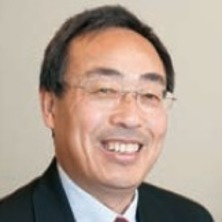
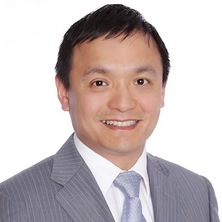
Professor Geoff Wang received his PhD in Chemical and Metallurgical Engineering from the Northeastern University, Shenyang, China in 1990. After earned about 2-year Visiting Academic experience at University of New South Wales, he joined the University of Queensland in 1996 and has been leading in the research focusing on modeling and simulation of the Chemical and Metallurgical Engineering processes, such as iron ore sintering, iron- & steel-making, sustainable energy, coalbed methane (CBM) extraction and carbon dioxide capture and utilization including CO2 -sequestration with enhanced coalbed methane (CO2-ECBM) recovery. Professor Wang’s research activity and interests are directed towards developing energy and environmental technologies. He has made significant contributions to the field of research on fluid flow, heat and mass transfer in chemical reactors, particularly gas solid reaction kinetics associated with various porous media. He has been active and completed research programs in clean energy technologies such as pulverized coal injection into blast furnaces, hydrogen production through lower emission coal combustion, and CO2 electrochemical conversion to fuel or reusable chemicals.
Professor Wang is author of a monograph entitled "Pulverized Coal Injection Technology for Blast Furnaces" and has over 100 original journal publications and about 60 refereed conference papers, included 2 patents.
Postdoctoral Research Fellow, Cancer Immunotherapy
Australian Institute for Bioengineering and Nanotechnology
Availability:
Available for supervision
Dr Yanan Wang is a Postdoc at the Australian Institute for Bioengineering and Nanotechnology (AIBN), The University of Queensland. She obtained her PhD degree from Ocean University of China and joined AIBN in early 2026.
Dr Wang’s research focuses on the development of stimulus-responsive and targeted drug delivery systems for the treatment of acute organ injuries and inflammatory diseases. In addition, her current work also aims to develop engineering multifunctional nanomedicine for cancer immunotherapy, with particular interests in innate immune modulation, dendritic cell-mediated antitumour immunity, and the tumour immunosuppressive microenvironment reprogramming for enhancing cancer treatment.
Dr Wang has published 23 papers in international top refereed journals such as ACS Nano, Advanced science, Biomaterials, Chemical Engineering Journal, and so on.
Dr. Geng Wang is a postdoctoral research fellow specializing in statistical genetics and genetic epidemiology at the Institute for Molecular Bioscience, University of Queensland. His research focuses on the developmental origins of health and diseases, causal inference in genetic epidemiology, genetic susceptibility of complex traits and diseases, and the advancement of statistical genetics methodologies. Proficient in bioinformatics, statistical genetics, and clinical research, he has a background in clinical medicine and the biotechnology industry.
Dr. Wang obtained his bachelor's degree in clinical medicine and master's degree in internal medicine from Second Military Medical University (Shanghai, China) in 2012 and 2016, respectively. He served as a resident physician at Changzheng Hospital, affiliated with Second Military Medical University, from 2016 to 2017, specialising in rheumatology, before being promoted to an attending doctor. During his time in Shanghai, he was invited to visit the Translational Research Institute (Australia) twice in 2016 and 2017 for bioinformatics training and collaborative research.
Driven by his growing interest in human genetics, Dr. Wang pursued a Ph.D. in statistical genetics with Professor David Evans at the University of Queensland, which he successfully completed in 2023. Since then, he has continued his research in the aforementioned areas, contributing to the field with his diverse background and expertise.
Associate Professor Jie Wang is a scholar in disaster resilience, risk management and inclusive communication, with a particular focus on how humans perceive and act in relation to risk, crisis and disaster, with the aim of understanding how behaviour changes can improve the resilience of people, organisations and destinations. She co‑leads the Security and Resilience Research Hub at UQ Business School and was the Co‑Director of the DFAT‑funded Australia–Indonesia Business ResilienceHub, working closely with governments, councils and industry partners in Australia and the Asia‑Pacific.
Research expertise and excellence
Her research examines risk perception, preparedness behaviours, crisis communication and resilience planning, with applications across disaster‑prone communities, tourism and small businesses. She has led or contributed to more than $500,000 in competitive and industry‑funded grants and published extensively in leading journals such as Tourism Management and Annals of Tourism Research. Her work has received multiple national and international awards, including recognition from the European Foundation for Management Development (EFMD) and Emerald Publishing, as well as the UQ Business School Early Career Researcher Excellence Award in Research.
Her research also advances accessible and inclusive travel for people with disabilities and older adults, with a focus on building destination accessibility readiness, designing disability‑inclusive communication and marketing, and developing accessibility‑aware digital and algorithmic systems to enable equitable participation in tourism.
Teaching and HDR supervision
Dr Wang is an award‑winning educator recognised for excellence in work‑integrated learning, employability and graduate research supervision. She supervises PhD, MPhil and Honours students across disaster resilience, inclusive innovation and risk communication, and was awarded the UQ BEL Faculty Award for Excellence in HDR Supervision (2023), UQ BEL Faculty Award for Excellence in Education (2018, 2025), a Commendation for UQ Citation for Outstanding Contributions to Student Learning (2019), UQ Business School Teaching and Learning Awards (2024) in Work-integrated-Learning and Employability. In 2026, she is working with faculty champions across multiple disciplines to co‑design neuroinclusive curriculum, assessment and pedagogy, grounded in the lived experiences of neurodivergent students.
She is strongly committed to mentoring the next generation of researchers and translating her teaching and research into meaningful real‑world impact.
Faculty of Engineering, Architecture and Information Technology
Availability:
Available for supervision
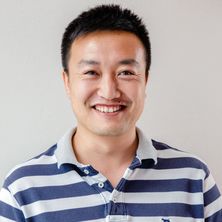
Dr. Zhuyuan Wang is a Postdoc Research Officer at UQ Dow Centre in the School of Chemical Engineering. He is an active and frontline researcher in the field of membrane separation with over 6 years of experience. He used to work at a listed membrane manufacturing company in China (2016-2019), focusing on developing Polyamide Thin Film Composite (PA-TFC) for water treatment. He then commenced his Ph.D. research at Monash university (2019-2023, Monash) under the supervision of Prof. Xiwang Zhang and Prof. Huanting Wang.
Zhuyuan is currently interested in developing ion-exchange membranes, especially proton exchange membranes, and in their application around electrolyzers for green hydrogen production and CO2 electrochemical reduction.
Zhuyuan has firstly authored high profile peer-reviewed journal papers, including Nature communications and Progress in polymer science. He developed a scalable production method for quality 2D materials, which has been awarded twice as the “Best project of the year” from ARC Industry Transformation Research Hub for Energy-efficient Separation (EESep).
Dr Brydon Wang is an author, lawyer, and scholar researching the trustworthy regulation of technology. His work focuses on how we design and govern benevolent data structures and decision-making systems that support human-centric, climate-resilient cities. Dually qualified in law and architecture, Brydon brings more than twenty years of experience across construction, legal practice, and academia. He is currently an Associate Director at KPMG, advising on major infrastructure transactions, and an Honorary Fellow at the Centre for Policy Futures at the University of Queensland.
Brydon’s research investigates how regulation can increase the perceived trustworthiness of decision-makers, particularly in contexts of automated systems and informational asymmetry. His interdisciplinary methods blend doctrinal legal analysis with creative research strategies. He was lead editor of Automating Cities: Design, Construction, Operation and Future Impact (Springer, 2021) and lead editor of the forthcoming Large Floating Solutions (Springer, 2025), a volume exploring sustainable marine infrastructure and governance, that follows on from the previous edited collection Large Floating Structures: Technological Advances (Springer 2015). His work has been featured by the Centre for Digital Built Britain (Cambridge University), The Conversation, ABC Radio National’s Future Tense, and Seeker’s How Close Are We to Living in the Ocean?
Before joining KPMG, Brydon taught contract law, data privacy, and AI regulation at the Queensland University of Technology, where he received the 2024 Vice Chancellor’s Award for Early Career Teaching. He also taught Responsible Data Science in UQ’s Master of Data Science programme. His PhD thesis, The Role of Trustworthiness in Automated Decision-making Systems and the Law, was awarded the 2022 Faculty of Business and Law Outstanding Doctoral Thesis Award. His research combines doctrinal legal research with creative research methodologies to explore the governance of automation, digital infrastructure, and smart urban systems. Through his creative research strategies, Brydon has also become an award-winning artist.
Brydon began his career in architecture and contract administration on award-winning construction projects, before practising as a technology and construction lawyer at Allens Linklaters. He remains passionate about integrating policy, law, and infrastructure to ensure technological systems are designed with trust and transparency at their core.
Affiliate of ARC Research Hub for Advanced Manufacture of Targeted Radiopharmaceuticals (AMTAR)
ARC Research Hub for Advanced Manufacture of Targeted Radiopharmaceuticals
Australian Institute for Bioengineering and Nanotechnology
Affiliate of Centre for the Business and Economics of Health
Centre for the Business and Economics of Health
Faculty of Business, Economics and Law
Research Fellow
School of Business
Faculty of Business, Economics and Law
Availability:
Available for supervision
Media expert
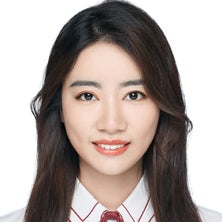
I am a Research Fellow in Health Economics at the University of Queensland’s Centre for the Business and Economics of Health (CBEH). My research focuses on the economic evaluation of varying healthcare interventions for cancer, with interests in exercise oncology, precision medicine, and implementation science. I am dedicated to advancing the long-term wellness of women following cancer treatment, specifically by identifying the cancer rehabilitation programs that provide the best value for money for this population. Additionally, I explore the role of therapeutic radiopharmaceuticals in cancer treatment, seeking to develop innovative cost-effective analysis that enable more robust evaluation of these novel therapies at the production stage.