Rob Gilbert worked as a teacher in Queensland secondary schools before completing his doctorate in curriculum studies at the University of London. His experience in curriculum work includes research and evaluation, consultancy and involvement in curriculum committees and agencies.
Rob Gilbert’s expertise is in curriculum development, research and evaluation. He has been a consultant for State and Commonwealth governments, the New Zealand Ministry of Education and the Curriculum Corporation. His research addresses issues of curriculum theory, design and development across a range of fields and levels of education. The work draws on sociocultural perspectives on schools and school contexts, concepts from the sociology of knowledge and the curriculum, and discourse theory.
Particular applications have included research in social and environmental education, education for citizenship, gender in education, the education of boys, standards based curriculum and assessment, and research training.
He is currently working on an analysis of contemporary Australian curriculum debates related to the culture wars and controversies about educational standards, as well as the development of standards based approaches to curriculum and assessment.
Professor Robyn Gillies' major research interests are in the learning sciences, classroom discourses, small group processes, including co-regulated learning, classroom instruction, student behaviour, and students with disabilities. Professor Robyn Gillies has worked extensively in both primary and secondary schools to embed STEM education initiatives into the science curriculum. This includes helping teachers to embed inquiry skills into the science curricula so they capture students’ interests, provide opportunities for them to explore possible solutions to problems, explain phenomena, elaborate on potential outcomes, and evaluate findings. In short, through these investigations, students learn how to engage critically and constructively with others’ ideas, challenge and rebut proposals, and discuss alternative propositions. In so doing, they learn to talk and reason effectively together. These STEM education initiatives have been funded by research grants and contracts from the Australian Research Council, the Department of Education and Training (DET), the Queensland Museum Network (QMN), and the Office of Learning and Teaching (OLT). Professor Gillies is a Chief Investigator on the Science of Learning Research Centre (SLRC) where she has been instrumental in implementing two recent science-based research projects in primary and secondary schools to help teachers embed inquiry-science pedagogy into their science curricula. Her recommendations on how teachers can translate research into practice have been widely profiled in the international literature and on the website of the Smithsonian Science Education Center in Washington, DC.
Senior Lecturer, Medical Education (Personalised Learning & USMLE Prep)
MD Curriculum & Assessment
Faculty of Health, Medicine and Behavioural Sciences
Availability:
Available for supervision
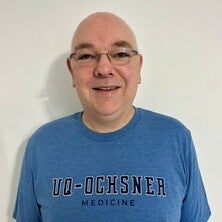
Dr Christian Gray is a Senior Lecturer in Medical Education (Personalised Learning & USMLE Prep) at The University of Queensland Medical School. His work focuses on personalised learning, assessment and preparation for medical licensing examinations, with a particular interest in understanding how individual students learn, prepare and adapt.
Dr Gray joined UQ in 2019, having previously been a Lecturer in Infection and Immunity and Immunology Discipline Lead at Peninsula Medical School, University of Plymouth, UK. He holds a PhD from the University of Newcastle, Australia, and a Postgraduate Diploma in Academic Practice from the University of Plymouth, and is a Fellow of the Higher Education Academy.
Prior to moving into medical education, Dr Gray undertook postdoctoral research across a range of areas in immunology, including tumour immunology, rheumatoid arthritis, pneumococcal immunity, mastitis resistance in dairy cattle and vaccine development. His biomedical research has been published in journals including Blood, Cancer Research, The Journal of Immunology, Clinical Cancer Research and Mucosal Immunology.
At UQ, Dr Gray's scholarship focuses on how students prepare for high-stakes assessment and medical licensing examinations and how assessment and learning data can be used to understand student readiness and learning behaviour. Within the UQ-Ochsner medical program, he has developed and coordinated structured preparation for USMLE Step 1. His research includes longitudinal investigation of student preparation and question-bank engagement, including changes associated with the transition of USMLE Step 1 to pass/fail reporting.
His work in medical licensing assessment extends internationally. He has contributed chapters to Cambridge University Press texts providing guidance for students preparing for and taking the UK Medical Licensing Assessment Applied Knowledge Test (MLA AKT). His broader educational scholarship includes personalised learning, support for students experiencing academic difficulty, inclusive approaches to learning and assessment, and understanding how learners adapt their preparation in response to assessment.
More broadly, Dr Gray's research interests extend to learning and learning behaviour across higher education, including the emerging role of artificial intelligence and its relationship with cognitive and non-cognitive aspects of learning. He currently supervises doctoral research in this area.
Affiliate Associate Professor of School of Languages and Cultures
School of Languages and Cultures
Faculty of Humanities, Arts and Social Sciences
Associate Professor
School of Education
Faculty of Humanities, Arts and Social Sciences
Availability:
Not available for supervision
I received education in English literature, applied linguistics and TESOL (Teaching English to Speakers of Other Languages). I consider TESOL my home. My research straddles global language testing, language in education policy, and diversity of Englishes. I have pursued my research within the Asia Pacific region, with a particular focus on developing societies. In examining the role of English, other languages and English language testing for individual mobility and societal development, I have foregrounded inequity, inequality and exclusion. I use qualitative, quantitative and textual data. My work is underpinned by critical perspectives, my multidisciplinary backgrounds and my life experiences as a confused transnational.
Dr Hardy researches and teaches in the areas of educational policy and politics, particularly in relation to institutionalized educational settings (schools; universities), at the School of Education, University of Queensland. He is also increasingly involved in policy studies relating to international and comparative education in schooling, higher education and vocational education. Dr Hardy's teaching at Undergraduate, Masters and PhD levels, and his service to the research, professional and wider community is informed by research into the relationship between education and society, particularly broader policy and political discourses, and educators' responses to the socio-political contexts in which their work is undertaken. Dr Hardy is currently undertaking national (Queensland) and international (England, Singapore, Bangladesh) work into the nature of teacher and other educator and policy officer's engagement with data in schools and schooling systems and settings. Dr Hardy is continuing to work on research undertaken during his recent Future Fellowship (2014-2018); this includes in relation to how policy support for the Australian Curriculum influenced teacher learning in diverse schooling settings in Queensland, within a broader global policy context. This work has also involved exploring how concurrent policy reform in Scandinavian (Finland and Sweden) and North American (Ontario and Connecticut) contexts has constituted and influenced practice in these settings. This research builds upon earlier work (2012-2014; ARC-DECRA) which focused upon teacher learning practices in Queensland under globalised policy conditions. Dr Hardy also researches the nature of academic work under current conditions in Australian and international university settings.
Current and future research focuses upon continued work on the nature and effects of data as currently constituted in educational (particularly schooling) settings in different national and international contexts (including in the Asia-Pacific, Europe and North America). Current and future research also includes work in relation to the nature and effects of Artificial Intelligence in educational settings, including how this influences educators' work and learning in schooling and other (formal and informal) educational settings. Current and future work also includes research into enhancing East-West relations, particularly as this pertains to international students studying in higher education settings in Australia and east-Asia.
Since 2004, Dr Hardy has also been a member of the Pedagogy, Education and Praxis international research consortium, involving researchers from Australia (University of Queensland, Griffith University, Charles Sturt University, Monash), UK (University of Sheffield), Sweden (University of Gothenburg), Norway (University of Tromso), and Finland (Abo Akademi). This group is primarily engaged in researching and theorising professional practice, including the politics of teachers' learning, throughout the teaching career in primary, secondary, tertiary and other adult education settings.
Dr Hardy worked previously at Charles Sturt University (Wagga Wagga, Australia; 2004-2010), commenced at The University of Queensland in 2010, and has occupied his current continuing substantive position as Associate Professor at the School of Education since 2019.
Faculty of Health, Medicine and Behavioural Sciences
Availability:
Available for supervision
Dr Stevie-Jae Hepburn is a Lecturer in initial teacher education (ITE) in the School of Education at the University of Queensland. Her approach to educational program design, review, and evaluation in professional and educational contexts is guided by the principles of andragogy, collaborative practice to support learning with, from, and about others.
After gaining experience as a classroom teacher and curriculum coordinator across jurisdictions in Queensland and abroad, Stevie directed her attention to educational leadership, health and wellbeing resources in schools and ITE. Her doctoral research investigated the impact of an integrated approach to health and wellbeing for teachers during the pre-service and early career period. Stevie’s research is influenced by her interest in public health and salutogenic theory, as well as the use of health promotion strategies to address the social determinants of health and influence job satisfaction, stress management, burnout, and career trajectory.
Stevie's research experience in collaborative practice spans both health disciplines and education. She investigated the impact of interprofessional education resources on promoting interprofessional collaborative practice across the continuum of health professionals' education, as well as student learning and experience on placement in rural and remote communities.
Stevie is currently focused on exploring the role of collaborative practice between school community stakeholders (e.g., parents/carers, school-based health professionals, teachers), schools as health-promoting workplaces, and preparedness for practice during the pre-service and early career period.
I obtained my PhD in Pure Mathematics from the University of Adelaide in the area of Convex Sets with Lattice Point Constraints. Following my PhD, I was a mathematics lecturer at the Nanyang Technological University, Singapore. In 2012, I joined UQ as a teaching focused academic in the School of Mathematics and Physics.
I have extensive teaching and administrative experience at the secondary-tertiary interface. Prior to my PhD, I taught senior high school mathematics in Singapore, where, as head of the mathematics department, I oversaw the delivery of the senior high school mathematics curriculum for over 2000 students. In my current role as Director of First Year Mathematics, I have led and implemented course improvements. These include the development of a comprehensive range of graded learning resources for key first year mathematics courses and specific initiatives to address the secondary-tertiary mathematics transition. One such initiative that has been especially rewarding is the Support Learning Tutorial (SLT), an intervention program that I designed and implemented to support at-risk first year students. SLT students have consistently outperformed the general cohort in pass rates and quality of results. Another significant initiative which I led is the MATH1051 (Calculus and Linear Algebra I) UQ2U Blended Learning Project. This project introduced changes to the delivery of MATH1051 in 2019, through the integration of online and high-value on-campus activities. A key innovation is the creation of a complete set of videos for MATH1051 and the implementation of collaborative workshops. The success of the MATH1051 project has led to the subsequent redesign of several large first year mathematics courses.
The impact of my teaching and research has been recognised through eight teaching awards (five UQ and three national awards). I am a Senior Fellow of the Higher Education Academy Fellowship (SFHEA) and 2022 Australian University Teacher of the Year.
Awards and Fellowships
Australian Awards for University Teaching, Australian University Teacher of the Year, 2022
Australian Awards for University Teaching, Award for Teaching Excellence, 2022
UQ Faculty of Science Sustained Teaching Excellence Award, 2021
UQ Award for Teaching Excellence, 2021
Senior Fellow of the Higher Education Academy (SFHEA), 2020
UQ Faculty of Engineering, Architecture and Information Technology Special Teaching Excellence Award, 2018
Australian Awards for University Teaching Citations for Outstanding Contributions to Student Learning, 2017
UQ Citation for Outstanding Contribution to Student Learning, 2016
UQ Faculty of Science Award for Teaching Excellence, 2014
Dr Wenying (Wendy) Jiang taught at the Department of East Asian Studies, University of Alberta in Canada and The University of Western Australia in Perth before taking a position at School of Languages and Cultures at The University of Queensland in Australia. She is a specialist in Applied Linguistics, a graduate of Qufu Normal University (BA 1988, MA 1998) in China, University of Luton (MA 2001) in UK and The University of Queensland (PhD 2006) in Australia. She taught English at Taishan Medical University in China for more than ten years before switching to teaching Chinese as a foreign language in English-speaking countries such as the UK, Canada and Australia. She has been publishing regularly in the fields of second language acquisition, language teaching and learning, and computer assisted language learning (CALL) since 1992. Her monograph "Acquisition of Word Order in Chinese as a Foreign Language" was published by Mouton de Gruyter in 2009. Her article "Measurements of development of L2 written production: the case of Chinese L2" appeared in the journal Applied Linguistics in 2013 is a widely cited piece of publication.
Dr Anne Jobling is part of an on-going research team examining the development and longer term adjustment of adolescents and young adults with Down Syndrome. This research project is the longest running study of its kind in the world.
Since returning to academia from industry in 1998, Professor Lydia Kavanagh has become a leader in engineering education and has used her background as a professional engineer to design both curricula and courses for active learning by combining real-world projects and specialist knowledge. She has had a significant impact on the delivery of UQ’s undergraduate engineering program through creative new teaching pedagogies including the Flipped Classroom, innovative authentic approaches to assessment, and the introduction of multi-disciplinary courses. As Director of First Year Engineering for almost a decade, Lydia was responsible for a significant program of extra-curricular transition support for first year students and she co-coordinated two compulsory courses that delivered what could arguably be the world's largest flipped classroom for 600 students. Recently, she has set up a Leadership and Mentoring Program for all EAIT faculty students (undergraduate and postgraduates), and continued this into a Leaders@EAIT, an ongoing academy for these students to continue to develop leadership competencies.
Lydia is now the Deputy Associate Dean Academic (Curriculum Review and Teaching Innovation) for the Faculty of Science where she has overseen a faculty-wide overview of curriculum resulting in streamlined undergraduate and postgraduate offerings. She holds a concurrent fractional position with the Institute of Teaching and Learning Innovations, where she has developed frameworks and systems for UQ shorter form credentials.
Lydia is also heavily involved institutionally with training and mentoring academics and professional staff with teaching responsibilities through the development and implementation of the Graduate Teaching Assistant program (for PhD scholars and postdocs), Teaching@UQ (for staff new to teaching), and TeachingPlus@UQ (for emerging leaders in Teaching and Learning).
Lydia’s work was recognised with a Principal Fellowship of the HEA, an ALTC Excellence in teaching award in 2011 and she has lead and participated in Carrick/ ALTC/ OLT projects on teamwork, online learning, curriculum innovation (2x), preparing students for first year engineering, and Flipped Classrooms.
Faculty of Engineering, Architecture and Information Technology
Affiliate Associate Professor of Humanities and Social Sciences of Faculty of Humanities and Social
Faculty of Humanities, Arts and Social Sciences
Affiliate Associate Professor of School of Education
School of Education
Faculty of Humanities, Arts and Social Sciences
Associate Professor
Institute for Teaching and Learning Innovation
Availability:
Available for supervision
Media expert
Dr Hassan Khosravi is an Associate Professor in Data Science and Learning Analytics at The University of Queensland. As a computer scientist by training, he is passionate about the role of artificial intelligence in the future of education. In his research, he draws on theoretical insights driven from the learning sciences and exemplary techniques from the fields of human-centred AI and crowdsourcing to build technological solutions that enhance student learning and experience. His past research and publications have addressed a number of diverse topics such as learning graphical models, statistical-relational learning, social network analysis, cybersecurity and game theory.
Hassan's teaching career includes coordinating 30 different offerings with class sizes ranging from 50 to 700, in 10 distinct courses to a total of approximately 7000 students at three top-ranked institutions: Simon Fraser University (SFU) and The University of British Columbia (UBC) in Canada, and The University of Queensland (UQ) in Australia. He has taught a range of courses including introductory programming courses, data structures and algorithms, artificial intelligence, database management systems as well as graduate-level data science courses. he also leads and teaches into a variety of formal and programs that mentor and foster the next generation of great teachers. These programs cover a wide variety of topics, including student-centred learning, active learning tools and strategies, supporting assessment design and delivery at scale, and enhancing teaching with learning analytics.
Hassan holds a Senior Fellowship with the Higher Education Academy, which has been awarded in recognition of his contributions to effective approaches to teaching and learning as well as successful coordination, support, supervision, management and mentoring of others in relation to learning and teaching.
Affiliate of Research Centre in Creative Arts and Human Flourishing
Research Centre in Creative Arts and Human Flourishing
Faculty of Humanities, Arts and Social Sciences
Associate Professor
School of Music
Faculty of Humanities, Arts and Social Sciences
Availability:
Not available for supervision
Media expert
Associate Professor Eve Klein’s compositions have been called vivid, revolutionary, inclusive, moving and must-see. Winner of the 2023 Art Music Award for Experimental Practice, Klein brings orchestral music into dialogue with immersive and interactive technologies for screen, art music and mass festival audiences. Klein's work has been experienced by hundreds of thousands of people globally at Salisbury Cathedral, Burning Man, New York University, VIVID Sydney, MONA, GOMA, Brisbane Festival, World Science Festival, the Arts Centre Melbourne and the State Library of Queensland. As Lead Composer for Textile Audio, Eve crafts City Symphony, an interactive AR music experience overlaying Brisbane CBD (available via iOS and Android app stores).
Klein creates artworks in collaboration with community groups, festivals, researchers, and NGOs to achieve community transformation goals. Recent projects have explored gendered and racial violence, climate change, disaster recovery and refugee rights. Klein's work, Vocal Womb, is an example of this practice, allowing the audience to explore the relationship between voice, identity and power by stepping into and directly manipulating the voice of another. The premier was called the "#1 coolest thing at MOFO 2018" (Timeout Melbourne) and "One of the must-see music/artworks of the 2018 festival... a deeply considered engagement with the history and traditions of opera" (The Conversation).
Klein is Associate Professor of Music Technology, leading an interactive music and spatial audio research cluster at the University of Queensland, guiding postgraduate composers on the creation of immersive, interacitve, virtual reality and augmented reality concert works and operas.
"This is contemporary music at its most relevant – it is simultaneously inward and outward focused in addressing the challenge of its existence and its capacity to produce something great.” - Melonie Bayl-Smith, Cyclic Defrost, Issue 31
“Excellence in Experimental Practice was awarded to Eve Klein for City Symphony, a Brisbane sound walk revolutionising audiences' engagement with urban environments, underpinned by an ethos of collaborative inclusivity and accessibility.” -Australian Music Centre
“One of the must-see music/art works of the 2018 festival was Eve Klein’s Vocal Womb … a deeply considered engagement with the history and traditions of opera.” - Svenja J. Kratz -The Conversation
Lecturer in Interdisciplinary Agricultural Studies | Deputy Director (Curriculum), School Teaching & Learning Committee | ACDA Steering Committee Member & 2026 ACDA T&L Awards Chair | Affiliate Academic, ITaLI | Senior Fellow (SFHEA)
I am an educator and researcher dedicated to transforming teaching and learning in higher education, with a focus on interdisciplinary agricultural studies, student engagement, and curriculum innovation. With a background spanning chemistry, biology and animal science, I integrate scientific perspectives to create authentic, applied learning experiences for students.
As Deputy Chair of the School Teaching & Learning Committee, I lead strategic initiatives that strengthen curriculum design, assessment practices, inclusive teaching, academic integrity, and student transition. I actively support colleagues in adopting evidence‑based pedagogies, co‑teaching models, and innovative approaches that enhance learning and teaching across the school.
Nationally, I contribute to sector-wide educational leadership through the Australasian Council of Deans of Agriculture (ACDA), serving on the Steering Committee and as the Incoming Chair of the ACDA Teaching & Learning Awards for 2026. In these roles, I help shape national conversations on agricultural education, celebrate excellence, and support the development of high-quality teaching across the discipline.
My research explores virtual field trips in agriculture, student–industry engagement, digital inclusion, and the role of technology‑enhanced learning in supporting diverse cohorts, including rural and remote learners. I have led and contributed to multiple teaching and learning grants that embed sustainability, digital tools, and real‑world applications into agricultural curricula.
As an Affiliate Academic with ITaLI, I contribute to educator development through workshops, SECaTS-informed consultations, peer coaching, and co‑teaching initiatives. I mentor early‑career educators in active learning, curriculum alignment, and evidence‑based teaching practices that promote student success.
My Scholarship of Teaching and Learning (SoTL) focuses on co‑teaching effectiveness, assessment redesign, and improving student learning outcomes, informing both my practice and broader institutional enhancement efforts.
A Senior Fellow of the Higher Education Academy (SFHEA), I have received commendations for teaching excellence and pedagogical leadership.
Research Interests
Co‑teaching and interdisciplinary collaboration
Curriculum innovation and assessment redesign
Digital inclusion and technology‑enhanced learning
Virtual field trips and industry engagement in agricultural education
Student transition and first‑year STEM experience
Scholarship of Teaching and Learning (SoTL)
I collaborate with university and industry partners to reimagine agricultural education, mentor the next generation of educators, and cultivate skilled professionals equipped to shape the future of the agricultural sector.
Faculty of Health, Medicine and Behavioural Sciences
Availability:
Available for supervision
Media expert
Dr Dillon Landi is a Lecturer in Health and Education in the School of Human Movement and Nutrition Sciences. His research and teaching focuses on equity in sport, health education, sexuality education and physical education. He is internationally recognised for his contributions to these areas and has published extensively in leading journals and edited volumes across health, wellbeing, sport and education. His research has been cited in and informed policy documents, government reports and national position statements in Aotearoa New Zealand, Australia, the United Kingdom and the United States.
Dillon's research has been recognised and won major awards from prestigious organisations such as the American Educational Research Association (AERA), the British Educational Research Association (BERA), the Association Internationale des Écoles Supérieures d'Éducation Physique (AIESEP) and SHAPE America. He has also co-edited three Special Issues in high-impact journals on topics that reflect his commitment to inclusive scholarship: (a) Equity and Diversity in Health, Physical Activity and Education; (b) LGBTQIA+ Research in Physical Education; and (c) LGBTQIA+ Research in Sport, Human Movement and Education.
At the University of Queensland, Dillon teaches courses related to health, research methods, and education. He is also actively engaged in mentoring students and early-career researchers in research related to health, wellbeing, and education. He holds a PhD from the Waipapa Taumata Rau - The University of Auckland (Aotearoa New Zealand) and two postgraduate degrees from Columbia University (New York, USA). Prior to joining UQ, he held academic appointments in Aotearoa New Zealand, Maryland (USA), and Scotland (UK). He currently serves as the Senior Editor of Physical Education and Sport Pedagogy (Q1, Taylor & Francis) and sits on the editorial board of Sport, Education and Society (Q1, Taylor & Francis).
Alan Lawson's research interests include post-colonial theory and critical practice, especially in relation to 'settler' cultures, literary and cultural institutions, Australia-Canada comparative studies, Australian fiction and Canadian fiction.
He currently researches in two distinct areas.
Higher education policy - especially as it relates to research quality and research integrity
The analysis of rhetorical and narrative tropes in "settler" post-colonial cultures, such as Australia, Canada, New Zealand, and South Africa.
He has authored:
Patrick White.Articles on Australian literature including Patrick White, Barbara Baynton, George Johnston, Hal Porter, and Henry Lawson.Australian literary criticism and literary history.Post-colonial theory, Canadian literature and literary institutions.Theory and practice of comparative studies in post-colonial context.He has edited and co-edited many publications, including:Patrick White: Selected Writings.The Macmillan Anthology of Australian Literature (with Ken Goodwin).Barbara Baynton (with Sally Krimmer).Australian Literature: A Reference Guide (with Fred Lock).De-Scribing Empire: Post-colonialism and Textuality (with Chris Tiffin).Post-colonial Literatures: General, Comparative and Theoretical Criticism (with Leigh Dale, Helen Tiffin, and Shane Rowlands).Annotated Bibliographies of Criticism of Post-colonial Literatures in English series.
Faculty of Health, Medicine and Behavioural Sciences
Availability:
Available for supervision
Dr Yoo Young (Dominique) Lee is a Senior Lecturer in the Faculty of Medicine at The University of Queensland and a consultant radiation oncologist at Princess Alexandra Hospital. A specialist in hepatobiliary malignancies, she is nationally recognised for her leadership in physician wellbeing and professional culture.
Her work spans research, education, coaching, and system-level engagement, examining burnout, moral distress, and organisational drivers of clinician distress, and delivering evidence-informed programs that support doctors to navigate workplace challenges and build sustainable, values-aligned careers.
She is also a leader in stereotactic body radiation therapy (SBRT) research, focused on advanced technologies for liver and pancreatic cancers, and is deeply committed to advancing both precision cancer care and healthier medical workplaces.
She is deeply committed to medical education, supervision, and leadership, and to advancing both precision cancer care and healthier, more sustainable medical workplaces. Her work in physician wellbeing and coaching can be found at www.heyboss.org
Dr. Lee has been trained in applied linguistics in MA, critical curriculum study in PhD and has conducted researches in critical analysis of language (English and Korean and Chinese) textbooks and curriculum, postcolonial drama in Korea, language policy, multiculturalism in the school curriculum, North Korean defectors, North Korean education and school curriculum. He has published two monographs in a prestigious international publisher, 35 journal articles and book chapters, and one co-authored book. His researches cover not only the language (English and Korean and Chinese) in the school curriculum of South Korea, North Korea, Japan, Vietnam, Indonesia, Saudi Arabia, Iran, Australia, and China, but also covers overseas Korean identity issues in North Korea, Japan, China, and Australia. Recently he has expanded his research towards environmental (sustainable green ideology) issues in the school curriculum (including textbooks) in Korea, China, Japan, Saudi Arabia, Australia, and South-East Asian countries. He is also conducting his research on Australian missionaries' contribution to the modernity of Korea (1899-the 1970s).
Director of Teaching and Learning of School of Nursing, Midwifery and Social Work
School of Nursing, Midwifery and Social Work
Faculty of Health, Medicine and Behavioural Sciences
Associate Professor
School of Nursing, Midwifery and Social Work
Faculty of Health, Medicine and Behavioural Sciences
Availability:
Available for supervision
Peter is the Director of Teaching and Learning for UQ's School of Nursing, Midwifery and Social Work. He teaches across both undergaduate and postgraduate programs and is also responsible for the International Portfolio.
Peter's research interests include: teaching and learning; eLearning and flexible learning; digital literacy; and interprofessional education.
Working in tertiary education since 2003, Peter's responsibilities have included but are not limited to: curriculum development and implementation; internal and external accreditation processes; interprofessional teaching and cooperation; development and implementation of School strategic plans; development and management of moderation processes which ensure transparency of standards of quality in implementation and outcomes; administration of programs; maintaining and developing domestic and international partnerships with both industry and external tertiary providers; and international consultancy particular to staff developoment and capacity building, teaching and learning and curricula development and review.