Queensland Alliance for Agriculture and Food Innovation
Availability:
Available for supervision
I work at the interface of sensory science and analytical chemistry to understand how food production, processing and environmental conditions influence food quality, provenance, authenticity and consumer perception. My research supports agrifood industries, including meat, seafood and broader food production sectors, by linking measurable chemical changes with sensory attributes such as flavour, aroma, texture and appearance.
I am interested in partnering with producers, processors, industry bodies and technology providers to evaluate how different growing, treatment, feeding, farming, harvesting or processing methods affect product quality and consumer perceptibility. This includes industry trials focused on climate-smart crops, sustainable production systems, improved animal and seafood production methods, provenance claims and product differentiation. My goal is to help translate scientific measurement into practical insights that support innovation, product integrity and consumer confidence.
Affiliate of ARC COE for Plant Success in Nature and Agriculture
ARC COE for Plant Success in Nature and Agriculture
Faculty of Science
Emeritus Professor
Queensland Alliance for Agriculture and Food Innovation
Availability:
Available for supervision
Media expert
Professor Henry, is a graduate of the University of Queensland, B Sc (Hons), Macquarie University, M Sc (Hons) and La Trobe University (Ph D). In 2000 Professor Henry was awarded a higher doctorate (D Sc) by UQ for his work on analysis of variation in plants.
He is currently Professor of Innovation in Agriculture. Before being appointed QAAFI Director (May 2010-September 2020), he was Director of the Centre for Plant Conservation Genetics at Southern Cross University, a centre which he established in 1996. Other previous positions held by Professor Henry include Research Director of the Grain Foods Cooperative Research Centre (CRC) (until 2010) and Research Program Leader in the Queensland Agricultural Biotechnology Centre (until 1996).
Professor Henry’s speciality research area is the study of agricultural crops using molecular tools. He is particularly interested in Australian flora and plants of economic and social importance and has led the way in research into genome sequencing to capture novel genetic resources for the diversification of food crops to deliver improved food products.
Kathleen Herbohn is a Professor in financial accounting. She has a PhD from the University of Adelaide concerned with full cost environmental accounting by organisations managing multiple purpose natural resources. Kathleen's research is concerned with corporate social responsibility for issues such as climate change and tax transparency with a focus on how public data can be used in debt and equity markets to inform stakeholders about organisational performance. Her other research interests include the role of financial accounting in informing capital markets in areas of ambiguity (e.g. impairment, business and operating risk, biological assets) and the accounting profession.
Kathleen's publications have appeared in various journal including Accounting, Organizations and Society, The Journal of Business Finance and Accounting, The Journal of Business Ethics, Accounting and Finance Journal, The British Accounting Review, Accounting Research Journal and The Australian Accounting Review. She is also a co-author on the twelfth, thirteenth, fourteenth, fifteenth and sixteenth editions of the Issues in Financial Accounting textbook and an editor of a book published by Edward Elgar (Cheltenham, UK) on Sustainable Small-Scale Forestry: Socio-Economic Analysis.
Kathleen is currently a member of the Academic Advisory Panel of the Australian Accounting Standards Board and an Associate Editor of the Australian Accounting Review.
Centre Director of ARC Training Centre for Predictive Breeding
ARC Training Centre in Predictive Breeding
Queensland Alliance for Agriculture and Food Innovation
Affiliate of ARC COE for Plant Success in Nature and Agriculture
ARC COE for Plant Success in Nature and Agriculture
Faculty of Science
ARC Future Fellow
Queensland Alliance for Agriculture and Food Innovation
Availability:
Available for supervision
Media expert
Professor Lee Hickey is a plant breeder and crop geneticist within the Queensland Alliance for Agriculture and Food Innovation at The University of Queensland, Australia. He is an ARC Future Fellow and Director of the ARC Training Centre in Predictive Breeding. His own research group specialises in plant breeding innovation to support development of more productive crops, including cereals, legumes, sugarcane, as well as horticultural and fibre crops. He has a strong interest in the integration of breeding technologies, such as genomic prediction, AI, speed breeding and genome editing. His advice for speed breeding crops is sought internationally and the technology is now adopted by plant breeding programs worldwide, which is fast-tracking development of improved crop varieties for farmers. His research outcomes have featured in >100 refereed publications, including articles in high profile journals Nature Plants, Nature Protocols and Nature Biotechnology. Lee is a prolific science communicator and his research outcomes have appeared in mainstream media such as BBC World News, National Geographic, and the New York Times. He is passionate about training the next generation of plant breeders and currently mentors 18 PhD students, while 20 of his previous graduates now work for leading plant breeding companies and high-profile research institutes around the globe.
Check out the ARC Training Centre in Predictive Breeding website here
Follow Professor Lee Hickey on X: @DrHikov
Research interests
Speed breeding techniques to reduce the length of breeding cycles
Understanding the genetics of physiological traits that support yield in different environments
Integrating breeding technologies to accelerate genetic gain in breeding programs
Faculty of Health, Medicine and Behavioural Sciences
Availability:
Available for supervision
Media expert
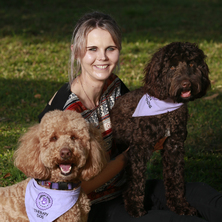
Jess has worked as a paediatric occupational therapist in private practice since graduating from her undergraduate degree. She gained additional training in animal-assisted therapy (canine and equine) in 2015 and became interested in the role animals could play in facilitating client motivation and engagement within therapy sessions. This interest led Jess to complete her PhD exploring the efficacy of canine-assisted occupational therapy with autistic children. Since completing her PhD Jess has continued her research into the impact of human-animal interaction to human and animal health and wellbeing resulting in a number of publications. In line with this research Jess is also the Co-director of The University of Queensland Animal-Assisted intervention Alliance, and the Community Engagement Manager for Animal Therapies Ltd. Jess is also qualified as a personal trainer and has clinical and research experience working to support people with disability engage in physical activity. Jess is a current researcher and coach within the UQ ParaSTART Program.
Affiliate of Centre for Environmental Responsibility in Mining
Centre for Environmental Responsibility in Mining
Faculty of Engineering, Architecture and Information Technology
Affiliate of Centre for Geoanalytical Mass Spectrometry
Centre for Geoanalytical Mass Spectrometry
Faculty of Science
Professorial Research Fellow
Sustainable Minerals Institute
Faculty of Engineering, Architecture and Information Technology
Availability:
Available for supervision
Media expert
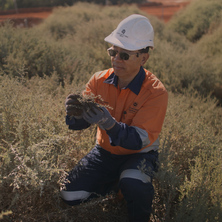
Professor Longbin Huang is a Full Professor and leader of an interdisciplinary research group in Ecological Engineering in Mining. His research focuses on mine waste rehabilitation, ecological engineering, and geomicrobial soil formation, integrating ecological, microbiological, and environmental processes to address sustainability challenges in the mining sector, with influence spanning industry, academia, and policy. Professor Huang leads cutting-edge research in: Geo-microbial ecology, Mineral bioweathering, Microbially and rhizosphere driven soil formation from Tailings Minerals.
Professor Huang's work has advanced nature-based solutions for transforming mine tailings, waste rock, and bauxite residues into sustainable ecosystems. Supported by approximately AUD $23 million in competitive and industry-funded research over the past 15 years, his team has developed and demonstrated innovative rehabilitation technologies with field-scale applications. These include a pioneering technology for the treatment and dealkalization of bauxite residues, which has been commercialized through the University of Queensland startup Bioculum Pty Ltd, and novel approaches for preventing acid mine drainage generation in mine waste materials.
Professor Huang has published over 190 scholarly outputs, including journal articles, conference papers, patents, and book chapters. His research has attracted broad international recognition and has contributed significantly to the advancement of mine waste management, ecological restoration, and sustainable mining practices worldwide.
He is highly experienced in industry-partnered research and translation of knowledge into field-based technologies for tackling large environmental challenges in the mining industry, for example, technologies for tackling global tailings problem. Since 2010, he has led many large and industry-partnered research projects attracting about $23M funding. The research aims to deliver transformative knowledge and practices (i.e., technologies/methdologies) in the rehabilitation of mine wastes (e.g., tailings, mineral residues, spoils, waste rocks) and mined landscapes for non-polluting and ecologically and financially sustainable outcomes. Prof Huang has successfully demonstrated innovative methodology and technology to achieve nature-based outcomes in treating and rehabilitating tailings and waste rocks. Prof Huang’s research program was featured in Rio Tinto’s media releases as one of the four most successful global R&D partnerships in 2024. Prof Huang led the development of the first field-feasible technology to treat and dealkalize alkaline bauxite residues for sustainable rehabilitation. His industry-partnered research was recognised in 2019 UQ’s Partners in Research Excellence Award (Resilient Environments) (Rio Tinto and QAL). Prof Huang is also developing new knowledge and technologies for achieving non-polluting and ecologically sustainable rehabilitation of, for example, coal mine spoils and tailings, Fe-ore tailings, bauxite tailings (from mining bauxite), and Cu/Pb-Zn tailings.
Membership of Board, Committee and Society
Professional associations and societies
2010 – Present Australian Soil Science Society.
2023 – Present AuSIMM
2015 – 2025 Present American Society of Mining and Reclamation (ASMR)
Editorial boards/services
2025 - present: Member of Editorial Board, Energy & Environment Nexus
Nick’s research focuses on improving the efficiency and environmental sustainability of animal production systems. He uses modern omics technologies and quantitative analysis to support genetic improvement, inform management decisions, and enhance on-farm interventions that improve productivity while reducing environmental impact.
In parallel, he studies the physiology, metabolism and conservation of native Australian fauna, with particular interest in frogs and butterflies. His work applies comparative and systems-based approaches to understand how animals function across diverse ecological contexts, including very challenging environments such as the arid zone.
Trained as a metabolic biochemist, Nick’s expertise spans the interpretation of large and complex biological datasets, molecular technologies, mitochondrial physiology, and metabolic flux. His research integrates molecular data with whole-animal function to better understand how biological systems convert energy and information into phenotypic outcomes. Within production science Nick focusses on feed conversion efficiency as it is of both commercial and environmental importance, as well as being mechanistically complex.
Before joining the School of Agriculture and Food Sustainability (AGFS) as a Teaching and Research academic, Nick worked within a multidisciplinary Systems Biology group at CSIRO. There he helped develop and apply bioinformatic approaches that integrate metabolite, protein, RNA and DNA data to model and predict phenotypes of commercial importance in cattle, sheep, pigs and poultry.
A highlight of this work was the co-development of a universal method for inferring causal regulatory molecules from genome-wide gene expression data (Hudson et al., 2009, PLoS Computational Biology). This approach has since been applied across diverse systems, including human kidney cancer and commercially important traits in livestock species.
Nick’s broader research contributions reflect an interest in complex biological function across scales. His publications have addressed mitochondrial systems biology, metabolic adaptation and hibernation physiology, population genetics methodology, and the physiological basis of economically important traits such as beef marbling and feed conversion efficiency. He has also led interdisciplinary work exploring information processing in biological and cognitive systems and the interpretation of educational data.
Nick completed his undergraduate degree in Animal Biology at the University of St Andrews and was awarded his PhD through the Zoology Department at The University of Queensland after travelling from England on a Britain–Australia Society Northcote Scholarship.
He teaches biochemistry and molecular biology to undergraduate and postgraduate students using a comparative approach that draws on both wildlife and production species. Core biochemical principles are illustrated through applied examples from agriculture, biomedicine, sports science and environmental systems, helping students understand how molecular processes scale to whole-organism function and real-world outcomes.
After graduating from the University of Queensland in 2002, I worked as a veterinarian in a mixed animal practice in Victoria, as a small animal intern in Brisbane (BVSC), and as a Veterinary Associate in England before moving to Pennsylvania for five years to complete a Haematology and Transfusion fellowship, veterinary clinical pathology residency, and then lectureship. I passed my Memberships in Internal Medicine in 2006, completed my Haematology and Transfusion Fellowship in 2007, and my Diplomate of the American College of Veterinary Pathologists (Clinical Pathology) in 2010.
In 2011, I returned to Australia and worked as a specialist veterinary clinical pathologist for IDEXX in Sydney for almost four years then moved to an academic role as a Senior Lecturer at the University of Adelaide before coming home to Queensland when I was recently accepted as a Senior Lecturer in Clinical Pathology here at the University of Queensland.
I am passionate about veterinary student education and hope to help UQ students to understand the importance and excitement of clinical pathology in veterinary medicine today. Although I enjoy all aspects of clinical pathology, I have specific diagnostic and research interests in haematology, transfusion medicine, immunohaematology, and oncology. I also love collaborative research with a clinical focus in any species so if people are looking for clinical pathology expertise as part of a project then please feel free to contact me.
Senior Research Officer, Citrus Disease Management
Queensland Alliance for Agriculture and Food Innovation
Availability:
Available for supervision
Dr Mark Jackson is a senior researcher at the Queensland Alliance for Agriculture and Food Innovation (QAAFI), where his research focuses on developing innovative approaches to sustainable crop protection. His early postdoctoral studies at the Institute for Molecular Biosciences (IMB-UQ) were split between the development of plant produced peptides as ecofriendly insecticides, and utilising plants as biofactories for recombinant products of value. At QAFFI Dr Jackson works closely with the sugar, citrus and vegetable industries on projects that aim to develop biological solutions to pest and diseases. A rewarding aspect of his career has been in training of research higher degree students.
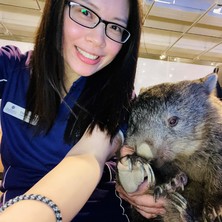
A/Prof Stephen Johnston is a Reader in Reproduction (40% Teaching; 40% Research and 20% Service) in the School of Environment at the University of Queensland, where he teaches animal reproduction and captive husbandry to Bachelor of Wildlife Science and Science undergraduate and postgraduate students. He is current program coordinator for the Bachelor of Wildlife Science Program. He is also a research affiliate in the School of Veterinary Science. Stephen was trained as a zoologist and specialises in the area of reproductive biology in a broad diversity of species ranging from prawns to tigers but with a major focus on Australian mammals. A/Prof Johnston has published 300 scientific works in basic and applied science disciplines including reproductive anatomy, physiology and behaviour. He was the first person in the world to produce a pouch young following artificial insemination in a marsupial, a task that he and his colleagues have now carried out successfully in the koala, a total of 34 times. Stephen is also a specialist in the cryopreservation of marsupial spermatozoa and in the assessment of sperm DNA fragmentation, including human and domestic animal spermatozoa. A/Prof Johnston’s recent research interests and grant success include studies aimed at a better understanding of the effect of chlamydia on male koala reproduction, heat stress in koalas, sociobiology of koalas, genetic and reproductive management of koalas, wombat captive reproduction, echidna captive breeding, crocodile artificial insemination and prawn aquaculture. He is a Fellow of the Society for Reproductive Biology (2019)
Affiliate of ARC COE for Plant Success in Nature and Agriculture
ARC COE for Plant Success in Nature and Agriculture
Faculty of Science
Professorial Research Fellow
Queensland Alliance for Agriculture and Food Innovation
Availability:
Available for supervision
Prof. David Jordan is a sorghum breeder and geneticist with more than 20 years experience working in both the public and private sector.
For the last decade he has led the public sorghum pre-breeding program in Australia which is a partnership between the University of Queensland (UQ), The Queensland Department of Agriculture and Fisheries (DAF) and the Grains research and Develop Corporation (GRDC). This is a long running and successful research effort with a reputation for integrating across disciplines and linking research efforts from the strategic to the applied. Breeding lines from this program are widely used commercially in Australia and internationally with 100% of the commercial sorghum grown in Australia having genetics from the program. At the same time the research group continues to produce research papers at the forefront of sorghum research.
In recent years he had led projects focused on improving the lives of resource poor farmers in Africa that rely on sorghum.
Affiliate of ARC COE for Plant Success in Nature and Agriculture
ARC COE for Plant Success in Nature and Agriculture
Faculty of Science
Senior Research Fellow
School of Agriculture and Food Sustainability
Faculty of Science
Availability:
Available for supervision
Media expert
I am centre-wide sernior research fellow in the ARC Centre of Excellence for Plant Success in Nature and Agriculture, based here at UQ. Currently I lead a small but growing team of computational biologists focusing on new techniques for predicting complex quantitative traits through causal molecular networks using AI and ML approaches.
Areas of interest:
Machine Learning, AI and high performance computing to learn and exploit functional connectivity in biological data
Gene Expressions networks
Multiplex networks, information propagation and perturbation
Genomic Prediction
Our goal is to aid crop and forestry breeders in selecting parental lines more accurately, which gives us a pathway to improving certain plant species. I also spend time developing new data analysis techniques that are being applied to human disease and conditions such as Autism and substance addiction.
David completed his PhD at Australian National University in 2017, focusing on the genome-wide basis of foliar terpene variation in Eucalyptus. He then undertook a postdoc at Oak Ridge National Laboratory, a US Dept of Energy lab with a focus on big data. After a stint as a staff scientist at Oak Ridge, David arrived at the Centre of Excellence in 2023 in the role of a Senior Research Fellow. He currently supervises 3 PhD students and one full time postdoctoral researcher at UQ.
Dibesh Karmacharya has a Conservation Biology degree from Wayne State College, USA and a PhD on Conservation and Microbiome Genetics from Griffith University, Australia. He worked extensively in the US for Caliper Lifesciences in New Jersey as a research scientist (transgenic animal models). He promoted Genomics and Proteomics technology platforms for GE Healthcare Lifesciences in the US and Canada. He founded the Center for Molecular Dynamics Nepal (CMDN), a wildlife genetics and clinical epidemiology research center and is the Chairman and Executive Director of the Organization. He also founded Intrepid Nepal Pvt. Ltd.-a molecular diagnostics-based Biotechnology Company, and Intrepid Cancer Diagnostics-a leading cancer diagnostic laboratory. He leads several innovative researches in Nepal including building Nepal’s first genetic database of wild tigers through Nepal Tiger Genome Project. He was the Principal Investigator of PREDICT Nepal project-an emerging pandemic threat project. He also founded BIOVAC Nepal Pvt. Ltd. - a vaccine research, development and manufacturing company. He was the Wildlife Conservation Society (WCS) Regional Project Coordinator of Pandemic Prevention Leadership Initiative (PPLI). He specializes in One Health and Conservation Genetics.
May 2002–ongoing: Senior Lecturer Land Resources Sciences, Principla Research Fellow, School of Land, Crop and Food Sciences; The University of Queensland, Australia
As lecturer of Land Resources Sciences at the University of Queensland, Dr Kirchhof has both led and collaborated on over half a dozen projects, and supervised numerous research staff and students. His research has focussed on:
Soil–Water relationships;
Conservation Agriculture and Irrigation scheduling
Soil erosion
Water and Nutrient Balances;
Spatial Variability of Soil Properties from Ped to Landscape Scales;
Dry-land Salinity Management;
Water Recycling
Computer Modelling of Water Flow with Special Reference to Variability and assessment of deep drainage
Knowledge Management;
2011-15 Course leader: Australia Awards in Africa Dryland Farming/Soil and Water conservation Short Course Awards, UniQuest; Australia and Africa, Dr Kirchhof led the design and delivery of the AusAID-funded Dryland Farming Short Course Award, contracted to UniQuest/UQ-ID through GRM International, which was delivered twice a year in 2011 and 2014.
Countries of work experience: Indonesia, Vietnam, Papua New Guinea, the Philippines, Burkino Faso, Côte d’Ivoire, Djibouti, Ethiopia, Nigeria, Tunisia, Uganda, Kenya, Tunisia, Australia.
Previous postions:
Oct 1997–May 2002: Senior Soil Scientist, Soil Conservation, NSW Agriculture; Australia
Mar 1996–Oct 1997: Soil Physicist, International Institute of Tropical Agriculture; Ibadan, Nigeria
Dec 1991–Mar 1996: Research Fellow, Department of Agriculture, The University of Queensland; Brisbane
Jan 1989–Dec 1991: Soil Scientist, CASSIRO Ltd, Wauchope, NSW