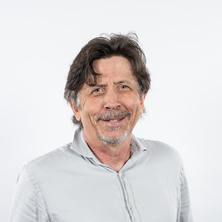
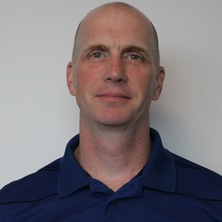
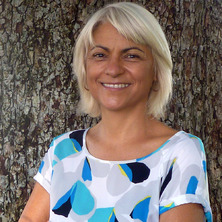
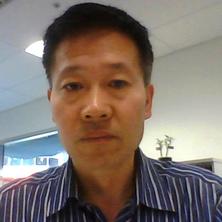
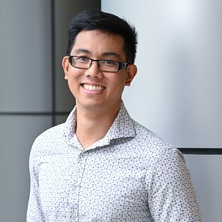
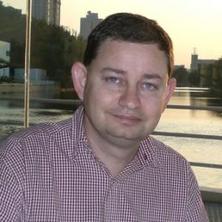
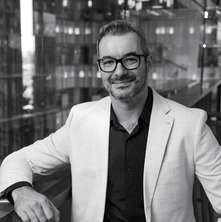
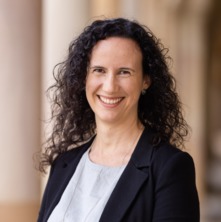
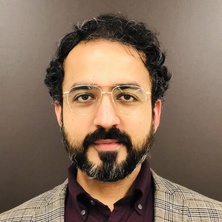
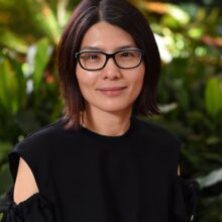
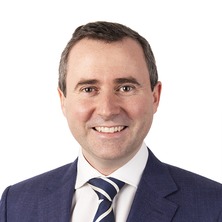
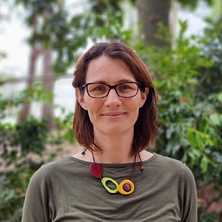
Professor Joseph Grotowski completed his Bachelor of Science with Honours in Mathematics at the Australian National University in 1985. He then moved to New York for postgraduate studies in Mathematics, and completed an MS in 1987 and a PhD in 1990 at the Courant Institute, NYU.
He held a number of positions in Germany, and completed his Habilitation at the Friedrich-Alexander Universitaet Erlangen-Nuernberg in 2001. He took up a position as an Associate Professor at the City College of New York of the City University of New York in 2003, and returned to Australia to take up a position as a Senior Lecturer at UQ in 2005. He was promoted to Associate Professor from 2010, and Full Professor from 2013.
His main research area is geometric and nonlinear partial differential equations.
He served as Head of the Mathematics Discipline from 1 January 2010 until 30 April 2014. From 1 May 2014 he has been Head of the School of Mathematics and Physics. As Head of School, he is responsible for ensuring that the School delivers a high standard of research and teaching, as well as engagement with the broader community, across our disciplines of mathematics, physics and statistics. He is also responsible for providing and fostering strategic leadership within the School, as well as for financial management of the School’s budget and management of the School’s resources.
He is a former Board Member of the Australian Mathematical Sciences Institute, and serves on the advisory Board of the MATRIX Research Insitute. He has been active in CSIRO Mathematicians in Schools for a number of years.
My research interests are in coral reef ecology and marine parasitology.
I also incorporate other fields in my research including evolutionary biology, molecular biology, parasitology, and animal behaviour. I use field observations to generate hypotheses which are tested using field and laboratory experiments.
Currently, I have research programmes at Lizard Island on the Great Barrier Reef.
Specific projects include:
The ecological significance of cleaning behaviour in reef fishes
The direct and indirect effects of cleaner fish on the coral reef community
Faculty of Engineering, Architecture and Information Technology
Research Fellow
Australian Institute for Bioengineering and Nanotechnology
Availability:
Available for supervision
Dr. Wenyi Gu’s early education was conducted in China which include his undergraduate and master’s degrees in veterinary medicine. In 1996, he migrated to Australia and pursued his PhD study in biochemistry & molecular biology at the Australian National University (ANU). After a short period of work at John Curtin Medical School ANU as a junior scientist, he moved to Brisbane in 2001 for his post-doc at the University of Queensland and currently a post-doctoral research fellow at AIBN. He held a Peter Doherty Fellowship (2006-2009) and was further supported by NHMRC to spend 7 months at Harvard University as a visiting fellow in 2008. Since his post-doctoral research he has been working in the area of using RNAi to treat viral diseases and cancers. He also has a strong background in immunology and vaccine development.
Affiliate of Centre for Extracellular Vesicle Nanomedicine
Centre for Extracellular Vesicle Nanomedicine
Faculty of Health, Medicine and Behavioural Sciences
Research Fellow
Frazer Institute
Faculty of Health, Medicine and Behavioural Sciences
Availability:
Available for supervision
Dominic Guanzon is a research fellow at the University of Queensland within the Salomon Lab, and supported by the Lions Medical Research Foundation. His expertise lies in the fascinating realm of extracellular vesicles where he is the genomics leader. Dominic’s research involves developing nucleic acid blood tests to diagnose disease. His primary research focus is on predicting chemotherapy response in women diagnosed with ovarian cancer, specifically distinguishing between individuals who respond positively to chemotherapy and those resistant to it (chemoresistance).
Affiliate of Centre for Extracellular Vesicle Nanomedicine
Centre for Extracellular Vesicle Nanomedicine
Faculty of Health, Medicine and Behavioural Sciences
Principal Research Fellow
Frazer Institute
Faculty of Health, Medicine and Behavioural Sciences
Availability:
Available for supervision
Media expert
I lead a research program with extensive expertise in immunology, particularly in natural killer (NK) cells, focused on developing innovative approaches for treating hard-to-cure diseases like metastatic cancers. Our mission is to improve patient outcomes and extend lives. Recognized as an international leader in my field, I've been instrumental in identifying novel regulators of our immune functions, and developing NK cell-based immunotherapies.
My dedication to my field has been recognized through numerous peer-reviewed grants as sole-CI or CIA/Principal Investigator, including a NHMRC ECF Peter Doherty Fellowship, an NHMRC Project Grant, an US DoD, a MRFF EMCR among others. Since 2009, I've amassed a portfolio of >120 publications in renowned journals like Blood, Cell Death Dis, JEM, Molecular Therapy, Nat Comms, and Nat Immunol with an H-index = 46. My body of work and contributions have been acknowledged with awards such as the 2019 Researcher of the Year by CCA, 2020 QLD Young Tall Poppy Science, 2020 UQ Frazer Institute's Rising Star, 2022 Frazer Institute's Mentor of the Year, 2023 TRI - Connecting with the Clinic, the 2025 Dr. Jian Zhou Foundation Award for Translational Medicine among others.
Committed to translating fundamental discoveries into real-world therapies, I co-founded the venture-backed biotechnology company Sicario Tx, focused on advancing NK cell-based immunotherapies. I have also served as a scientific consultant and collaborator for national and international biotech companies, including Biotheus (now part of BioNTech's oncology pipeline), Prescient Therapeutics, Microba Life Sciences, among others, contributing to their development programs.
At present, I am a Group Leader / Principal Research Fellow & Associate Professor with the University of Queensland's Frazer Institute. My research group is based at the Translational Research Institute (TRI). Here, I lead a high-performing research team with a keen focus on developing and innovating immunotherapy approaches for a spectrum of diseases.
Dr. Guix researches how tourism and hospitality organizations approach change to integrate sustainability considerations and report on their progress for external accountability. Her work focuses on corporate social responsibility and grand challenges such as modern slavery and climate change.
She worked on projects funded by the European Union, the United Nations Environmental Program, and the Inter-American Development Bank to run life and online stakeholder consultations for sustainable tourism policy and assess industry disclosure and progress towards the Sustainable Development Goals.
Dr. Guix regularly publishes in top academic journals, including Tourism Management, Annals of Tourism Research, Journal of Sustainable Tourism, and International Journal of Hospitality Management.
Faculty of Health, Medicine and Behavioural Sciences
Availability:
Available for supervision
Dr Karan Gulati is a Research Group Leader and the Deputy Director of Research at the School of Dentistry, UQ. He is also the Deputy Director of Centre for Orofacial Regeneration, Reconstruction and Rehabilitation (COR3) at UQ Dentistry.
Dr Gulati is a pioneer in electrochemically nano-engineered dental implants with over 13 years of extensive research experience using nano-engineering towards various bioactive and therapeutic applications. Dr Gulati completed his PhD from the University of Adelaide (Australia) in 2015 and was awarded the Dean’s Commendation for Doctoral Thesis Excellence. His career has been supported by prestigious fellowships from NHMRC (National Health and Medical Research Council, Australia), JSPS (Japan Society for the Promotion of Science, Japan), Erasmus+ (Germany) and the University of Queensland. At 10 years post-PhD, Dr Gulati has edited 3 books, published 7 chapters and >79 publications (h-index 44), and presented >110 times in various reputed conferences.
Australian Institute for Bioengineering and Nanotechnology
FaBA Future Academic Leader in Precision Fermentation
School of Agriculture and Food Sustainability
Faculty of Science
Availability:
Available for supervision
Yosephine Gumulya has a degree in Food Technology (2004) from Bogor Agricultural University (Indonesia) and a Master of Biotechnology (2007) from Technical University Hamburg Harburg (Germany). She completed her PhD in 2010 at Max Planck Institute for Coal Research (Germany), where she learned how to mimic the natural evolution in laboratory and use this technique to generate novel enzymes for biotechnology applications. After spending 1.5 years working for food industry in Spain, in October 2012, she decided to pursue an academic career by doing postdoctoral research in the lab of Prof Elizabeth Gillam and A.Prof. Mikael Boden. Her research has focused on protein engineering and ancestral sequence reconstruction. This knowledge is essential for understanding the protein evolutionary histroy as well for creating robust yet promiscous enzymes for industrial applications.
Faculty of Health, Medicine and Behavioural Sciences
Availability:
Available for supervision
Dr David Gunn is an Australian-trained Cornea, Cataract, and Refractive Surgeon with a special interest in innovative treatments for keratoconus and laser vision correction. He practices at the Queensland Eye Institute, the state’s largest independent academic research institute dedicated to ophthalmic health and disease, and at Focus Vision, a dedicated laser eye surgery centre in Brisbane.
Dr Gunn graduated with honours in Medicine from the University of Queensland and completed specialist Ophthalmology training in Queensland, where he was awarded the prestigious Howsam Medal. He undertook further subspecialty fellowship training in corneal and refractive surgery at the Bristol Eye Hospital in the United Kingdom.
His research focuses on advanced techniques in corneal transplantation and refractive surgery, including laser vision correction for irregular corneas. Dr Gunn was the first surgeon to introduce Femto CAIRS (Corneal Allogenic Intrastromal Ring Segments) to Australia in 2021 and is a pioneer in the field globally. He co-developed CairsPlan.com, a surgical planning tool now used internationally, and has performed several Australian and world-first procedures in keratoconus surgery.
Australian Institute for Bioengineering and Nanotechnology
Availability:
Available for supervision
Helen Gunter is a Senior Postdoctoral Fellow at the Australian Institute for Bioengineering and Nanotechnology. Dr. Gunter is partnering with Oxford Nanopore Technologies and the BASE Facility to benchmark a comprehensive test of mRNA vaccine quality. Helen has authored 25 publications, with 10 as first author, one as senior author, and 14 as middle author. She has published in influential journals such as Nature, Nature Communications and Translational Psychiatry. Helen’s work has attracted >$2M in funding from Oxford Nanopore (2023), the Genome Innovation Hub (2021), Deutesche Forschungsgemeinschaft (2011), a Zukunftskolleg Fellowship (2008) and from the University of Konstanz (2013).